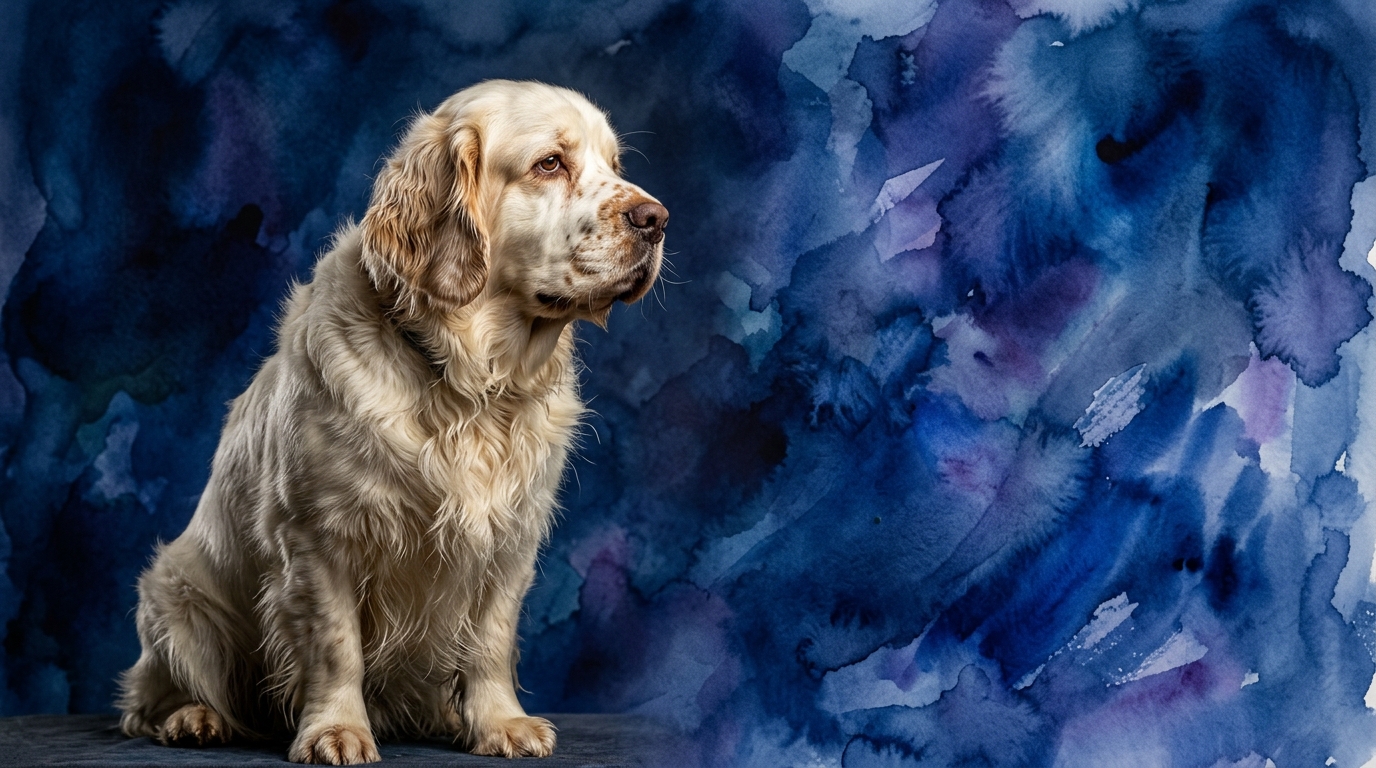

Side-by-Side Cognitive Profiles: Clumber Spaniel
The Clumber Spaniel, a dignified Sporting Group member, exhibits a balanced cognitive profile, with each dimension scoring a solid 3 out of 5. Their Problem Solving at 3/5 means they approach tasks with a steady, methodical focus, especially when scent work or retrieving is involved. They can figure out straightforward puzzles but might require more guidance for complex, abstract challenges. Training Speed, also 3/5, indicates they respond well to consistent, positive reinforcement, picking up new commands at a moderate pace. Their inherent desire to please often makes them cooperative learners, though they benefit from patience and clear instruction rather than rushed sessions.
Social Intelligence for the Clumber Spaniel, rated 3/5, reflects their capacity to form strong bonds with their families, often displaying a gentle and amiable disposition. They are generally perceptive of human moods and can adapt to various social situations with proper early exposure and continued interaction. Their Instinctive Drive, at 3/5, points to a pronounced inclination for scenting and retrieving, characteristic of their sporting heritage. This drive is manageable and can be channeled effectively into activities like field work or scent games, rather than being an overwhelming force. Finally, their Memory, also 3/5, ensures they retain learned commands and routines effectively over time, remembering familiar people and places, relying on repetition to solidify their understanding of tasks and expectations.
Side-by-Side Cognitive Profiles: Rhodesian Ridgeback
The Rhodesian Ridgeback, a robust Hound Group member, also presents a consistent cognitive score of 3 out of 5 across all dimensions, yet their application of these traits differs significantly from the Clumber. Their Problem Solving at 3/5 is characterized by a capacity for independent thought, often assessing situations and finding solutions through observation. This can manifest as cleverness in navigating their environment or figuring out how to achieve a desired outcome, though their solutions might not always align with human expectations, reflecting their self-reliant nature. Training Speed, rated 3/5, shows they learn commands at a moderate pace, but their independent streak means they require a trainer who is patient, consistent, and understands how to motivate them without resorting to harsh methods. They respond best to clear, fair leadership and engaging challenges.
Social Intelligence for the Rhodesian Ridgeback, at 3/5, means they develop deep loyalty to their family, often exhibiting a watchful and discerning nature with strangers. Their social interactions are frequently characterized by a confident demeanor, coupled with a capacity to understand their handler's intent, though they may not be overtly demonstrative with everyone. Their Instinctive Drive, also 3/5, encompasses a strong prey drive and a natural inclination towards tracking and guarding, stemming from their heritage as lion hunters. This drive requires appropriate outlets and careful management to ensure it is channeled constructively. Their Memory, at 3/5, allows them to retain past experiences and training well, remembering both positive and negative associations, which contributes to their discerning and sometimes cautious approach to new situations.
Where the Clumber Spaniel Excels Cognitively
While both breeds share similar numerical cognitive scores, the Clumber Spaniel truly excels in areas requiring focused, methodical application of its abilities, particularly within a cooperative framework. Their 3/5 Problem Solving manifests as a steady, rather than impulsive, approach to tasks, making them adept at sequential activities like following complex scent trails in a structured manner. This patient persistence, combined with their 3/5 Instinctive Drive for scent work, means they can maintain concentration on a task over extended periods without becoming easily distracted or attempting to 'freelance' a solution. For instance, in a scent discrimination exercise, a Clumber will often meticulously work through each item, whereas another breed might try to shortcut the process. Their 3/5 Social Intelligence also plays a role here, as their desire to please their handler encourages them to stick to the task and method taught, enhancing their performance in guided activities.
The Clumber's consistent memory and moderate training speed also mean they are reliable in recalling established routines and commands. This makes them particularly suited for repetitive tasks or activities that demand a predictable, steady performance. Their cognitive strengths lean towards being a dependable and thorough partner in activities where consistency and adherence to learned procedures are paramount, rather than rapid, independent decision-making in highly variable environments. This makes them a strong choice for owners who appreciate a dog that works diligently alongside them.
Where the Rhodesian Ridgeback Excels Cognitively
The Rhodesian Ridgeback's cognitive strengths lie in its capacity for independent assessment and robust decision-making, even with a 3/5 in Problem Solving. Their heritage required them to think critically in challenging environments, often without immediate human direction, and this manifests in their ability to evaluate situations and act decisively. For example, when faced with an unfamiliar object or person, a Ridgeback will often take a moment to process the situation, drawing on its 3/5 Memory of past experiences and its 3/5 Social Intelligence to gauge intent before reacting. This discerning nature is a hallmark of their self-reliant intelligence.
Their 3/5 Instinctive Drive is geared towards tracking and protection, giving them a keen awareness of their surroundings and a willingness to act when necessary. This isn't a mindless drive, but rather one coupled with their problem-solving ability to navigate complex outdoor terrains or assess potential threats. They can make sound judgments in ambiguous situations, relying on their own observations and memory rather than solely on human cues. This makes them exceptional partners for owners who value a dog that possesses a strong, independent spirit and the cognitive fortitude to handle novel or potentially challenging situations with a degree of self-sufficiency. Their confidence in their own judgment is a key cognitive advantage.
Which Is Easier to Train and Why?
Despite both breeds sharing a 3/5 rating for Training Speed, the Clumber Spaniel generally presents an easier training experience for the average owner due to fundamental differences in their social and instinctive drives. The Clumber's 3/5 Social Intelligence often translates into a pronounced desire to please its handler, which is a powerful motivator in training. They are typically more biddable and cooperative, readily accepting guidance and enjoying the structured interaction that training provides. Their 3/5 Instinctive Drive, focused on scenting and retrieving, is also highly channelable into positive reinforcement activities, making them eager participants in learning new tasks and commands.
Conversely, the Rhodesian Ridgeback's 3/5 Training Speed is tempered by its independent nature and a Problem Solving score that encourages self-reliance. While capable of learning, a Ridgeback might question the necessity of a command or attempt to find a more efficient (in their view) solution to a problem. Their 3/5 Instinctive Drive, being more oriented towards tracking and guarding, can sometimes lead to distraction if not properly managed, and their confidence means they don't always feel compelled to adhere to human directives if they perceive them as illogical. Training a Ridgeback requires a consistent, firm, but fair approach, emphasizing clear expectations and understanding their motivations, whereas a Clumber often thrives on simple praise and partnership.
Suitability for Active vs. Relaxed Owners
When considering lifestyle, the cognitive profiles of these two breeds guide their suitability for active versus more relaxed owners. The Clumber Spaniel, while a sporting breed, fits comfortably with relaxed active owners. Their 3/5 Instinctive Drive for scent work and retrieving means they do require regular, moderate exercise and mental stimulation – a good daily walk, some structured play, or scent games are usually sufficient. Their 3/5 Problem Solving and Memory allow them to enjoy consistent routines without demanding constant novelty. They are generally content to relax indoors after their needs are met, making them well-suited for families who enjoy moderate outdoor activity balanced with quiet indoor companionship.
The Rhodesian Ridgeback, however, is definitively better suited for active owners. Their 3/5 Instinctive Drive, geared towards tracking and endurance, combined with their independent Problem Solving, means they require significant physical exercise and mental engagement to prevent boredom and potential behavioral issues. Long runs, hiking, and challenging training sessions that tap into their independent thinking are crucial. A Ridgeback thrives when given a 'job' or regular opportunities to explore and assess its environment. Owners who lead an active outdoor lifestyle and are prepared to incorporate their dog into strenuous activities will find the Ridgeback a stimulating and robust companion. A relaxed owner might find the Ridgeback's unmet energy and mental needs overwhelming.
The Verdict
Choose the Clumber Spaniel if you seek a cooperative, gentle companion who thrives on methodical tasks and consistent routines, offering a more biddable training experience for a moderately active household.
Opt for the Rhodesian Ridgeback if you are an experienced, active owner who appreciates an independent, discerning companion capable of making its own assessments and who can commit to extensive physical and mental engagement.
🧠 Find Your Pet's IQ Score
Our Pet IQ Lab assessment covers 25+ tests across 5 cognitive dimensions — personalized to your breed.
Take the Full IQ Test →Frequently Asked Questions
Do Clumber Spaniels or Rhodesian Ridgebacks learn faster?
Both breeds score 3/5 in Training Speed, indicating they learn at a moderate pace. However, the Clumber Spaniel's desire to please often makes them more eager and cooperative during training sessions, potentially giving the impression of faster learning due to their biddable nature.
Which breed is better at problem-solving independently?
While both breeds have a 3/5 Problem Solving score, the Rhodesian Ridgeback exhibits this trait with a greater degree of independence. Their heritage encouraged self-reliance, meaning they are more inclined to assess situations and devise solutions on their own, sometimes without waiting for human input, compared to the more cooperative Clumber Spaniel.
Are Clumber Spaniels or Rhodesian Ridgebacks more socially adaptable?
Both breeds score 3/5 in Social Intelligence. Clumber Spaniels tend to be more generally amiable and adaptable with a wider range of people, while Rhodesian Ridgebacks, though deeply loyal to their families, are often more reserved and discerning with strangers, requiring careful socialization to ensure appropriate interactions.