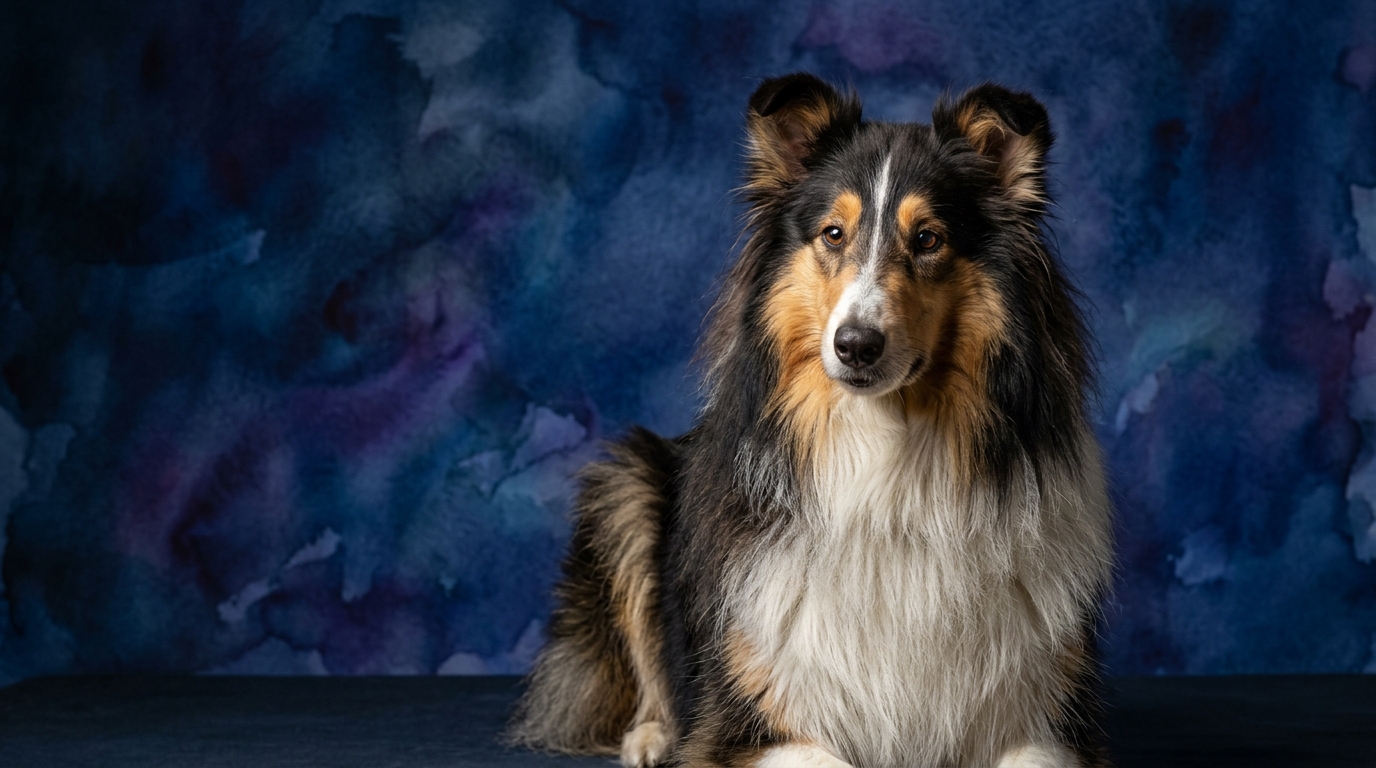
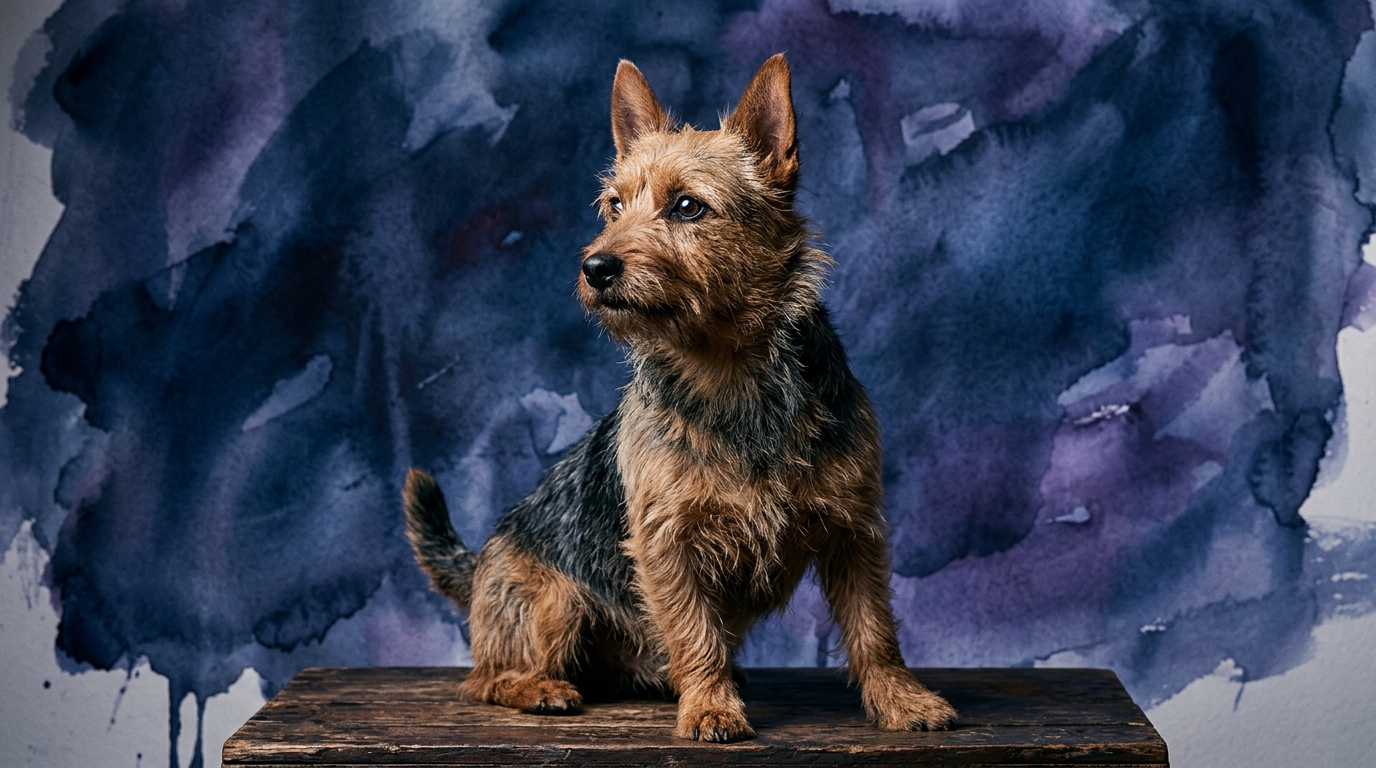
Side-by-Side IQ Profile
The Collie (Rough) exhibits a robust cognitive profile, marked by a strong capacity for problem-solving (4/5), indicating an ability to navigate complex tasks and learn from experiences. Their training speed (4/5) suggests they grasp new commands and routines with efficiency, often requiring fewer repetitions than many other breeds. Social intelligence (3/5) positions them as cooperative companions, capable of understanding human cues, though perhaps not as acutely attuned to subtle emotional shifts as some highly empathetic breeds. An instinctive drive score of 3/5 reflects their heritage as working dogs, possessing a moderate inclination towards their original herding duties, which can manifest as a desire to gather or manage. Perhaps their most remarkable cognitive asset is memory (5/5), allowing them to retain vast amounts of information, from commands to routines and even specific locations, over extended periods.
The Australian Terrier presents a distinct cognitive makeup, characterized by a respectable problem-solving ability (3/5), signifying they can figure out solutions to challenges, though potentially requiring more persistence or trial-and-error than a Collie. Their training speed (3/5) indicates a solid capacity for learning, but owners should anticipate a steady rather than rapid pace when introducing new behaviors. Social intelligence (3/5) places them on par with the Collie in terms of general cooperativeness and responsiveness to human interaction, suggesting they are capable of forming strong bonds and understanding basic social structures. An instinctive drive score of 3/5 highlights their terrier roots, manifesting as a drive to hunt, dig, or explore, often with considerable determination. Their memory (3/5) is functional and reliable, allowing them to recall learned behaviors and familiar environments, though perhaps not with the same encyclopedic recall as the Collie.
Where Collie (Rough) Wins Cognitively
The Collie (Rough) genuinely shines in several specific cognitive domains, particularly in memory and the efficiency of learning. With a perfect 5/5 in memory, a Collie can recall a vast repertoire of commands, routines, and even specific environmental details with remarkable accuracy, making them exceptionally reliable in tasks requiring sequential actions or long-term retention of information. This superior memory aids their 4/5 training speed, allowing them to absorb new concepts and behaviors quickly, often generalizing learned skills to novel situations with minimal prompting. For instance, a Collie might learn a multi-step agility course faster, remembering the sequence and specific obstacles after fewer repetitions, or consistently adhere to a complex daily schedule without frequent reminders. Their strong problem-solving (4/5) also means they can independently figure out how to overcome obstacles, such as opening a gate or retrieving a dropped item from a tricky spot, often applying previously learned principles. This combination of swift learning, strong problem-solving, and exceptional recall makes them adept at complex, multi-faceted tasks and highly responsive to consistent guidance.
Where Australian Terrier's Cognitive Profile Shines
While the Australian Terrier may not boast the same raw cognitive scores as the Collie (Rough) in all areas, its specific cognitive profile is perfectly adapted to its original purpose and offers unique strengths. Its 3/5 problem-solving, combined with a 3/5 instinctive drive, translates into a determined and resourceful approach to challenges. Unlike the Collie's more cooperative problem-solving, the Australian Terrier often employs a persistent, independent methodology, driven by its ancestral need to locate and dispatch vermin. This manifests as a tenacious focus on a task, such as relentlessly digging to investigate a scent or figuring out how to access a hidden toy, even if it takes more trial-and-error. Their social intelligence (3/5) ensures they are receptive to human interaction, but their independent streak means they are less likely to constantly seek direction and more prone to making their own decisions when presented with an opportunity to pursue their innate drives. This cognitive makeup makes them incredibly self-sufficient and adaptable in environments where quick, independent action is valued over strict adherence to human directives, showcasing a resilient and focused individual intelligence.
Which is Easier to Train and Why
Based on their respective IQ profiles, the Collie (Rough) is demonstrably easier to train, primarily due to its superior training speed (4/5) and exceptional memory (5/5). A Collie typically grasps new commands and concepts with fewer repetitions, meaning a training session can introduce more new material or solidify behaviors more quickly. Their remarkable memory ensures that once a behavior is learned, it is retained for a long time, reducing the need for constant refreshers. For example, teaching a Collie a complex routine like heeling through a crowded market or performing a series of tricks will likely progress faster, and they will recall the entire sequence days or weeks later. In contrast, the Australian Terrier, with a training speed of 3/5 and memory of 3/5, will certainly learn, but the process will require more patience and consistency. An Australian Terrier might need more repetitions to master a new command and might require more frequent practice sessions to keep the behavior sharp. Their instinctive drive (3/5) also means they can be easily distracted by environmental stimuli related to their hunting heritage, like a squirrel or a novel scent, which can momentarily impede training focus compared to the more human-attuned Collie. Therefore, while both breeds are trainable, the Collie offers a smoother, faster, and more efficient training experience.
Which Suits Active Owners vs Relaxed Owners
The choice between a Collie (Rough) and an Australian Terrier also hinges significantly on an owner's lifestyle and activity levels. The Collie (Rough), with its herding background and scores indicating a capacity for complex tasks and excellent memory, thrives with active owners who can provide consistent mental stimulation and moderate physical exercise. They are well-suited for activities like obedience trials, agility, herding games, or long, exploratory walks where their problem-solving and memory can be engaged. A more relaxed owner might find a Collie becomes bored or develops undesirable behaviors if their significant cognitive and physical needs are not met. Their social intelligence (3/5) means they enjoy being part of family activities and are generally agreeable to social interaction, but their strong memory means they will remember perceived slights or inconsistencies in routine. The Australian Terrier, while also benefiting from activity, is perhaps more adaptable to a slightly less structured, yet still engaging, lifestyle. Their instinctive drive (3/5) means they need outlets for digging, chasing, and exploring, making them suitable for owners who enjoy terrier games, earthdog trials, or consistent walks with opportunities for scent work. A truly relaxed owner might struggle with the Australian Terrier's independent streak and need for mental engagement, as their problem-solving (3/5) combined with instinctive drive can lead to creative, sometimes mischievous, endeavors if undirected. However, their smaller size and slightly less demanding overall cognitive processing compared to a Collie might make them a better fit for an active owner who prefers a smaller, more compact companion for varied outdoor adventures without the intensity of a dedicated working dog.
The Verdict
When seeking a companion that excels in rapid learning, complex task retention, and responsive partnership, the Collie (Rough) is the clear choice. Opt for a Collie if you are an engaged owner who enjoys consistent training, participates in dog sports, or desires a dog capable of understanding intricate routines and commands with remarkable recall.
If your preference leans towards a tenacious, independent spirit in a smaller package, one that approaches challenges with resourceful determination and thrives on exploring its environment, then the Australian Terrier is an excellent fit. Choose an Australian Terrier if you appreciate a dog with a strong personality, a drive for independent exploration, and a willingness to engage in lively, often earth-bound, adventures.
🧠 Find Your Pet's IQ Score
Our Pet IQ Lab assessment covers 25+ tests across 5 cognitive dimensions — personalized to your breed.
Take the Full IQ Test →Frequently Asked Questions
Does Coren rank apply to both breeds?
The Coren rank, a measure of working and obedience intelligence, is specifically attributed to the Collie (Rough) at #16, indicating its proficiency in understanding and executing commands. The Australian Terrier is not specifically Coren-ranked, which doesn't diminish its intelligence but rather reflects a different focus in its cognitive strengths, often more aligned with independent problem-solving than strict obedience.
Can an Australian Terrier be trained for agility despite lower training speed?
Absolutely, an Australian Terrier can be trained for agility; their instinctive drive and problem-solving abilities make them energetic and determined participants. While their training speed is 3/5 compared to the Collie's 4/5, consistent, positive reinforcement and breaking down tasks into smaller steps will yield excellent results, leveraging their tenacity and enjoyment of physical and mental challenges.
How does the memory difference impact daily life with these breeds?
The Collie's 5/5 memory means it will remember routines, boundaries, and commands with exceptional consistency, making daily life predictable and smooth once behaviors are established. The Australian Terrier's 3/5 memory is still functional, but owners might find they need to reinforce commands or routines more frequently, and the terrier might "test" boundaries more often, requiring more consistent reminders to maintain desired behaviors.