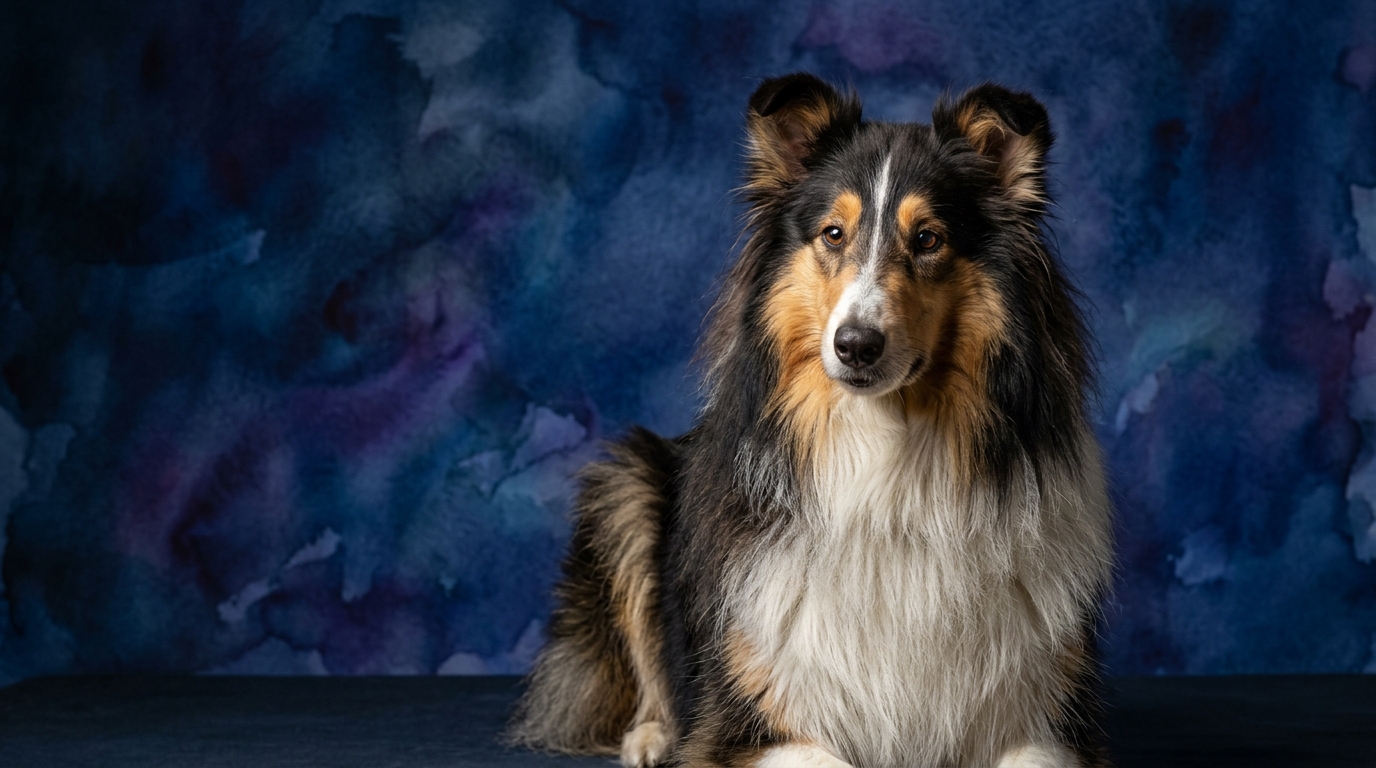
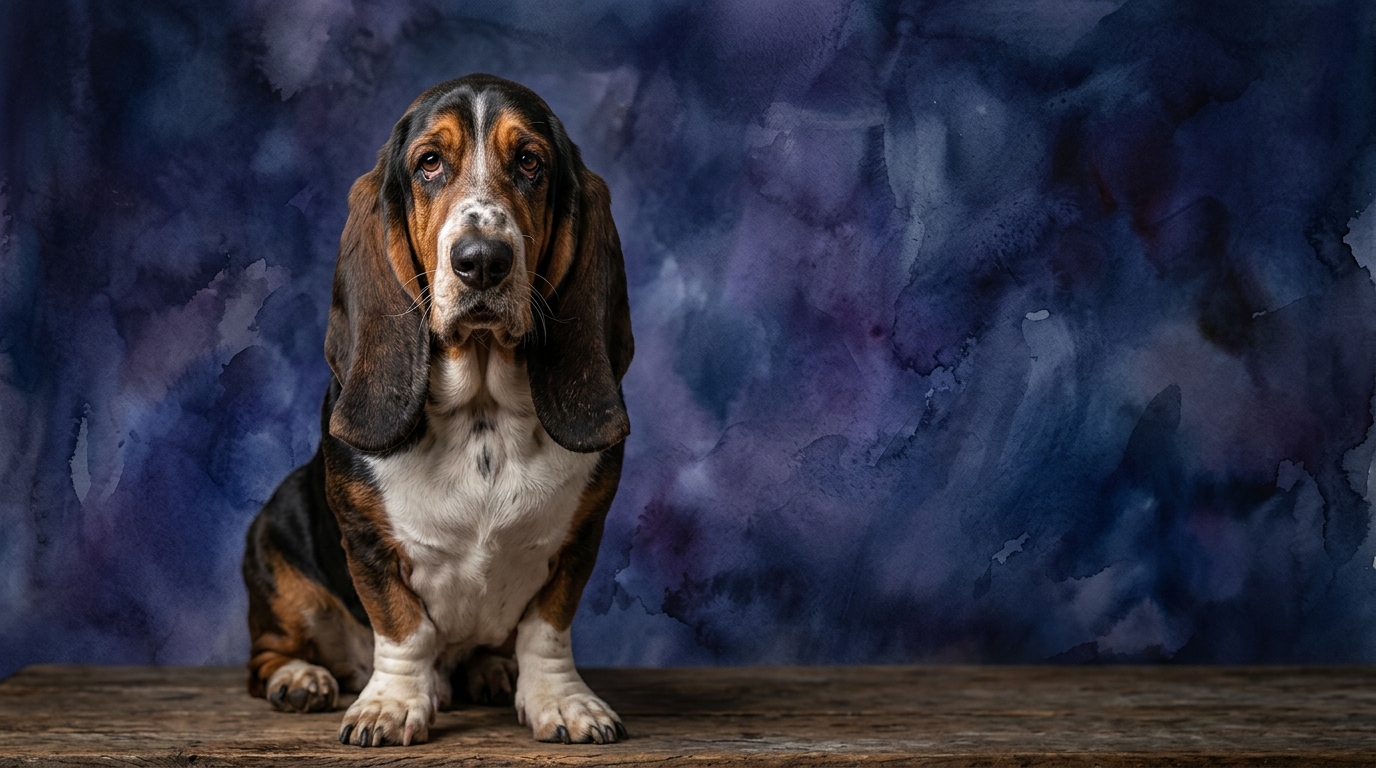
Side-by-Side IQ Profile: Collie (Rough) vs. Basset Hound
The Cosmic Pet Pet IQ Lab provides a unique framework for evaluating canine intelligence across five key dimensions. Let's examine how the Collie (Rough) and Basset Hound measure up, offering a granular view of their cognitive blueprints.
For the **Collie (Rough)**, a Herding dog with a Coren rank of #16, their profile paints a picture of a mentally agile companion. Their **Problem Solving (4/5)** indicates a strong capacity for analyzing situations and devising solutions, often without direct human instruction; they can quickly learn to manipulate objects, navigate obstacles, or even anticipate a handler's next move in a complex sequence. **Training Speed (4/5)** means they grasp new commands and routines with impressive alacrity, eager to engage and quickly associate actions with cues. Their **Social Intelligence (3/5)** shows they are adept at reading human emotions and intentions within their trusted circle, though they can display a reserved nature with strangers. The **Instinctive Drive (3/5)** in a Collie is pronounced but typically well-controlled, manifesting as a desire to gather or manage. Finally, their **Memory (5/5)** is exceptional, allowing them to recall an extensive repertoire of commands, intricate sequences, and past experiences with remarkable clarity, even after long periods.
The **Basset Hound**, classified as a Hound breed with a Coren rank of #71, presents a different set of cognitive strengths. Their **Problem Solving (3/5)** is distinct, primarily driven by their acute sense of smell, involving meticulous following of scent trails rather than abstract reasoning. **Training Speed (3/5)** signifies they learn at a moderate pace, often needing more repetitions than a Collie, influenced by their independent streak. Their **Social Intelligence (3/5)** reflects an amiable and placid temperament, making them generally excellent companions who value comfort and companionship. The Basset Hound's **Instinctive Drive (3/5)** is overwhelmingly dominated by their scenting ability; once they lock onto an interesting smell, their focus becomes singular, often overriding other stimuli. Their **Memory (3/5)** is good for familiar routines, people, and especially for scent trails, though less expansive for complex, abstract commands compared to the Collie.
Where the Collie (Rough) Wins Cognitively
The Collie (Rough) exhibits a pronounced cognitive advantage in several key areas that underscore their versatility and responsiveness. Their **memory score of 5/5** stands out, allowing them to recall an extensive repertoire of commands, intricate routines, and past experiences with exceptional fidelity. This superior recall is not just about remembering a single cue; it means they can execute complex sequences of actions, even after significant time has passed, making them ideal candidates for advanced obedience, agility, and even theatrical performances. This deep memory capacity translates directly into a more efficient learning process and consistent performance.
Furthermore, their **problem-solving ability (4/5)** surpasses that of the Basset Hound. Collies are adept at analyzing novel situations and independently devising solutions, whether it's figuring out how to open a gate, retrieve a specific item, or navigate a complex obstacle course. This cognitive flexibility allows them to adapt quickly to new challenges and environments, demonstrating an understanding of cause and effect that extends beyond simple learned responses. The Collie's **training speed (4/5)** is directly linked to their cognitive processing efficiency and their innate desire to cooperate. They process new information rapidly and form strong associations between commands and actions, meaning fewer repetitions are required for mastery. This rapid acquisition of skills, coupled with their strong memory, makes them highly responsive and eager partners in training, capable of mastering a wide array of tasks from basic manners to specialized work. Their Coren Rank of #16 further underscores their general aptitude for understanding and executing human instructions effectively.
Where the Basset Hound Wins Cognitively
While the Basset Hound's overall IQ profile might appear less varied than the Collie's, their cognitive strengths lie in a highly specialized domain: **olfactory intelligence and persistence**. Their 'instinctive drive' (3/5) is almost entirely dedicated to scent work, representing a unique form of cognitive mastery. A Basset Hound's ability to discriminate, track, and follow a complex scent trail over varying terrains and through distracting environments is a remarkable feat of perception and sustained focus. This isn't just a physical act; it involves intricate cognitive mapping, memory of scent profiles, and unwavering dedication to a task once a compelling odor is detected.
Their **problem-solving (3/5)**, while not abstract, is profoundly effective within this olfactory realm. They methodically break down a scent puzzle, using their keen nose to piece together information, demonstrating a specialized form of analytical thought. This deliberate approach, coupled with their incredible stamina for tracking, means they will often out-persist other breeds in scent-based challenges, finding solutions through sheer dedication to their primary sensory input. The Basset Hound's **social intelligence (3/5)**, combined with their placid demeanor, represents a win in terms of their adaptability to a relaxed home environment. They are inherently calm and affectionate, requiring less direct mental stimulation from their human companions to feel content. This allows them to seamlessly integrate into families seeking a mellow, loving presence, rather than a dog constantly seeking a 'job' or complex mental exercise. Their cognitive focus is often on comfort and sensory exploration rather than high-octane mental engagement.
Which is Easier to Train and Why
**The Collie (Rough) is unequivocally easier to train for a broad spectrum of tasks.** Their superior **training speed (4/5)** means they absorb new commands and routines with remarkable efficiency, often understanding a new cue after just a few repetitions. This rapid learning curve is bolstered by their exceptional **memory (5/5)**, ensuring that once a command is learned, it is retained for the long term. Collies possess an innate desire to cooperate and please their handlers, a trait deeply ingrained from their herding lineage where working in close partnership with humans was essential. This willingness to engage, coupled with their cognitive agility, allows them to progress quickly through various levels of obedience, agility, and even complex trick training. They respond well to positive reinforcement and clear communication, making the training process a highly rewarding and often swift experience for both dog and owner.
**The Basset Hound, in contrast, presents a more significant training challenge, primarily due to their independent nature and dominant instinctive drive.** While they are certainly capable of learning, their **training speed (3/5)** is moderate, and their **memory (3/5)** for abstract commands can be less robust than the Collie's. The most notable hurdle is their powerful **olfactory drive**. Once a Basset Hound catches an interesting scent, their focus becomes singularly dedicated to following that trail, often rendering them temporarily 'deaf' to commands. This means training requires immense patience, unwavering consistency, and highly motivating, high-value rewards to capture and maintain their attention. Recall can be particularly challenging in an environment rich with smells. Their hound heritage often means they are more inclined to make their own decisions based on sensory input rather than immediately complying with human directives, necessitating a persistent and understanding approach from their trainer.
Which Suits Active Owners vs. Relaxed Owners
**The Collie (Rough) is an ideal match for active owners who thrive on engagement and structured activities.** Their high problem-solving capacity and need for mental stimulation mean they flourish when given purposeful tasks. Owners who enjoy dog sports such as agility, obedience trials, flyball, or even advanced trick training will find the Collie an eager and capable partner. Beyond physical exercise, Collies require consistent mental challenges to prevent boredom and channel their innate herding intelligence constructively. An owner who can dedicate time to regular training sessions, puzzle toys, and outdoor adventures that allow for both physical and mental exertion will cultivate a deeply bonded and fulfilled Collie companion. They are not content to merely exist; they want to participate and learn.
**The Basset Hound is far better suited for relaxed owners seeking a calm, amiable companion.** While they do benefit from daily walks, particularly those that allow for ample sniffing opportunities, their overall exercise requirements are moderate. Basset Hounds are content to lounge comfortably at home, enjoying the company of their family. Their cognitive focus is often on sensory exploration through scent rather than high-intensity mental tasks or constant physical activity driven by human direction. Owners who appreciate a dog with a laid-back temperament, a charmingly independent streak, and a primary interest in comfort and olfactory discovery will find the Basset Hound an excellent fit. They are less about performing and more about being a comforting presence, making them perfect for those who prefer a tranquil pace of life.
The Verdict
Opt for a Collie (Rough) if you seek a highly trainable, mentally agile companion eager to engage in complex activities and form a deep, cooperative bond. They excel in structured environments where their problem-solving and memory can be consistently challenged.
Select a Basset Hound if you prefer a calm, affectionate companion whose primary joy comes from scent exploration and relaxed companionship, and you are prepared for a more independent training journey.
🧠 Find Your Pet's IQ Score
Our Pet IQ Lab assessment covers 25+ tests across 5 cognitive dimensions — personalized to your breed.
Take the Full IQ Test →Frequently Asked Questions
Can Basset Hounds be trained for advanced obedience?
While Basset Hounds can learn obedience, their independent nature and strong scent drive mean advanced training requires exceptional patience, consistency, and high-value motivation. They may not achieve the same precision or speed as a Collie, but can certainly master basic commands with dedication.
Do Collies (Rough) make good family pets, considering their intelligence?
Collies (Rough) make excellent family pets due to their social intelligence and loyalty, often forming strong bonds with all family members. Their cognitive abilities allow them to understand household routines and adapt well, though they do require mental stimulation and engagement to prevent boredom and destructive behaviors.
How does the 'instinctive drive' differ between these two breeds?
The Collie's instinctive drive is primarily herding, involving control and movement, channeled into activities like agility or even playfully 'herding' family members. The Basset Hound's drive is overwhelmingly olfactory, focused on tracking scents, leading to persistence in following a trail rather than human direction if a compelling smell is present.