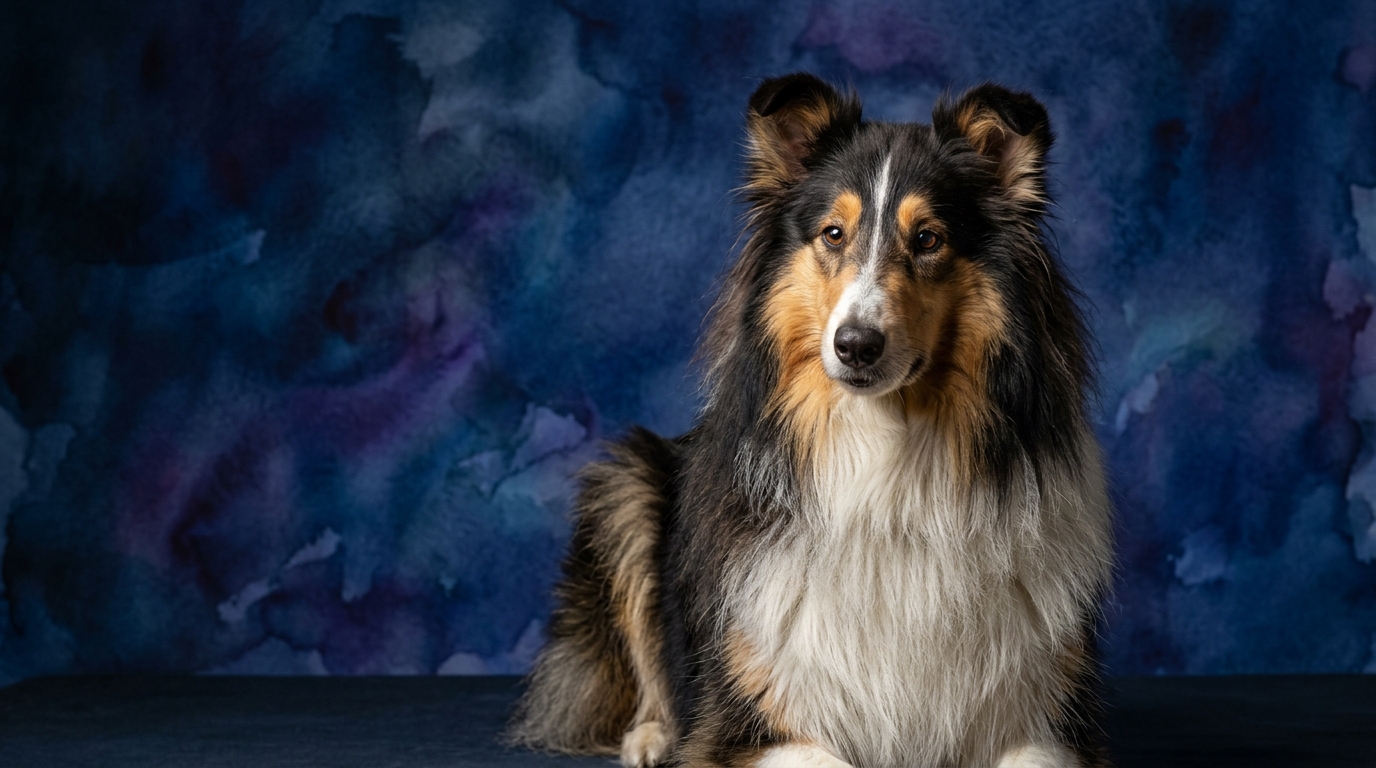
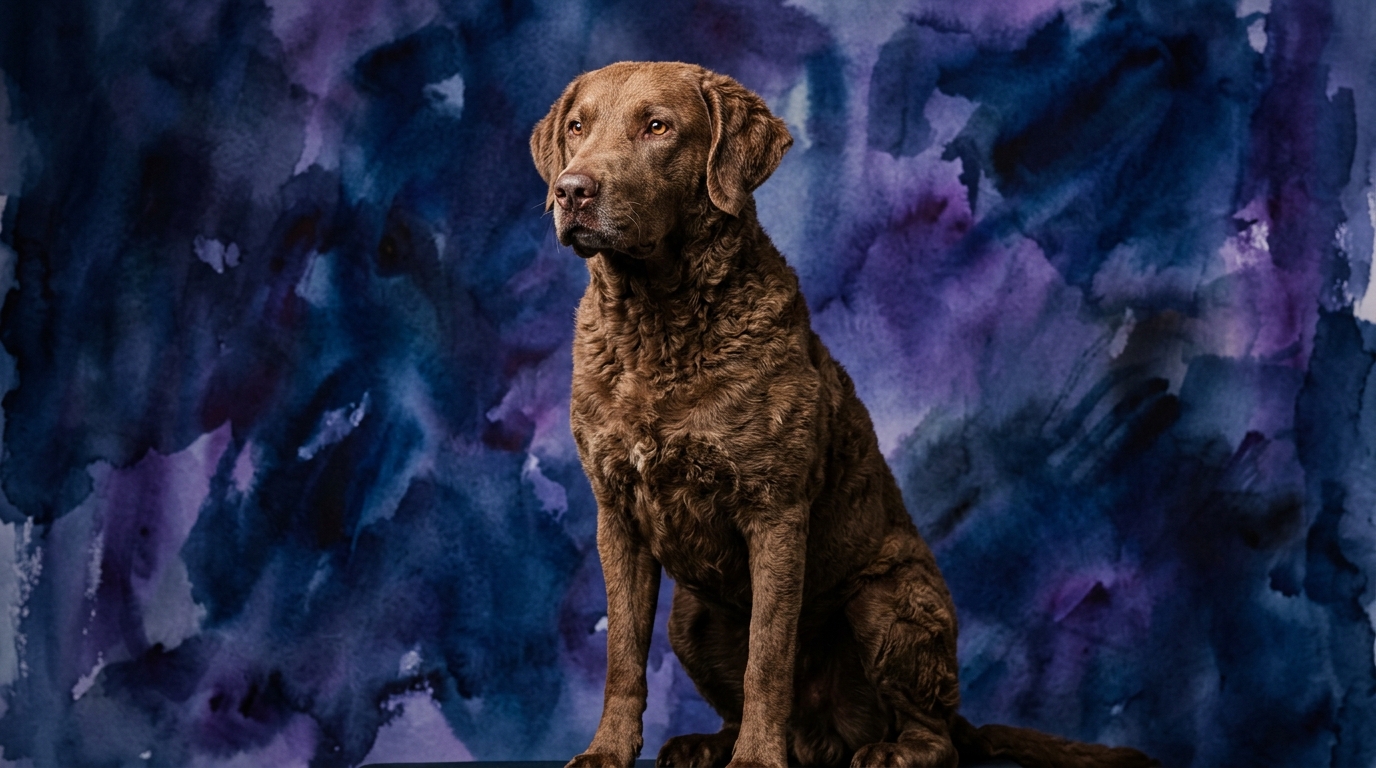
Side-by-Side IQ Profile: Collie (Rough) vs. Chesapeake Bay Retriever
The Cosmic Pet Pet IQ Lab employs a five-dimensional framework to assess canine intelligence, offering a granular view beyond simple rankings. For the Collie (Rough), ranked #16 by Coren, its profile includes a Problem Solving score of 4/5, Training Speed at 4/5, Social Intelligence at 3/5, Instinctive Drive at 3/5, and an impressive Memory score of 5/5.
Conversely, the Chesapeake Bay Retriever, Coren ranked #27, presents a very similar cognitive makeup: Problem Solving 4/5, Training Speed 4/5, Social Intelligence 3/5, Instinctive Drive 3/5, and a Memory score of 4/5. These closely aligned scores necessitate a deeper look into how each dimension manifests within their distinct breed roles and temperaments.
For the Collie (Rough), a Problem Solving score of 4/5 indicates a strong capacity for independent thought and adapting to novel situations, often applying learned patterns to new challenges within their environment. This aptitude stems from their herding lineage, where adapting to livestock movement and terrain required quick, on-the-spot decisions. Their Training Speed of 4/5 signifies a readiness to absorb and execute new commands with efficiency, picking up complex sequences and routines relatively quickly due to an eagerness to please and focus on their handler. A Social Intelligence of 3/5 suggests an average aptitude for understanding and responding to human emotional cues and social structures, often forming strong bonds within their immediate family, though interactions might be more reserved. An Instinctive Drive of 3/5 shows a moderate level of innate, purpose-driven behaviors, primarily expressed through their herding instincts, which is present but typically manageable. Finally, their exceptional Memory score of 5/5 means they stand out with an outstanding ability to retain information, including commands, routines, and experiences, over extended periods.
The Chesapeake Bay Retriever, with a Problem Solving score of 4/5, displays a solid capability for tackling challenges, particularly those related to their retrieving tasks, such as navigating complex terrain or strategizing to retrieve a fallen bird. Their resourcefulness is often applied to practical, goal-oriented scenarios. Their Training Speed of 4/5 means they learn new commands and tasks with good speed, often displaying a focused determination to master new skills, aided by an eagerness to work alongside their human partners. A Social Intelligence of 3/5 indicates a moderate understanding of social dynamics and human intentions, typically forming deep, loyal connections with their family members and observing their surroundings. Their Instinctive Drive of 3/5 exhibits a pronounced set of innate behaviors centered around their retrieving and water-fowling heritage, manifesting as a desire to fetch, carry, and work diligently. Their Memory score of 4/5 denotes a commendable capacity for remembering commands, procedures, and past events, allowing them to perform intricate retrieving sequences and recall specific locations, effectively serving their working roles.
Where Collie (Rough) Wins Cognitively
The Collie (Rough) distinguishes itself primarily through its superior memory score of 5/5, surpassing the Chesapeake Bay Retriever's 4/5. This exceptional recall means a Collie is likely to retain complex command sequences, elaborate routines, and previous training experiences with greater fidelity and for longer durations. For an owner, this translates into fewer refresher sessions and more consistent performance of learned behaviors, making them particularly reliable for intricate tasks or competitive obedience where precision over time is crucial.
Furthermore, the Collie (Rough)'s higher Coren rank (#16 vs. #27) suggests a broader cognitive agility and responsiveness to human directives, indicating they generally grasp new concepts with slightly less repetition and apply them more readily in varied contexts. This subtle difference in overall cognitive processing speed and memory retention provides the Collie with an edge in scenarios demanding sustained, nuanced application of learned intelligence. Their herding background also implies a cognitive structure geared towards understanding and manipulating group dynamics, a subtle form of problem-solving that might manifest differently than a retriever's focus on objects.
Where Chesapeake Bay Retriever Wins Cognitively
While sharing similar scores in problem-solving and training speed, the Chesapeake Bay Retriever's cognitive strengths are uniquely shaped by its demanding retrieving heritage. Its 4/5 problem-solving ability, coupled with its 3/5 instinctive drive, often manifests as a tenacious and resourceful approach to practical, goal-oriented challenges, especially those involving retrieving in difficult environments. A Chessie will apply its intellect with a rugged determination, showing exceptional perseverance in figuring out how to retrieve an object from dense cover or icy water, often demonstrating a self-directed ingenuity specific to its task.
This isn't just about understanding a command, but about the cognitive effort to overcome obstacles to fulfill its intrinsic drive. Their problem-solving is often less about abstract thought and more about efficient, persistent execution within a defined purpose, which can appear as a more robust, 'can-do' attitude in physically demanding situations. This focused application of their cognitive abilities, driven by their sporting instincts, gives them an advantage in tasks requiring resilience and independent problem-solving in challenging outdoor settings.
Which is Easier to Train and Why
Both breeds share a high training speed score of 4/5, indicating they are generally receptive and quick learners. However, the Collie (Rough) holds a distinct advantage in ease of training primarily due to its exceptional 5/5 memory and its higher Coren rank. A Collie's superior recall means that once a command or behavior is learned, it is deeply ingrained, requiring less reinforcement over time to maintain proficiency. This makes the training process feel more progressive and less prone to backsliding.
Furthermore, their herding instinct, while a drive, often manifests as a desire to work *with* their handler, responding to direction and subtle cues. The Chesapeake Bay Retriever, while also a fast learner, has a slightly lower memory score (4/5) and its instinctive drive is more singularly focused on retrieving, which can sometimes manifest as a stubborn independence or intense focus on its task. While trainable, a Chessie might require more consistent engagement to ensure behaviors are reliably performed outside of its primary drive, whereas the Collie's cognitive framework makes it inherently more inclined to follow and remember complex instructions, making the overall training journey smoother and more adaptable to varied disciplines.
Which Suits Active Owners vs. Relaxed Owners
For owners seeking a more relaxed, yet engaged, companion, the Collie (Rough) often presents a better fit. While they appreciate activity and mental stimulation, their instinctive drive of 3/5 is manageable and their herding impulses can be channeled into structured play or light exercise rather than constant, strenuous output. Their social intelligence, while average, often translates to a gentle presence within the home, content with companionship after a good walk or training session. They thrive on routine and mental challenges like puzzle toys, but don't typically demand relentless physical exertion.
In contrast, the Chesapeake Bay Retriever is unequivocally better suited for active owners. Their 3/5 instinctive drive, though numerically similar, is strongly tied to their robust retrieving heritage, demanding significant physical and mental outlets. Chessies require consistent, vigorous exercise, often involving swimming, fetching, and exploring varied terrains. Without sufficient engagement, their powerful drive and problem-solving abilities can manifest as boredom or destructive behaviors. Owners who enjoy outdoor adventures, hunting, or intense dog sports will find the Chessie an ideal, indefatigable partner, whereas a relaxed owner might struggle to meet their substantial needs for physical and purposeful activity.
The Verdict
Choose the Collie (Rough) if you prioritize a companion with exceptional memory and a refined capacity for learning complex, varied tasks, offering a generally smoother training experience and a more adaptable demeanor for family life.
Opt for the Chesapeake Bay Retriever if you are an active individual or family seeking a resilient, highly driven partner for outdoor adventures, water sports, or dedicated retrieving work, appreciating its robust problem-solving in practical, demanding environments.
🧠 Find Your Pet's IQ Score
Our Pet IQ Lab assessment covers 25+ tests across 5 cognitive dimensions — personalized to your breed.
Take the Full IQ Test →Frequently Asked Questions
Do both breeds require a similar amount of mental exercise?
While both possess strong problem-solving skills, the Collie (Rough) benefits greatly from varied mental challenges, training, and social interaction to keep its sharp memory engaged. The Chesapeake Bay Retriever also needs mental stimulation, but often prefers it channeled into purposeful activities like retrieving games, scent work, or navigating challenging outdoor environments.
How do their social intelligence scores of 3/5 impact their family life?
A 3/5 social intelligence score means both breeds are generally capable of forming strong bonds and understanding family dynamics, though they might not be as overtly expressive or universally outgoing as some other breeds. Collies tend to be gentle and observant within their family unit, while Chessies often display a loyal, sometimes reserved, devotion to their inner circle.
Given their similar training speed, what's the key difference for a first-time dog owner?
For a first-time owner, the Collie (Rough)'s superior memory and slightly higher Coren rank would likely make the initial training process feel more forgiving and progressive, as concepts stick more readily. The Chesapeake Bay Retriever, while a fast learner, demands an owner who can consistently channel its powerful, task-oriented drive and manage its independent streak.