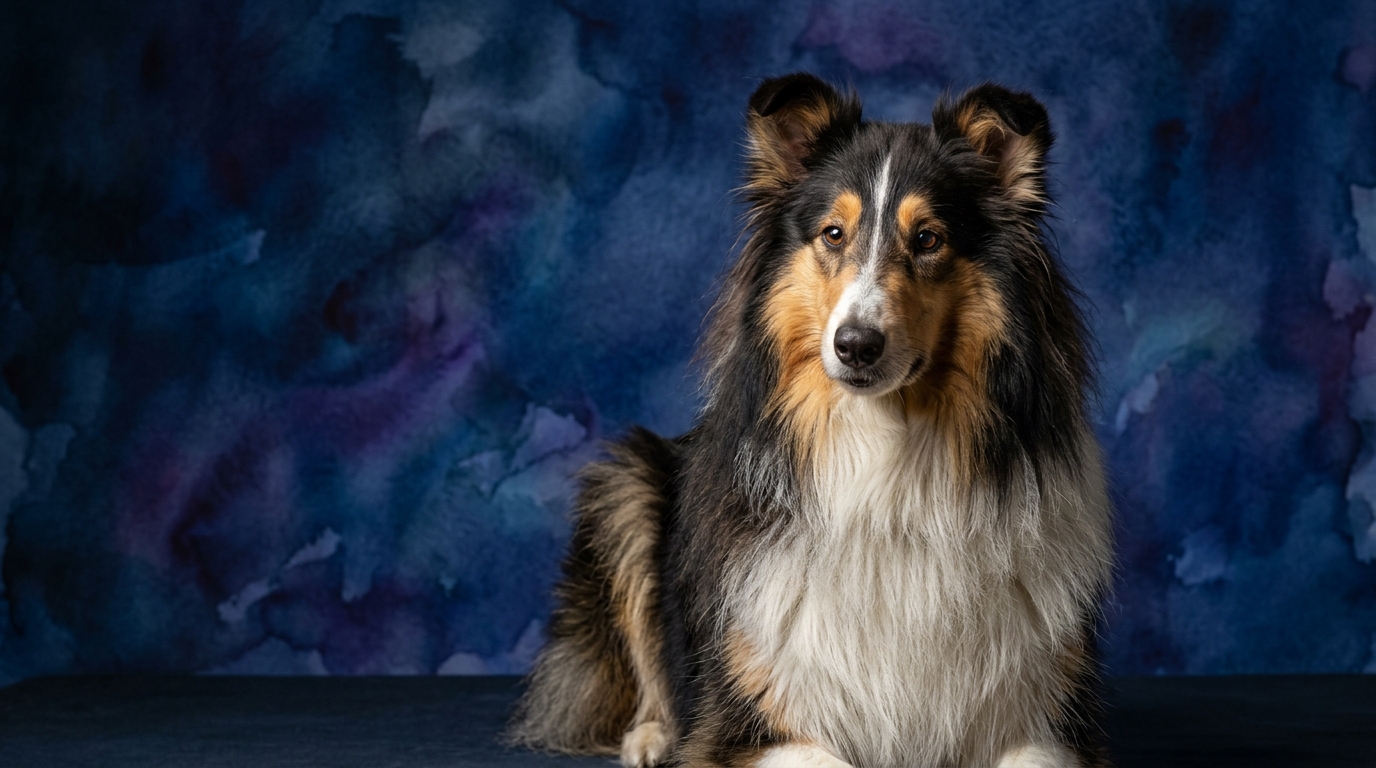
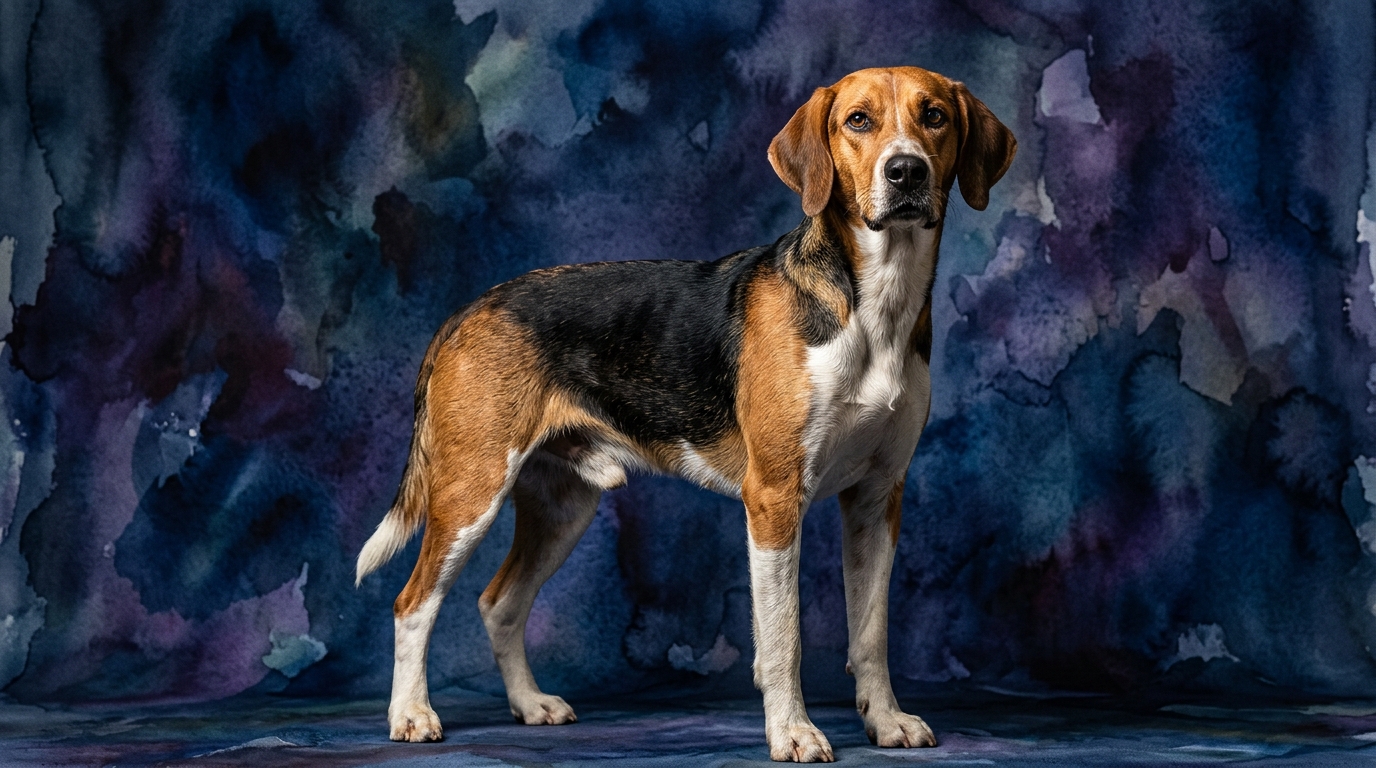
Side-by-Side IQ Profile: Collie (Rough) vs. English Foxhound
The Cosmic Pet Pet IQ Lab employs a multi-dimensional framework to assess canine cognitive abilities, moving beyond a single 'smartness' score. For the Collie (Rough), we observe a strong aptitude for problem solving (4/5), indicating an ability to navigate complex situations and learn solutions effectively. Their training speed (4/5) is notably rapid, suggesting they grasp new commands and routines with relative ease. Social intelligence registers at 3/5, reflecting a balanced understanding of human cues and pack dynamics. Instinctive drive, specifically for herding tasks, is also 3/5, while their memory stands out at an impressive 5/5, allowing for exceptional retention of learned information and sequences.
In contrast, the English Foxhound presents a profile more aligned with their heritage as independent hunters. Their problem-solving ability is rated at 3/5, suggesting competence in practical, field-specific challenges rather than abstract puzzles. Training speed is a moderate 3/5, implying a steady but perhaps less immediate uptake of new commands. Social intelligence is also 3/5, often focused on pack interaction and less on intricate human-dog communication. Instinctive drive, particularly for scent tracking, is a robust 3/5, guiding much of their behavior. Their memory is assessed at 3/5, indicating an average capacity for recall compared to breeds with higher scores.
Where the Collie (Rough) Excels Cognitively
The Collie (Rough)'s cognitive strengths are particularly evident in structured environments and tasks requiring sequential processing and recall. Their Coren rank of #16 among working breeds underscores a general aptitude for obedience and task learning. The exceptional memory score of 5/5 means Collies excel at retaining complex sequences of commands, routines, and specific cues, making them highly adept at advanced obedience, agility, or even theatrical performances where precision and consistent recall are paramount. This robust memory allows them to build a vast repertoire of learned behaviors and apply them reliably.
Furthermore, their problem-solving ability (4/5) is geared towards understanding and executing multi-step tasks, a direct reflection of their herding origins where anticipating livestock movement, navigating obstacles, and responding to handler signals are crucial. This isn't just about learning tricks; it's about applying learned principles to new, similar challenges. A Collie might quickly understand how to open a specific gate latch after seeing it once, or adjust its herding pattern based on subtle changes in livestock behavior. Their capacity for rapid training (4/5) complements this, allowing handlers to quickly impart new skills and refine existing ones, fostering a highly responsive and cooperative working relationship.
Where the English Foxhound Excels Cognitively
While not rated for traditional obedience in the same vein as a Collie, the English Foxhound's cognitive prowess is profoundly specialized, shaped by centuries of independent hunting. Their strength lies not in human-directed compliance, but in their highly developed sensory processing and autonomous decision-making in the field. The instinctive drive (3/5) is intensely focused on scent-tracking, demanding sustained concentration and the ability to interpret complex olfactory information over long distances, often through varied and challenging terrain. This involves a unique form of problem-solving (3/5) – not for abstract puzzles, but for deciphering a scent trail, navigating environmental obstacles, and making independent choices to follow a quarry, often without direct human instruction.
An English Foxhound's cognitive success is measured by its ability to persist on a scent, differentiate between trails, and utilize its environment to its advantage during a hunt. Their social intelligence (3/5) is often geared towards effective pack dynamics, allowing them to cooperate seamlessly with other hounds, communicating through barks and body language to maintain the integrity of the hunt. This specialized intellect means they possess a deep understanding of their primary 'job,' making sophisticated inferences from scent and environmental cues that are largely imperceptible to humans. Their memory (3/5) in this context is geared towards remembering successful hunting strategies and familiar territories, rather than a vast array of human commands.
Training Dynamics: Which is Easier to Train and Why
When it comes to ease of training, the Collie (Rough) generally holds an advantage due to their cognitive profile. Their high training speed (4/5) and exceptional memory (5/5) mean they grasp new commands and sequences quickly and retain them reliably. Collies were bred to work in close cooperation with humans, responding to complex verbal and visual cues to manage livestock. This inherent desire for cooperation, coupled with their problem-solving abilities, makes them eager to learn and responsive to positive reinforcement. They thrive on having a 'job' and excel in structured training environments, often anticipating their handler's next instruction.
The English Foxhound, while capable of learning, presents a different training challenge. Their moderate training speed (3/5) and average memory (3/5) mean that learning new commands may take more repetition and patience. Crucially, their strong instinctive drive (3/5) for scent work can often override a desire for human-directed obedience. When a captivating scent is present, a Foxhound's focus can become singularly devoted to tracking, making it appear 'stubborn' or 'distracted' to an owner. Training a Foxhound requires a deep understanding of their motivations, often leveraging their love of scent in scent games or working closely with their natural drives rather than against them. Consistency and high-value rewards are key to capturing and maintaining their attention, as their independent nature means they are less inherently inclined to seek constant human approval compared to the Collie.
Owners and Lifestyles: Active vs. Relaxed Suitability
The Collie (Rough) typically suits owners who appreciate and can provide consistent mental engagement alongside physical activity. While they enjoy exercise, their needs extend beyond just physical exertion; they thrive on structured activities that challenge their problem-solving (4/5) and memory (5/5) capabilities. Owners who enjoy dog sports like agility, obedience, rally, or even advanced trick training will find a highly cooperative and enthusiastic partner in a Collie. They require regular interaction, mental puzzles, and opportunities to use their cognitive skills, making them ideal for owners who are actively involved in their dog's learning and development, rather than just providing basic care. They can adapt to various living situations, provided their mental and moderate physical exercise needs are met.
The English Foxhound, conversely, is best suited for owners who can accommodate a significant need for physical exercise, particularly opportunities to engage their powerful scent drive. While they can be relaxed and affectionate indoors after sufficient activity, their deep-seated instinctive drive (3/5) demands outlets for running and tracking. This means long, vigorous walks, secure off-leash areas for exploration (where safe), or participation in scent work or tracking sports are essential. Owners who enjoy extensive outdoor activities like hiking, jogging, or have access to large, fenced properties will find a compatible companion. A more 'relaxed' owner who cannot provide these outlets may find a Foxhound becoming restless or engaging in undesirable behaviors born from boredom and unfulfilled instincts. Their independence means they don't constantly demand human attention but do require specific outlets for their energy and drives.
The Verdict
Choose the Collie (Rough) if you seek a highly cooperative, mentally agile companion for structured tasks, advanced training, and a deep, responsive bond. They thrive on engagement and relish opportunities to use their impressive memory and problem-solving skills.
Opt for the English Foxhound if you appreciate an independent spirit, can provide extensive physical outlets for their potent scent drive, and value a dog with deep-seated traditional hunting instincts. They offer a unique partnership for those who understand and respect their specialized cognitive strengths.
🧠 Find Your Pet's IQ Score
Our Pet IQ Lab assessment covers 25+ tests across 5 cognitive dimensions — personalized to your breed.
Take the Full IQ Test →Frequently Asked Questions
Is the English Foxhound genuinely less capable of learning than a Collie?
No, the English Foxhound isn't less capable of learning, but their learning style and priorities differ significantly. While a Collie excels in human-directed, cooperative tasks, a Foxhound's intellect is geared towards independent problem-solving in a scent-driven environment, making their training experience distinct.
How does the Collie's memory specifically manifest in daily life?
A Collie's exceptional memory means they quickly recall commands, routines, and even specific locations or people, making them highly predictable and reliable companions. They might remember complex sequences of actions, like a multi-step fetch game, or specific house rules learned long ago, making them adaptable and easy to live with.
What kind of 'problem-solving' is typical for an English Foxhound?
English Foxhounds typically excel at practical, sensory-based problem-solving, such as deciphering a complex scent trail through varied terrain or navigating obstacles during a pursuit. Their problem-solving is less about abstract puzzles and more about applying innate instincts and learned environmental cues to achieve their goal of tracking a scent.