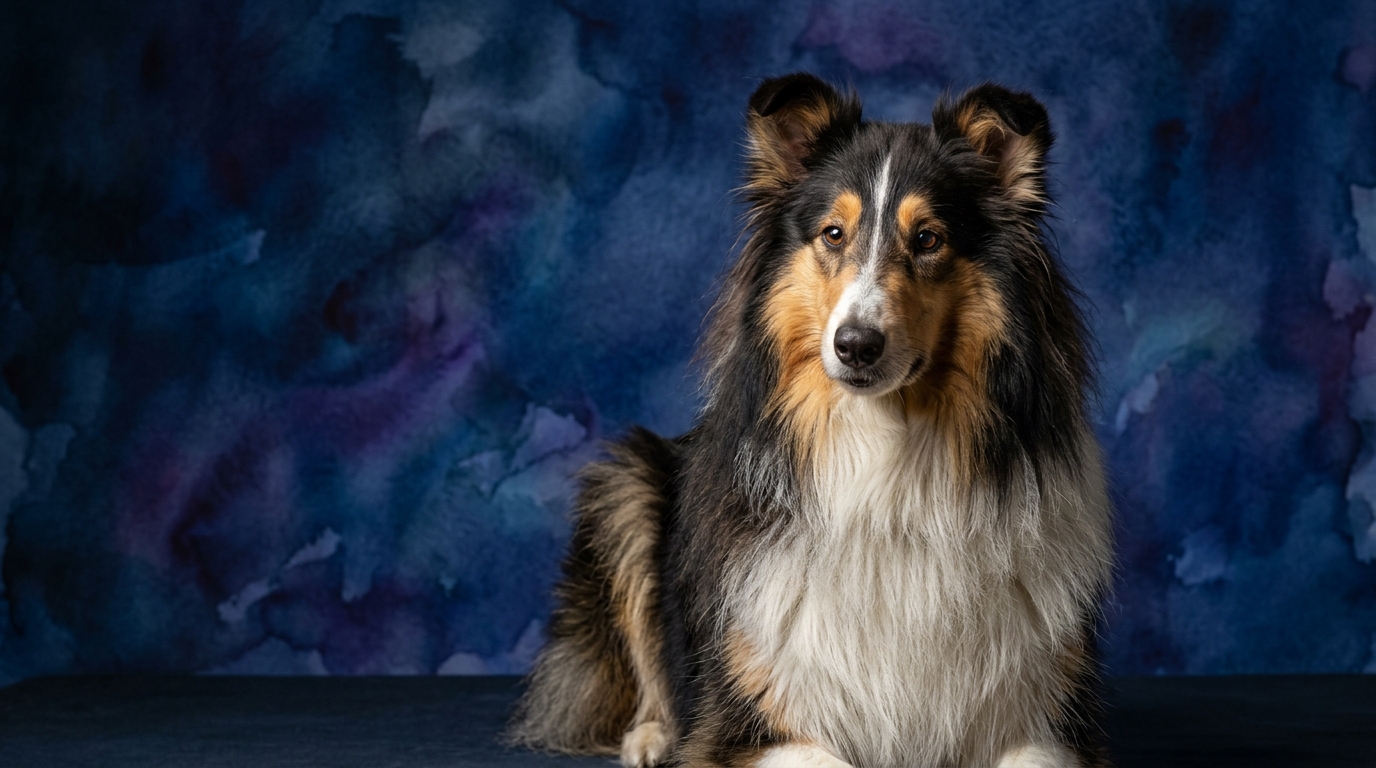
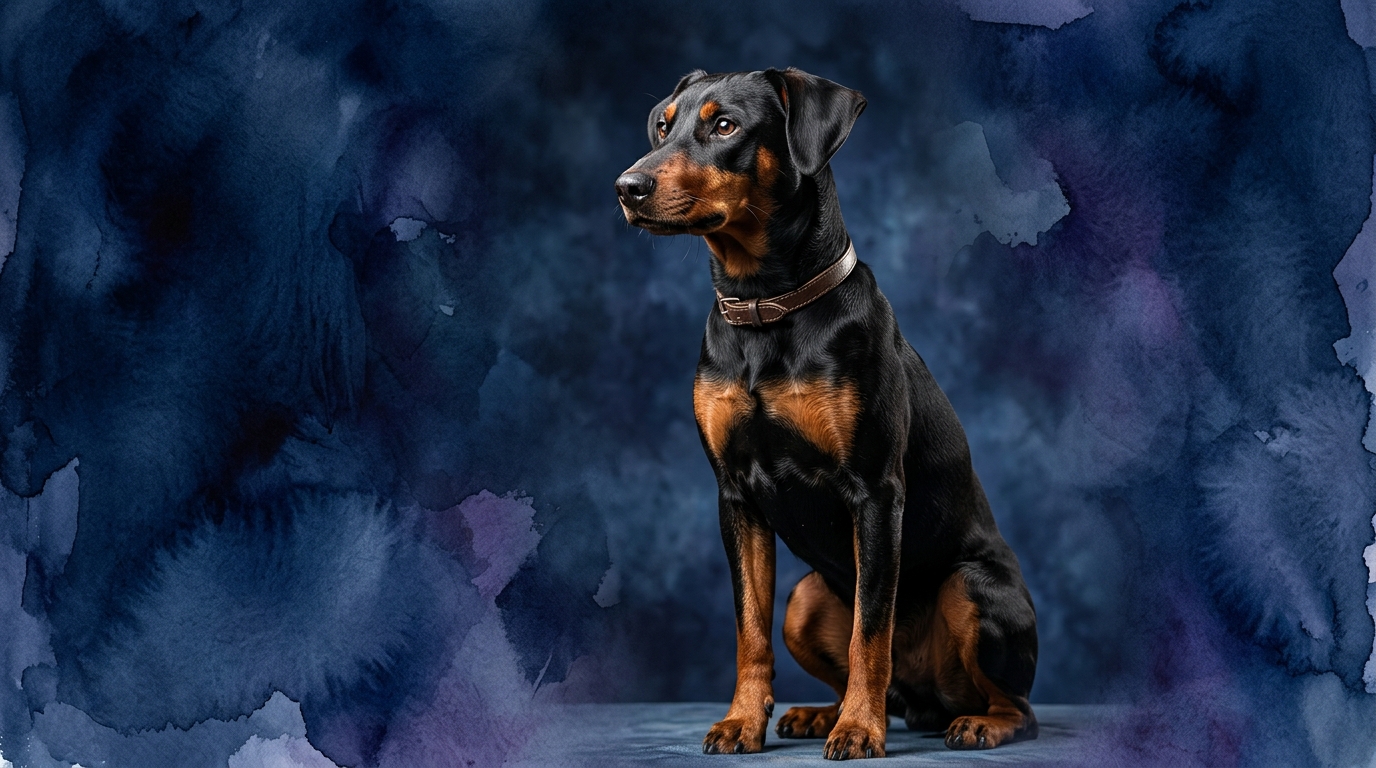
Side-by-Side IQ Profiles: Collie (Rough) vs. German Pinscher
The Cosmic Pet Pet IQ Lab employs a five-dimensional framework to assess canine intelligence, offering a granular view beyond simple rankings. For the Collie (Rough), a breed historically tasked with complex livestock management, this framework highlights a sophisticated cognitive makeup. Their Problem Solving is rated 4/5, indicating an ability to navigate novel situations and devise solutions with considerable ingenuity. Training Speed also scores 4/5, reflecting a capacity to grasp and internalize new commands and behaviors efficiently. Social Intelligence stands at 3/5, suggesting a balanced understanding of human and canine cues, while their Instinctive Drive is likewise 3/5, demonstrating a moderate, manageable intrinsic motivation for their breed-specific tasks. A standout feature for the Collie (Rough) is their Memory, achieving an impressive 5/5, pointing to an exceptional ability to recall learned information and experiences over time.
In contrast, the German Pinscher, originating as a versatile farm dog and vermin catcher, presents a more uniformly balanced cognitive profile within the IQ Lab metrics. Their Problem Solving is rated 3/5, indicating a practical, direct approach to challenges, relying on learned patterns rather than complex abstraction. Training Speed also scores 3/5, suggesting they learn at a steady pace, requiring clear and consistent instruction. Like the Collie (Rough), their Social Intelligence is 3/5, enabling effective interaction within their human families and with other dogs. Their Instinctive Drive is also 3/5, reflecting a purposeful, but not overwhelming, internal motivation for activity and engagement. The German Pinscher's Memory is rated 3/5, signifying a solid capacity for recall, though perhaps not with the same depth and retention for intricate sequences as the Collie (Rough).
Where the Collie (Rough) Excels Cognitively
The Collie (Rough)'s cognitive architecture shines brightest in areas demanding intricate recall and adaptive problem-solving, directly influenced by their historical herding duties. Their exceptional 5/5 Memory score means they can master multi-stage commands and complex routines with remarkable retention, remembering sequences of actions or the locations of objects even after long periods. This superior memory allows them to build vast vocabularies of commands and generalize learned behaviors across different environments, making them adept at advanced obedience, agility, and even service work where precise recall is paramount. An owner might observe a Collie (Rough) effortlessly executing a ten-step routine or remembering a specific toy's hiding spot from weeks prior.
Furthermore, their 4/5 Problem Solving ability, coupled with their memory, enables them to analyze and adapt to dynamic situations. When faced with a new obstacle or a change in a familiar routine, the Collie (Rough) is more likely to pause, assess, and devise a strategy rather than simply resorting to brute force or immediate trial-and-error. This translates into a dog that can figure out how to open a gate, navigate a complex puzzle toy with multiple steps, or even anticipate a handler's next move in a cooperative task. Their Herding group background fostered a mind capable of orchestrating movement and understanding spatial relationships, a cognitive strength that extends beyond sheep to everyday challenges.
Where the German Pinscher Excels Cognitively
While the German Pinscher's IQ scores might appear more moderate across the board, their cognitive strengths lie in a different, equally valuable domain: a robust, practical intelligence geared towards efficiency and vigilance. Their 3/5 Instinctive Drive, while not as high as some working breeds, represents a focused eagerness to engage in purposeful activity without becoming overly obsessive or easily distracted. This allows them to commit consistently to tasks, whether it's learning a new trick or patrolling the yard, exhibiting a tenacity that ensures follow-through. They are less prone to overthinking and instead apply a direct, consistent effort to achieve objectives, a trait invaluable for tasks requiring straightforward application rather than abstract reasoning.
The German Pinscher's balanced 3/5 scores in Problem Solving, Training Speed, and Memory converge to create a highly dependable and resilient learner. They may not devise the most novel solutions, but they will reliably apply learned methods. Their cognitive strength lies in their steadfastness; once a command or routine is understood through clear, consistent training, they will perform it dependably. This breed excels in roles where alertness and a direct response are key, such as guarding or active companionship. An owner will appreciate their straightforward approach to learning and their consistent application of learned behaviors, making them a reliable partner once the foundation is established, embodying a no-nonsense, practical intelligence.
Training Dynamics: Which is Easier to Train?
When it comes to ease of training, the Collie (Rough) generally holds an advantage due to their superior Training Speed (4/5) and exceptional Memory (5/5). Their capacity to quickly grasp new concepts and retain them long-term means fewer repetitions are needed for a command to become ingrained. A Collie (Rough) is more likely to generalize a learned behavior, understanding that 'sit' means to sit regardless of the location or distractions. This allows owners to progress rapidly through obedience levels, tackle complex trick training, or engage in dog sports that demand a vast repertoire of precise behaviors. Their problem-solving ability also helps them understand the *purpose* behind commands, leading to a more willing and engaged participation in training sessions.
The German Pinscher, with a Training Speed of 3/5, requires a more consistent and patient approach. They will certainly learn, but owners should be prepared for more repetition and a structured training environment to solidify new commands. Their 3/5 Memory means they absorb information, but perhaps not with the same immediate, deep retention as a Collie (Rough), necessitating regular refreshers. While they possess a moderate Instinctive Drive (3/5) that makes them eager to work, their learning style benefits from clear, unambiguous instructions and positive reinforcement delivered consistently. They might not pick up on subtle cues as quickly, but once a behavior is learned through methodical practice, it tends to be very reliable, making them steadfast companions for owners who appreciate a direct and predictable training journey.
Lifestyle Match: Active vs. Relaxed Owners
For owners seeking a mentally stimulating partnership and an active lifestyle, the Collie (Rough) presents a compelling choice. Their high Problem Solving (4/5) and Memory (5/5) demand regular intellectual engagement beyond just physical exercise. They thrive on activities that challenge their minds, such as advanced obedience, rally, agility, or even scent work and puzzle toys. While their Instinctive Drive is a moderate 3/5, indicating they are not hyperactive, they require consistent mental stimulation to prevent boredom and channel their cognitive strengths constructively. An ideal owner for a Collie (Rough) enjoys teaching new things, participating in dog sports, or simply engaging in thoughtful interactions that leverage their capacity for learning and recall.
The German Pinscher, with its balanced 3/5 scores across most cognitive dimensions and a moderate Instinctive Drive (3/5), suits owners who appreciate a purposeful, engaged companion without the need for constant, high-level intellectual challenges. They are energetic and require daily physical activity – walks, runs, and playtime are essential – but their cognitive needs are met through consistent training, clear routines, and opportunities to apply their natural vigilance and tenacity. They can excel in activities like agility or earthdog trials, which satisfy their working heritage, but they are equally content with a stable home life, a predictable schedule, and an owner who provides consistent leadership and clear expectations. They thrive with owners who enjoy structured engagement and appreciate a dog that is alert and ready for action, but not necessarily seeking to outsmart the household.
The Verdict
Choose the Collie (Rough) if you desire a highly trainable companion with exceptional memory, eager for complex mental challenges and a nuanced partnership in activities like advanced obedience or dog sports.
Opt for the German Pinscher if you prefer a steadfast, alert companion with a practical intelligence, thriving on consistent training, clear routines, and purposeful engagement in a moderately active household.
🧠 Find Your Pet's IQ Score
Our Pet IQ Lab assessment covers 25+ tests across 5 cognitive dimensions — personalized to your breed.
Take the Full IQ Test →Frequently Asked Questions
How does Coren ranking relate to the Pet IQ Lab scores?
The Coren ranking primarily assesses 'working and obedience intelligence' based on the number of repetitions for a new command and the success rate of obeying the first command. The Pet IQ Lab provides a more granular view across five distinct cognitive dimensions, offering a broader understanding of a breed's overall mental profile beyond just obedience.
Do these IQ scores mean one breed is 'better' than the other?
No, these scores indicate different cognitive strengths and learning styles, not overall superiority. A higher score in one area simply means that breed is predisposed to excel in tasks requiring that specific mental faculty, making them better suited for certain lifestyles or activities than others.
Can a German Pinscher learn complex tasks despite its 3/5 Problem Solving and Memory?
Absolutely. While a German Pinscher might require more repetition and consistent reinforcement than a Collie (Rough), they are perfectly capable of learning complex tasks. Their practical intelligence means they will reliably perform learned behaviors once adequately trained, emphasizing consistency and clear communication in the training process.