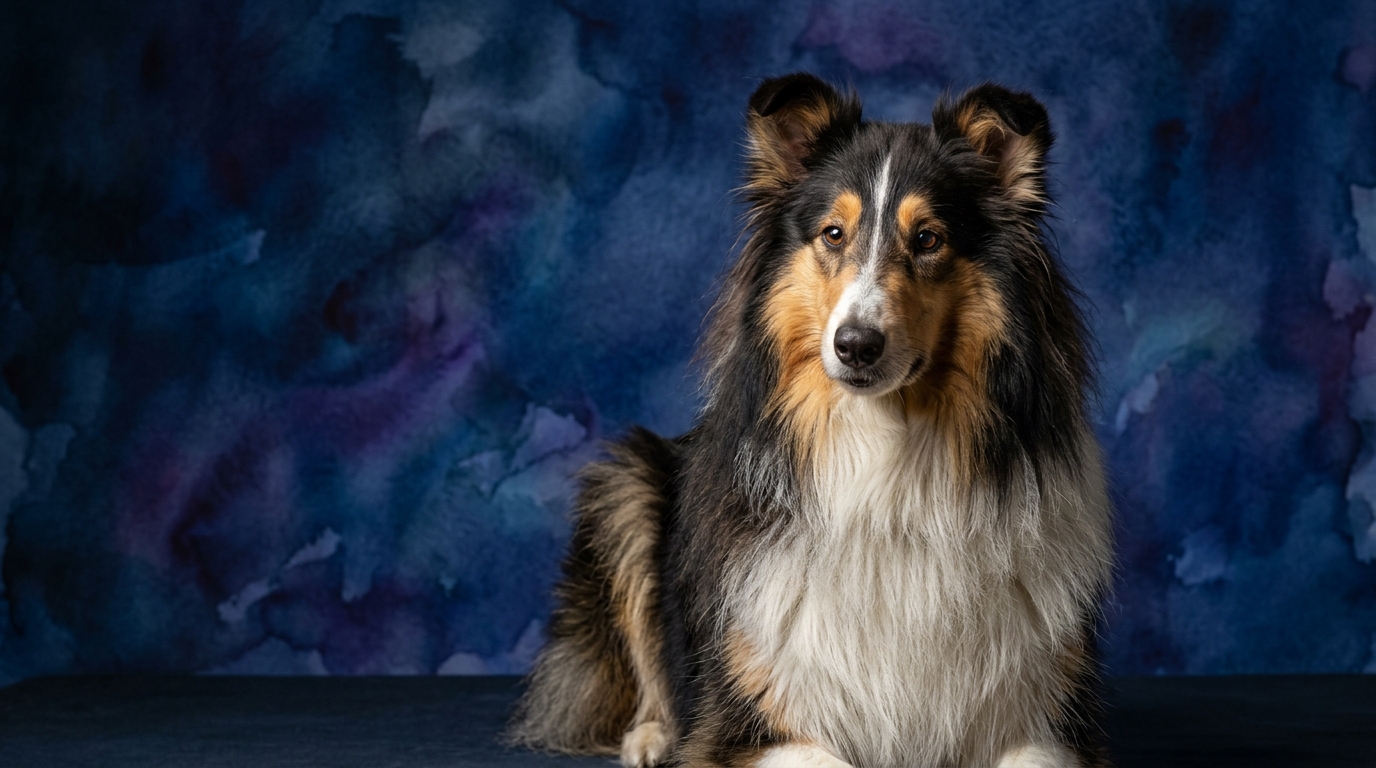
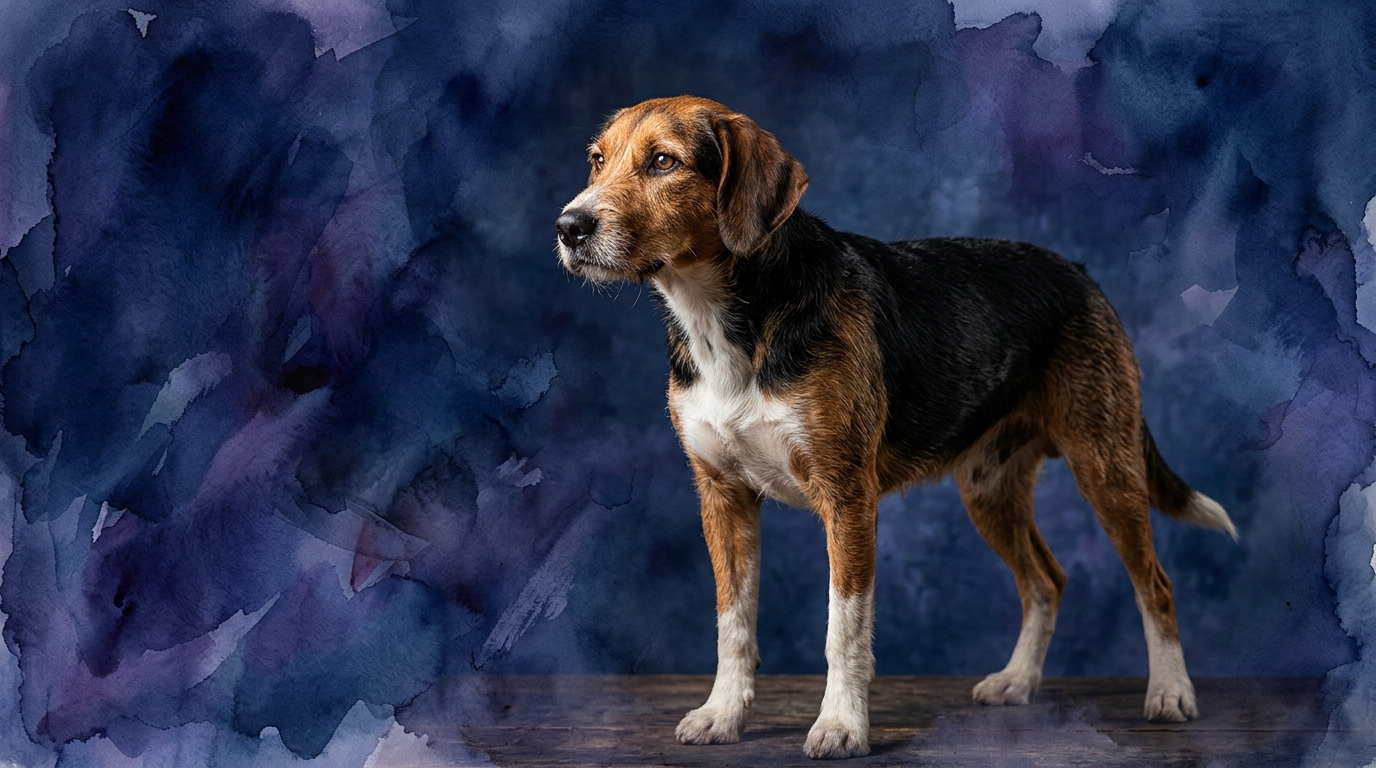
Side-by-Side IQ Profile: Herding Brains vs. Hound Minds
The Cosmic Pet Pet IQ Lab provides a structured framework for understanding canine cognition across five key dimensions. For the Collie (Rough), a breed with a Coren rank of #16, their profile highlights considerable mental prowess: Problem Solving 4/5, Training Speed 4/5, Social Intelligence 3/5, Instinctive Drive 3/5, and Memory 5/5. This suggests a dog adept at complex tasks, quick to learn, and possessing an exceptional capacity for recall.
In contrast, the Harrier, a hound breed not listed in Coren's ranking, presents a more balanced, yet distinct, cognitive picture: Problem Solving 3/5, Training Speed 3/5, Social Intelligence 3/5, Instinctive Drive 3/5, and Memory 3/5. While these scores indicate a capable and adaptable companion, they suggest a mind that operates with a different set of priorities, perhaps emphasizing persistence and sensory input over intricate strategic planning or rapid-fire learning.
Where the Collie (Rough) Wins Cognitively
The Collie (Rough)'s cognitive strengths shine brightest in areas demanding intricate thought and retention. Its Problem Solving score of 4/5 indicates a capacity to analyze novel situations and devise effective solutions, a trait honed by generations of herding work where outsmarting livestock requires more than brute force. This might manifest as quickly learning to open gates, figuring out how to retrieve a toy from a complex enclosure, or understanding multi-step commands without extensive repetition.
Furthermore, the Collie's exceptional Memory (5/5) is a significant cognitive advantage. This isn't just about remembering where the treats are; it extends to recalling sequences of events, specific training cues learned weeks ago, or the precise boundaries of their territory. Coupled with a Training Speed of 4/5, this means Collies can quickly grasp and retain new commands and routines, making them particularly responsive to consistent instruction and capable of mastering a wide repertoire of behaviors. Their ability to remember complex patterns and past interactions allows them to build a rich understanding of their environment and their human companions.
While its Social Intelligence and Instinctive Drive are rated at 3/5, the Collie's overall cognitive architecture positions it as a breed that can thrive on mental stimulation, enjoying activities that challenge its intellect and utilize its strong memory and problem-solving skills.
Where the Harrier Wins Cognitively
While the Harrier's individual scores might appear lower than the Collie's in some areas, its cognitive profile is perfectly adapted for its historical role as a scent hound, emphasizing tenacity, focused sensory processing, and cooperative effort. Its Instinctive Drive of 3/5, combined with its Problem Solving score of 3/5, means the Harrier is less likely to overthink a scent trail or second-guess its natural instincts. Instead, it commits to a task with a single-minded determination, following a scent with unwavering focus that can outlast many other breeds.
The Harrier's balanced cognitive scores, particularly its 3/5 in Social Intelligence, also highlight its suitability for pack dynamics. While not necessarily devising complex strategies, its ability to integrate effectively within a group, following cues from other hounds or hunters, is a distinct cognitive strength. This allows for seamless collaborative work in the field, where individual brilliance might be less critical than collective perseverance and synchronized action. Its moderate Memory (3/5) may also contribute to a certain resilience; a Harrier is less likely to dwell on past errors or become overly fixated on a failed pursuit, instead resetting its focus to the next scent with renewed vigor.
This breed's cognitive 'win' lies in its unwavering dedication to sensory tasks and its robust, resilient approach to problem-solving within its specialized domain. It excels at tasks requiring sustained effort, physical endurance, and the interpretation of a rich olfactory world, rather than abstract reasoning or complex obedience routines.
Which is Easier to Train and Why
When it comes to ease of training, the Collie (Rough) generally holds an advantage due to its higher scores in Training Speed (4/5), Problem Solving (4/5), and Memory (5/5). A Collie can typically grasp new commands more quickly and retain them over longer periods, requiring fewer repetitions. Their capacity for complex problem-solving also means they can generalize learned behaviors to new situations with greater ease, and they often enjoy the mental challenge of learning new tricks or advanced obedience routines. For instance, a Collie might understand the concept of 'fetch the red ball, then the blue rope' with relative quickness, remembering the specific objects and sequence.
The Harrier, with its 3/5 scores across Problem Solving, Training Speed, and Memory, requires a more patient and consistent approach to training. Harriers are often driven by their powerful scenting instincts, which can make them less immediately attentive to human commands, especially in stimulating environments. Training a Harrier often involves working with, rather than against, their natural drive; using scent games or incorporating tracking into their training can be highly effective. While they are certainly trainable, achieving the same level of precision and rapid learning as a Collie will typically demand more time, repetition, and creative motivation to hold their focus against the allure of a compelling scent.
Which Suits Active Owners vs. Relaxed Owners
The cognitive profile of the Collie (Rough) makes it an excellent match for owners who enjoy engaging in mentally stimulating activities and can provide consistent interaction. Its high problem-solving and memory capabilities mean it thrives on learning new skills, participating in dog sports like agility or obedience, and even engaging in 'brain games' that challenge its intellect. While they are active dogs, their mental energy often requires as much outlet as their physical energy. A Collie with an owner who provides regular mental puzzles and training sessions will be a more content and well-adjusted companion, whereas a lack of mental engagement could lead to boredom and potentially unwanted behaviors.
The Harrier, with its moderate problem-solving and memory but strong instinctive drive, is better suited for highly active owners who can meet its substantial physical exercise requirements. This breed was bred for endurance and following scent trails over long distances; therefore, daily vigorous exercise, such as long runs, hikes, or opportunities for off-leash exploration in secure areas, is crucial. While they are social and enjoy companionship (Social Intelligence 3/5), their primary need is for physical outlets that allow them to utilize their natural hound instincts. A Harrier will be happiest with an owner who enjoys an active outdoor lifestyle and can provide consistent opportunities for them to run, explore, and follow their nose, rather than focusing on intricate mental challenges.
The Verdict: When to Choose Each
The Verdict
Choose the Collie (Rough) if you seek a highly trainable companion keen on mental challenges, capable of learning complex routines, and thriving on intellectual engagement alongside regular physical activity.
Opt for the Harrier if you lead a very active lifestyle, prioritize robust physical exercise and outdoor adventures, and appreciate a tenacious, scent-driven companion that excels with consistent, instinct-aligned training.
🧠 Find Your Pet's IQ Score
Our Pet IQ Lab assessment covers 25+ tests across 5 cognitive dimensions — personalized to your breed.
Take the Full IQ Test →Frequently Asked Questions
Is the Collie (Rough) truly smarter than the Harrier?
Based on the provided IQ scores, the Collie (Rough) demonstrates higher aptitudes in problem-solving, training speed, and memory, suggesting a greater capacity for complex learning and retention in general contexts. The Harrier possesses a different cognitive makeup, optimized for its specific working role rather than broad intellectual tasks.
Can a Harrier be trained for complex tasks like a Collie?
While Harriers are certainly trainable, their lower scores in problem-solving and training speed mean they will typically require more patience, repetition, and creative motivation to master complex tasks compared to a Collie. Their strong instinctive drive can also make them more prone to distraction by scents, requiring focused training techniques.
Do both breeds require a lot of exercise?
Yes, both breeds require significant exercise, though the nature differs. Collies need both physical activity and substantial mental stimulation to prevent boredom. Harriers, bred for endurance hunting, demand extensive physical exercise, including opportunities to run and explore, to satisfy their high energy and instinctive drives.