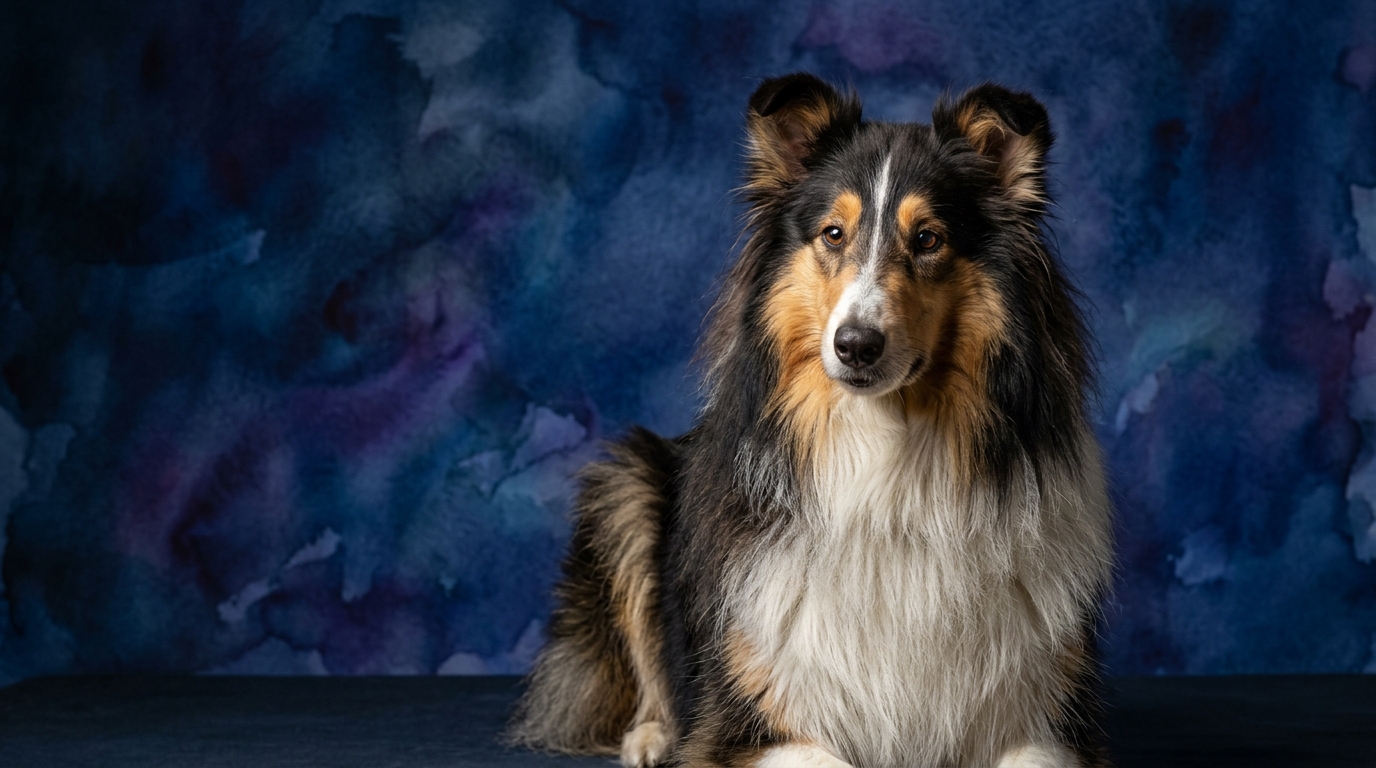
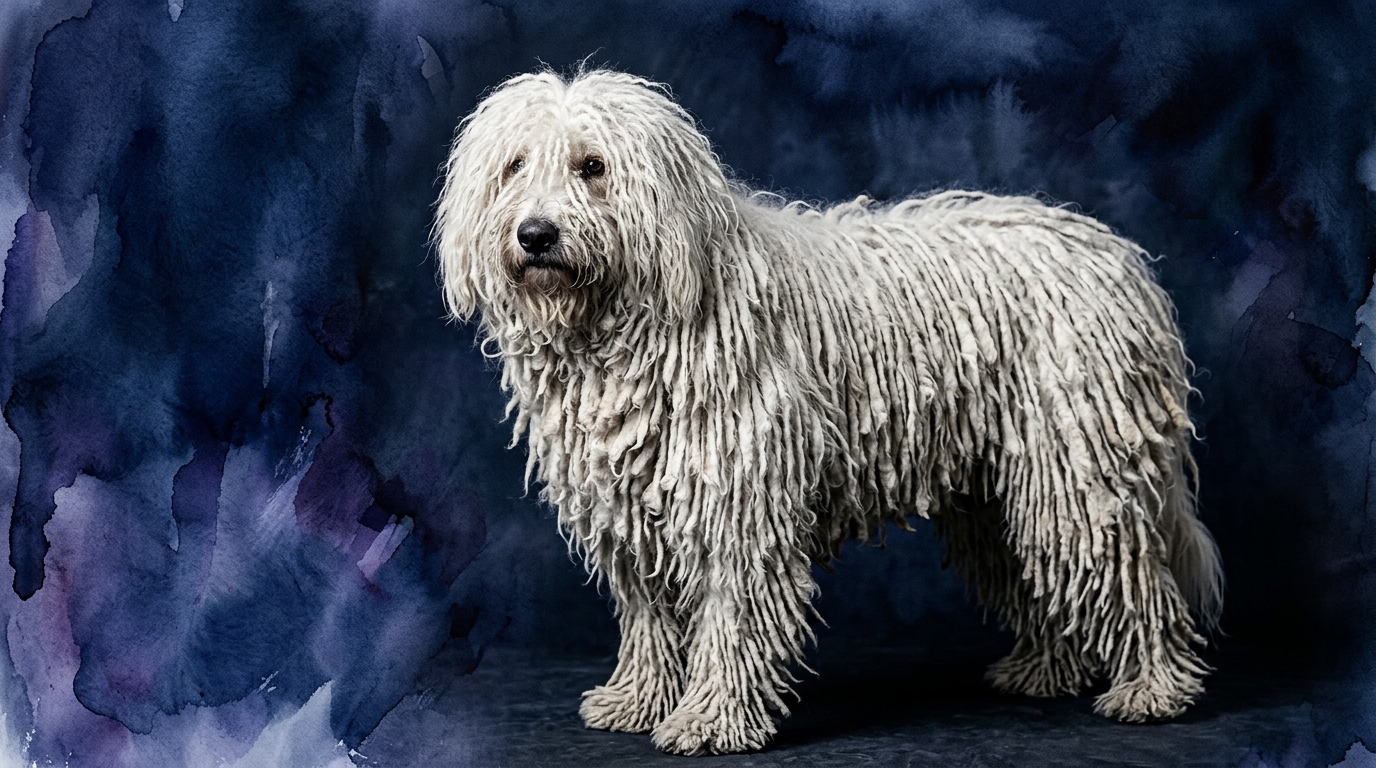
Side-by-Side IQ Profile: Herding Wit vs. Guardian Resolve
The Cosmic Pet Pet IQ Lab provides a five-dimensional cognitive framework to understand canine intelligence, offering insights beyond mere obedience. For the Collie (Rough), ranked #16 by Coren, their profile is marked by exceptional memory (5/5), strong problem-solving (4/5), and impressive training speed (4/5), reflecting their heritage as agile, responsive herders. Their social intelligence (3/5) and instinctive drive (3/5) are balanced, enabling complex interactions within a flock and with their handler without being overly independent.
In contrast, the Komondor, a Working group breed ranked #67 by Coren, presents a different cognitive landscape. Their scores across the board — problem-solving (3/5), training speed (3/5), social intelligence (3/5), instinctive drive (3/5), and memory (3/5) — indicate a more uniform, moderate cognitive style. This profile is consistent with their role as a livestock guardian, where independent judgment and steadfast watchfulness are prioritized over rapid, intricate command execution. Their intelligence is geared towards autonomous decision-making and a deep understanding of their territory and charges, rather than quick-fire obedience.
Understanding these foundational scores is crucial because they reveal the inherent predispositions and natural aptitudes of each breed. The Collie's higher scores in specific areas point to a mind built for dynamic, collaborative tasks, while the Komondor's balanced, moderate scores suggest a dog whose cognitive strengths lie in sustained vigilance and self-reliance, rather than quick learning of novel tricks. Neither profile is 'superior,' but rather optimized for very different life tasks and owner expectations.
Where the Collie (Rough) Wins Cognitively
The Collie (Rough) exhibits a clear cognitive advantage in tasks requiring rapid acquisition of new behaviors and the retention of complex sequences. Their 4/5 problem-solving score means they can quickly assess novel situations, such as navigating an agility course or figuring out a puzzle toy, and devise effective solutions. This ability is coupled with a 4/5 training speed, allowing them to grasp new commands and routines with fewer repetitions than many other breeds. A Collie is often processing information at a quicker pace, making connections between actions and consequences efficiently.
Perhaps the most striking cognitive strength of the Collie is their 5/5 memory. This exceptional recall is not just about remembering a 'sit' command; it extends to recalling intricate patterns of movement, understanding the layout of a large property, and remembering specific interactions with various individuals or animals. In a herding context, this memory allows them to anticipate flock movements, remember boundaries, and execute multi-part commands received from a distance, making them highly adaptable and reliable partners in complex, dynamic environments.
Their combined high scores in problem-solving, training speed, and memory mean Collies can excel in activities that demand sustained mental engagement, such as competitive obedience, rally, or even intricate trick training. They thrive on the challenge of learning and performing complex routines, demonstrating a cognitive flexibility and capacity for detailed recall that sets them apart from breeds with different working priorities. They are designed for a nuanced, communicative partnership.
Where the Komondor Wins Cognitively
While the Komondor's IQ scores may appear moderate across the board, their cognitive profile is profoundly optimized for their specific role as a livestock guardian. Their strength isn't in rapid learning or complex command sequences, but in an enduring, independent form of problem-solving (3/5) and a deep-seated instinctive drive (3/5) focused on protection. A Komondor's 'win' lies in their capacity for autonomous decision-making in threat assessment, a critical skill for a dog left alone to protect a flock.
Their moderate social intelligence (3/5) contributes to this independence; they are not overly eager to please or constantly seeking human direction. Instead, they are astute observers of their environment, capable of discerning normal from abnormal, and assessing potential threats with a calm, deliberate logic. This means they are less likely to be swayed by distractions or to misinterpret signals, making them reliable, steadfast guardians. Their problem-solving manifests as a patient, strategic approach to protecting their charges, rather than a quick, reactive one.
Furthermore, the Komondor's memory (3/5) is sufficient for remembering their territory, their flock, and identifying familiar individuals, allowing them to consistently fulfill their guardian duties over extended periods without constant human reinforcement. Their cognitive strengths are rooted in self-sufficiency, unwavering commitment to their role, and the ability to make sound, independent judgments, which is a specialized form of intelligence that serves its purpose admirably in the field.
Which Is Easier to Train and Why
Based on their IQ profiles, the Collie (Rough) is generally easier to train for a wide range of obedience and advanced tasks compared to the Komondor. The Collie’s 4/5 training speed means they pick up new commands quickly, often requiring fewer repetitions and responding well to positive reinforcement methods. Their exceptional 5/5 memory allows them to retain these commands and complex routines over long periods, making training sessions productive and progressive. Real behavioral differences include a Collie's eager willingness to engage and work collaboratively with their handler, often seeking guidance and approval.
The Komondor, with a training speed of 3/5, requires a more patient and consistent approach. Their independence, a crucial trait for a guardian dog, means they are not inherently driven to perform for human approval in the same way a Collie might be. Training a Komondor often involves convincing them that a command is worthwhile and makes sense within their world, rather than simply expecting rote compliance. They may question commands or take longer to process them, reflecting their inherent inclination to make their own decisions.
Therefore, while both breeds are capable of learning, the Collie's cognitive wiring makes them more amenable to traditional obedience training and sports, thriving on the mental stimulation and partnership. The Komondor's training requires an understanding of their guardian instincts, focusing on clear boundaries, early socialization, and consistent, fair leadership to channel their independent nature effectively, rather than attempting to override it completely. Owners must appreciate that the Komondor's learning curve is often slower and requires more nuanced communication.
Which Suits Active Owners vs. Relaxed Owners
The Collie (Rough) is an excellent match for active owners who are eager to engage with their dog's sharp mind and energetic body. Their higher problem-solving and training speed mean they thrive on mental stimulation through training, puzzle toys, and learning new skills. Owners who enjoy dog sports like agility, obedience, rally, or even advanced trick training will find a willing and capable partner in a Collie. Their need for consistent engagement aligns well with an owner who enjoys daily interactive play and regular outings, providing both physical and cognitive outlets.
For owners with a more relaxed lifestyle, or those seeking a truly independent companion, the Komondor presents a unique fit. While they still require exercise and basic training, their cognitive profile suggests they are less demanding of constant interactive mental stimulation from their owner. A Komondor is often content to observe and patrol their territory, fulfilling their instinctive drive for guardianship. Owners who appreciate a dog with a strong sense of self, who can be relied upon for watchful presence rather than constant interaction, might find the Komondor a harmonious companion.
However, 'relaxed' for a Komondor owner does not equate to 'hands-off.' They require an owner who understands and respects their independent nature, providing clear boundaries and early, consistent socialization to ensure their guardian instincts are properly channeled. They are not a dog for the first-time owner or someone unwilling to commit to their unique needs for space and purpose. An active Komondor owner might be someone who manages a farm and requires their dog to fulfill its natural guarding role, rather than someone seeking a jogging partner.
The Verdict
Choose a Collie (Rough) if you desire a responsive, collaborative companion eager for training, dog sports, and daily mental challenges, thriving on a close, communicative partnership.
Opt for a Komondor if you value an independent, watchful guardian with a calm, self-reliant nature, and you are prepared to respect their unique cognitive style and slower, deliberate approach to interaction and training.
🧠 Find Your Pet's IQ Score
Our Pet IQ Lab assessment covers 25+ tests across 5 cognitive dimensions — personalized to your breed.
Take the Full IQ Test →Frequently Asked Questions
Do Collies (Rough) require a lot of mental stimulation?
Yes, Collies (Rough) benefit significantly from regular mental stimulation due to their high problem-solving and memory scores. They thrive on learning new commands, engaging with puzzle toys, and participating in dog sports that challenge their cognitive abilities, preventing boredom and potential behavioral issues.
Is the Komondor difficult to train for basic obedience?
Training a Komondor for basic obedience requires patience and consistency, as their moderate training speed and independent nature mean they may take longer to grasp commands. They respond best to clear, fair leadership and positive reinforcement, often needing to understand the 'why' behind a command rather than simply complying.
Which breed is better for a family with young children?
The Collie (Rough), with its more amenable social intelligence and eagerness to please, is generally a more suitable choice for families with young children, often forming strong bonds and being gentle companions. The Komondor's independent and protective nature, while loyal, may require more careful management and socialization around children due to their guardian instincts.