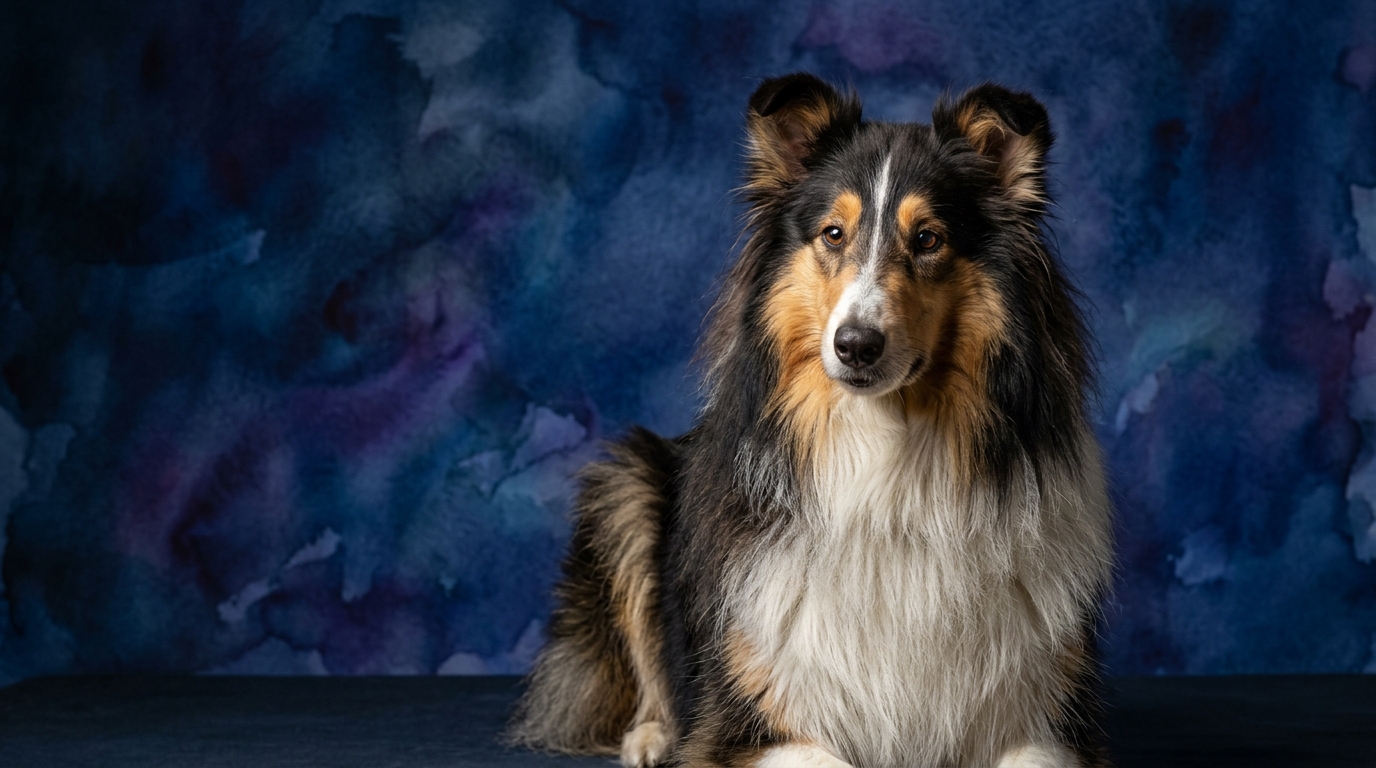
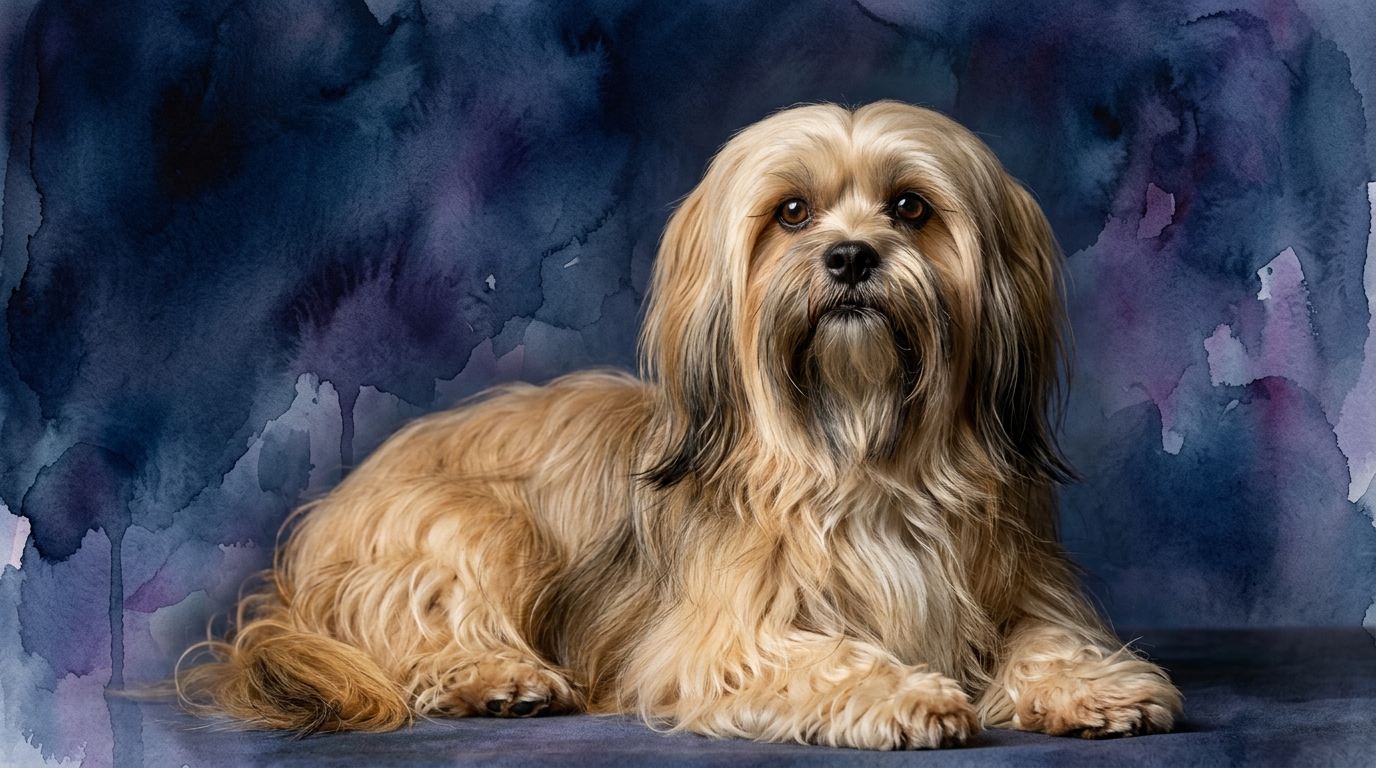
Side-by-Side IQ Profile: Collie (Rough) vs. Lhasa Apso
The Cosmic Pet Pet IQ Lab categorizes canine intelligence across five key dimensions, revealing nuanced differences between breeds. For the Collie (Rough), a Herding group member, their profile is marked by Problem Solving 4/5, Training Speed 4/5, Social Intelligence 3/5, Instinctive Drive 3/5, and Memory 5/5. This robust cognitive toolkit reflects their heritage of independent decision-making and cooperative work.
In contrast, the Lhasa Apso, from the Non-Sporting group, presents a profile of Problem Solving 3/5, Training Speed 3/5, Social Intelligence 3/5, Instinctive Drive 3/5, and Memory 3/5. These scores illustrate a different type of mental aptitude, one geared towards focused observation and steadfast companionship rather than broad working applications.
The Collie’s 4/5 in Problem Solving indicates a strong capacity to independently assess situations and devise solutions, a trait honed by their historical need to manage livestock and adapt to changing environmental conditions on the pasture. Their 4/5 Training Speed means they typically pick up new commands and routines with impressive alacrity, often showing an eagerness to engage and learn from their human companions, making them responsive to structured instruction. While their Social Intelligence sits at 3/5, it leans towards understanding and responding to human commands within a working context, rather than broad adaptability in diverse social settings. Their Instinctive Drive of 3/5 centers on herding behaviors—gathering, watching, and guiding—which manifests as a need for purpose and activity, often seeking to 'manage' their environment or family members. Finally, their exceptional Memory at 5/5 allows them to retain complex sequences of commands, routines, and spatial information over extended periods, crucial for navigating large territories and performing intricate tasks.
For the Lhasa Apso, their 3/5 in Problem Solving signifies a moderate ability to solve novel problems, often preferring to stick with established routines or relying on their persistent nature to achieve goals, rather than seeking innovative solutions. Their Training Speed of 3/5 means this breed learns at a steady pace, but their independent spirit may require more patience and consistent motivation during training sessions, responding best to positive reinforcement. The Lhasa’s 3/5 Social Intelligence displays as focused loyalty, forming deep bonds with their primary family but often being reserved or aloof with strangers, valuing a stable social structure within their immediate circle. Their Instinctive Drive, also 3/5, is rooted in their historical role as watchful sentinels, leading to a strong territorial instinct and an inclination to alert their family to perceived threats or changes in their environment. Lastly, their Memory, rated 3/5, is solid and functional, capable of remembering routines, specific individuals, and their designated 'post' within the home, though perhaps not the extensive, multi-layered recall seen in working breeds.
Where the Collie (Rough) Wins Cognitively
The Collie (Rough) clearly excels in cognitive domains demanding dynamic engagement and extensive recall, largely due to their herding lineage. Their 4/5 problem-solving score means they are adept at navigating complex scenarios, such as figuring out how to retrieve a toy from an awkward spot or understanding multi-step commands, demonstrating a flexible and adaptive mind. This contrasts with breeds that might rely more on brute force or simple repetition, highlighting the Collie's capacity for strategic thought.
Furthermore, their training speed of 4/5 indicates a strong desire to cooperate and a quick grasp of new concepts, making them highly receptive to advanced obedience, agility, or even service work. This speed isn't just about learning tricks; it reflects an underlying cognitive efficiency in processing and responding to human cues. They often anticipate commands and display a proactive understanding of tasks, a distinct advantage in any training endeavor.
The most striking cognitive advantage is their 5/5 memory, allowing them to remember vast repertoires of commands, intricate routes, and the nuances of various tasks over long periods. This superior recall underpins their capacity for consistent performance in demanding roles, far exceeding the typical recall capabilities of many companion breeds and enabling them to execute complex sequences reliably.
Where the Lhasa Apso Wins Cognitively
While the Lhasa Apso's scores might appear lower in comparison, their cognitive strengths are perfectly tailored to their historical role and manifest in distinct advantages. Their 3/5 in problem-solving often presents as a tenacious persistence; they might not find the quickest solution, but they will methodically work at a task until it's resolved, especially if it involves protecting their space or gaining attention. This isn't a deficiency but a different style of cognitive processing, emphasizing endurance over rapid innovation.
Their social intelligence, also rated 3/5, is a focused loyalty rather than broad social adaptability. They form incredibly strong, discerning bonds with their chosen family, demonstrating a profound understanding of their specific human's moods and routines, acting as a perceptive and dedicated companion. This specific social attunement is a win for owners seeking a deeply devoted connection, as they offer unwavering allegiance to their inner circle.
The Lhasa Apso's instinctive drive (3/5) to be a watchful sentinel is another cognitive strength, allowing them to meticulously monitor their environment and alert their household to anything out of the ordinary, a highly valuable trait for a dedicated home guardian. Their memory, at 3/5, is functional and reliable for recalling important events, people, and routines relevant to their protective and companion roles, ensuring they remember their 'post' and who belongs within their perceived territory.
Which is Easier to Train and Why
The Collie (Rough) is generally easier to train, primarily due to their superior training speed (4/5) and exceptional memory (5/5). They possess an innate eagerness to please and a cognitive wiring that makes them highly receptive to learning new commands and routines rapidly. For instance, a Collie can often master complex obedience sequences after fewer repetitions than many other breeds, retaining that knowledge for extended periods. Their herding background instilled a strong desire to work cooperatively with humans, making them naturally inclined to follow direction and find satisfaction in performing tasks.
In contrast, the Lhasa Apso, with a training speed of 3/5 and a memory of 3/5, can be more challenging. Their independent nature, stemming from centuries of guarding responsibilities, means they often require more patience, consistency, and positive reinforcement to motivate them. While they are capable of learning, their problem-solving (3/5) may lead them to try to 'outsmart' or test boundaries, rather than simply comply, especially if they don't perceive immediate value in the command. This isn't a lack of ability, but a difference in motivation; a Lhasa needs to understand the *value* of the command, often from their own perspective, whereas a Collie is more intrinsically motivated by the act of cooperation and pleasing its handler. Their stubborn streak is a manifestation of their cognitive independence.
Which Suits Active Owners vs. Relaxed Owners
The Collie (Rough) is a better fit for active owners who can provide ample mental and physical stimulation. Their high problem-solving (4/5) and strong instinctive drive (3/5) for purpose mean they thrive with activities like advanced obedience, agility, herding trials, or long, engaging walks that offer sensory input and opportunities to 'work.' An owner who can channel their cognitive energy into structured tasks will find a highly fulfilled and cooperative companion. Without sufficient mental challenges, a Collie may become bored and develop undesirable behaviors, as their minds require constant engagement and an outlet for their herding instincts.
Conversely, the Lhasa Apso is well-suited for more relaxed owners, though 'relaxed' doesn't mean neglecting their needs. Their moderate problem-solving (3/5) and instinctive drive (3/5) for watchfulness mean they are content with shorter, regular walks and thrive on being a dedicated indoor companion. While they benefit from training and mental stimulation, they don't demand the same intensity or volume of activity as a Collie. Their social intelligence (3/5) focusing on loyalty makes them ideal for owners who appreciate a devoted presence that is less demanding of constant, high-energy interaction but still values a strong, albeit more reserved, bond, making them excellent companions for apartment living or less active lifestyles.
The Verdict
Opt for a Collie (Rough) if you are an active owner seeking a highly trainable, cooperative companion eager for mental challenges and capable of mastering complex tasks. Their exceptional memory and problem-solving skills make them ideal for dog sports, advanced obedience, or a busy family life that includes consistent engagement.
Select a Lhasa Apso if you value a loyal, independent, and watchful companion who thrives on routine and a strong bond with their immediate family, fitting well into a more relaxed household. Their cognitive strengths are perfectly suited for being a devoted, discerning home guardian who enjoys a comfortable, predictable environment.
🧠 Find Your Pet's IQ Score
Our Pet IQ Lab assessment covers 25+ tests across 5 cognitive dimensions — personalized to your breed.
Take the Full IQ Test →Frequently Asked Questions
Can a Lhasa Apso be trained for agility?
While a Lhasa Apso can participate in agility, their 3/5 training speed and independent nature mean they might require more patience and consistent motivation than a breed like the Collie. They can certainly learn and enjoy it, but their performance might be less consistently fluid or rapid due to their preference for self-directed activity.
How much mental exercise does a Collie (Rough) truly need?
A Collie (Rough) requires significant mental exercise daily, beyond just physical activity. Their 4/5 problem-solving and 5/5 memory mean they thrive on learning new commands, puzzle toys, scent work, or engaging in 'jobs' around the house to keep their active minds stimulated and prevent boredom and destructive behaviors.
Are Lhasa Apsos good with children, considering their social intelligence score?
A Lhasa Apso's 3/5 social intelligence means they are often loyal to their family, but can be reserved with strangers and may prefer older, respectful children. Early socialization is crucial, and they generally thrive in homes where children understand how to interact gently and respectfully with a more independent canine companion, respecting their space.