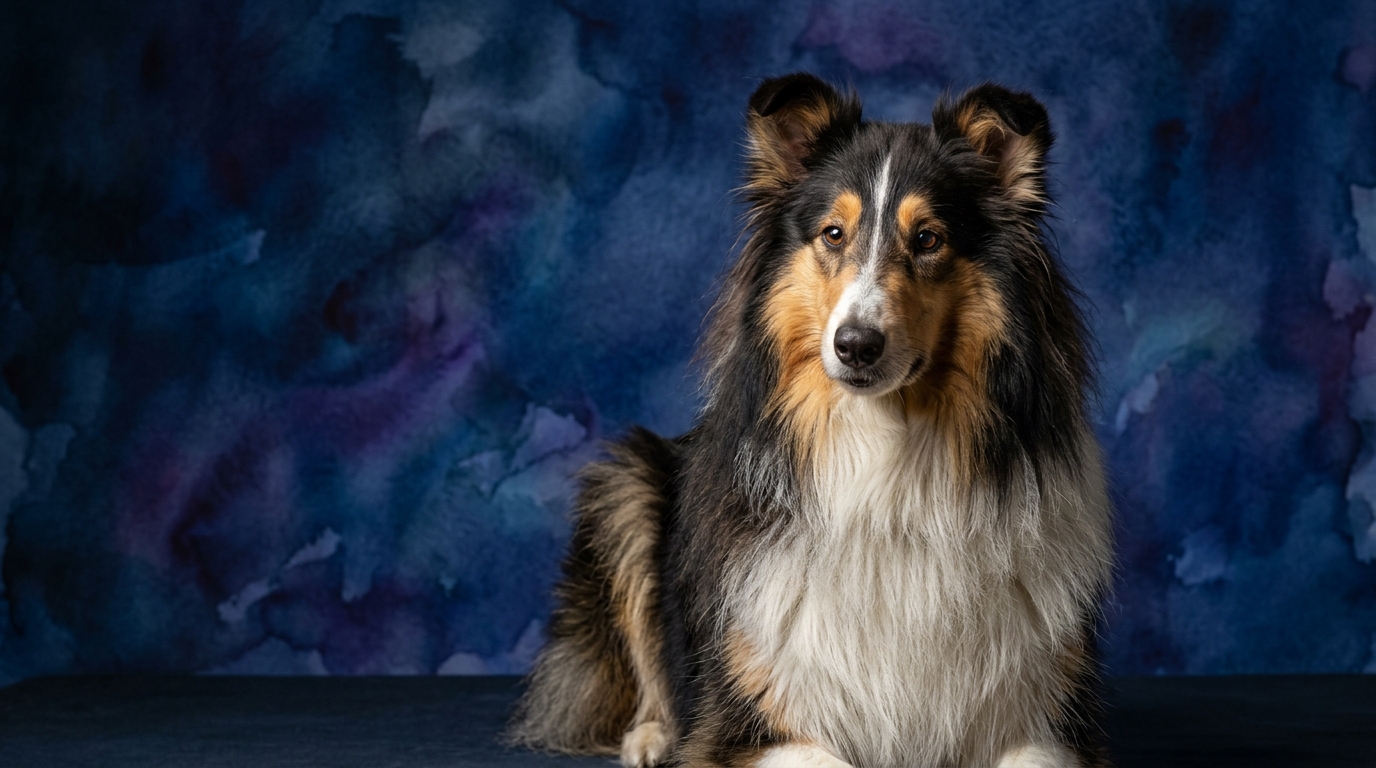
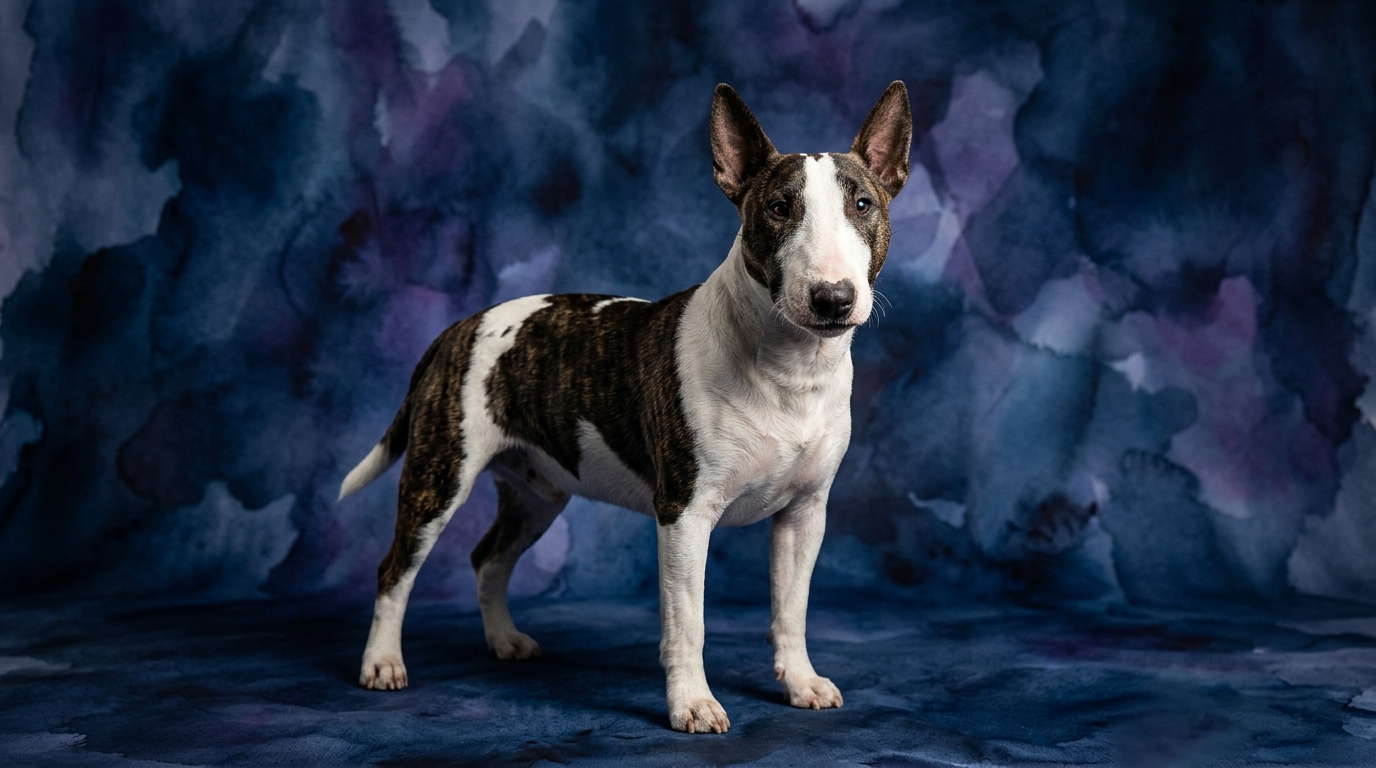
Side-by-Side IQ Profile: Collie (Rough) vs. Miniature Bull Terrier
The Collie (Rough), a member of the Herding group and ranked #16 by Coren, presents a cognitive profile optimized for complex, cooperative work. Its Problem Solving is rated 4/5, indicating an ability to understand and navigate multi-step challenges, often involving spatial reasoning or cause-and-effect in dynamic environments. Training Speed stands at 4/5, reflecting a quick grasp of new commands and routines, requiring fewer repetitions. Social Intelligence is 3/5, demonstrating an understanding of human cues and social structures, though not always prioritizing overt people-pleasing. An Instinctive Drive of 3/5 signifies a moderate herding impulse, manifesting as a desire to gather or control. The Collie’s Memory is exceptional at 5/5, crucial for recalling intricate sequences, commands, and expansive layouts.
In contrast, the Miniature Bull Terrier, a Terrier group member not included in Coren’s ranking, possesses a cognitive makeup suited to its independent, determined nature. Its Problem Solving is rated 3/5, competent at practical challenges, especially those fueled by prey drive or accessing desired items, rather than abstract reasoning. Training Speed is 3/5, indicating a steady learning pace that benefits from consistent, engaging methods. Social Intelligence, also 3/5, means they are aware of social dynamics and human moods, yet can be quite independent, not always seeking constant human approval. An Instinctive Drive of 3/5 highlights a focused terrier tenacity, particularly for chasing, digging, and persistent pursuit of goals. The Miniature Bull Terrier’s Memory is 3/5, allowing for adequate retention of information and learned behaviors, though less complex than its herding counterpart.
Where the Collie (Rough) Excels Cognitively
The Collie (Rough)’s exceptional Memory (5/5) forms the bedrock of its cognitive strengths. This isn't just about remembering routine; it's about the capacity to recall intricate sequences of commands, the layout of a vast pasture, or the specific movements required to guide a flock with precision. This robust recall allows them to build upon past experiences, executing complex tasks with minimal prompting and a deep understanding of their role, far beyond simple obedience. Their Problem Solving ability (4/5) often shines in dynamic scenarios, such as adapting to a sheep breaking from the flock or navigating unexpected terrain, applying logical deduction to achieve a desired outcome critical for their traditional responsibilities.
The speed at which a Collie grasps new concepts (Training Speed 4/5) further enhances its cognitive advantage. They require fewer repetitions to solidify a command or a new routine, making initial training periods remarkably efficient. This quick uptake means they can progress rapidly through obedience levels, mastering advanced maneuvers or learning sport-specific skills with relative ease. Their ability to swiftly connect a command to an action, and then retain it, underscores a cognitive efficiency that is invaluable for any owner seeking a dog that can quickly integrate new instructions and perform reliably.
Where the Miniature Bull Terrier Shows Its Own Strengths
While not excelling in abstract problem-solving, the Miniature Bull Terrier’s cognitive strengths are rooted in focused tenacity, particularly when driven by instinct. Their Problem Solving (3/5) frequently involves overcoming obstacles to reach a specific goal, such as figuring out how to retrieve a buried toy or navigating a complex scent trail. This isn't about intricate herding patterns but about persistent, goal-oriented determination—a hallmark of their terrier heritage. Their Instinctive Drive (3/5) acts as a powerful cognitive engine, fueling their concentration and persistence. When a Miniature Bull Terrier is engaged in an activity that taps into these natural urges, be it a game of chase or digging, their focus can be profound, transforming potential challenges into opportunities for sustained effort.
The Miniature Bull Terrier’s Social Intelligence (3/5) manifests as a keen awareness of their human companions, often expressed through a charming, sometimes stubborn, personality. They understand social cues and can form deep bonds, though they might not always prioritize human directives over their own immediate impulses. Their social acumen allows them to navigate household dynamics, often with a playful and assertive approach, making them engaging family members who understand their place within the pack, even if they occasionally test boundaries with characteristic terrier resolve.
Training Ease: Collie (Rough) vs. Miniature Bull Terrier
The Collie (Rough) generally offers a smoother training experience due to its superior Training Speed (4/5) and Memory (5/5). They process commands rapidly, needing fewer repetitions to solidify new behaviors. This means a Collie can progress from basic obedience to advanced tasks relatively quickly, retaining those lessons over the long term with remarkable consistency. Their inherent desire to work cooperatively and their strong recall make them highly responsive to consistent, positive reinforcement, leading to a more predictable and rewarding training journey for both dog and owner.
The Miniature Bull Terrier, with a Training Speed of 3/5 and Memory of 3/5, necessitates a distinct training approach. While perfectly capable of learning, they often require more consistent reinforcement, shorter, varied training sessions to prevent boredom, and methods that tap into their independent spirit. Their strong Instinctive Drive (3/5), coupled with a sometimes headstrong nature, means training success hinges on making the process highly engaging and intrinsically rewarding, often by incorporating games that leverage their prey drive. Owners must be patient, creative, and unwavering in their consistency, understanding that a Mini Bull Terrier learns at a steady pace but also demands significant motivation beyond simple compliance.
Lifestyle Match: Active vs. Relaxed Owners
For owners seeking an active, consistently engaged companion, particularly those interested in dog sports or a reliable outdoor partner, the Collie (Rough) is often an excellent match. Their cognitive profile, especially their problem-solving and memory capabilities, thrives on consistent mental and physical stimulation. They benefit immensely from activities that challenge both their intellect and physical stamina, such as agility, obedience trials, herding exercises, or complex scent work. An owner who enjoys regular, structured activities and can provide diverse mental enrichment will find the Collie a willing, capable, and enthusiastic partner, eager to learn and execute tasks.
The Miniature Bull Terrier can suit a range of owners, but the term 'relaxed' needs careful consideration. While they are not typically endurance athletes requiring continuous, long-duration exercise, their strong instinctive drive and playful nature mean they demand consistent, engaging bursts of activity and mental stimulation to prevent boredom and potential behavioral issues. They are better suited for owners who appreciate their distinct, spirited personality, can provide structured play sessions, short periods of intense activity, and consistent, firm guidance. Owners who understand their terrier tenacity and can offer clear boundaries and focused engagement will find a devoted, if sometimes assertive, companion.
The Verdict
Choose the Collie (Rough) if you seek a highly trainable companion eager to learn complex tasks, excel in dog sports, and thrive on consistent mental and physical engagement from an active owner. Their exceptional memory and quick learning make them ideal for those who enjoy a cooperative, responsive dog.
Opt for the Miniature Bull Terrier if you appreciate a tenacious, spirited personality and are prepared for a consistent, engaging training approach that channels their strong instincts. They suit owners who value an independent yet devoted companion and can provide focused activity and clear boundaries.
🧠 Find Your Pet's IQ Score
Our Pet IQ Lab assessment covers 25+ tests across 5 cognitive dimensions — personalized to your breed.
Take the Full IQ Test →Frequently Asked Questions
Does the Collie (Rough)'s herding instinct affect its daily behavior?
Yes, the Collie's instinctive drive (3/5) can manifest as a desire to 'herd' family members, especially children or other pets, by gently nudging or circling them. This behavior is generally benign and can be redirected with consistent training and appropriate outlets like herding games or structured play to satisfy their natural impulse.
Are Miniature Bull Terriers difficult to train because they aren't Coren-ranked?
The lack of a Coren ranking doesn't imply difficulty; it simply means they weren't part of that specific study. Their training speed (3/5) suggests they learn at a steady pace but require consistency, engaging methods, and an understanding of their terrier tenacity. They respond well to positive reinforcement and varied approaches that hold their interest.
How does 'social intelligence' differ between these two breeds?
Both breeds score 3/5 in social intelligence, indicating they understand social cues. For the Collie, it often manifests as a strong responsiveness to handler cues in a working context, reflecting their cooperative nature. For the Miniature Bull Terrier, it typically means a keen awareness of family dynamics and moods, often expressed through a more independent, sometimes assertive, social style, while still forming deep bonds.