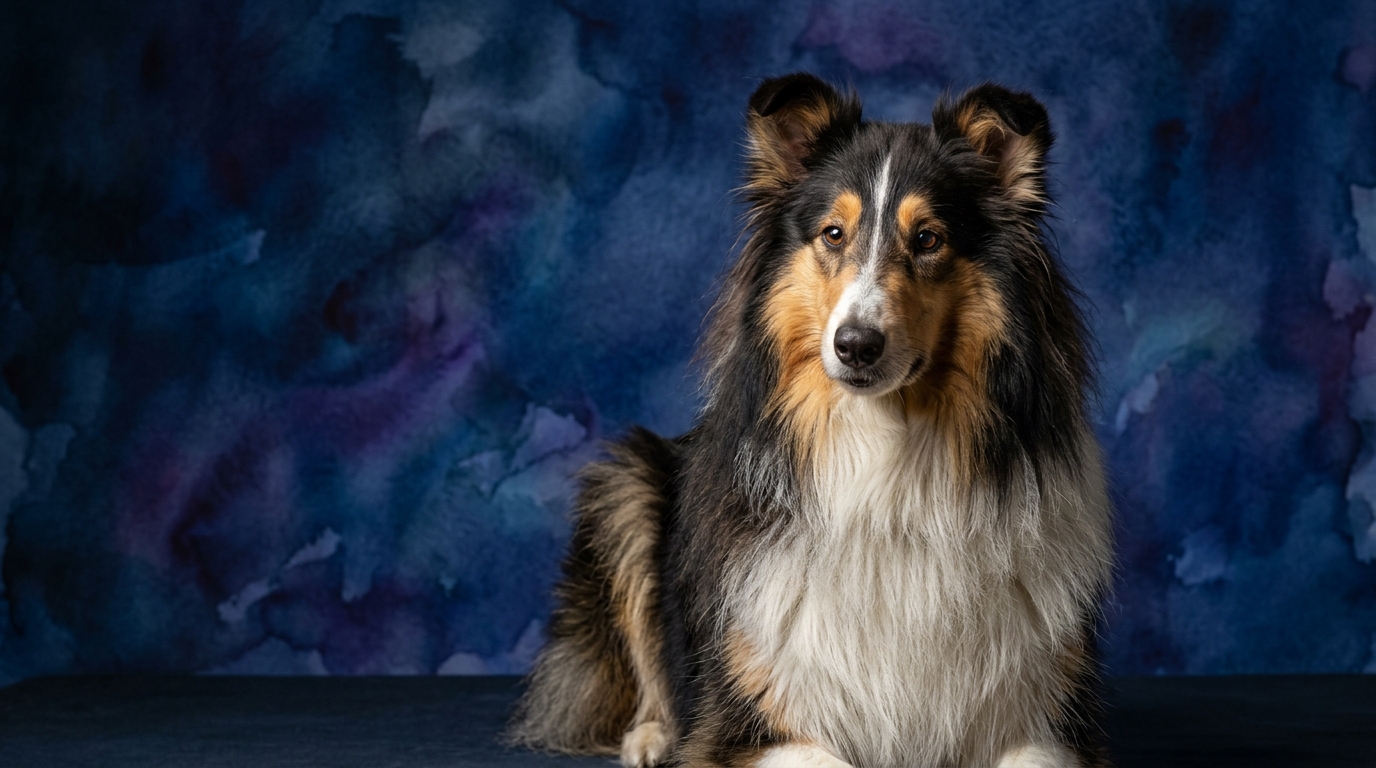
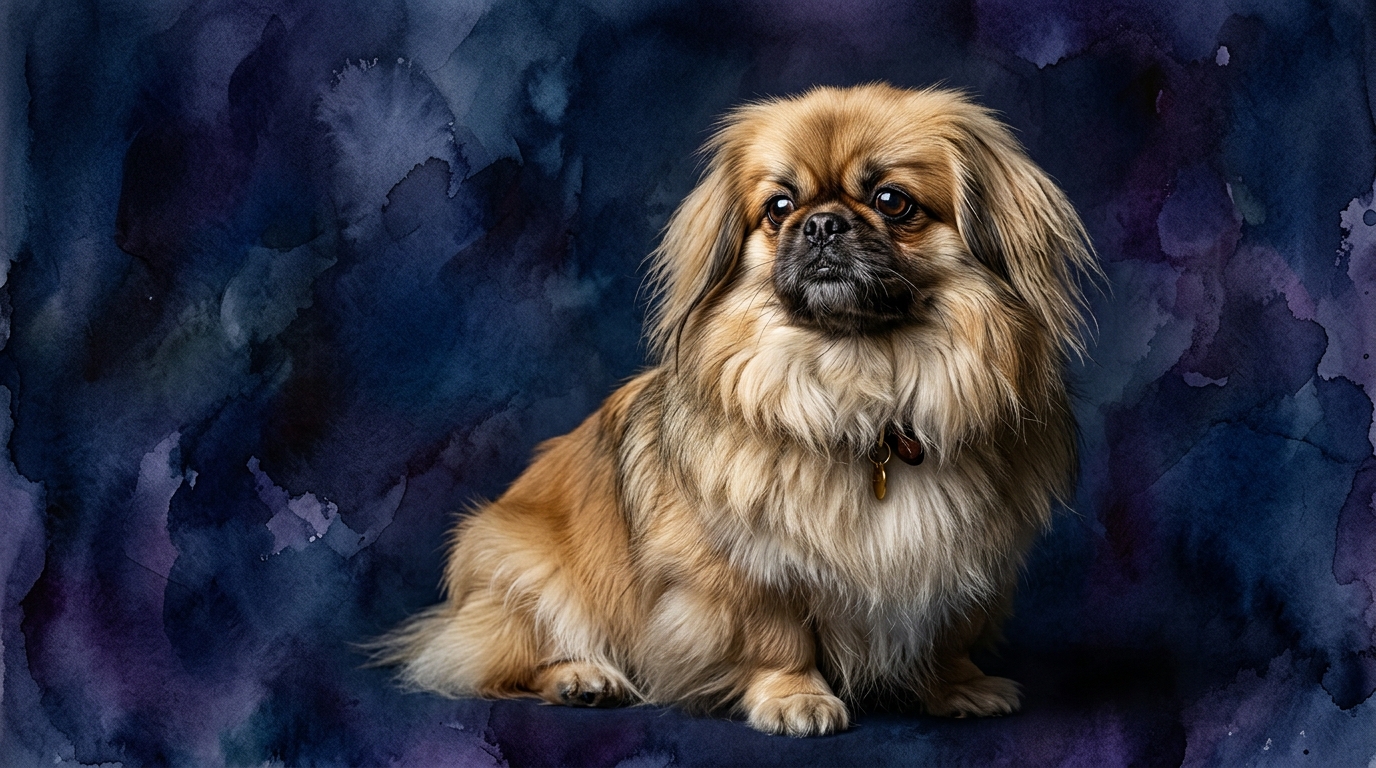
Side-by-Side IQ Profile: Collie (Rough) vs. Pekingese
The Cosmic Pet Pet IQ Lab assesses canine intelligence across five critical dimensions, offering a nuanced understanding beyond simple “smart” labels. When we examine the Collie (Rough) and the Pekingese, their profiles immediately highlight divergent evolutionary paths and breed purposes. The Collie, a Herding group member, registers a Coren rank of #16, placing it among breeds recognized for high working intelligence, while the Pekingese, a Toy breed, holds a Coren rank of #77, reflecting its historical role as a companion animal rather than a working one.
Delving into the Collie's specific scores, we find an impressive 4/5 for Problem Solving, signifying a dog capable of independent thought and strategic action when faced with novel situations. Its Training Speed also stands at 4/5, indicating a rapid absorption of new commands and routines. Social Intelligence and Instinctive Drive are both solid at 3/5, suggesting a balanced understanding of human cues and a moderate but focused drive tied to its heritage. However, the standout is its Memory, scoring a perfect 5/5, a testament to its capacity for retaining complex information and experiences over time.
In contrast, the Pekingese presents a more uniform cognitive profile, with all five dimensions — Problem Solving, Training Speed, Social Intelligence, Instinctive Drive, and Memory — scoring 3/5. This consistent score reflects a dog with reliable cognitive abilities across the board, capable of learning, adapting, and interacting effectively within its environment, though perhaps without the standout peaks seen in the Collie. Their intelligence is geared towards companionship and navigating a domestic setting rather than complex tasks.
These side-by-side snapshots reveal that while both breeds possess functional intelligence, their strengths are distributed differently. The Collie's scores lean heavily into areas that support complex work, rapid learning, and extensive recall, essential for managing livestock. The Pekingese's balanced scores suggest a dog perfectly equipped for a life of devoted companionship, where consistency and social engagement are paramount, rather than requiring exceptional aptitude in any single cognitive domain.
Where the Collie (Rough) Wins Cognitively
The Collie (Rough) exhibits clear cognitive advantages, particularly in areas demanding intricate mental processing and retention. Its Problem Solving score of 4/5, compared to the Pekingese's 3/5, underscores a greater capacity for independent thought and strategic planning. This manifests in their ability to assess a novel situation, such as navigating a new environment or figuring out how to access a desired item, and then devise an effective approach without constant human intervention. Their problem-solving isn't just about trial and error; it often involves a more sophisticated understanding of cause and effect.
Training Speed is another area where the Collie shines, scoring 4/5 against the Pekingese's 3/5. This translates into a significantly faster learning curve for new commands, tricks, or complex routines. A Collie can often master a new behavior in fewer repetitions, making advanced obedience, agility, or herding training more efficient and rewarding. They are quick to associate actions with consequences and verbal cues, absorbing lessons with remarkable alacrity.
Perhaps the most striking cognitive win for the Collie is its perfect 5/5 Memory score, dwarfing the Pekingese's 3/5. This exceptional recall capability allows Collies to retain vast amounts of information, from intricate obedience sequences and the layout of familiar places to specific verbal cues and the routines of their household. This strong memory underpins their reliability in tasks that require consistent performance over time and their ability to pick up exactly where they left off, even after a long break. They remember past experiences and lessons with remarkable clarity, contributing to their reputation as dependable working partners.
Where the Pekingese Wins Cognitively
While the Pekingese’s individual cognitive scores of 3/5 across all dimensions might not numerically surpass the Collie’s higher marks, its strength lies in the *balance* and *suitability* of its intelligence for its specific breed purpose. For an owner seeking a devoted companion whose cognitive needs align with a less demanding lifestyle, this breed truly shines. The Pekingese's balanced profile means it isn't prone to the same intense mental demands or potential frustration that a high-drive working breed might experience if under-stimulated.
One area where the Pekingese demonstrates a relevant cognitive strength is its Social Intelligence, matching the Collie's 3/5. Despite its primary role as a lapdog and companion, the Pekingese possesses a solid ability to interpret human emotions, intentions, and subtle social cues. This allows them to form incredibly strong, perceptive bonds with their owners, often seeming to anticipate moods or desires. Their social acumen ensures they are highly attuned companions, capable of engaging in meaningful two-way communication within the context of a family.
Furthermore, the Pekingese’s moderate Instinctive Drive (3/5) can be seen as a cognitive advantage for certain households. Unlike breeds with powerful working instincts that require constant channeling, the Pekingese is generally content with a more relaxed routine. Their cognitive energy isn't perpetually directed towards complex tasks like herding or guarding, meaning their mental stimulation needs are often met through companionship, short play sessions, and exploring their immediate environment. This cognitive contentment makes them superb companions for those who appreciate a less demanding mental engagement from their canine friend, allowing them to excel in their intended role without requiring exhaustive mental exercises.
Which is Easier to Train and Why
When evaluating ease of training, the Collie (Rough) holds a distinct advantage due to its exceptional cognitive profile geared towards cooperative work. Its Training Speed of 4/5 means Collies absorb new commands and behaviors with remarkable alacrity, often picking up complex sequences in just a few repetitions. This quick learning is powerfully reinforced by their perfect 5/5 Memory score, ensuring that once a lesson is learned, it is retained long-term, reducing the need for constant re-teaching.
Furthermore, the Collie's Problem Solving score of 4/5 contributes to its trainability by enabling it to understand the mechanics of tasks and adapt its behavior, rather than simply rote memorization. They often anticipate what is expected, making them responsive and intuitive partners in training. Their inherent desire to work alongside their human, a legacy of their herding origins, further enhances their willingness to engage and comply, translating into a highly rewarding training experience for both dog and owner.
The Pekingese, with its consistent 3/5 across Training Speed, Memory, and Problem Solving, presents a different training dynamic. While certainly trainable, they typically require more patience, consistency, and a greater number of repetitions to solidify new behaviors. Their learning pace is steady rather than rapid, and while they remember what they learn, the retention might not be as flawless or enduring as a Collie's, necessitating periodic refreshers.
Pekingese can also exhibit a more independent streak, a trait sometimes associated with their historical role as revered companions who were not necessarily expected to perform complex tasks. This independence means they may not always possess the same fervent desire to please or inherent drive to cooperate that characterizes a working breed. Successful training with a Pekingese often relies heavily on high-value rewards, positive reinforcement, and making training sessions fun and engaging to capture their attention and motivate their compliance. Owners should be prepared for a more gradual progression and celebrate smaller successes.
Which Suits Active Owners vs. Relaxed Owners
The choice between a Collie (Rough) and a Pekingese based on owner lifestyle boils down to their inherent needs for physical and mental engagement, directly tied to their cognitive profiles. The Collie, with its Herding group background and elevated cognitive scores, is an ideal match for active owners who can provide ample opportunities for both physical exertion and mental stimulation. Their 4/5 in Problem Solving and Training Speed, coupled with a 5/5 Memory, means their minds are constantly seeking engagement and purpose.
Collies thrive in environments where they can participate in activities like agility, advanced obedience, scent work, or even real or simulated herding. Long, stimulating walks, interactive puzzle toys, and consistent training sessions are not just beneficial but essential to prevent boredom and potential behavioral issues. An owner who enjoys outdoor adventures, has time for dedicated training, and wants a canine partner for sports or extensive learning will find the Collie to be an incredibly rewarding and responsive companion.
Conversely, the Pekingese is perfectly suited for more relaxed owners or those with less physically demanding lifestyles. Their consistent 3/5 across all IQ dimensions means their mental and physical stimulation requirements are moderate and easily met within a typical home environment. While they enjoy short walks and playful interactions, they do not possess the same intense drive for prolonged activity or complex mental challenges that a Collie does.
A Pekingese is content with comfortable indoor living, regular cuddle sessions, and short bursts of play. Their social intelligence (3/5) ensures they relish companionship and thrive on consistent interaction with their family, making them excellent lapdogs and devoted household members. Owners who prefer a calmer pace, appreciate a dog that is happy with a predictable routine, and seek a loyal, affectionate presence will find the Pekingese an ideal and cognitively fulfilled companion.
The Verdict
Choose the Collie (Rough) if you are an active individual or family seeking a highly trainable, intelligent partner for advanced obedience, dog sports, or a working role, and can commit to significant daily mental and physical exercise. They thrive on purpose and consistent engagement, offering unparalleled loyalty and a keen mind to those who can meet their substantial needs.
Opt for the Pekingese if you desire a devoted, charming companion perfectly suited to a calmer, more relaxed home environment, where moderate exercise and consistent affection are prioritized. They offer unwavering loyalty and contentment without demanding intense mental or physical exertion, making them an excellent choice for those seeking a loving lapdog.
🧠 Find Your Pet's IQ Score
Our Pet IQ Lab assessment covers 25+ tests across 5 cognitive dimensions — personalized to your breed.
Take the Full IQ Test →Frequently Asked Questions
Is a Collie (Rough) hard to manage for a first-time dog owner?
While highly trainable, a Collie's substantial cognitive needs, including high problem-solving and memory, require consistent mental stimulation and dedicated training, which can be a significant commitment for a novice owner. They need an owner prepared for their intelligence and energy.
Do Pekingese need a lot of grooming despite their moderate activity?
Yes, despite their more relaxed lifestyle, Pekingese have a luxuriant double coat that requires daily grooming to prevent mats and tangles, along with regular facial cleaning due to their brachycephalic features. Their grooming needs are significant, independent of their activity level.
Can a Pekingese participate in dog sports like agility?
While some individual Pekingese might enjoy introductory agility or rally, their physical structure and moderate instinctive drive (3/5) mean they are generally not built for high-level athletic dog sports. Their cognitive strengths are better suited to companionship and less demanding activities.