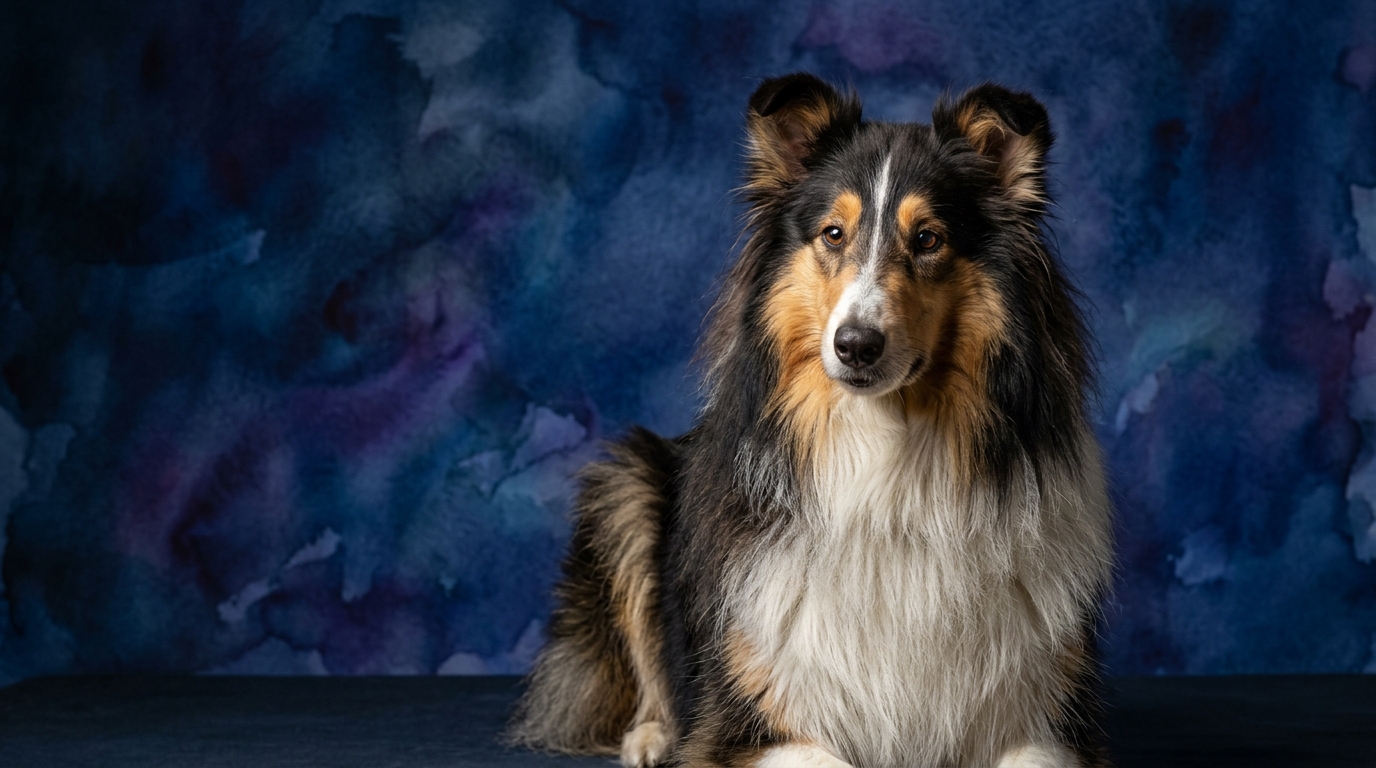
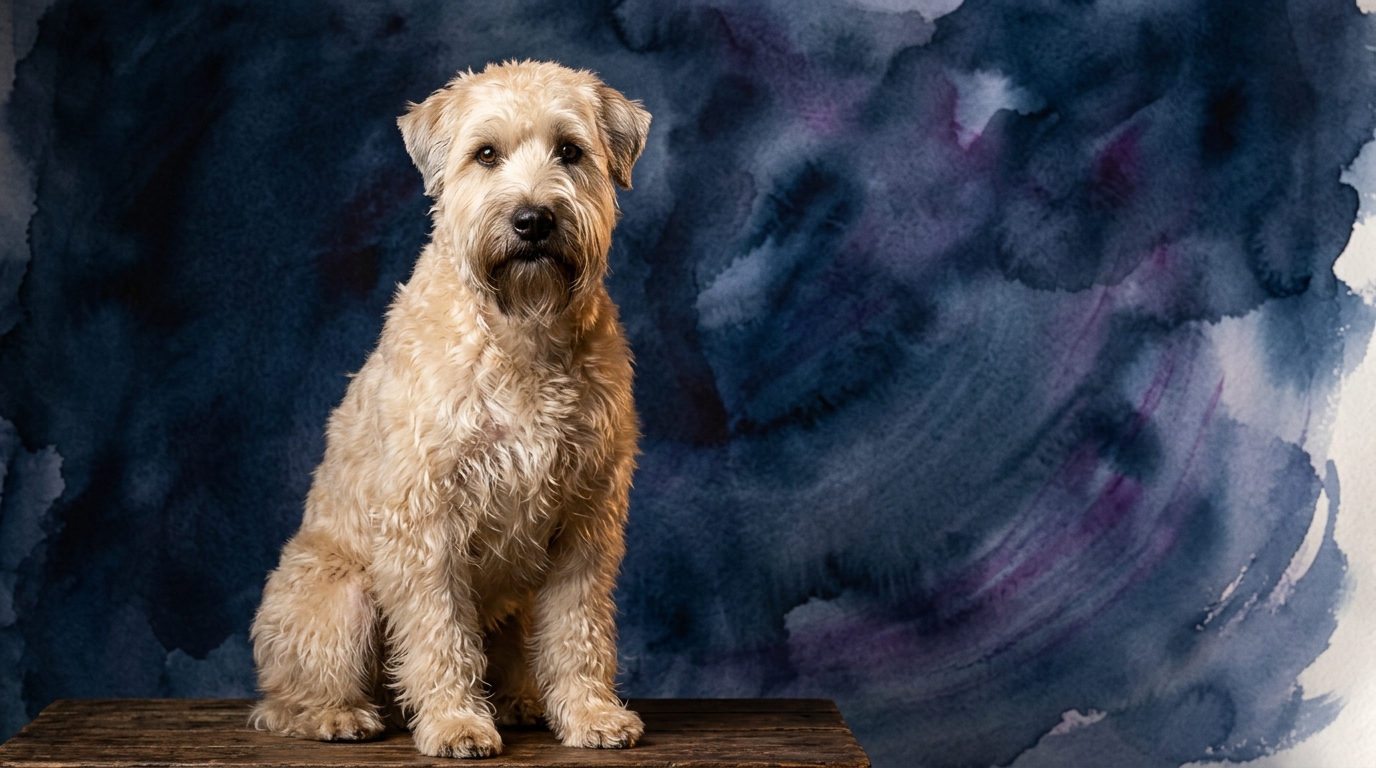
Side-by-Side IQ Profile: Collie (Rough) vs Soft Coated Wheaten Terrier
To understand the unique mental landscapes of these two breeds, let's break down their cognitive strengths across five key dimensions, as assessed by The Cosmic Pet Pet IQ Lab.
**Collie (Rough)**: This Herding group member, holding a Coren rank of #16, demonstrates a refined intellect shaped by centuries of working alongside humans. Their Problem Solving is rated at 4/5, indicating a strong capacity to assess and navigate complex situations, a valuable trait when managing livestock independently. Training Speed is also 4/5, reflecting their eagerness to learn and retain commands efficiently. Social Intelligence stands at 3/5, suggesting a good understanding of human cues and a desire to connect. Instinctive Drive is 3/5, manifesting as a gentle herding tendency rather than an overwhelming urge. A standout attribute is their Memory, rated at an exceptional 5/5, allowing them to recall vast amounts of information and learned behaviors over extended periods.
**Soft Coated Wheaten Terrier**: From the Terrier group, this breed brings a different kind of cleverness, unranked by Coren but with its own distinct cognitive toolkit. Their Problem Solving is 3/5, characterized by a persistent, often trial-and-error approach to overcoming obstacles. Training Speed is 3/5, meaning they are capable learners but require consistent, engaging methods to maintain focus. Social Intelligence is 3/5, showing an affectionate and perceptive nature towards their family. Instinctive Drive is also 3/5, reflecting a moderate prey drive and an inclination for independent exploration typical of terriers. Their Memory is rated at 3/5, indicating a solid ability to recall routines and commands, though perhaps not with the same depth or complexity as the Collie.
Where the Rough Collie Wins Cognitively
The Rough Collie's cognitive strengths shine particularly in areas demanding sustained focus, intricate recall, and measured decision-making. Their Problem Solving score of 4/5, coupled with an unparalleled Memory score of 5/5, means they excel at tasks requiring multi-step sequences and long-term retention of information. For instance, a Rough Collie can be taught a complex agility course and recall the sequence accurately months later, or learn an extensive vocabulary of objects by name, retrieving specific items on command. This enduring memory, a legacy of remembering vast grazing territories and complex herding patterns, makes them exceptionally reliable in maintaining learned behaviors and routines.
Their superior Training Speed (4/5) further enhances this, allowing them to absorb and integrate new commands with remarkable efficiency. They don't just learn quickly; they retain that learning with impressive fidelity, making them adept at mastering advanced obedience, rally, or even assistance dog work where precise, remembered actions are paramount. The nuanced application of their instinctive drive also gives them an edge in tasks requiring a gentle touch, such as guiding children, rather than a strong prey-driven pursuit. Their ability to internalize complex rules and apply them consistently makes them highly predictable and dependable companions in a structured environment.
Where the Soft Coated Wheaten Terrier Wins Cognitively
While the Rough Collie excels in structured learning and recall, the Soft Coated Wheaten Terrier brings a different set of cognitive advantages, rooted in their terrier tenacity and adaptability. Their Problem Solving (3/5) is characterized by a persistent, exploratory approach, which can be invaluable in certain contexts. Wheatens are often adept at figuring out how to achieve a goal through trial and error, a trait that makes them surprisingly resourceful when faced with novel obstacles in their environment. This cognitive flexibility, while sometimes perceived as stubbornness in training, allows them to adapt quickly to changing situations, making them less prone to becoming flustered by unexpected shifts in routine or environment.
Their instinctive drive (3/5), though moderate, provides a robust foundation for engaging in scent work or earthdog trials, where their natural curiosity and drive to investigate are assets. Unlike the Collie’s more measured herding instinct, the Wheaten’s drive is often expressed as an enthusiastic, hands-on engagement with their surroundings, making them particularly good at interactive games that involve seeking and discovering. This blend of adaptable problem-solving and spirited engagement allows them to thrive in dynamic, less predictable environments where quick thinking and resilience are prized. Their resilience in the face of challenge is a cognitive strength that sets them apart.
Which is Easier to Train and Why
When assessing ease of training, the Rough Collie typically presents a smoother path due to their higher scores in Training Speed (4/5) and Memory (5/5). Their historical role required them to understand and execute complex commands, often from a distance, fostering a strong desire to cooperate and a capacity for rapid learning. A Rough Collie will generally pick up basic cues like 'sit,' 'stay,' or 'come' within a few repetitions and will retain these commands reliably over time, even with breaks in practice. Their inherent biddability means they are often eager to please and respond well to positive reinforcement, making training sessions productive and less prone to frustration.
In contrast, the Soft Coated Wheaten Terrier, with a Training Speed of 3/5 and Memory of 3/5, requires a more nuanced approach. Wheatens possess a spirited independence, a hallmark of their terrier lineage, which means they might question the 'why' of a command or get distracted if training isn't kept engaging and rewarding. They are perfectly capable of learning, but their learning curve may be longer, and consistency is paramount to ensure retention. While a Collie might generalize a command to new environments quickly, a Wheaten might need more repetitions in various settings to solidify the learning. For instance, teaching a reliable recall off-leash might be a more significant, longer-term endeavor with a Wheaten, as their instinctive drive to explore scents can override immediate obedience if not consistently reinforced from an early age. Patience and creativity are key with a Wheaten.
Which Suits Active Owners vs Relaxed Owners
Considering their cognitive and behavioral profiles, the Rough Collie and Soft Coated Wheaten Terrier cater to different owner lifestyles. The Rough Collie, despite its historical working background, often thrives with owners who appreciate a steady, predictable routine and enjoy engaging in mentally stimulating activities. While they need regular exercise, their energy levels are generally moderate, making them suitable for owners who enjoy daily walks, perhaps some light jogging, and consistent mental challenges like obedience training, puzzle toys, or even trick training. Their lower instinctive drive (3/5) compared to some other working breeds means they are less likely to constantly seek out intense physical tasks, preferring instead to be involved in family life and gentle interactions. For owners who are more relaxed but committed to mental enrichment, the Collie's calm demeanor indoors and strong memory make them an excellent companion.
The Soft Coated Wheaten Terrier, on the other hand, is a better fit for active owners seeking a more spirited and engaged companion. Their terrier zest for life and moderate instinctive drive (3/5) mean they benefit immensely from regular, vigorous exercise, such as long runs, hikes, or participation in dog sports like agility or flyball. Their problem-solving approach, often involving trial and error and a degree of persistence, means they enjoy interactive play that challenges them physically and mentally. Owners who are prepared for a dog with a more independent streak and who can channel their energetic curiosity into structured activities will find the Wheaten a joyous and rewarding partner. They require an owner who can match their enthusiasm and provide consistent mental and physical outlets.
The Verdict
If you value a companion with exceptional memory, a smooth training trajectory, and a calm, predictable presence, the Rough Collie is likely your ideal match, thriving on structured mental engagement.
Conversely, if you are an active individual seeking a spirited, adaptable, and persistently curious partner who thrives on dynamic activities and independent problem-solving, the Soft Coated Wheaten Terrier will bring immense joy.
🧠 Find Your Pet's IQ Score
Our Pet IQ Lab assessment covers 25+ tests across 5 cognitive dimensions — personalized to your breed.
Take the Full IQ Test →Frequently Asked Questions
Is a Rough Collie good with children?
Yes, Rough Collies often exhibit a gentle and protective nature towards children, stemming from their herding instinct to keep the 'flock' together. Their social intelligence allows them to be watchful and patient, making them generally suitable family companions.
Do Soft Coated Wheaten Terriers bark a lot?
Soft Coated Wheaten Terriers can be prone to barking, especially as a form of communication or when excited. Their moderate instinctive drive and alert nature mean they might vocalize to announce visitors or express their enthusiasm, though consistent training can help manage this.
Which breed requires more grooming?
Both breeds require significant grooming. Rough Collies have a dense double coat that needs regular brushing to prevent mats and manage shedding, especially seasonally. Soft Coated Wheaten Terriers have a single, silky coat that doesn't shed heavily but requires frequent brushing and professional trimming to prevent matting.