Side-by-Side IQ Profile: Curly-Coated Retriever vs. Cesky Terrier
To truly understand the cognitive nuances between these two breeds, The Cosmic Pet Pet IQ Lab examines five key dimensions of intelligence. While their overall scores appear quite similar, the application and manifestation of these traits in their daily lives diverge significantly due to their distinct breed histories and temperaments.
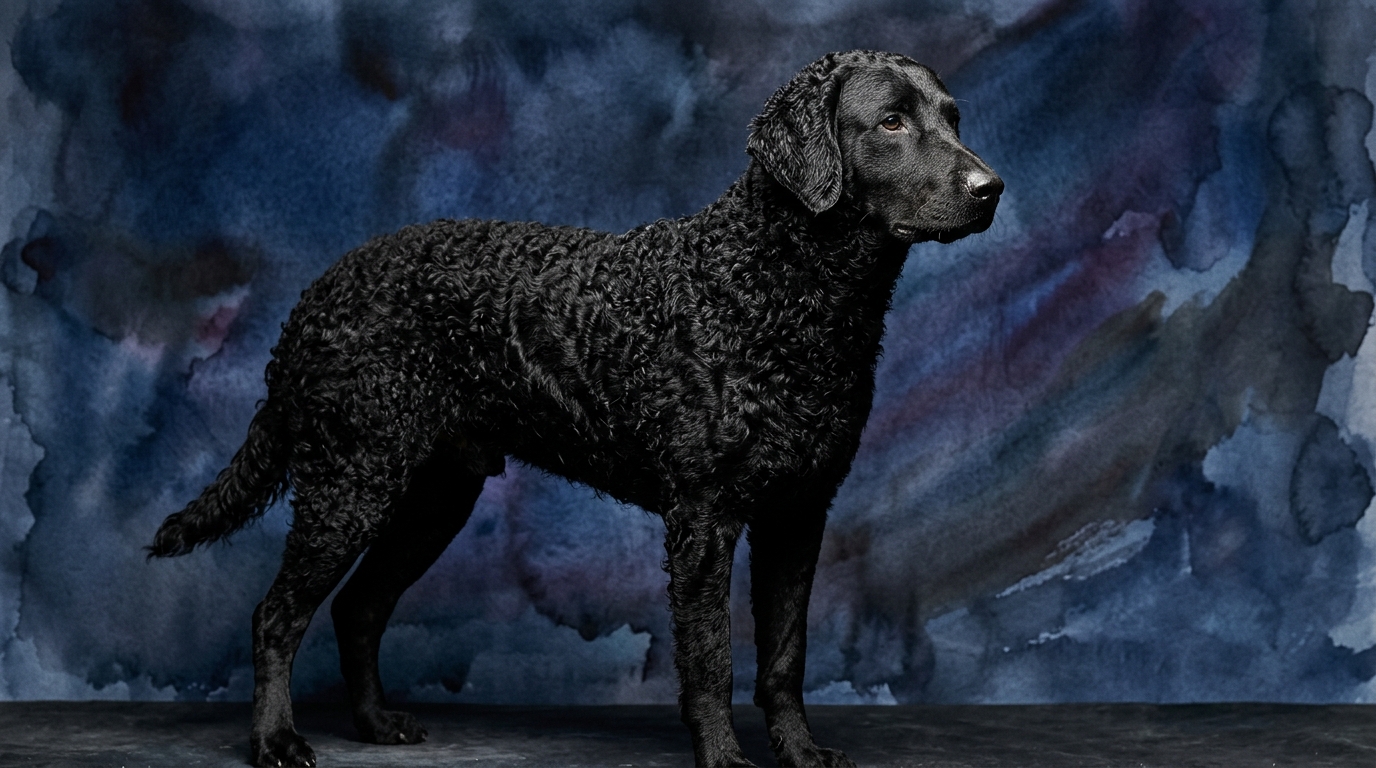
The Curly-Coated Retriever, a Sporting dog with a Coren rank of #41, presents a balanced cognitive profile geared towards cooperative work. Their Problem Solving is rated at 3/5, indicating a moderate capacity to navigate novel situations or puzzles with focused effort, often relying on learned patterns. Training Speed also sits at 3/5, suggesting they absorb new commands at a steady, reliable pace, valuing consistency in instruction. Social Intelligence is 3/5, allowing them to form strong, responsive bonds with their human companions and interpret common social cues effectively. Their Instinctive Drive, at 3/5, is a functional level of natural inclination towards retrieving and working alongside people without being overly intense. A notable strength is their Memory, scoring 4/5, which allows them to retain learned behaviors and spatial information over extended periods, contributing to their consistent performance.
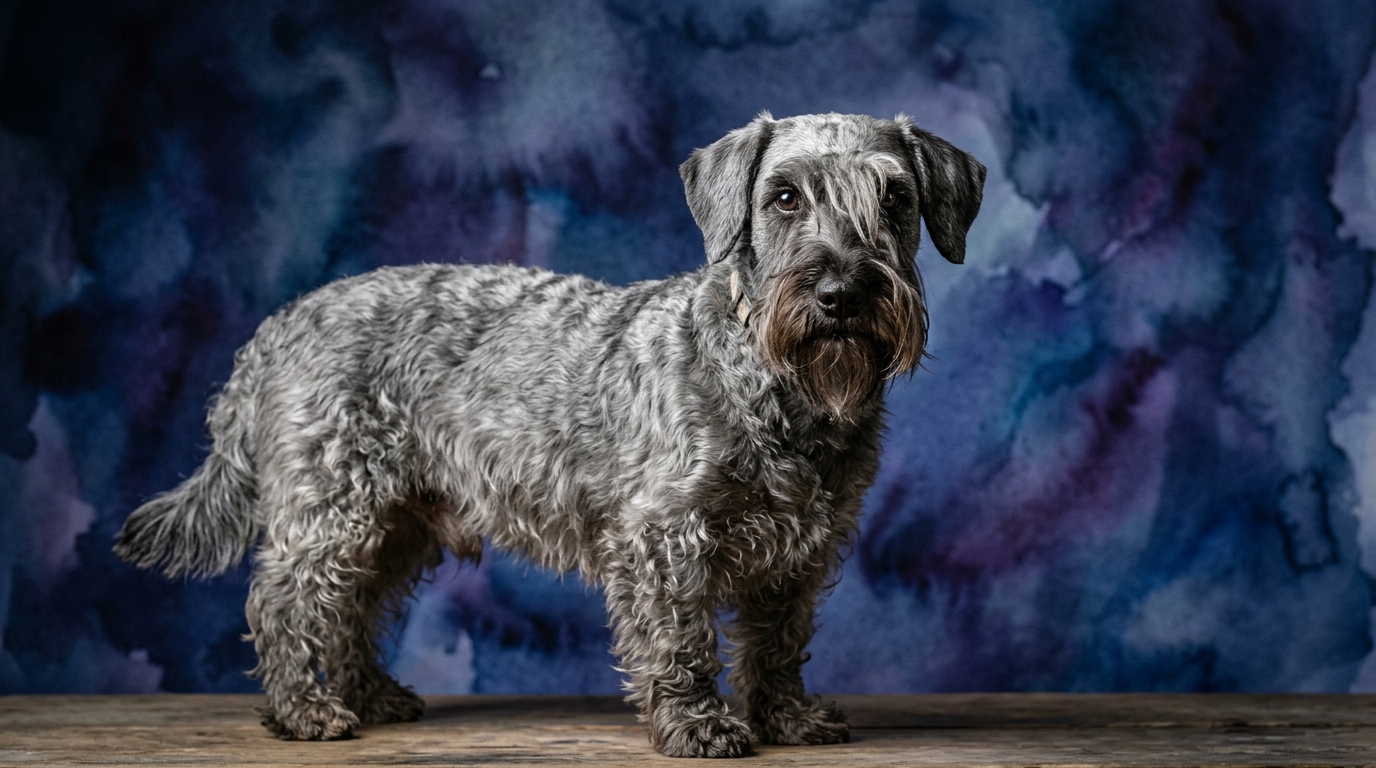
The Cesky Terrier, a Terrier breed without a Coren ranking, showcases a profile of determined independence. Their Problem Solving is also 3/5, demonstrating a resourceful aptitude for figuring out challenges, often through persistent trial and error driven by their terrier spirit. Training Speed is 3/5, meaning they learn at an average rate, but their independent nature often requires creative and engaging methods to maintain focus. Social Intelligence is 3/5, enabling them to integrate well into family dynamics and understand established routines, though they might not always seek constant human validation. Instinctive Drive is 3/5, reflecting a moderate but clear inclination for tasks like hunting and digging, characteristic of their terrier heritage. Their Memory is 3/5, functioning practically to recall commands and routines, though perhaps without the same depth or long-term retention seen in breeds with higher scores in this area.
Where the Curly-Coated Retriever Wins Cognitively
The Curly-Coated Retriever's primary cognitive advantage lies squarely in its superior memory, rated at 4/5 compared to the Cesky Terrier's 3/5. This enhanced retention means a Curly-Coat is significantly more adept at remembering complex sequences of commands, the precise location of hidden objects from previous training sessions, or intricate routes encountered during walks or field work. For tasks requiring a cumulative understanding of past experiences, such as advanced obedience trials, multi-stage scent discrimination, or retrieving specific items from memory, the Curly-Coat holds a distinct and practical edge. This stronger memory also contributes to more consistent performance over time, reducing the need for frequent refreshers on established behaviors and making them highly reliable in repetitive tasks. Their Coren rank of #41 further underscores a practical trainability and adaptability that often correlates with excellent memory for task execution, allowing them to build upon prior learning with greater ease and precision.
Where the Cesky Terrier Wins Cognitively
While their individual scores are largely similar across the board, the Cesky Terrier's cognitive strength isn't about outscoring the Curly-Coat in a specific dimension but rather how their moderate scores are applied through their inherent terrier temperament. Their problem-solving (3/5) coupled with their instinctive drive (3/5) manifests as a remarkably persistent and resourceful approach to challenges. Where a Curly-Coat might rely on its superior memory to recall a previously successful solution, a Cesky might more readily experiment with different tactics, driven by its independent nature to achieve a goal. This tenacity and willingness to improvise make them exceptionally effective at tasks requiring independent thought and sustained effort, such as navigating a novel scent trail, figuring out how to access a desired toy hidden in a puzzle, or exploring an unfamiliar environment to find a specific target. They might not remember the exact solution as perfectly as a Curly-Coat, but they are adept at rediscovering it through determined exploration and clever manipulation, often surprising owners with their ingenuity and grit.
Which is Easier to Train and Why
Given their identical 3/5 training speed scores, neither breed is inherently "easier" to train in terms of raw learning pace; both absorb new commands at a moderate rate. However, real behavioral differences stemming from their breed groups significantly influence the *experience* of training. The Curly-Coated Retriever's slightly higher memory (4/5) means that once a command is learned, it's likely to stick more firmly, requiring fewer repetitions over the long term for maintenance and retention. As a member of the Sporting group, they are generally bred to work cooperatively with humans, which often translates to a more eager-to-please attitude during training sessions. This collaborative disposition, combined with their strong memory, can make the training process feel smoother, more predictable, and less prone to wilful defiance, fostering a sense of partnership.
The Cesky Terrier, while learning at the same pace, brings its characteristic terrier independence to the training ring. Their problem-solving (3/5) and instinctive drive (3/5) are often paired with a strong will and a tendency to question commands or pursue perceived more interesting alternatives, especially if motivation is lacking. Training a Cesky often requires more creativity, engaging games, and a clear demonstration of "what's in it for them" to maintain their focus and enthusiasm. They are capable learners but might demand more mental stimulation and varied approaches to prevent boredom and harness their independent spirit effectively. While both breeds benefit immensely from consistency, the Curly-Coat might offer more consistent compliance due to its cooperative nature and memory, whereas the Cesky might offer more spirited, independent problem-solving within the training context, requiring a more nuanced approach from the handler.
Which Suits Active Owners vs. Relaxed Owners
The Curly-Coated Retriever, as a classic Sporting dog, generally requires a more active and engaged lifestyle. Their instinctive drive (3/5) suggests a distinct need for regular, vigorous physical activity and consistent mental engagement, such as retrieving games, swimming, long hikes, or participation in dog sports like agility or obedience. Owners who enjoy outdoor activities and are prepared to involve their dog as a willing and robust partner in these pursuits will find the Curly-Coat an ideal companion. Their moderate social intelligence and cooperative nature also mean they thrive on interaction and being an integral part of family activities, making them suitable for owners who seek an active, engaged, and devoted canine partner.
The Cesky Terrier, despite its terrier heritage, can adapt to a slightly less intensely active routine than some other working breeds, though it is certainly not a sedentary dog. Their moderate instinctive drive (3/5) still necessitates daily walks, opportunities for vigorous play, and outlets for mental stimulation, such as scent games or puzzle toys, but they might be content with a good romp in a secure yard followed by indoor relaxation. Relaxed owners who appreciate a dog with a distinct personality and are willing to engage in shorter, focused bursts of activity rather than sustained endurance sports might find the Cesky a better fit. They can be content with cozy indoor time, often curled up beside their family, after their exercise and mental stimulation needs are met, making them suitable for owners who enjoy a balance of activity and quiet, affectionate companionship.
The Verdict
Choose the Curly-Coated Retriever if you seek a cooperative canine partner for outdoor adventures, value a strong memory for consistent training outcomes, and appreciate a dog that integrates readily into an active family life.
Opt for the Cesky Terrier if you admire a resourceful, independent problem-solver with charming tenacity, are prepared for engaging training methods, and desire a companion that balances spirited activity with comfortable indoor companionship.
🧠 Find Your Pet's IQ Score
Our Pet IQ Lab assessment covers 25+ tests across 5 cognitive dimensions — personalized to your breed.
Take the Full IQ Test →Frequently Asked Questions
Does Coren ranking mean a dog is smarter?
Coren ranking primarily reflects a breed's working and obedience intelligence, indicating how quickly they learn new commands and how reliably they obey. It's one valuable measure of cognitive function, but it doesn't encompass all aspects of intelligence like problem-solving, social understanding, or adaptive ingenuity, which can vary across breeds regardless of rank.
How do a dog's "instinctive drive" and "social intelligence" differ?
Instinctive drive refers to innate, hardwired behaviors like hunting, herding, or guarding, which are often tied to a breed's historical purpose and manifest as strong motivations. Social intelligence, conversely, is a dog's capacity to understand and respond to human communication, cues, and social dynamics within a family or group setting, reflecting their ability to navigate complex social environments.
Can a Cesky Terrier learn complex tasks like a Curly-Coated Retriever?
Both breeds possess a 3/5 problem-solving ability, meaning they are capable of learning complex tasks. The Curly-Coated Retriever's superior memory might make retention of multi-step tasks more consistent, while the Cesky Terrier's tenacity means they'll likely apply persistent effort to figure things out, albeit potentially with more independent improvisation in their approach.