Side-by-Side Cognitive Profiles
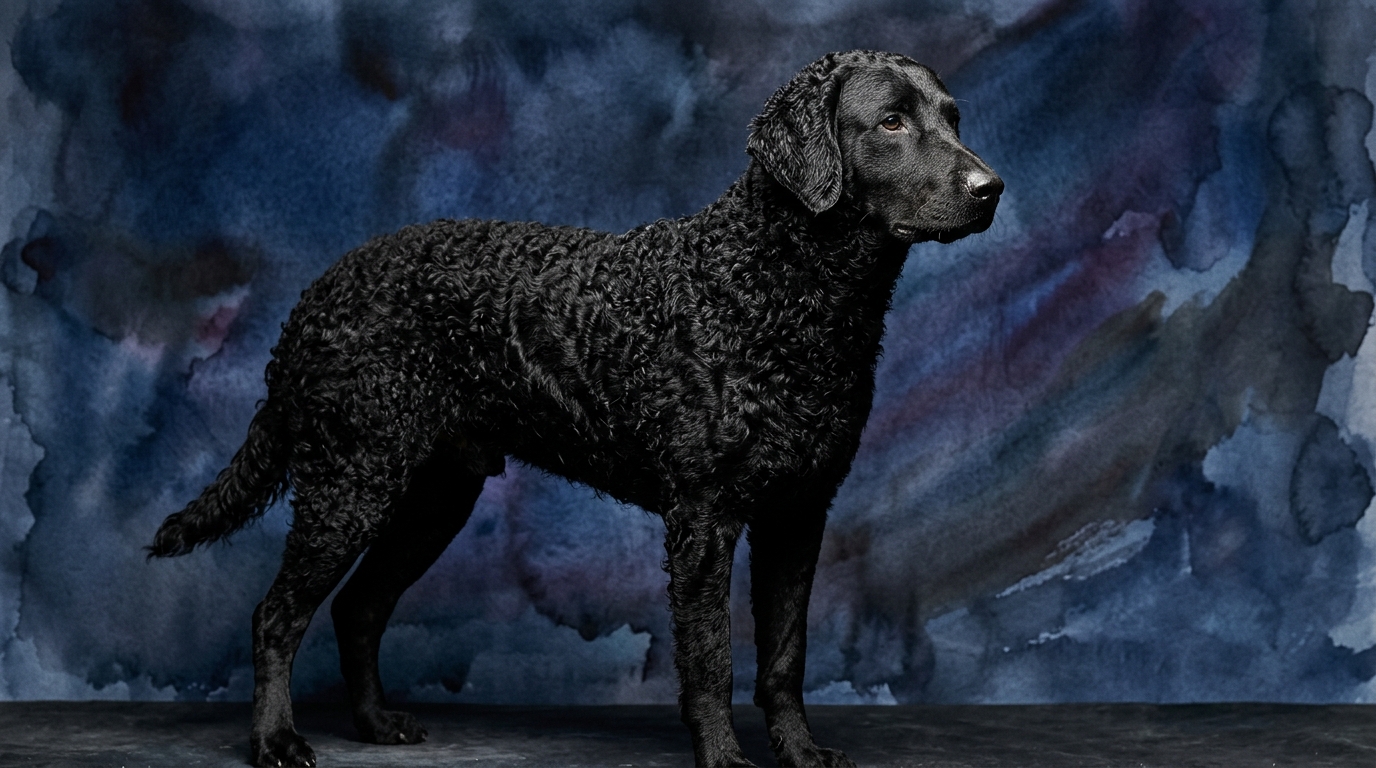
At The Cosmic Pet Pet IQ Lab, we evaluate canine intelligence across five key dimensions. For the Curly-Coated Retriever, a member of the Sporting group and notably ranked #41 in Coren's traditional obedience intelligence, their profile shows a balanced aptitude with a standout memory. They score 3/5 for Problem Solving, indicating a capacity to navigate novel situations and figure out solutions. Their Training Speed is also 3/5, suggesting they absorb new commands at a moderate pace. Social Intelligence registers at 3/5, reflecting their ability to understand and respond to human cues and social dynamics. Instinctive Drive, crucial for their retrieving heritage, is 3/5. Their most prominent cognitive asset is Memory, scoring an impressive 4/5, enabling excellent retention of learned behaviors and experiences.
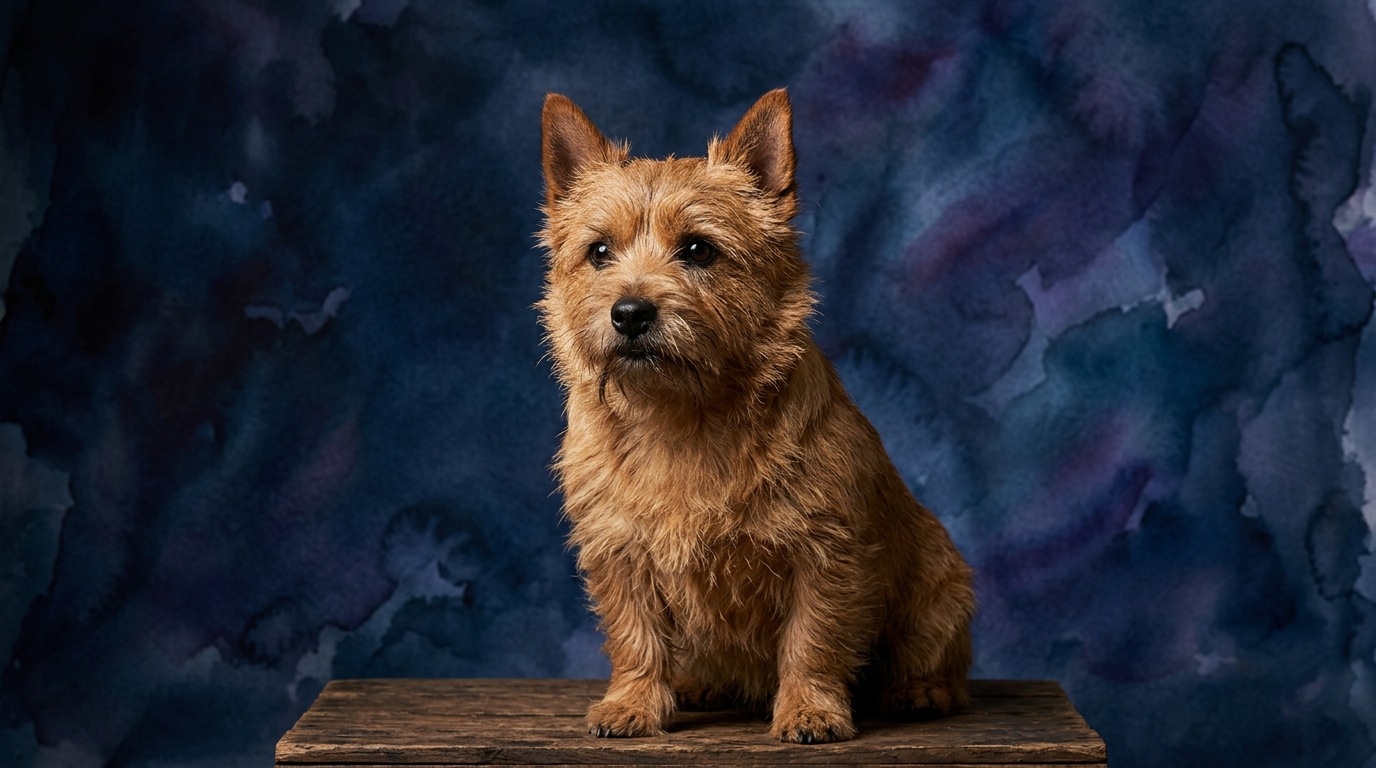
In contrast, the Norwich Terrier, a robust member of the Terrier group, is not included in Coren's rankings, which often emphasizes obedience and handler-driven tasks. Their cognitive profile presents a consistent average across all dimensions, reflecting a different kind of working intelligence. They score 3/5 for Problem Solving, demonstrating a practical approach to overcoming obstacles. Training Speed is also 3/5, meaning they learn at a pace similar to the Curly-Coated Retriever. Their Social Intelligence is 3/5, indicating an awareness of their social environment and interactions. Instinctive Drive, characteristic of their vermin-hunting background, is 3/5. Finally, their Memory scores 3/5, suggesting they retain information adequately but may require more consistent reinforcement than a breed with higher memory capacity.
Where the Curly-Coated Retriever Excels Cognitively
The Curly-Coated Retriever's cognitive strength lies prominently in their superior Memory, rated at 4/5. This enhanced ability allows them to recall complex sequences of commands, remember specific locations of retrieved items, and build a rich understanding of routines and expectations over time. For an owner, this translates into a dog that reliably remembers past lessons, making advanced training and consistency in behavior a more achievable goal. Their memory contributes significantly to their Coren rank of #41, as consistent performance in obedience trials relies heavily on retention.
Furthermore, their 3/5 Problem Solving and Instinctive Drive, combined with excellent memory, enable them to excel in tasks requiring both mental processing and physical execution. Imagine a Curly-Coated Retriever navigating varied terrain to retrieve a decoy, remembering the exact spot it fell, even after a distraction. This blend of attributes makes them adept at field work, dog sports like agility where sequences must be memorized, and even complex scent discrimination tasks where remembering target scents is key. Their cognitive makeup is geared towards partnership in a working capacity, where reliable recall and understanding of multi-step instructions are paramount.
Where the Norwich Terrier Shows Unique Cognitive Strengths
While the Norwich Terrier's scores are consistently 3/5, their unique cognitive strengths emerge not from superior numerical ratings but from the *application* of these dimensions within their terrier context. Their 3/5 Problem Solving is often characterized by tenacious, independent thought, particularly when pursuing an objective. This isn't about solving abstract puzzles but about figuring out how to get to a perceived 'prey,' whether it's a burrowing rodent or a treat hidden under a sofa. Their compact size and agility combine with this problem-solving to make them exceptionally resourceful in navigating tight spaces or overcoming small obstacles with determination.
Their 3/5 Instinctive Drive, while numerically matching the Retriever, manifests as a powerful, self-directed motivation to explore, hunt, and dig. This drive is a cognitive engine for persistence, allowing them to focus intently on a task that ignites their terrier instincts, often to the exclusion of other stimuli. This focused persistence, combined with their moderate social intelligence, means they can be incredibly charming and persuasive when they want something, using their wits to engage or disengage from interactions on their own terms. Owners often describe them as 'big dogs in small bodies,' reflecting their strong-willed cognitive approach to life.
Which Breed is Easier to Train and Why?
When considering ease of training, the Curly-Coated Retriever generally presents a more straightforward path for most owners. Their Coren rank of #41 is a strong indicator of their biddability and capacity for obedience. While their Training Speed is 3/5, meaning they learn at a moderate pace, their crucial advantage lies in their 4/5 Memory. What they learn, they tend to retain exceptionally well, leading to greater consistency and requiring less frequent remedial training. Their Sporting group heritage also instills a natural inclination to work collaboratively with a handler, often eager to please and respond to direction, which smooths the training process.
The Norwich Terrier, with consistent 3/5 scores across Problem Solving, Training Speed, and Memory, requires a different approach to training. While they are capable learners, their lower memory score compared to the Retriever suggests that consistent, patient repetition is vital for solidifying commands. More significantly, their strong terrier independence and instinctive drive (also 3/5) mean they are often less motivated by a desire to please and more by their own internal objectives. Training a Norwich often involves making the desired behavior more rewarding than their independent impulses, requiring creative, engaging, and highly reinforcing methods to capture their attention and cooperation. Owners must be prepared for a dog that might 'reason' with commands rather than simply comply, making them more challenging for those seeking immediate, unquestioning obedience.
Suitability for Active vs. Relaxed Owners
The Curly-Coated Retriever, as a Sporting breed, thrives with active owners who can meet their substantial mental and physical exercise needs. Their cognitive profile, particularly their strong memory and problem-solving abilities, makes them ideal candidates for structured activities like advanced obedience, agility, tracking, or field trials. These dogs enjoy having a 'job' and benefit greatly from owners who are committed to daily engagement through long walks, vigorous play sessions, and consistent training. A less active lifestyle could lead to boredom and the development of undesirable behaviors, as their cognitive capacity and physical energy need appropriate outlets.
The Norwich Terrier, despite their small stature, is not a sedentary breed. Their terrier heritage imbues them with a spirited nature and a need for mental stimulation that taps into their instinctive drives. While they don't require vast amounts of running, they need regular, engaging walks that allow for exploration, scent-tracking, and opportunities to 'investigate' their surroundings. Owners who enjoy short, vigorous play sessions, puzzle toys, and consistent, fun training will find a rewarding companion. They can adapt to moderately active households, but a truly relaxed owner who prefers minimal interaction might find their independent, curious nature challenging, as they will seek out their own entertainment if not adequately engaged.
FAQs About Curly-Coated Retriever and Norwich Terrier Intelligence
Q: Are Curly-Coated Retrievers good for first-time dog owners? A: Their biddable nature and strong memory can make them responsive to training, which is beneficial for first-time owners. However, their need for consistent engagement and substantial physical exercise means potential owners should be prepared for an active commitment.
Q: What kind of mental stimulation do Norwich Terriers need? A: Norwich Terriers benefit from activities that tap into their natural terrier instincts, such as puzzle toys, scent work, supervised digging opportunities, and varied exploration on walks. Engaging their problem-solving and instinctive drive is key to their contentment.
Q: How do the social intelligence scores impact interaction with people and other pets? A: Both breeds score 3/5, suggesting they can be sociable. The Curly-Coated Retriever tends to be more outwardly friendly and cooperative, while the Norwich Terrier's social interactions might be characterized by more assertive charm and selective, independent engagement.
The Verdict
Choose the Curly-Coated Retriever if you appreciate a biddable companion with excellent memory, eager to engage in structured learning and energetic outdoor activities.
Choose the Norwich Terrier if you seek a spirited, independent thinker who thrives on engaging challenges and offers robust personality in a compact, tenacious form.
🧠 Find Your Pet's IQ Score
Our Pet IQ Lab assessment covers 25+ tests across 5 cognitive dimensions — personalized to your breed.
Take the Full IQ Test →