
Side-by-Side Cognitive Profiles
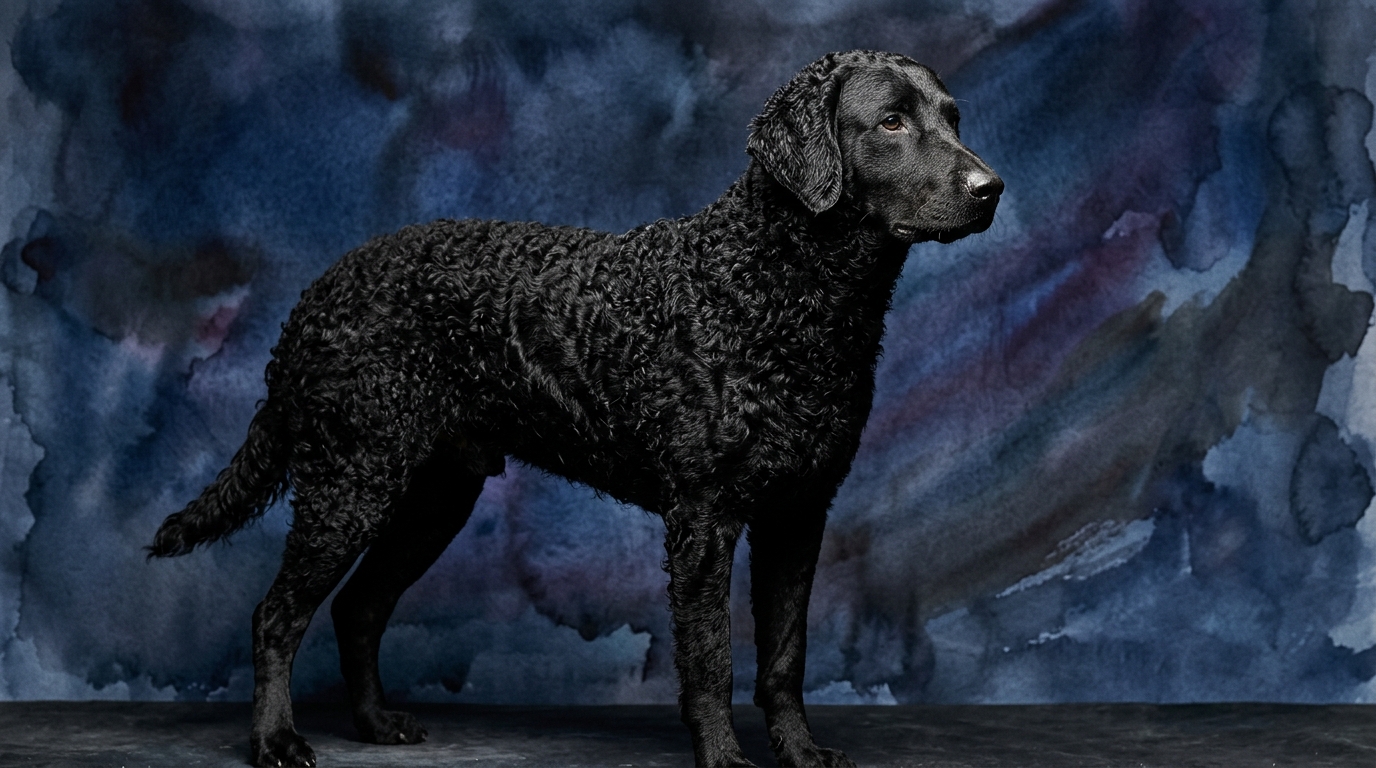
The Cosmic Pet Pet IQ Lab provides a detailed lens through which to view breed intelligence, evaluating five key dimensions. For the Curly-Coated Retriever (CCR), a Sporting group dog with a Coren rank of #41, its profile shows Problem Solving at 3/5, Training Speed at 3/5, Social Intelligence at 3/5, Instinctive Drive at 3/5, and a notable Memory at 4/5. This suggests a dog capable of moderate analytical thought, average learning pace, balanced social interaction, and a typical drive for its breed group, but with a standout ability to retain information.
In contrast, the Rhodesian Ridgeback (RR), a Hound group member ranked #52 by Coren, presents a more uniform cognitive spread. Its scores are Problem Solving 3/5, Training Speed 3/5, Social Intelligence 3/5, Instinctive Drive 3/5, and Memory also at 3/5. This indicates a consistent, well-rounded, but not exceptional, aptitude across these cognitive areas. The Ridgeback’s profile suggests a pragmatic intellect, one that applies its capabilities evenly rather than excelling in a single dimension.
Where the Curly-Coated Retriever Excels Cognitively
The Curly-Coated Retriever's distinct advantage lies squarely in its superior Memory score of 4/5. This elevated capacity for retention means a CCR is more likely to remember complex command sequences, learned routines, and specific spatial information over longer periods. For instance, an owner teaching a multi-step retrieve or an agility course will likely find the CCR grasps and retains the entire sequence with greater ease and consistency than a dog with average memory.
This enhanced memory isn't just about tricks; it impacts daily life. A CCR is more apt to remember house rules, the location of specific toys, or the boundaries of a familiar yard. Their ability to recall past experiences can make them adept at predicting outcomes in recurring situations, potentially leading to more nuanced problem-solving over time as they draw upon a richer bank of past solutions. This cognitive strength underpins their suitability for roles requiring consistent performance and detailed recall, such as advanced obedience or competitive dog sports.
Where the Rhodesian Ridgeback Shows Its Cognitive Mettle
While the Rhodesian Ridgeback doesn't boast a numerically superior score in any single cognitive dimension compared to the CCR, its strength lies in the cohesive and robust application of its balanced 3/5 ratings across the board. This uniformity, particularly in Problem Solving, Social Intelligence, and Instinctive Drive, speaks to a resilient and independent mind, perfectly suited for its historical role as a hunter of dangerous game.
The Ridgeback’s cognitive profile allows it to operate with a degree of self-reliance, making calculated decisions in challenging environments. Its 3/5 in instinctive drive, coupled with a 3/5 in problem-solving, means it's driven to pursue goals and possesses the mental fortitude to figure out obstacles independently. This isn't about raw memorization but about applying a balanced set of cognitive tools to navigate complex, often unpredictable, real-world scenarios. Their moderate social intelligence ensures they can work alongside humans or other dogs when necessary, but their overall profile suggests a dog capable of independent thought and action when faced with a task.
Training Dynamics: Which Breed is Easier and Why?
When it comes to ease of training, the Curly-Coated Retriever holds a subtle but significant edge due to its superior Memory score (4/5) compared to the Rhodesian Ridgeback's (3/5). While both breeds share an average Training Speed (3/5), the CCR’s ability to retain information more effectively means that once a command or behavior is learned, it is likely to be remembered more reliably and for longer periods. This translates to fewer repetitions needed over time to maintain proficiency and a quicker re-learning curve after a break.
For example, a CCR might master a new trick in the same number of initial sessions as a Ridgeback, but weeks later, the CCR is more likely to perform it flawlessly with minimal prompting, whereas the Ridgeback might require more refreshers. The Ridgeback's consistent 3/5 across all categories means it responds well to consistent, positive reinforcement, but its average memory dictates that ongoing practice and reinforcement are particularly vital to solidify learned behaviors. Owners of a Ridgeback might find themselves needing to be more patient and persistent, ensuring training is engaging to prevent boredom, which can lead to a perceived stubbornness rooted in a less robust recall of past lessons.
Matching Breeds to Lifestyles: Active vs. Relaxed Owners
Neither the Curly-Coated Retriever nor the Rhodesian Ridgeback is suited for a truly relaxed, sedentary lifestyle; both are active working breeds requiring substantial mental and physical engagement. However, the *type* of activity and mental stimulation they thrive on differs, making them suitable for different active owners.
The Curly-Coated Retriever, with its sporting background and excellent memory, is a superb fit for active owners who enjoy structured activities. They excel in dog sports like agility, obedience, dock diving, or field trials, where their memory and moderate problem-solving can be channeled into learning and executing complex routines. Owners who enjoy consistent training, teaching new skills, and engaging in competitive or performance-based activities will find the CCR a rewarding partner. Their desire to work alongside their human, combined with their strong recall, makes them responsive companions for outdoor adventures like hiking or swimming, provided they have a clear purpose.
The Rhodesian Ridgeback, a hound breed, appeals to active owners who appreciate independence and a keen sense of adventure. While they need significant exercise, often in the form of long walks, runs, or secure off-leash exploration, their cognitive profile (balanced problem-solving, instinctive drive, and social intelligence) means they are less about precision and more about purposeful exploration. Owners who enjoy scent work, exploring varied terrains, or who can provide consistent leadership and clear boundaries will thrive with a Ridgeback. They require an owner who respects their independent nature but can firmly guide them, ensuring their strong instincts are channeled appropriately rather than left unchecked to wander or pursue interesting scents. They are not lap dogs, but devoted companions to owners who value their unique blend of loyalty and self-reliance.
The Verdict
Choose the Curly-Coated Retriever if you seek a partner for structured learning, complex dog sports, and appreciate a dog with exceptional memory for routines and commands. Their cognitive strength lies in retention, making consistent training efforts yield lasting results.
Opt for the Rhodesian Ridgeback if you are an active owner who values a resilient, independent companion capable of robust problem-solving in real-world scenarios. Their balanced cognitive profile excels in self-reliant exploration and purposeful, driven activity.
🧠 Find Your Pet's IQ Score
Our Pet IQ Lab assessment covers 25+ tests across 5 cognitive dimensions — personalized to your breed.
Take the Full IQ Test →Frequently Asked Questions
Does a higher Coren rank always mean a 'smarter' dog?
Not necessarily. Coren ranks often reflect trainability and obedience, which are aspects of intelligence. However, breeds like the Rhodesian Ridgeback, with a lower Coren rank, possess unique cognitive strengths, such as independent problem-solving and resilience, that are crucial for their original working roles but might not translate directly into high obedience scores.
How does 'Instinctive Drive' impact a dog's daily life?
Instinctive Drive refers to a dog's innate urges, like retrieving, herding, or scent tracking. A 3/5 score for both breeds means they possess typical drives for their respective groups. For the Curly-Coated Retriever, this manifests as a desire to retrieve; for the Rhodesian Ridgeback, it's a drive for tracking and independent exploration, influencing their need for specific types of mental and physical outlets.
Can a dog with average memory still learn complex tasks?
Absolutely. While a dog with 3/5 memory, like the Rhodesian Ridgeback, may require more consistent repetition and reinforcement than one with 4/5 memory, they are fully capable of learning complex tasks. Patience, clear communication, and engaging training methods are key to helping them solidify and retain information over time.