Side-by-Side IQ Profile: Unpacking Canine Cognition
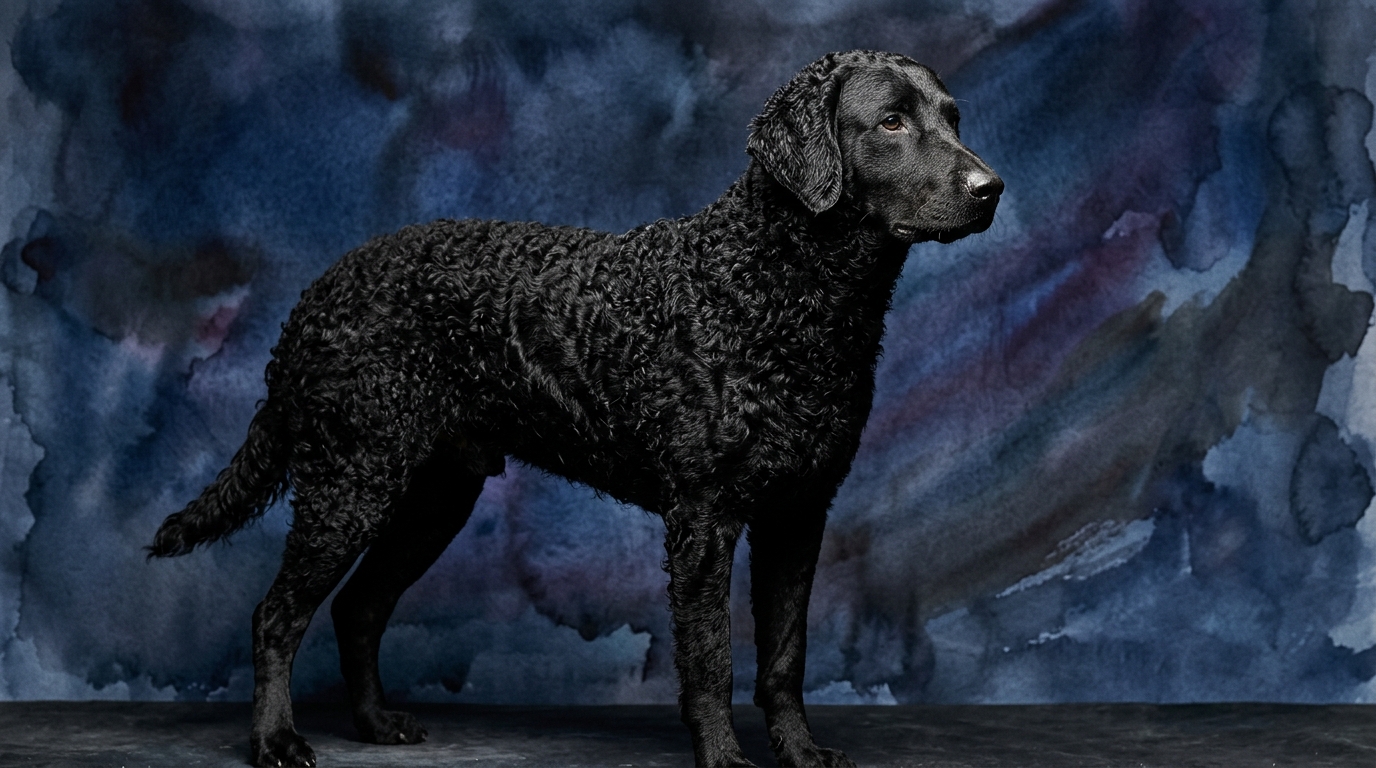
The Curly-Coated Retriever, a Sporting group member Coren-ranked #41, exhibits a balanced cognitive profile with an edge in recall. Its Problem Solving at 3/5 suggests a practical aptitude for navigating challenges, often in cooperation, like retrieving game. Training Speed at 3/5 indicates a steady learning pace for commands. Social Intelligence, also 3/5, points to a moderate awareness of human cues and pack dynamics. An Instinctive Drive of 3/5 reflects a moderate urge for breed-specific tasks. Its standout trait is Memory at 4/5, indicating a robust capacity to retain learned information, sequences, and locations, crucial for intricate retrieving patterns.
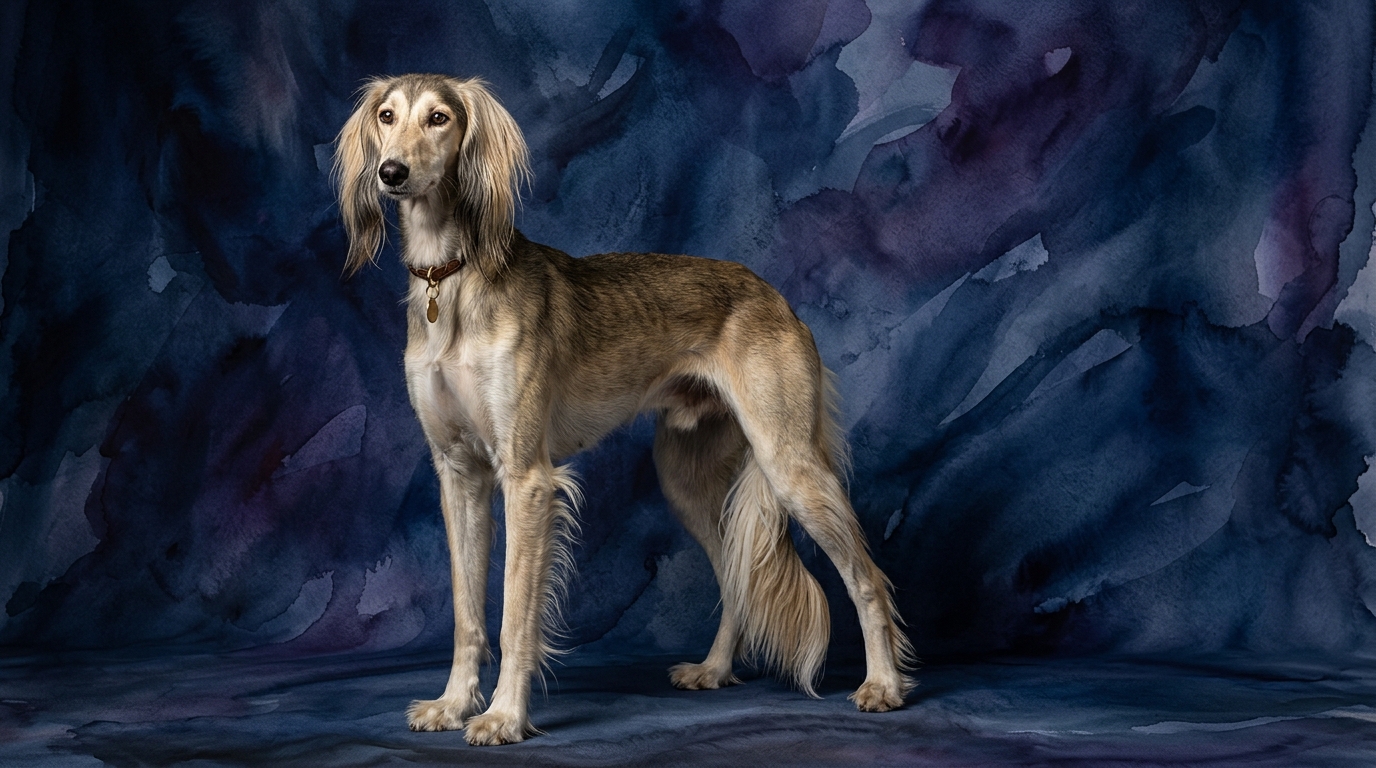
Hailing from the ancient Hound group and not Coren-ranked, the Saluki presents a consistent cognitive blueprint. Its Problem Solving score of 3/5 suggests an ability to independently assess and overcome obstacles, particularly when pursuing quarry. Training Speed at 3/5 means it learns at a comparable pace, though motivation might differ. Social Intelligence also registers 3/5, reflecting a capacity to understand companions but often with a more reserved demeanor. An Instinctive Drive of 3/5 is perfectly aligned with its sighthound heritage, signifying a strong, inherent urge to chase. Its Memory score of 3/5 indicates functional recall, sufficient for its independent hunting style but not as pronounced as its retrieving counterpart.
Where the Curly-Coated Retriever Cognitively Excels
The Curly-Coated Retriever's primary cognitive advantage lies in its superior Memory, scoring 4/5 compared to the Saluki's 3/5. This enhanced retention capacity translates into a dog that excels at remembering complex sequences of commands, specific object locations, or intricate routes. For instance, a Curly-Coated Retriever can precisely recall where multiple birds fell and retrieve them in a specific order, demonstrating strong memory for location and task sequence. This robust memory also contributes to its consistency in performance; once a lesson is learned, it tends to stick. Owners might observe this in how quickly they pick up new tricks or reliably respond to cues even after a break. This cognitive strength is deeply rooted in its historical role, where consistent recall of diverse instructions was paramount for effective partnership with a hunter.
Where the Saluki's Cognitive Strengths Shine
While the Saluki shares many cognitive scores with the Curly-Coated Retriever, its strengths manifest differently, shaped by its distinct evolutionary path as an independent sighthound. Its Problem Solving at 3/5, coupled with an Instinctive Drive of 3/5, speaks to an exceptional ability for autonomous, rapid decision-making in dynamic environments. Unlike the cooperative problem-solving of a retriever, the Saluki's cognitive process is geared towards instantly assessing terrain, identifying the quickest path to a moving target, and adapting strategies on the fly without human intervention. This isn't about rote memory of commands, but about instantaneous, instinct-driven cognitive processing for pursuit. Its social intelligence, also 3/5, often expresses itself in a more discerning manner, forming deep bonds with its chosen people while maintaining a dignified independence. Its cognitive 'win' is in the specialized application of its consistent scores towards highly effective independent action and pursuit, a unique form of problem-solving tailored for its sighthound heritage.
Ease of Training: Cooperation Versus Independence
When it comes to ease of training, both breeds score 3/5 for Training Speed, suggesting they learn at a moderate pace. However, their underlying motivations and cognitive architecture create distinct training experiences. The Curly-Coated Retriever, with its 4/5 Memory and Sporting group lineage, is generally perceived as more cooperative and eager to please, making it somewhat more straightforward to train for obedience and complex tasks. Its superior memory ensures that once a command is learned, it is retained effectively, reducing the need for constant re-teaching. Training a Curly-Coated Retriever often leverages its desire for partnership and its natural retrieving instincts, making positive reinforcement highly effective.
The Saluki, while capable of learning at a similar pace, approaches training with a different mindset. Its sighthound heritage emphasizes independence and an acute focus on visual stimuli, meaning it can be easily distracted by movement or distant objects. Its 3/5 Memory, while functional, means it might not retain specific, arbitrary commands with the same tenacity as the Curly-Coated Retriever if not consistently reinforced and made relevant to its interests. Training a Saluki often requires significant patience, creativity, and finding ways to make lessons intrinsically rewarding, as they are less inclined to perform simply for human approval if a more compelling chase opportunity arises. Their problem-solving (3/5) is often applied to circumventing rules rather than adhering to them if their independent drive is engaged.
Matching Breeds to Lifestyles: Active Versus Relaxed Owners
For active owners, both the Curly-Coated Retriever and the Saluki present compelling, albeit different, propositions. The Curly-Coated Retriever, with its 3/5 Instinctive Drive and background as a working gundog, thrives on structured activity, mental engagement, and a 'job' to do. Owners who enjoy dog sports like agility, obedience, or field work will find a willing and capable partner. They need regular, vigorous exercise that engages both their bodies and minds, making them an excellent fit for owners leading an active, outdoor-oriented lifestyle who wish for a canine companion to participate alongside them. Their social intelligence (3/5) means they generally enjoy being a central part of family activities.
The Saluki, also with a 3/5 Instinctive Drive, requires a different kind of activity. As a sighthound, its primary need is for opportunities to run, sprint, and chase in a secure, expansive area. Owners who enjoy long walks, hiking, or have access to large, fenced spaces where a Saluki can truly stretch its legs will find this breed suitable. While they require significant physical exertion, their temperament can be more relaxed indoors, often content to lounge gracefully after their exercise needs are met. However, a 'relaxed owner' might struggle with their independent nature and the necessity of providing outlets for their powerful chase drive, which can lead to boredom if not managed. They are more suited to owners active in providing exercise, but perhaps less demanding of constant interactive play indoors.
The Verdict
Choose the Curly-Coated Retriever if you seek a highly trainable, cooperative companion for dog sports, retrieving, and family life, valuing its strong memory for consistent performance.
Opt for the Saluki if you appreciate an elegant, independent companion requiring ample space for vigorous sprinting, valuing its autonomous problem-solving and dignified demeanor.
🧠 Find Your Pet's IQ Score
Our Pet IQ Lab assessment covers 25+ tests across 5 cognitive dimensions — personalized to your breed.
Take the Full IQ Test →Frequently Asked Questions
Is the Curly-Coated Retriever good with children?
Curly-Coated Retrievers typically possess a moderate social intelligence and can be excellent family dogs, often forming strong bonds. Early socialization and training are key to ensuring they interact appropriately with children and other pets, leveraging their cooperative nature.
Do Salukis require a lot of grooming?
Salukis have a short, silky coat that requires minimal grooming, typically just a weekly brush to remove loose hair and maintain coat health. Their elegant appearance is relatively low-maintenance, making them suitable for owners who prefer less intensive grooming routines.
What kind of exercise is best for a Saluki?
Given their strong instinctive drive and sighthound heritage, Salukis thrive on opportunities for vigorous running and sprinting in large, securely fenced areas. Long, leashed walks or hikes are also beneficial, but nothing truly replaces the chance to gallop freely and express their natural athleticism.