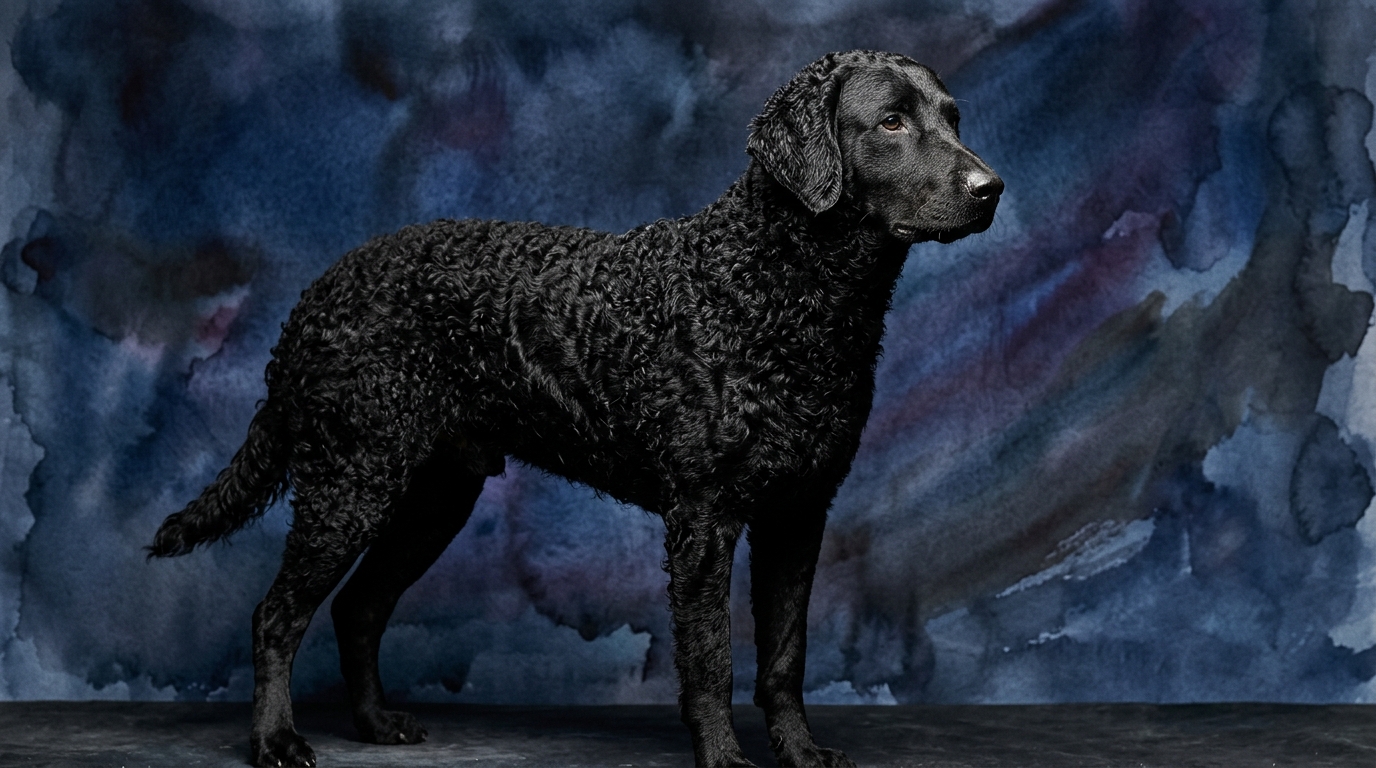
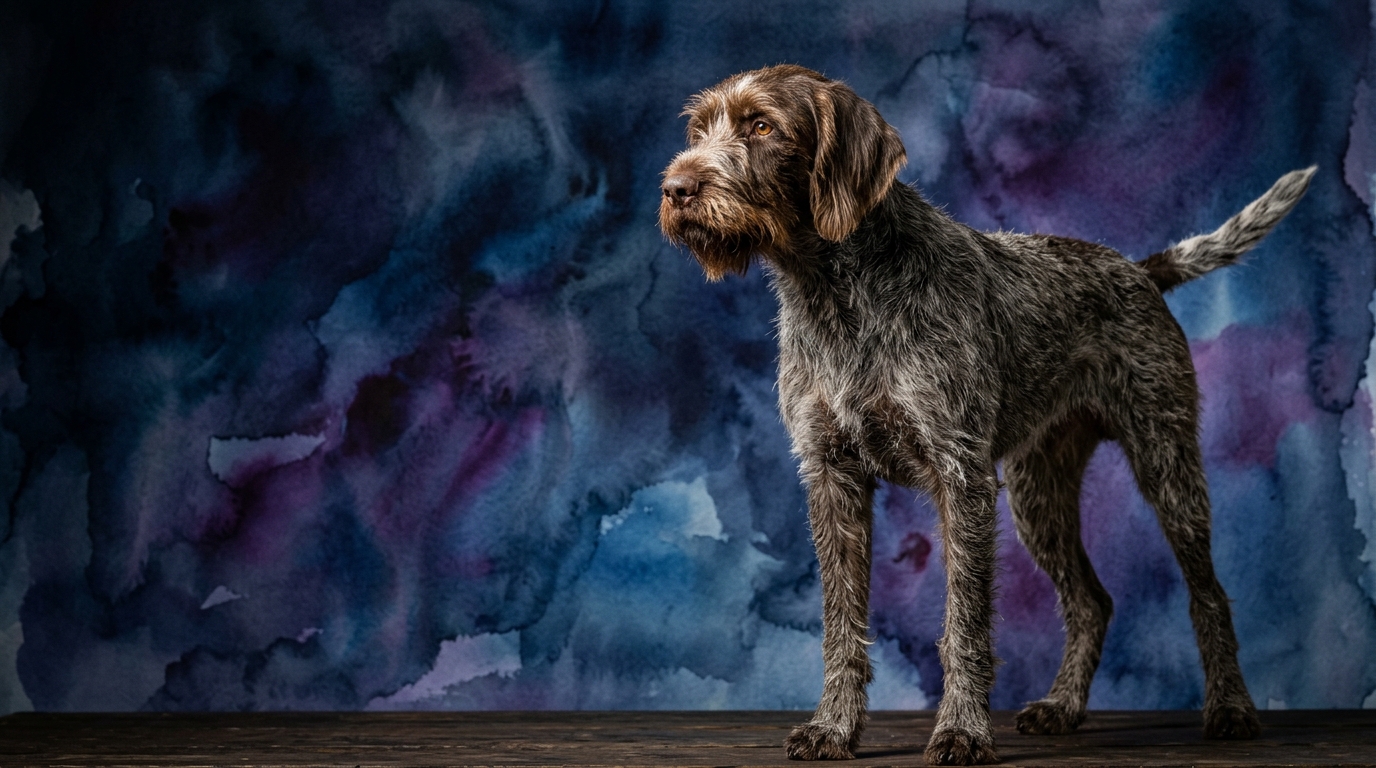
Side-by-Side IQ Profile: Curly-Coated Retriever vs. Wirehaired Pointing Griffon
The Cosmic Pet Pet IQ Lab assesses canine cognition across five critical dimensions, providing a granular view beyond general perceptions. For the Curly-Coated Retriever, a breed holding Coren rank #41, its profile registers 3/5 for Problem Solving, Training Speed, Social Intelligence, and Instinctive Drive, but notably achieves a 4/5 in Memory. This suggests a dog capable of moderate independent thought and learning pace, an average understanding of social cues, and a solid drive for its inherent tasks, all underpinned by a robust ability to recall past experiences and learned information.
In contrast, the Wirehaired Pointing Griffon, currently unranked by Coren, presents a consistent score of 3/5 across all five categories: Problem Solving, Training Speed, Social Intelligence, Instinctive Drive, and Memory. This indicates a balanced cognitive makeup, where its capacity for tackling novel challenges, acquiring new behaviors, interpreting social signals, and pursuing its natural instincts operates at a steady, moderate level, including its ability to retain information. The key distinction in these profiles lies primarily in the Curly-Coated Retriever's superior memory and its established position within Coren's intelligence hierarchy, hinting at a more consistent biddability in structured environments.
Where the Curly-Coated Retriever Wins Cognitively
The Curly-Coated Retriever's distinct cognitive advantage resides primarily in its 4/5 Memory score, surpassing the Griffon's 3/5. This enhanced memory translates directly into more efficient and reliable learning; a Curly can retain complex command sequences, recall specific behaviors after long periods, and remember environmental cues with greater precision. For instance, a Curly might more readily generalize a "stay" command from the living room to a bustling park, or flawlessly execute a multi-step retrieve pattern learned weeks prior, thanks to its stronger recall.
Furthermore, its Coren ranking at #41, while not an IQ score itself, reflects a proven capacity for sustained focus and retention in obedience training, demonstrating a breed that consistently processes and acts upon human instruction over time. This consistent performance in structured learning environments is a direct outcome of its superior memory and reinforces its aptitude for formal dog sports and complex working roles where precision and retention are paramount.
Where the Wirehaired Pointing Griffon Wins Cognitively
While the Wirehaired Pointing Griffon doesn't boast a higher score in any individual cognitive dimension compared to the Curly-Coated Retriever, its strength lies in the balanced and consistent nature of its 3/5 scores across all categories. This balanced profile means the Griffon is unlikely to be overly sensitive or prone to the mental "overthinking" that can sometimes accompany higher problem-solving or social intelligence scores.
Its 3/5 Instinctive Drive, coupled with its moderate problem-solving, makes it an exceptionally focused and purposeful partner in its designated field roles, such as pointing and retrieving. The Griffon effectively applies its moderate cognitive skills directly to its work, demonstrating reliable hunting prowess without requiring excessive novel mental stimulation beyond its natural inclinations. This balanced intellect means it's adaptable without being overly complex, providing a steady and predictable working temperament that excels when its natural drives are engaged, rather than requiring constant, intricate mental puzzles to stay content.
Which is Easier to Train and Why
When considering ease of training, the Curly-Coated Retriever generally presents a more straightforward path for formal obedience and complex tasks. Its 4/5 Memory score is a significant asset, allowing it to grasp and retain commands more quickly and reliably than a breed with a 3/5 memory. This means fewer repetitions are typically needed for a Curly to solidify a new behavior, and once learned, these behaviors are less likely to fade over time. The Curly's Coren rank of #41 further reinforces this, indicating a breed that has historically demonstrated a higher aptitude for understanding and executing human commands in structured settings.
The Wirehaired Pointing Griffon, with a 3/5 Training Speed and 3/5 Memory, will still learn, but likely at a more moderate pace and may require more consistent reinforcement to ensure long-term retention of commands. While eager to please within its working context, a Griffon might need a training approach that more explicitly links obedience tasks to its instinctive drives to maintain engagement, rather than relying solely on its memory for arbitrary commands. Its balanced intellect suggests it's trainable, but perhaps less inclined towards the rapid acquisition and generalization of abstract obedience sequences without sufficient motivation or repetition.
Which Suits Active Owners vs. Relaxed Owners
Neither the Curly-Coated Retriever nor the Wirehaired Pointing Griffon are suitable for truly relaxed, sedentary owners; both are robust sporting breeds with significant energy and mental stimulation requirements. However, their cognitive profiles suggest nuances in how they fulfill these needs. The Curly-Coated Retriever, with its superior memory and Coren ranking, thrives with active owners who enjoy structured activities like advanced obedience, agility, or consistent retrieving drills. Its capacity for retaining complex information means it genuinely benefits from regular mental engagement and can become bored or destructive if its cognitive needs aren't met, making it a better fit for owners dedicated to ongoing training and dog sports.
The Wirehaired Pointing Griffon, while equally requiring physical activity, might appeal to active owners who prioritize field work, hunting, or long outdoor adventures over intricate obedience routines. Its balanced cognitive scores mean it's less likely to demand constant novel mental challenges than a Curly, being content to apply its intellect to its instinctive drives. Owners who appreciate a steady, purposeful partner for outdoor pursuits, perhaps with less emphasis on competitive obedience, would find the Griffon's temperament and cognitive makeup a good match.
The Verdict
For owners seeking a highly biddable partner capable of retaining complex commands and excelling in structured obedience or dog sports, the Curly-Coated Retriever with its superior memory and Coren ranking is the clear choice.
If you value a balanced, purposeful companion primarily for field work and outdoor adventures, where consistent application of natural instincts is paramount over rapid acquisition of abstract commands, the Wirehaired Pointing Griffon will be a steadfast partner.
🧠 Find Your Pet's IQ Score
Our Pet IQ Lab assessment covers 25+ tests across 5 cognitive dimensions — personalized to your breed.
Take the Full IQ Test →Frequently Asked Questions
Does Coren rank #41 for Curly-Coated Retrievers mean they are "smarter" than Wirehaired Pointing Griffons?
Coren's ranking primarily assesses "working and obedience intelligence," which correlates with how quickly a breed learns and reliably performs obedience commands. While the Curly-Coated Retriever's rank suggests a higher aptitude for formal training, the Wirehaired Pointing Griffon's unranked status doesn't mean it lacks intelligence, but rather that its cognitive strengths might manifest differently, perhaps more in instinctive field work than structured obedience.
Can a Wirehaired Pointing Griffon learn complex tasks despite its 3/5 memory score?
Absolutely, a 3/5 memory is moderate and perfectly capable of learning complex tasks. It simply means a Griffon might require more consistent repetition and reinforcement compared to a Curly-Coated Retriever with a 4/5 memory, and owners should be patient and engaging in their training approach to ensure retention.
How do the "Instinctive Drive" scores of both breeds impact their owner suitability?
Both breeds score 3/5 in Instinctive Drive, meaning they possess a moderate, healthy urge to perform their breed-specific tasks like retrieving or pointing. This makes both suitable for owners who can provide outlets for these natural behaviors, whether through hunting, field trials, or engaging games that mimic these activities, ensuring their mental and physical well-being.