
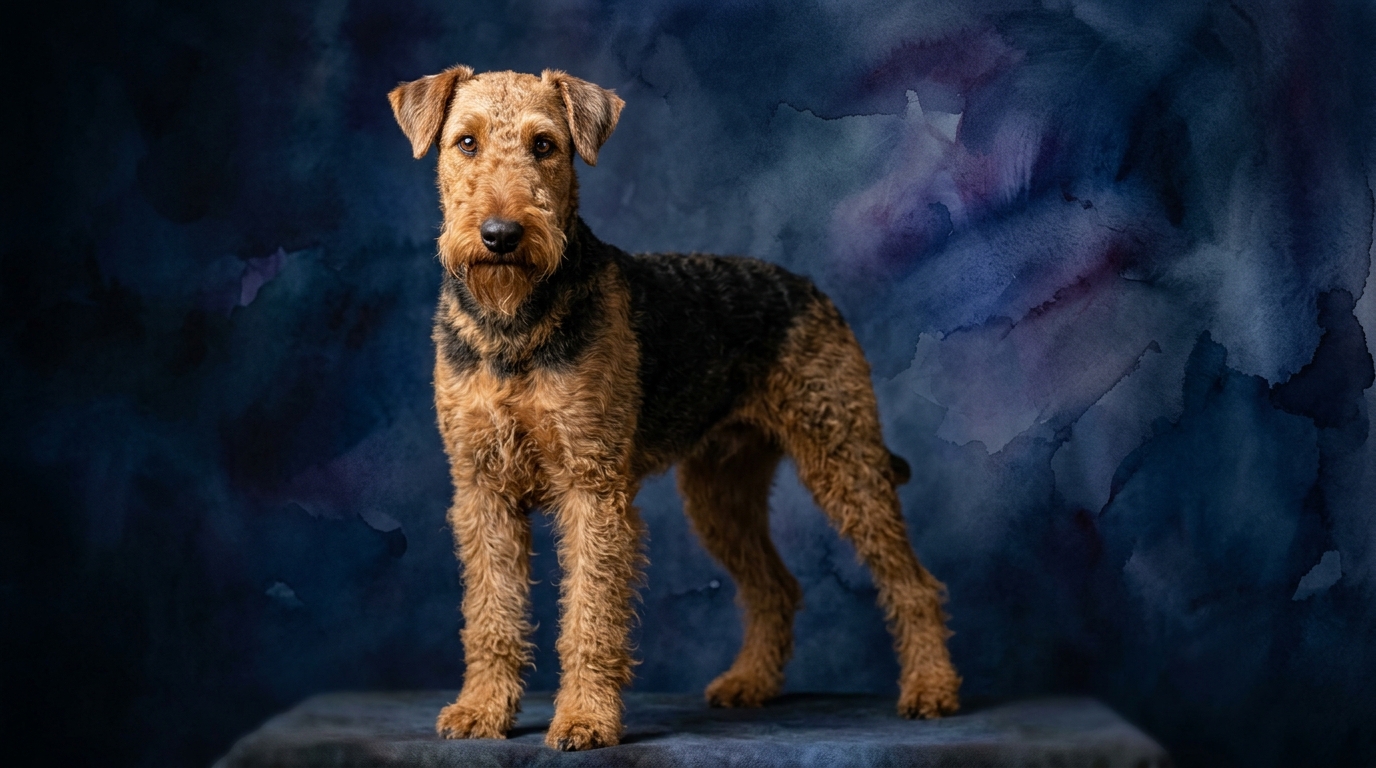
Side-by-Side IQ Profile: Dachshund vs. Airedale Terrier
The Cosmic Pet Pet IQ Lab provides a comprehensive framework to understand the unique cognitive makeup of each breed. For the Dachshund, a Hound group member, we observe a Coren rank of #49, indicating a solid but not top-tier working intelligence in terms of obedience and working IQ. The Airedale Terrier, on the other hand, a member of the Terrier group, achieves a Coren rank of #29, suggesting a more pronounced aptitude for understanding and executing human commands.
When we delve into specific cognitive dimensions, both breeds share a strong Problem Solving score of 4/5. This means both the Dachshund and the Airedale possess a commendable capacity to navigate complex situations, figure out puzzles, or adapt strategies to achieve a desired outcome. For Dachshunds, this often manifests in their determined pursuit of targets, while Airedales apply it to diverse tasks.
A significant divergence appears in Training Speed. The Dachshund scores 2/5, reflecting a more independent nature that can require patience and creative motivation during training sessions. In contrast, the Airedale Terrier boasts a 4/5, indicating a quicker grasp of new commands and a more responsive disposition to handler instruction, making them generally more receptive to formal training protocols.
Social Intelligence is rated at 3/5 for both breeds. This suggests that while both Dachshunds and Airedales are capable of understanding and responding to human social cues and interacting appropriately within a family structure, they may not possess the same nuanced social awareness or eagerness to please as some breeds specifically developed for close companionship and intricate communication.
Instinctive Drive presents another striking difference. The Dachshund earns a perfect 5/5, a testament to their deep-rooted hunting heritage and relentless focus on scent and prey. The Airedale Terrier, while still a working breed, has a more moderate Instinctive Drive of 3/5, suggesting their natural urges are present but less singularly dominant than their Dachshund counterparts.
Finally, Memory scores reveal the Airedale Terrier at 4/5, indicating a good capacity for retaining learned information and experiences over time. The Dachshund, with a score of 3/5, has an adequate memory, but perhaps not as robust for recalling complex sequences or commands without consistent reinforcement.
Where the Dachshund Wins Cognitively
The Dachshund's cognitive triumphs are rooted deeply in their original purpose: a relentless pursuit of burrow-dwelling game. Their instinctive drive, rated a perfect 5/5, is not just a physical urge but a profound cognitive framework that directs their problem-solving abilities (4/5) with single-minded intensity. This means a Dachshund excels at tasks requiring sustained focus on a specific sensory input, like scent tracking, where they will systematically follow a trail with unwavering determination, often ignoring distractions that might deter other breeds. Their independence, while sometimes perceived as stubbornness in obedience, is a cognitive asset when they need to make decisions autonomously in challenging environments, such as navigating a complex tunnel system to reach a perceived reward or 'prey' target. This intrinsic motivation to complete a task, even if it requires significant effort and individual strategizing, highlights a unique cognitive resilience.
Where the Airedale Terrier Wins Cognitively
The Airedale Terrier demonstrates cognitive superiority in areas requiring adaptability and information retention. Their training speed, rated a robust 4/5, indicates a quicker grasp of new commands and concepts compared to many breeds. This isn't just about obedience; it reflects a cognitive flexibility and willingness to engage with human instruction effectively. Coupled with a strong memory at 4/5, Airedales can build a larger repertoire of learned behaviors and recall them reliably over time, making them adept at multi-stage tasks or sports requiring complex sequences. Their problem-solving abilities, also a 4/5, are often applied in a more collaborative context than the Dachshund's, allowing them to work through challenges by leveraging learned strategies and past experiences. This blend of quick learning, solid memory, and collaborative problem-solving makes the Airedale exceptionally versatile for diverse roles, from advanced obedience to intricate agility courses, where they need to process and execute multiple instructions efficiently.
Which is Easier to Train and Why
When it comes to ease of training, the Airedale Terrier holds a distinct advantage. Our data places the Airedale’s training speed at 4/5, significantly higher than the Dachshund’s 2/5. This difference is stark in practical application. Airedales tend to pick up new commands and routines more quickly, demonstrating a greater eagerness to please and a more consistent response to cues. Their superior memory (4/5 vs. 3/5 for Dachshunds) means they retain these lessons more effectively, requiring fewer repetitions over time to solidify a behavior. In contrast, the Dachshund’s profound instinctive drive (5/5) often competes with human directives. While they are capable problem-solvers, their solutions might align with their strong prey drive or independent nature rather than a handler's command. Training a Dachshund demands exceptional patience, creativity, and a deep understanding of their independent spirit; positive reinforcement is crucial to motivate them, as they are less likely to comply simply for the sake of it. An Airedale, while still a terrier with a lively spirit, generally offers a more cooperative learning experience, making them a more straightforward choice for novice trainers or those seeking rapid progress in obedience.
Which Suits Active Owners vs. Relaxed Owners
Determining which breed suits an active versus a relaxed owner requires understanding their unique energy profiles and cognitive needs. The Airedale Terrier, with its robust physical build and higher training speed, is generally better suited for active owners. They thrive on structured activities like long hikes, jogging, agility, or advanced obedience training, all of which provide both physical exertion and mental stimulation. An Airedale's capacity for learning and desire for engagement mean they excel when given a 'job' and consistent interaction, making them a superb companion for owners who enjoy an active, participatory lifestyle with their dog. Conversely, the Dachshund can appear to be a fit for relaxed owners due to their smaller stature, but this is a common misconception. While they don't require the same endurance exercise as an Airedale, their immense instinctive drive (5/5) means they demand significant mental engagement. Owners must provide outlets for their sniffing, digging, and 'hunting' behaviors, even if it's within a home environment. A Dachshund left unstimulated can become bored and destructive, channeling their sharp problem-solving skills into undesirable behaviors. Therefore, a 'relaxed' owner for a Dachshund must be mentally active in providing enrichment, puzzle toys, and short, engaging scent games, even if their physical activity is moderate.
The Verdict
Choose the Dachshund if you appreciate an independent spirit and are prepared to engage a tenacious mind through scent work, puzzle toys, and consistent, patient motivation, valuing a deep bond with a characterful companion. They are ideal for owners who find joy in understanding and channeling a dog's profound natural instincts.
Opt for the Airedale Terrier if you seek a versatile, trainable partner for an active lifestyle, excelling in dog sports or advanced obedience, and value a dog that learns quickly and retains information readily. They thrive with owners who enjoy collaborative training and consistent engagement in diverse activities.
🧠 Find Your Pet's IQ Score
Our Pet IQ Lab assessment covers 25+ tests across 5 cognitive dimensions — personalized to your breed.
Take the Full IQ Test →Frequently Asked Questions
Do Dachshunds really have a strong prey drive?
Yes, their instinctive drive is rated 5/5, reflecting their historical role as badger hunters. This drive manifests as a keen interest in tracking scents and pursuing small animals, requiring secure environments and mental outlets.
Are Airedale Terriers easy to live with for first-time dog owners?
Airedales are trainable with a 4/5 training speed and good memory, but their size and energy mean they benefit from owners committed to consistent training and exercise. While not overly challenging, they thrive best with structured guidance.
How do problem-solving scores compare for these breeds?
Both Dachshunds and Airedale Terriers score 4/5 in problem-solving. However, Dachshunds often apply this skill independently towards instinctual goals, while Airedales can leverage it more collaboratively within a training context.