
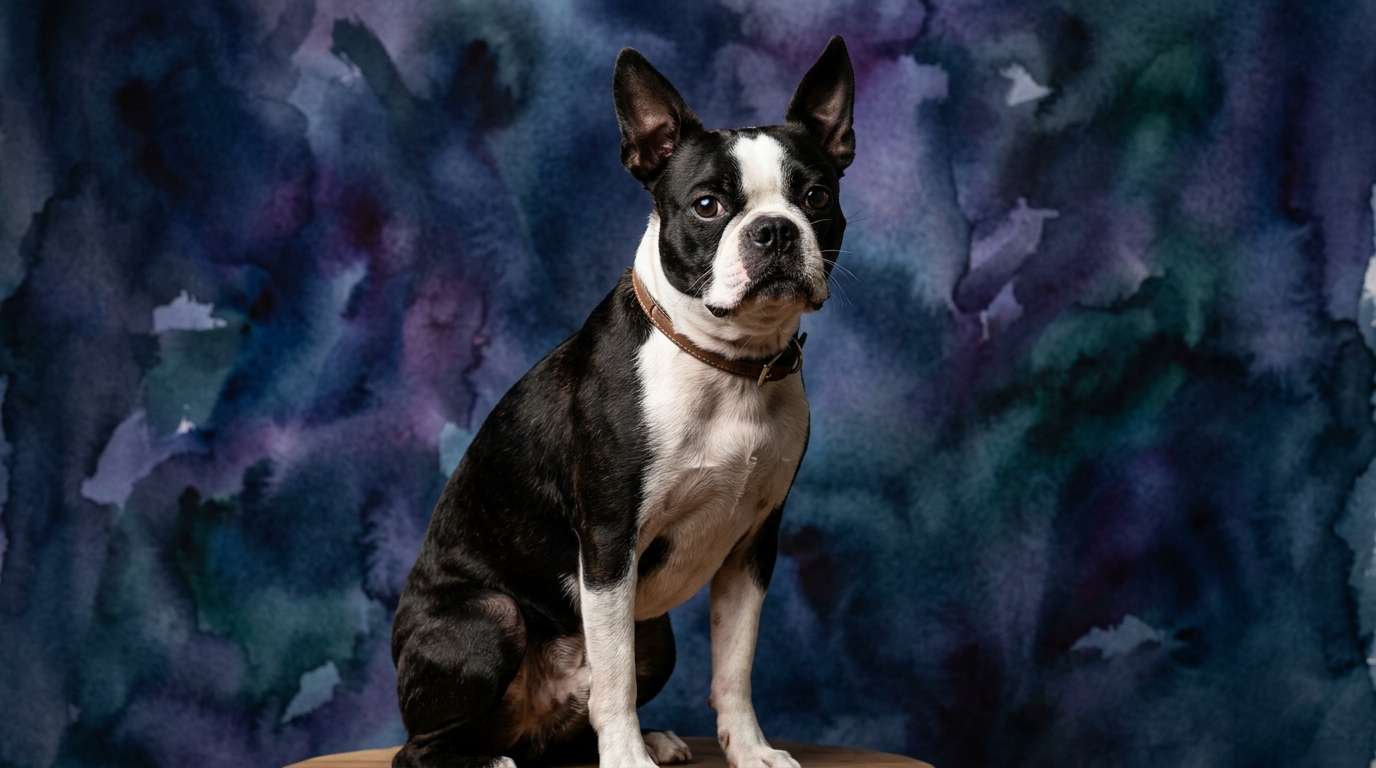
Side-by-Side Cognitive Profiles: Dachshund vs. Boston Terrier
The Dachshund, a hound breed ranking #49 in Coren's scale, presents a fascinating cognitive profile marked by strong instincts and independent thought. Their problem-solving ability scores a robust 4 out of 5, reflecting a persistent nature honed for intricate tasks like flushing burrowing prey. Training speed, however, sits at a moderate 2 out of 5, suggesting they learn at their own pace, often prioritizing their innate drives over human directives. Social intelligence is rated 3 out of 5, indicating they form bonds but may not always be overtly eager to please. A standout 5 out of 5 in instinctive drive highlights their powerful urge to hunt, track, and explore, a core aspect of their cognitive makeup. Memory is a solid 3 out of 5, allowing them to retain learned behaviors and environmental knowledge effectively.
The Boston Terrier, a non-sporting breed at Coren rank #54, offers a contrasting cognitive blueprint, emphasizing companionship and adaptability. Their problem-solving capacity is a respectable 3 out of 5, demonstrating an ability to navigate daily challenges and learn routines. Training speed scores 3 out of 5, indicating they are generally receptive to learning commands and enjoy engaging in structured activities. Where they truly shine is in social intelligence, scoring 4 out of 5, showcasing their exceptional capacity for reading human emotions and adapting to social cues. Their instinctive drive is a lower 2 out of 5, meaning their primary motivation isn't hunting or intense exploration but rather interaction and connection. Memory, like the Dachshund, is rated 3 out of 5, allowing for consistent recall of training and experiences.
Where the Dachshund Excels Cognitively
The Dachshund's cognitive strengths lie primarily in their problem-solving prowess and an unparalleled instinctive drive. Their 4/5 problem-solving score isn't about complex abstract thought but rather a tenacious, goal-oriented intelligence. This manifests in their ability to methodically work through obstacles, whether it's figuring out how to access a hidden treat or navigating a complex scent trail. This tenacity is a direct byproduct of their hunting heritage, where independent decision-making and persistent effort were crucial for success.
Their 5/5 instinctive drive is the engine behind much of their cognitive activity. This powerful urge to explore, dig, and track means they are constantly processing environmental stimuli, identifying potential “prey” (even if it's just a squirrel in the yard), and formulating strategies to engage with it. This drive fuels a specific type of cognitive engagement, leading to a deep understanding of their surroundings and a highly focused approach when their instincts are piqued. They excel in tasks requiring sustained attention to a sensory input and the independent execution of a plan, often without direct human instruction.
Where the Boston Terrier Shines Cognitively
The Boston Terrier's cognitive advantages are most evident in their superior social intelligence and more adaptable training speed. Their 4/5 social intelligence score highlights a keen aptitude for understanding human communication, both verbal and non-verbal. They are adept at interpreting facial expressions, body language, and tone of voice, allowing them to adjust their behavior to align with human expectations. This makes them highly responsive companions, eager to engage in shared activities and maintain a harmonious household environment.
Coupled with their 3/5 training speed, this social acumen makes them generally more amenable to learning new commands and routines. While not rapid learners, their desire to connect with and please their human counterparts often translates into a willingness to participate in training sessions. They are motivated by social reward and positive reinforcement, quickly grasping the link between their actions and desired human responses. This cognitive profile makes them excellent candidates for obedience training, trick learning, and even participation in canine sports that emphasize partnership and communication.
Training Dynamics: Which Breed is Easier to Guide?
When evaluating ease of training, the Boston Terrier clearly holds an advantage over the Dachshund. The Boston Terrier's 3/5 training speed, combined with their 4/5 social intelligence, creates a receptive student. They possess a natural inclination to cooperate and enjoy the interaction that training provides. Their lower instinctive drive (2/5) means they are less likely to be distracted by external stimuli like scents or perceived prey, allowing them to focus more readily on the task at hand. Their eagerness to please and strong bond with their owners make them motivated learners who respond well to positive reinforcement methods.
The Dachshund, with a training speed of 2/5 and a potent 5/5 instinctive drive, presents a different training challenge. Their strong independent streak, a hallmark of their hound heritage, means they often prefer to follow their own nose or pursue their own objectives rather than adhering strictly to human commands. While capable of learning, their attention can be difficult to capture and retain, especially if a more compelling scent or activity presents itself. Training a Dachshund requires immense patience, consistency, and a deep understanding of their motivations, often leveraging their innate drives in a constructive way rather than trying to suppress them.
Matching Breeds to Owner Lifestyles: Active vs. Relaxed
The choice between a Dachshund and a Boston Terrier depends significantly on an owner's lifestyle and their preferred level of engagement. Owners who thrive on outdoor exploration, enjoy puzzle-solving, and appreciate a dog with a strong, independent personality might find the Dachshund a more fitting companion. Their high instinctive drive (5/5) means they require outlets for their natural urges to sniff, track, and dig. They are not content to simply lounge; they need mental and physical challenges that tap into their problem-solving (4/5) and exploratory instincts. An active owner who understands and caters to these needs will find a devoted, albeit opinionated, partner.
Conversely, the Boston Terrier is often a better match for owners seeking a more relaxed, socially integrated companion. Their lower instinctive drive (2/5) means they are generally less driven by external stimuli and more focused on their human family. Their high social intelligence (4/5) makes them excellent housemates who enjoy being involved in daily routines and thrive on companionship. While they certainly benefit from regular walks and playtime, their primary need is for social interaction and a comfortable spot by their owner's side. Relaxed owners who appreciate a communicative, adaptable, and affectionate dog will find the Boston Terrier a delightful addition to their home.
The Verdict
Choose a Dachshund if you appreciate a dog with profound independent problem-solving skills and a robust instinctual drive for exploration, and are prepared to engage with their strong-willed personality through patient, consistent training.
Opt for a Boston Terrier if you seek a highly social, adaptable companion eager to please and easily integrated into family life, offering a more straightforward training experience and a lower demand for instinctual outlets.
🧠 Find Your Pet's IQ Score
Our Pet IQ Lab assessment covers 25+ tests across 5 cognitive dimensions — personalized to your breed.
Take the Full IQ Test →Frequently Asked Questions
Are Dachshunds stubborn during training?
Dachshunds can certainly appear stubborn, primarily due to their strong instinctive drive (5/5) and independent problem-solving (4/5). They are often more motivated by their own desires, like following a scent, than by human commands, requiring consistent and creative training approaches.
How much mental stimulation does a Boston Terrier need?
Boston Terriers thrive on social interaction and moderate mental challenges. Their 4/5 social intelligence means engaging with their owners is stimulating, and regular training sessions, puzzle toys, or short games that tap into their 3/5 problem-solving are usually sufficient.
Can a Dachshund and Boston Terrier live harmoniously together?
Yes, a Dachshund and Boston Terrier can often live together, especially with proper socialization. The Boston Terrier's higher social intelligence (4/5) helps them adapt, while the Dachshund's independent nature (3/5 social IQ) means they might tolerate rather than constantly engage, but generally coexist peacefully.