
Side-by-side IQ profile
The Dachshund, ranked 49th by Coren, exhibits a unique cognitive blend. Its Problem Solving is a robust 4/5, reflecting its historical role in overcoming obstacles to hunt prey; they are adept at figuring out how to achieve goals, sometimes to an owner's exasperation. Training Speed sits at a lower 2/5, not due to a lack of comprehension, but often an independent streak and strong will. Social Intelligence is 3/5, indicating deep bonds with family but potential wariness towards strangers. Critically, their Instinctive Drive is a maximal 5/5, fueling their persistent tracking and digging urges. Memory is a functional 3/5, allowing recall of routines and commands, though often applied selectively.
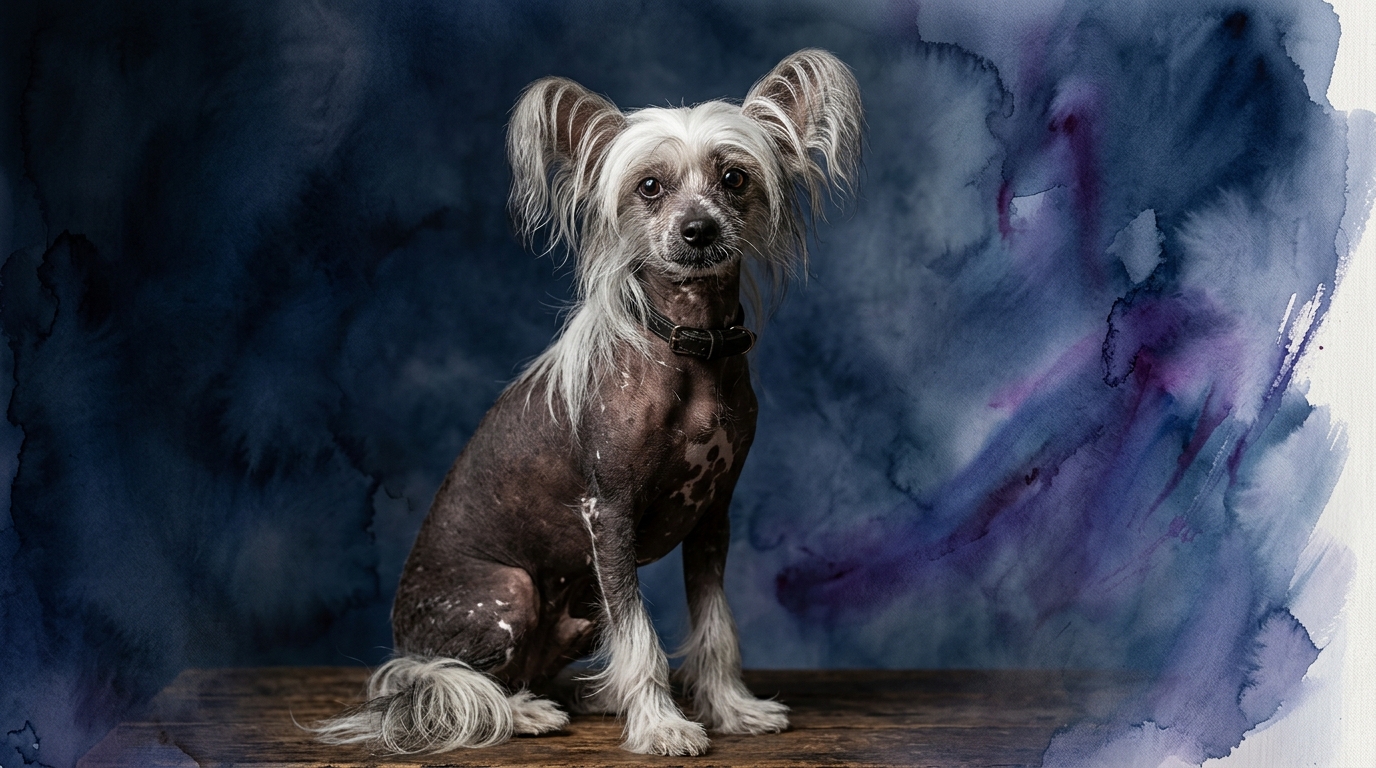
The Chinese Crested, without a Coren ranking, presents a different cognitive profile. Their Problem Solving is a moderate 3/5; they learn through observation and can solve puzzles, often driven by curiosity or a desire for interaction. Training Speed is 3/5, suggesting a more cooperative and attentive student who responds well to positive reinforcement. Social Intelligence is 3/5, fostering strong family attachments and general adaptability, though some may be shy without early socialization. Instinctive Drive is 3/5, present but less intense than the Dachshund, meaning fewer overwhelming urges for hunting or digging. Memory is 3/5, supporting consistent recall of learned behaviors and social cues.
Where Dachshund wins cognitively
The Dachshund's cognitive superiority lies in its exceptional Problem Solving (4/5) and unparalleled Instinctive Drive (5/5). Their ancestry as badger hunters forged a mind inherently resourceful and persistent. When confronted with a barrier, a Dachshund employs clever strategies, digging or investigating until its objective is met, whether it's a hidden treat or an escape route. This tenacity is a direct manifestation of their high problem-solving score, fueled by a powerful, deeply ingrained instinct to overcome. Their prodigious instinctive drive also translates into sophisticated olfactory intelligence, allowing them to process and follow complex scent trails with remarkable precision in activities like scent work.
Where Chinese Crested wins cognitively
The Chinese Crested demonstrates a distinct cognitive advantage in its Training Speed (3/5) compared to the Dachshund's 2/5. Cresteds are generally more eager to learn and respond well to positive reinforcement, often motivated by companionship. Their willingness to cooperate translates into a smoother, faster learning process for formal commands and tricks. Furthermore, their moderate Instinctive Drive (3/5) offers a cognitive flexibility not seen in the Dachshund. Without an overwhelming urge to hunt or dig, their intelligence can be channeled into a broader range of activities and adaptability to diverse household environments, making them generally more pliable companions for various lifestyles.
Which is easier to train and why
The Chinese Crested is generally easier to train, primarily due to its higher Training Speed (3/5) and more moderate Instinctive Drive (3/5). Cresteds are often keen to please, responding well to consistent, positive reinforcement. Their cognitive process during training is less likely to be sidetracked by overpowering innate urges, allowing them to focus on the trainer and the task, leading to efficient acquisition of new behaviors. In contrast, the Dachshund's lower Training Speed (2/5) combined with its maximal Instinctive Drive (5/5) means they often prioritize their own interests or scents over commands, requiring more patient, creative, and consistent approaches to achieve desired behaviors.
Which suits active owners vs relaxed owners
For owners seeking a companion with specific types of activity, the Dachshund aligns well with those who define "active" by mental engagement and purpose-driven tasks. Their prodigious Instinctive Drive (5/5) means they thrive on scent work, tracking games, and challenges that engage their problem-solving minds. They require stimulating walks and mental puzzles to prevent boredom, suiting owners who enjoy outdoor exploration and can dedicate time to satisfying their inherent drives. Conversely, the Chinese Crested is a better fit for relaxed owners. Their moderate Instinctive Drive (3/5) means they are content with regular, but not exhaustive, walks and indoor play, thriving on companionship and a calm home environment.
The Verdict
Choose a Dachshund if you appreciate a dog with a robust, independent problem-solving mind and an unwavering instinctive drive, and are prepared to engage their mental tenacity with consistent, creative training and plenty of scent-based enrichment.
Choose a Chinese Crested if you seek a sensitive, adaptable companion with a moderate drive and a cooperative spirit that responds readily to positive training methods, thriving in a home that values companionship and gentle interaction.
🧠 Find Your Pet's IQ Score
Our Pet IQ Lab assessment covers 25+ tests across 5 cognitive dimensions — personalized to your breed.
Take the Full IQ Test →Frequently Asked Questions
Are Dachshunds stubborn because they aren't smart?
No, Dachshunds are not stubborn due to a lack of intelligence; their high problem-solving ability and intense instinctive drive often mean they prioritize their own goals, like tracking a scent, over immediate obedience. Their "stubbornness" is often a display of their independent cognitive processing rather than an inability to comprehend.
Can a Chinese Crested participate in dog sports?
Absolutely! While not typically known for the intense drives of working breeds, Chinese Cresteds can excel in various dog sports like agility, obedience, and rally. Their moderate training speed and desire to please make them amenable students, and many enjoy the mental and physical stimulation these activities provide.
How important is early socialization for these breeds?
Early socialization is crucial for both breeds, though for different reasons. For Dachshunds, it helps temper their naturally exclusive social intelligence and potential wariness towards strangers, fostering broader acceptance. For Chinese Cresteds, it helps build confidence and prevent shyness, ensuring they grow into well-adjusted, adaptable companions.