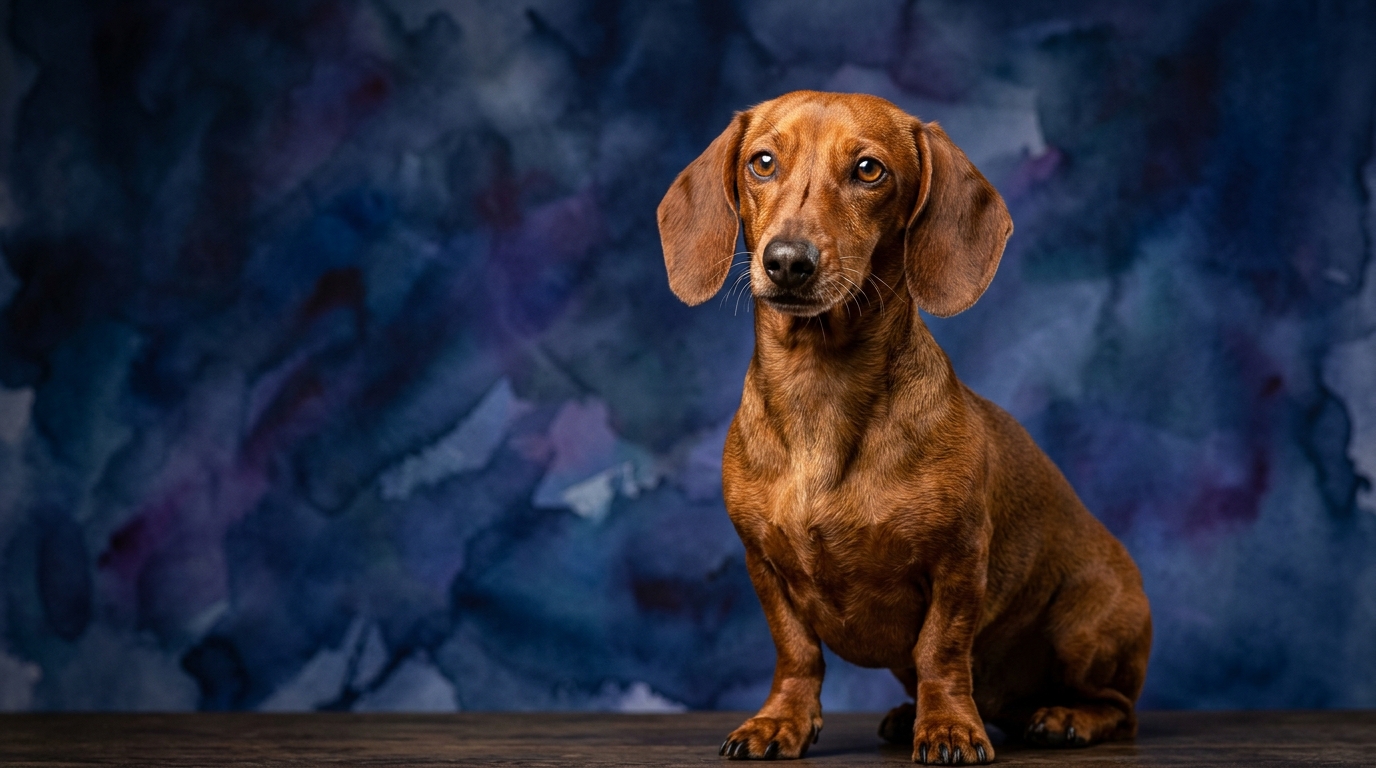
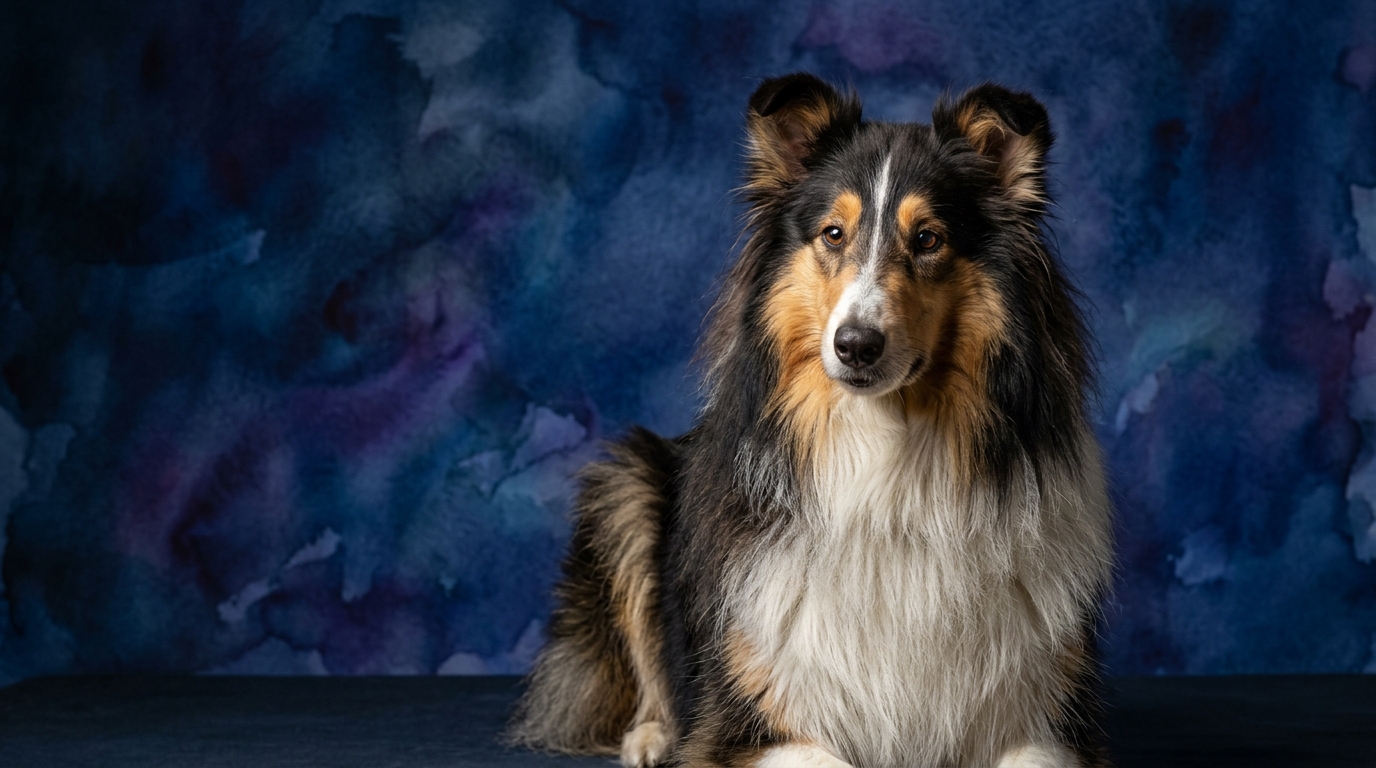
Side-by-Side IQ Profile: Dachshund vs. Collie (Rough)
To understand the unique cognitive makeup of each breed, The Cosmic Pet Pet IQ Lab assesses five key dimensions. For the Dachshund, a Hound breed ranked #49 by Coren, its Problem Solving is rated 4/5. This score reflects a tenacious, independent approach to overcoming obstacles, particularly when motivated by scent or a desired object. They often devise clever, if sometimes mischievous, strategies to achieve their goals, leveraging their low-slung body for navigating tight spaces or persistent digging. Their solutions are often practical and self-serving rather than abstract. Training Speed is 2/5; Dachshunds exhibit a slower rate of acquiring new commands, not necessarily due to a lack of understanding, but rather a strong-willed disposition. They process instructions but often weigh them against their own immediate desires or instincts, requiring consistent and patient repetition for compliance. Social Intelligence is 3/5; their capacity to interpret human cues is moderate. While they can read their owners, their independent nature means they might choose to acknowledge or ignore these cues based on their own agenda, rather than seeking constant human approval. Instinctive Drive is an exceptional 5/5; an exceptionally high drive is a hallmark of the Dachshund, deeply rooted in their badger-hunting origins. This manifests as an intense desire to scent, dig, and pursue, which significantly influences their problem-solving and overall behavior, often overriding other cognitive functions. Memory is 3/5; Dachshunds possess a decent memory for routines, specific locations of treats, and familiar people. However, their recall for complex sequences of commands might be less robust compared to breeds with a higher memory score, often requiring regular reinforcement.
The Collie (Rough), a Herding breed with a Coren rank of #16, presents a different cognitive blueprint. Its Problem Solving is also 4/5; Rough Collies demonstrate a strong capacity for sequential problem-solving and understanding multi-step tasks. Their solutions often involve a systematic approach, whether it's navigating an agility course or figuring out how to retrieve a specific toy from a pile. They excel in scenarios where logic and learned patterns are applicable. Training Speed is 4/5; these dogs are notably quick learners, eager to absorb new commands and routines. Their cooperative nature and attentiveness allow them to grasp instructions with fewer repetitions, making them highly receptive to formal training and skill acquisition. Social Intelligence is 3/5; similar to Dachshunds, their social intelligence is rated as moderate, but it often manifests as a greater willingness to work alongside humans. They are attuned to their owner's moods and intentions, often using this understanding to facilitate cooperation and communication. Instinctive Drive is 3/5; the Rough Collie’s instinctive drive is moderate, primarily centered around their herding heritage. This translates into a desire for order, a tendency to “gather” family members, and an enjoyment of structured activities, influencing their cooperative behavior rather than independent pursuit. Memory is an outstanding 5/5; Rough Collies boast exceptional memory capabilities. They can retain a vast repertoire of commands, complex routines, and past experiences over long periods, making them reliable performers in learned tasks and excellent at recalling specific instructions.
Where the Dachshund Excels Cognitively
The Dachshund's cognitive strength lies prominently in its ability to apply its high instinctive drive (5/5) directly to tenacious problem-solving (4/5). This combination makes them masters of independent investigation and resourceful navigation of their environment. For instance, when presented with a hidden treat, a Dachshund won't just give up; they will employ a persistent, multi-faceted approach, using their exceptional scenting abilities, burrowing instincts, and unique body shape to access the reward. Their problem-solving isn't about abstract logic, but about pragmatic, goal-oriented persistence, often devising novel solutions born from sheer determination to achieve their desired outcome, such as tunneling under a blanket or pushing open a slightly ajar door. This self-driven ingenuity, fueled by their strong will, is where their cognitive edge truly emerges, making them formidable little strategists in their own pursuit of satisfaction.
Where the Collie (Rough) Holds the Cognitive Advantage
The Collie (Rough) distinguishes itself with an impressive blend of superior memory (5/5) and fast training speed (4/5), which underpins its ability to learn and reliably execute complex, multi-step tasks. This breed excels at building an extensive behavioral repertoire, remembering intricate sequences of commands for extended periods. Their problem-solving (4/5) is often expressed through their capacity to apply learned patterns and sequences to new situations, quickly processing information and recalling appropriate responses. For example, a Collie can learn and perform a lengthy agility course with precision after fewer repetitions, or consistently follow a series of verbal cues to retrieve specific items. Their cognitive advantage lies in their structured learning, robust recall, and willingness to cooperate in applying their intellect to human-directed activities, making them adept at tasks requiring precision and consistent understanding of instruction.
Ease of Training: Dachshund vs. Collie (Rough)
When evaluating ease of training, the Collie (Rough) stands out as the more straightforward student. Their training speed (4/5) is significantly higher than the Dachshund's (2/5), meaning they absorb new commands and behaviors much more quickly. Coupled with their exceptional memory (5/5), Collies tend to retain these lessons with remarkable consistency, eager to please and cooperate. This breed inherently seeks to understand and comply with human direction, making the training process a collaborative and rewarding experience, often requiring fewer repetitions and less remedial work. In contrast, the Dachshund's independent spirit and lower training speed mean that while they are certainly capable of learning, their compliance is often discretionary. A Dachshund might understand a command perfectly but choose to ignore it if a compelling scent or an interesting distraction presents itself, requiring far more patience, consistency, and motivational creativity from their trainer to achieve reliable obedience. Their strong instinctive drive (5/5) often competes directly with training objectives, demanding a dedicated and persistent training approach.
Matching Breed Intelligence to Owner Lifestyles
The choice between these breeds also hinges significantly on an owner's lifestyle and expectations. For owners leading a more relaxed life, the Collie (Rough) can be a surprisingly good fit, provided their mental needs are consistently met. While they enjoy daily walks and playtime, their moderate instinctive drive (3/5) means they aren't constantly seeking high-intensity physical exertion. They thrive on mental stimulation through training, puzzle toys, and consistent interaction, making them content with owners who enjoy teaching new things and engaging in structured, thoughtful activities rather than extreme sports. They are cooperative, gentle companions that adapt well to a calm household that prioritizes mental enrichment and regular, but not demanding, physical activity.
The Dachshund, despite its smaller stature, often requires a more “active” owner in terms of mental engagement and consistent management of their strong drives. Their exceptional instinctive drive (5/5) means they are not simply content to be lap dogs; they need outlets for their hunting and scenting behaviors. A relaxed owner who doesn't provide consistent mental challenges or manage their independent streak might find themselves with a persistent, sometimes destructive, little dog who invents their own entertainment. They suit owners who enjoy engaging in scent work, earthdog trials, or consistent, patient training to channel their determined personality, and who appreciate a dog with a robust, often vocal, character. Their activity might be bursts of intense focus and investigation rather than sustained endurance, but these bursts are essential for their well-being.
The Verdict
Opt for a Dachshund if you admire a tenacious, independent spirit with a sharp wit for self-motivated problem-solving, and you're prepared for consistent, patient guidance to channel their strong instincts.
Select a Collie (Rough) if you seek a highly trainable companion that excels at retaining complex commands and enjoys collaborative learning, fitting well into a structured environment with moderate activity.
🧠 Find Your Pet's IQ Score
Our Pet IQ Lab assessment covers 25+ tests across 5 cognitive dimensions — personalized to your breed.
Take the Full IQ Test →Frequently Asked Questions
Do Dachshunds and Collies learn at the same pace?
No, their learning speeds differ notably. The Collie (Rough) has a training speed of 4/5, quickly picking up new commands and routines. The Dachshund, with a training speed of 2/5, takes longer to internalize and consistently obey new instructions due to their independent nature.
Which breed is better at remembering tricks?
The Collie (Rough) demonstrates superior memory with a rating of 5/5, making them exceptional at retaining a wide array of tricks and commands over time. While Dachshunds have a decent memory (3/5), they may require more frequent refreshers for complex sequences.
How does instinctive drive impact their intelligence?
Instinctive drive significantly shapes how each breed applies its intelligence. The Dachshund's high drive (5/5) fuels their problem-solving in tasks related to hunting and exploration, making them persistent. The Collie's moderate drive (3/5), rooted in herding, translates to a desire for order and cooperation, making them responsive to structured training.