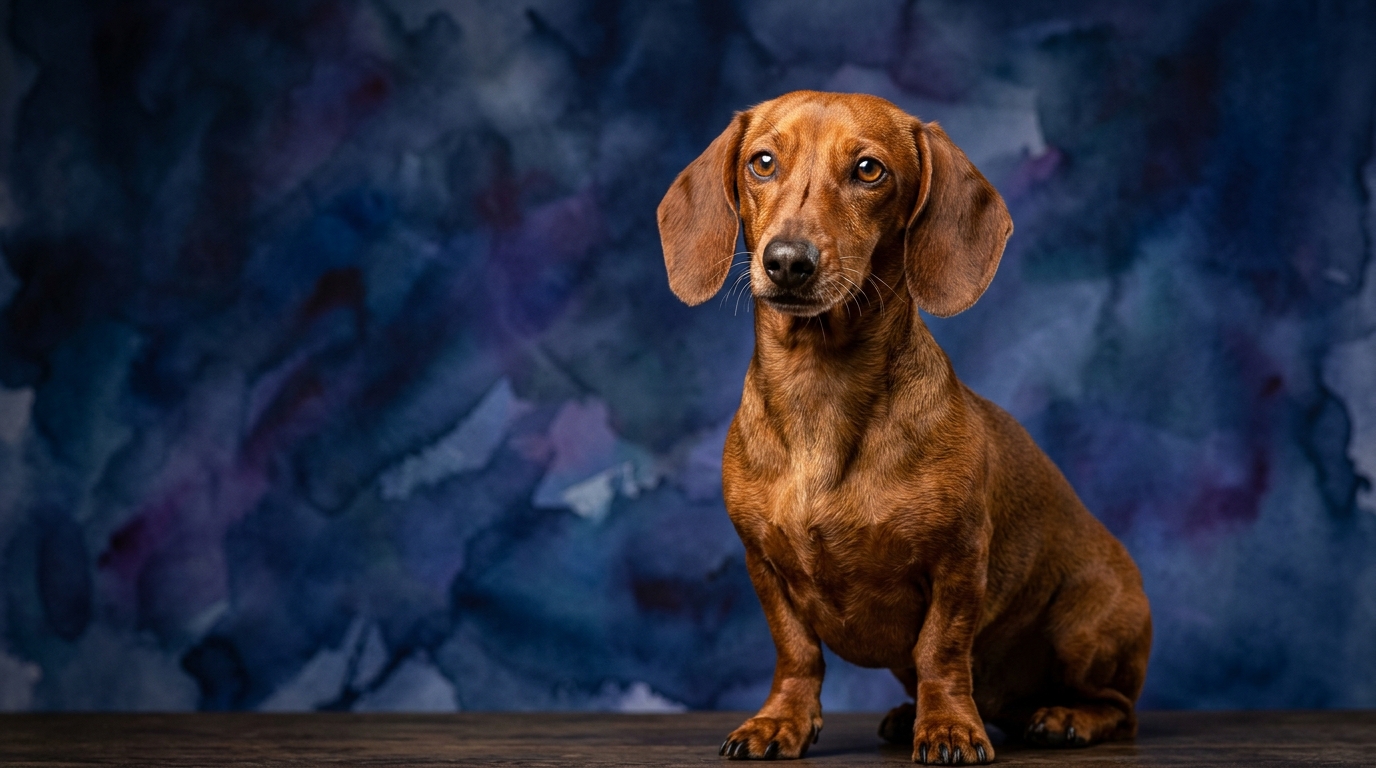
Side-by-Side IQ Profile: Dachshund
The Dachshund, ranked #49 by Coren, demonstrates a specialized cognitive toolkit. Their Problem Solving is rated 4/5, indicating a capacity for ingenious solutions, often driven by their primary hunting instincts. Training Speed is a moderate 2/5, suggesting they learn new commands at their own deliberate pace, sometimes prioritizing their inherent drives over human instruction. Social Intelligence stands at 3/5, meaning they can navigate complex social dynamics but might not always seek to please others above their own agenda. Their Instinctive Drive is a robust 5/5, reflecting an unyielding focus on scent work, burrowing, and independent pursuit, making them formidable in tasks related to their original purpose. Memory is assessed at 3/5, allowing them to retain learned information but perhaps not with the same precision as other breeds.
This breed's cognitive architecture is deeply rooted in its historical role as a hunter of burrowing animals. Their problem-solving often manifests as persistent, independent action to achieve a goal, even if it means detouring from a direct path or ignoring a human directive. The lower training speed isn't a lack of capacity but rather an expression of their strong will and preference for self-directed activities. Their social intelligence, while adequate for household living, is balanced by a strong individualistic streak, and their memory serves their immediate hunting and exploratory needs rather than extensive command sequences.
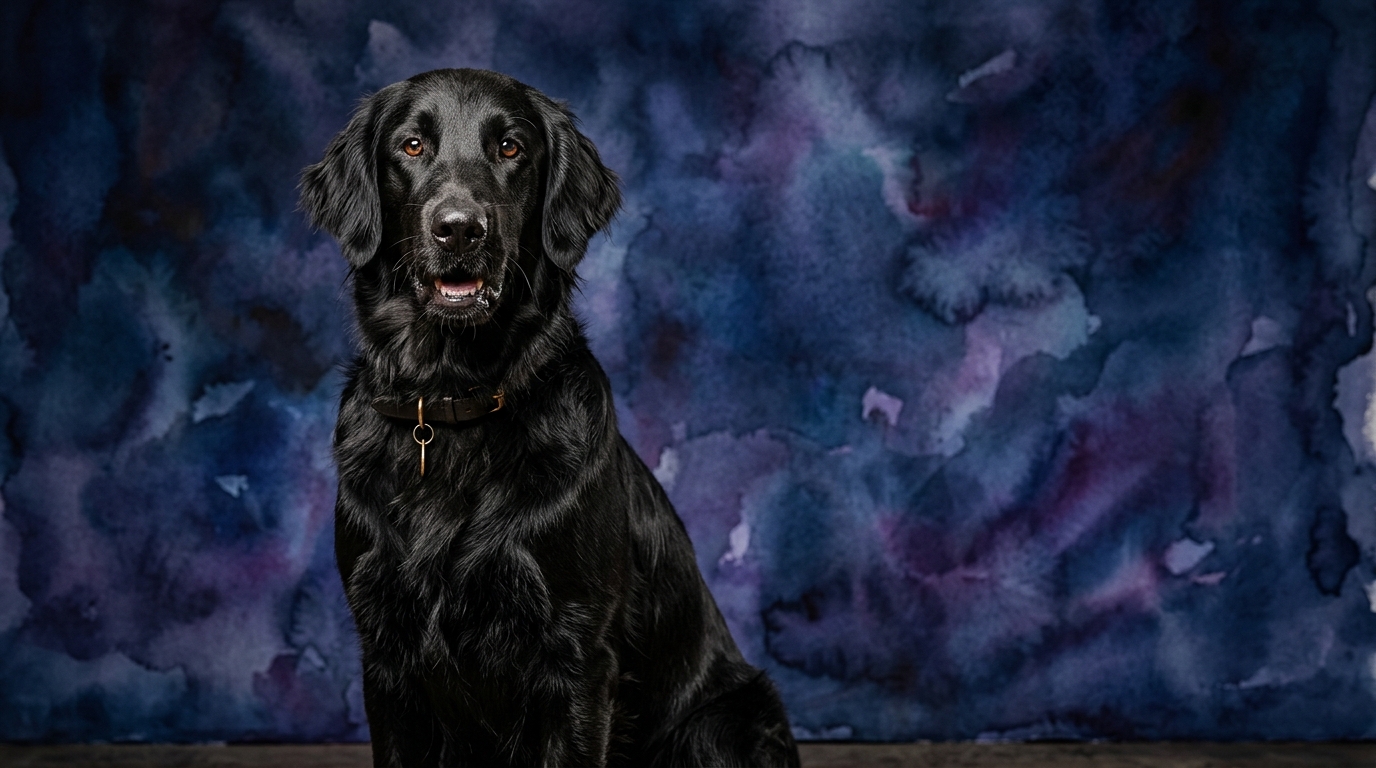
Side-by-Side IQ Profile: Flat-Coated Retriever
In contrast, the Flat-Coated Retriever, with a higher Coren rank of #17, presents a different cognitive emphasis. Their Problem Solving also scores 4/5, indicating an adaptive mind capable of navigating challenges, often in cooperative contexts. Training Speed is a strong 4/5, signifying a quicker grasp of commands and a greater eagerness to engage in structured learning. Social Intelligence is rated 3/5, similar to the Dachshund, suggesting they are adept at reading social cues but maintain a balanced approach to interaction. Their Instinctive Drive is 3/5, present but less singularly focused than the Dachshund, typically channeled towards retrieving and engaging with their human partners. A standout feature is their Memory, rated 5/5, indicating an exceptional ability to recall information, commands, and experiences over long periods, which is crucial for complex retrieving tasks and consistent performance.
The Flat-Coat's cognitive profile reflects its sporting heritage, where cooperation with a handler, rapid learning, and precise memory are paramount. Their problem-solving is often applied to tasks involving spatial awareness and object retrieval, frequently in dynamic environments. The higher training speed highlights their eagerness to learn and their responsiveness to instruction, making them a joy to guide through new challenges. Their exceptional memory allows them to build a vast repertoire of learned behaviors and associations, which underpins their reliable performance in various dog sports and working roles. While they possess an instinctive drive, it is typically more malleable and directed towards collaborative efforts.
Where Dachshund Wins Cognitively
The Dachshund's cognitive strength shines brightest in its unparalleled Instinctive Drive, rated a perfect 5/5. This isn't just a general drive; it's a hyper-focused, tenacious, and independent pursuit drive tied directly to their origins as badger hunters. When presented with a scent trail or the opportunity to explore a burrow-like space, a Dachshund's problem-solving (4/5) becomes acutely specialized. They excel at figuring out how to navigate tight spaces, bypass obstacles, and persist in a task for extended periods, even without direct human oversight. This cognitive tenacity means they can independently follow a complex trail, mentally mapping their environment and remembering the precise location of a perceived quarry, making them exceptional at tasks requiring sustained, independent focus on a sensory input.
Their problem-solving, though rated equally with the Flat-Coat, is applied differently. A Dachshund's cognitive strategy often involves trial-and-error driven by an unyielding desire to reach a goal, even if it means digging under a fence or finding a tiny gap to squeeze through. This intrinsic motivation to explore and hunt gives them a unique edge in tasks that demand singular, self-directed persistence rather than collaborative effort. They possess a profound understanding of their immediate sensory world and use their cognitive abilities to master it on their own terms, making them formidable little engineers of escape and exploration.
Where Flat-Coated Retriever Wins Cognitively
The Flat-Coated Retriever's cognitive advantages are most evident in its superior Training Speed (4/5) and exceptional Memory (5/5). These two attributes work synergistically, allowing them to rapidly acquire new skills and retain complex sequences of commands over time. While their Problem Solving is equal to the Dachshund at 4/5, the Flat-Coat applies it often in a cooperative context, quickly understanding human cues and adapting their behavior. Their flawless memory enables them to flawlessly recall intricate retrieving patterns, remember specific item locations, and perform multi-step tasks with consistent accuracy. This makes them highly proficient in activities requiring precision, repeatability, and a deep understanding of human expectations, such as advanced obedience, agility, or field work where remembering specific marks is paramount.
Their cognitive edge also extends to their ability to generalize learned behaviors and apply them in new situations, thanks to their strong memory and adaptable problem-solving. A Flat-Coat can remember a vast array of verbal cues and hand signals, seamlessly integrating them into complex routines. This makes them exceptionally adaptable to structured learning environments and capable of performing tasks that require not just understanding a command, but remembering its context and applying it consistently over time and across varying scenarios. Their cognitive strengths are geared towards partnership and performance, making them outstanding students and reliable working companions.
Which is Easier to Train and Why
Comparing training ease, the Flat-Coated Retriever clearly holds an advantage due to its 4/5 Training Speed and 5/5 Memory. They typically exhibit a strong desire to please and a quicker grasp of new commands, often requiring fewer repetitions to solidify a behavior. Their excellent memory ensures that once a command is learned, it is retained effectively, leading to more consistent performance. For instance, a Flat-Coat might master a complex 'retrieve and hold' command in a handful of sessions and remember it for months, whereas a Dachshund might require significantly more repetition and context-specific reinforcement.
In contrast, the Dachshund's 2/5 Training Speed suggests a more independent learning style. While capable of learning, their formidable 5/5 Instinctive Drive can often override the desire to comply with human instructions, especially if a more compelling scent or digging opportunity arises. This means training a Dachshund often requires more patience, creative motivation, and consistency to ensure that learned behaviors become more ingrained than their innate hunting urges. A Flat-Coat is generally more receptive to formal training methods, while a Dachshund benefits from highly engaging, reward-based approaches that compete effectively with their environmental interests, making training a marathon of consistent engagement rather than a sprint of rapid acquisition.
Which Suits Active Owners vs Relaxed Owners
For active owners seeking a highly engaged and trainable companion for outdoor adventures or dog sports, the Flat-Coated Retriever is a compelling choice. Their combination of good problem-solving, high training speed, and exceptional memory makes them adept at learning complex tasks for activities like obedience, agility, or retrieving. They thrive on physical and mental stimulation provided by an owner who enjoys hiking, running, or structured play sessions, readily participating in multi-stage activities that leverage their cognitive and physical capabilities. Their cooperative nature means they are often found enthusiastically by their owner's side, eager for the next challenge.
Conversely, for owners who appreciate a dog with a robust personality and a strong sense of self, who are comfortable with managing a powerful instinctive drive, the Dachshund can be a rewarding match. While they still require regular exercise and mental engagement, their independent nature and lower training speed might better suit an owner who enjoys a dog’s unique pursuits and is patient with a less rigidly compliant companion. They are often content with leisurely strolls punctuated by extensive sniffing opportunities, where their problem-solving is applied to deciphering the world through scent, rather than intense athletic endeavors requiring constant human direction. Their owners often find joy in observing their determined individuality and clever, self-directed exploits.
The Verdict
Choose the Dachshund if you admire a tenacious, independent spirit with a highly specialized drive for exploration and problem-solving, and you are prepared for a dog that learns on its own terms, often requiring patience and creative motivation.
Opt for the Flat-Coated Retriever if you seek a highly trainable, cooperative companion with outstanding memory, eager to engage in complex activities and structured learning, consistently performing tasks with enthusiasm and precision.
🧠 Find Your Pet's IQ Score
Our Pet IQ Lab assessment covers 25+ tests across 5 cognitive dimensions — personalized to your breed.
Take the Full IQ Test →Frequently Asked Questions
How does the Coren rank influence the perceived intelligence of these breeds?
The Coren rank primarily reflects a breed's 'working and obedience intelligence,' which correlates strongly with training speed and the ability to follow commands. A higher rank like the Flat-Coated Retriever's #17 suggests a quicker understanding and more consistent execution of new instructions, while the Dachshund's #49 indicates a more independent approach to learning and compliance, often prioritizing their own drives over human directives.
Can a Dachshund's high instinctive drive be channeled positively?
Absolutely. A Dachshund's powerful instinctive drive can be channeled into activities like scent work, tracking games, or earthdog trials, which allow them to utilize their natural talents in a structured and rewarding way. Engaging their minds with these activities can provide significant mental stimulation, prevent boredom, and strengthen their bond with their owner by fulfilling their innate desires constructively.
What specific activities would best suit each breed's cognitive strengths?
Flat-Coated Retrievers excel in activities requiring precision, memory, and cooperation, such as competitive obedience, agility, retrieving sports, or even therapy work due to their eagerness to please and retain complex information. Dachshunds, with their problem-solving and instinctive drive, thrive in scent-based games, tracking, earthdog events, or puzzle toys that challenge their independent ingenuity and tenacious pursuit of a goal.