
The Cosmic Pet Pet IQ Lab: Side-by-Side Cognitive Profiles
At The Cosmic Pet Pet IQ Lab, we evaluate canine intelligence across five critical dimensions to provide a nuanced understanding of each breed's mental landscape. For the Dachshund, a Coren rank of #49 places them in the 'average working/obedience intelligence' category, reflecting a mind shaped by independent hunting. Their problem-solving ability scores a respectable 4/5, indicating cleverness in navigating challenges, particularly those aligned with their innate drives. However, their training speed is rated 2/5, suggesting a more deliberate and often self-directed learning process. Social intelligence sits at 3/5, meaning they form strong bonds but can be selective in their interactions. A standout feature is their instinctive drive, scoring a perfect 5/5, a testament to their unwavering focus on scent and quarry. Memory is moderate at 3/5, sufficient for their tasks but perhaps not for extensive, complex command sequences.
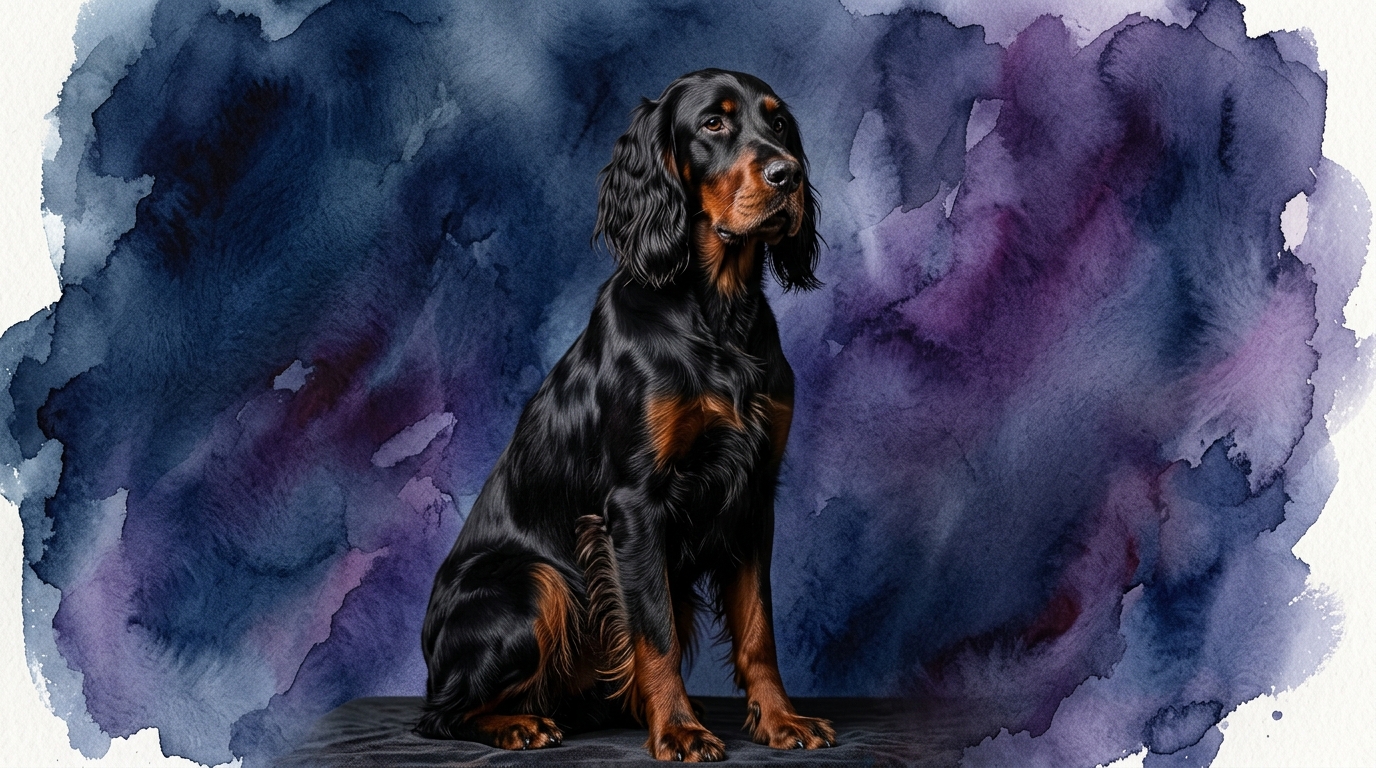
The Gordon Setter, with a Coren rank of #39, falls into a higher tier of working intelligence, reflecting their role as collaborative hunting partners. Their problem-solving also earns a 4/5, though often expressed in a more analytical, field-oriented context. Significantly, their training speed is a robust 4/5, highlighting their eagerness and capacity for learning complex commands. Social intelligence matches the Dachshund at 3/5, indicating a loyal but sometimes reserved temperament. Their instinctive drive, while present for birding, is a moderate 3/5, allowing for more handler collaboration than independent pursuit. Memory is a strong point for the Gordon Setter, scoring 4/5, which is crucial for recalling intricate hunting patterns and elaborate command sequences.
Where the Dachshund's Mind Excels
The Dachshund's most profound cognitive strength lies in its unparalleled instinctive drive and the independent problem-solving it fuels. With a 5/5 in instinctive drive compared to the Gordon Setter's 3/5, the Dachshund possesses an almost singular focus when pursuing a scent or burrowing. This isn't just a physical trait; it's a cognitive superpower. Their problem-solving (4/5) is intrinsically linked to this drive, enabling them to devise creative, often self-directed, solutions to reach their objectives, whether it's navigating complex underground tunnels or outsmarting a perceived barrier to a scent. They excel at persistent, autonomous task completion where the 'task' is often defined by their own primal urges.
This tenacious mental framework means a Dachshund can concentrate on a single goal with an intensity that few other breeds can match. While it might sometimes be perceived as stubbornness from a human perspective, it's a highly effective cognitive strategy for their original purpose. Their problem-solving is less about following human cues and more about independent strategic thinking to overcome obstacles in their path, making them masters of self-reliance in their chosen pursuits. This unique cognitive architecture allows them to operate effectively without constant human oversight, a distinct advantage in their original hunting role.
Where the Gordon Setter's Mind Takes the Lead
The Gordon Setter’s cognitive advantages clearly emerge in areas requiring collaboration, adaptability to human instruction, and superior retention. Their training speed, a robust 4/5 compared to the Dachshund's 2/5, signifies a mind that rapidly processes and integrates human commands, making them significantly more receptive to structured learning. This speed is not just about rote memorization but about understanding the intent behind commands and applying them effectively in various scenarios. Their mental agility allows them to quickly form associations between actions and desired outcomes, making complex sequences of commands attainable.
Furthermore, the Gordon Setter's memory, rated 4/5 against the Dachshund's 3/5, underpins their capacity for retaining intricate hunting patterns, extensive vocabulary, and consistent routines. This superior memory allows them to build a more comprehensive mental model of their environment and their handler's expectations. While both breeds score 4/5 in problem-solving, the Gordon Setter's approach is often more collaborative, involving interpreting subtle cues from a handler and adapting their strategy in the field, a nuanced cognitive skill that sets them apart from the Dachshund's more independent approach.
Trainability: A Tale of Two Temperaments
When it comes to trainability, the Gordon Setter generally presents a smoother path due to its higher training speed (4/5) and memory (4/5), coupled with a more moderate instinctive drive (3/5). These traits translate into a dog that is typically eager to please, attentive to its handler, and quick to grasp new commands. Their historical role as bird dogs necessitated a close working relationship with humans, fostering a cognitive inclination towards collaboration and responsiveness. They are bred to take direction and execute tasks in partnership, which makes them generally more amenable to obedience training, advanced commands, and even intricate field work.
The Dachshund, on the other hand, often poses a greater challenge in traditional training scenarios. Their lower training speed (2/5) and powerful instinctive drive (5/5) mean they are frequently more interested in pursuing their own agenda—especially if a compelling scent is present—than in consistently adhering to human directives. This isn't a deficit in intelligence but a strong prioritization of their innate drives. Their independent problem-solving means they are very capable of figuring things out, but often on their own terms. Training a Dachshund requires immense patience, creativity, and a consistent application of positive reinforcement to channel their strong will and independent spirit, acknowledging that their focus can be easily diverted by a compelling scent or a perceived burrowing opportunity.
Matching Minds to Lifestyles: Active vs. Relaxed Owners
For owners seeking an active, engaged companion for outdoor adventures and structured activities, the Gordon Setter aligns perfectly. Their robust physical stamina, combined with their higher training speed and memory, means they thrive on extensive daily exercise, such as long hikes, runs, or retrieving games. They require consistent mental stimulation through training, puzzle toys, and engaging activities that challenge their collaborative problem-solving abilities. Owners who enjoy dog sports like agility, obedience, or field trials will find the Gordon Setter a willing and capable partner, benefiting from their desire to work alongside their human companions and their capacity for complex learning.
Dachshunds, while needing regular physical activity, are generally better suited for owners who appreciate a dog with a strong personality and can provide mental engagement through specific, focused activities rather than continuous high-impact exercise. Their smaller size means their physical exercise needs are more modest than a Gordon Setter's, but their cognitive needs for stimulation are still significant. Owners who enjoy scent work, puzzle toys, or short, engaging training sessions that tap into the Dachshund's independent problem-solving and instinctive drive will find them rewarding companions. They fit well with individuals who value a dog's spirited independence and are prepared to engage with their specific cognitive quirks, such as their persistent focus on scents or their clever, self-directed solutions to everyday challenges.
The Verdict
Choose the Dachshund if you appreciate a dog with a powerful independent mind, unwavering tenacity, and are prepared to engage their high instinctive drive with patience and creative mental stimulation.
Opt for the Gordon Setter if you seek a highly trainable, collaborative partner for extensive outdoor activities and enjoy the process of teaching complex commands and working together towards shared goals.
🧠 Find Your Pet's IQ Score
Our Pet IQ Lab assessment covers 25+ tests across 5 cognitive dimensions — personalized to your breed.
Take the Full IQ Test →Frequently Asked Questions
Are Dachshunds prone to stubbornness?
Yes, their high instinctive drive and independent problem-solving often manifest as stubbornness. This isn't a lack of intelligence but a strong internal motivation to prioritize their own goals, especially scent-related ones, over human directives, requiring consistent and patient training.
How much exercise do Gordon Setters require daily?
Gordon Setters, as a sporting breed, possess considerable stamina and require extensive daily exercise, including vigorous play, long walks, or runs, typically 60-90 minutes, to maintain their physical and mental well-being and prevent boredom-related behaviors.
Which breed is better for a novice dog owner?
The Gordon Setter is generally more amenable to training and collaboration, making them a potentially easier choice for first-time owners who are committed to providing consistent exercise and mental stimulation. Dachshunds, with their independent streak and strong drives, may require more experience in understanding and channeling their unique cognitive profile.