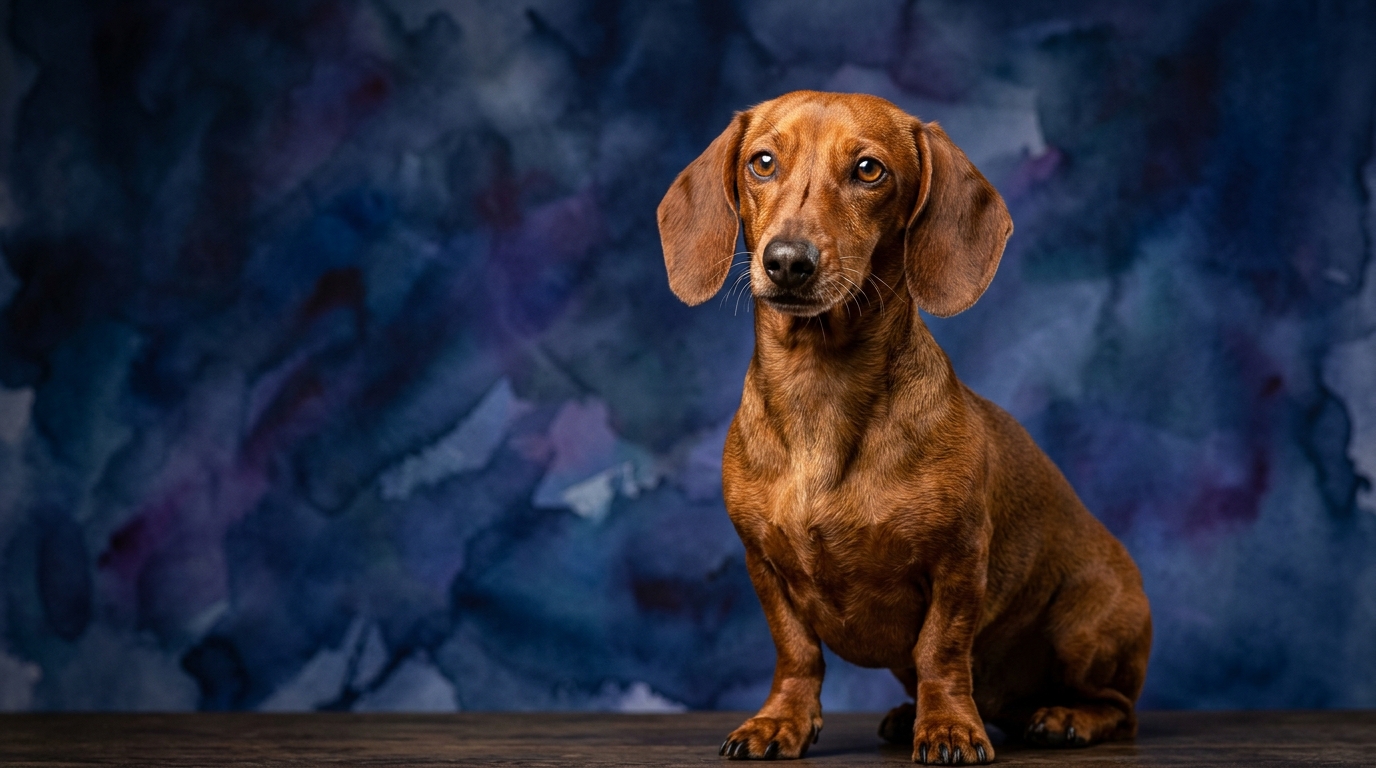

Side-by-Side IQ Profile: Dachshund vs. Manchester Terrier
The Dachshund, ranked #49 by Coren, presents a cognitive profile shaped by centuries of independent hunting. Its Problem Solving score of 4/5 reflects an impressive ability to navigate complex environments and persistent resolve in pursuit of a goal, often without human direction. Training Speed is rated 2/5, indicating a propensity for independent thought over immediate compliance, making rote obedience a slower process. Social Intelligence at 3/5 suggests they are capable of forming strong bonds but may not always prioritize human directives over their own interests. A robust Instinctive Drive of 5/5 underscores their unwavering focus on scent and prey, a trait essential for their badger-hunting origins. Memory is assessed at 3/5, sufficient for learning routines and remembering experiences, though perhaps not always applied to tasks they deem less interesting.
The Manchester Terrier, while not Coren-ranked, offers a more balanced cognitive spread. Its Problem Solving score of 3/5 denotes a capable mind, adept at figuring out practical challenges, though perhaps with less single-minded intensity than the Dachshund. Training Speed is rated 3/5, suggesting a moderate willingness to learn and respond to commands, making them generally more biddable. Social Intelligence also scores 3/5, indicating an ability to connect with human companions and understand social cues, contributing to their adaptability as family pets. Instinctive Drive at 3/5 means they possess a natural prey drive, suitable for vermin control, but it is typically more manageable than the Dachshund's intense focus. Memory is also 3/5, allowing them to retain training and experiences effectively.
In essence, the Dachshund's intelligence leans towards autonomous problem-solving and an unshakeable instinctive focus, while the Manchester Terrier exhibits a more generalized, adaptable intelligence, with a greater emphasis on cooperative learning and a somewhat less intense drive.
Where the Dachshund Excels Cognitively
The Dachshund's cognitive strengths are most apparent in situations demanding independent thought and singular focus. Its Problem Solving score of 4/5 means these dogs are adept at figuring out how to achieve a goal, even if it requires creative or persistent effort, like navigating obstacles to reach a perceived 'prey' or finding a way into a restricted area. This isn't about solving puzzles for human approval, but about intrinsic motivation to achieve their own objectives. Their unparalleled Instinctive Drive of 5/5 fuels this, making them relentless in tasks involving scent work, digging, or tracking. When a Dachshund locks onto a scent or a perceived mission, its cognitive resources are entirely dedicated to that pursuit, demonstrating a profound capacity for sustained attention in their chosen endeavors. This tenacity, while sometimes challenging for owners, is a testament to their specialized mental aptitude.
Where the Manchester Terrier Shines Cognitively
The Manchester Terrier's cognitive advantages lie in its balanced nature and quicker uptake of training. With a Training Speed of 3/5 compared to the Dachshund's 2/5, the Manchester Terrier generally processes and responds to commands more readily. This means they are often more receptive to learning new tricks, obedience exercises, and adapting to household rules with fewer repetitions. Their Problem Solving at 3/5, combined with their moderate Instinctive Drive (3/5), allows them to assess situations without being overwhelmingly consumed by a single primal urge, making them more amenable to human intervention and guidance. This breed demonstrates a practical intelligence that integrates well into a collaborative human-dog partnership, making them quicker to grasp expectations and adjust their behavior accordingly.
Training Dynamics: Which Breed is Easier?
When it comes to ease of training, the Manchester Terrier generally holds an advantage due to its higher Training Speed and more moderate Instinctive Drive. Manchester Terriers tend to be more responsive to positive reinforcement and clearer in understanding what is being asked of them, making the training process feel more collaborative. Their natural desire to engage with their owners, combined with a less overwhelming prey drive, means they are often more focused on the trainer during sessions.
Dachshunds, conversely, can be more challenging to train due to their powerful independent streak and intense Instinctive Drive. Their problem-solving skills are often directed towards their own goals rather than human-directed tasks. A Dachshund might 'solve' the problem of getting to a scent by ignoring a 'stay' command. This means training requires immense patience, consistency, and a deep understanding of their motivations, often needing to outsmart their independent nature rather than simply guiding it. While capable of learning, their compliance hinges heavily on their perception of value in the task, making them less inherently biddable.
Matching Breeds to Lifestyles: Active vs. Relaxed Owners
For active owners seeking a dog for collaborative activities, the Manchester Terrier is often a more fitting choice. Their moderate instinctive drive and quicker training speed mean they thrive in roles involving agility, obedience, or structured play that requires responsiveness and partnership. They possess ample energy for walks, runs, and interactive games, and their balanced cognitive profile makes them adaptable companions for various adventures, provided they receive consistent mental and physical engagement. Owners who enjoy teaching new skills and participating in dog sports will likely find the Manchester Terrier a rewarding partner.
Relaxed owners, or those who appreciate a dog with a strong, independent personality and are prepared for specific challenges, might find the Dachshund more suitable, provided they understand its unique needs. While they enjoy bursts of activity, their mental energy is often channeled into their instinctive drives rather than constant human-directed tasks. Owners who appreciate a dog that is content to explore scents in the yard, engage in short bursts of play, and then settle for a cuddle will find a good match. However, 'relaxed' does not mean 'hands-off' for a Dachshund; their strong will requires consistent, smart management, and their independent problem-solving means owners must be proactive in managing their environment to prevent unwanted behaviors like digging or escaping.
The Verdict: When to Choose Each Breed
The Verdict
Choose a Dachshund if you appreciate a dog with immense tenacity, independent problem-solving abilities, and an unwavering instinctive drive, and are prepared for a consistent and creative training approach that respects their unique will.
Opt for a Manchester Terrier if you desire a responsive, adaptable companion with a balanced cognitive profile, quicker training speed, and a moderate drive, making them excellent partners for active lifestyles and collaborative learning.
🧠 Find Your Pet's IQ Score
Our Pet IQ Lab assessment covers 25+ tests across 5 cognitive dimensions — personalized to your breed.
Take the Full IQ Test →Frequently Asked Questions
Are Dachshunds difficult to train?
Dachshunds are not necessarily difficult to train in terms of capability, but their independent nature and powerful instinctive drive (5/5) mean they often prioritize their own interests over immediate compliance. Training requires exceptional patience, consistency, and understanding of their motivations, often needing owners to be more creative in their approaches.
Do Manchester Terriers have a strong prey drive?
Manchester Terriers possess a moderate instinctive drive (3/5), which includes a natural prey drive for vermin, reflecting their historical role. While present, it is generally more manageable than the Dachshund's intense focus, allowing them to be more responsive to commands even when stimulated by potential prey.
Which breed is better for first-time dog owners?
For most first-time dog owners, the Manchester Terrier might be a more straightforward choice due to its higher training speed and more balanced, cooperative nature. Dachshunds, with their strong will and independent problem-solving, can present unique challenges that might be overwhelming for those new to dog ownership without significant prior research and commitment.