
Side-by-Side IQ Profile
The Cosmic Pet Pet IQ Lab provides a unique lens through which to compare canine cognitive abilities, breaking down intelligence into five key dimensions. For the Dachshund, a Hound group member with a Coren ranking of #49, we observe a specialized mental architecture. Their Problem Solving score of 4/5 reflects an independent, often cunning approach to navigating challenges, rooted in their historical role of flushing quarry from burrows. Training Speed, however, is a modest 2/5, indicating a strong-willed nature that prioritizes self-interest over immediate compliance. Social Intelligence stands at 3/5, suggesting a capacity for connection within their immediate circle but often a reserved demeanor with strangers. Instinctive Drive is exceptionally high at 5/5, a testament to their powerful scenting abilities and relentless pursuit instincts. Finally, their Memory score of 3/5 indicates a solid recall for routines and locations, but perhaps less for abstract commands without consistent reinforcement.
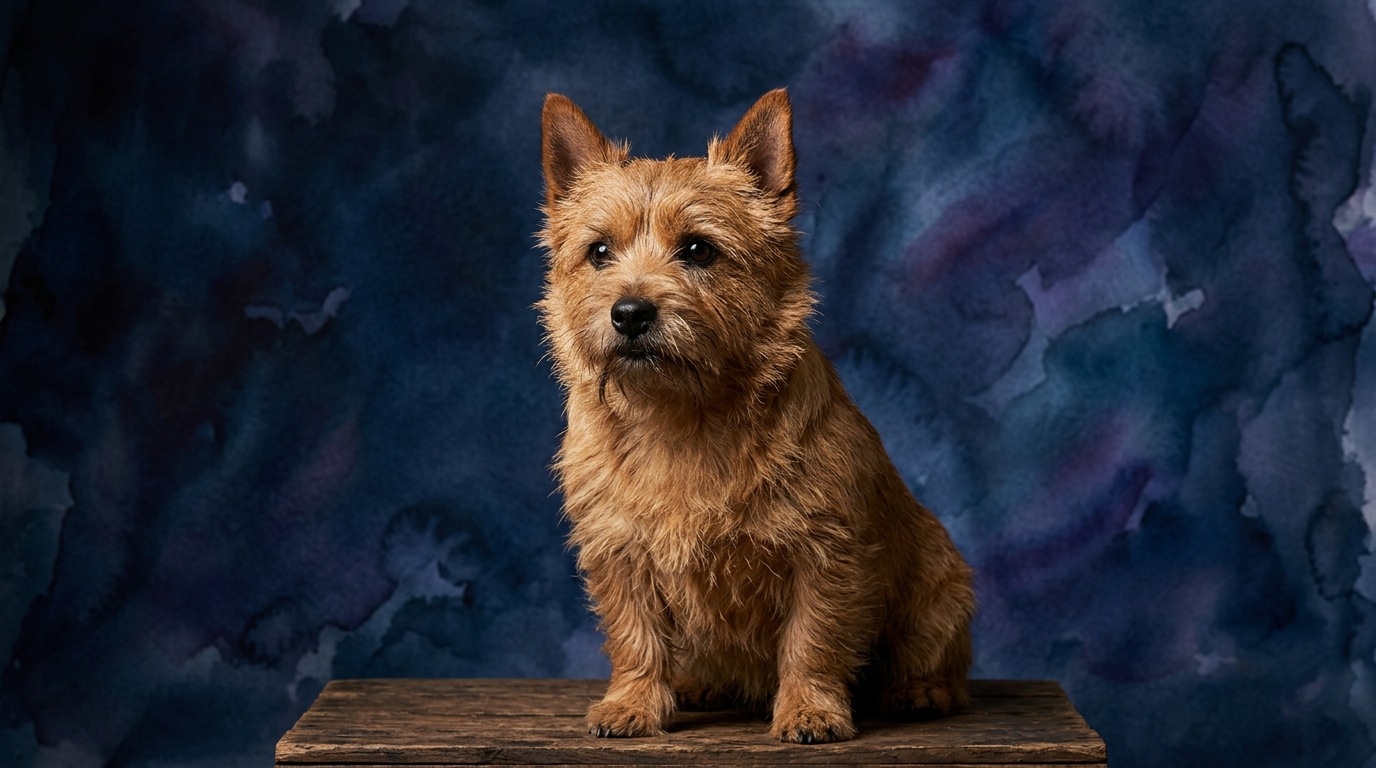
The Norwich Terrier, a lively member of the Terrier group and currently unranked by Coren, presents a more balanced, though still distinctly terrier, cognitive profile. Their Problem Solving score of 3/5 suggests practical resourcefulness, adept at figuring out immediate environmental puzzles rather than complex, multi-step challenges. Training Speed is a respectable 3/5, indicating a generally cooperative spirit and a willingness to learn, though they can be easily distracted by novel stimuli. Social Intelligence matches the Dachshund at 3/5, signifying a generally amicable disposition, often eager to engage but not overly demonstrative with all individuals. Instinctive Drive is rated at 3/5, present but less singularly focused than the Dachshund's, manifesting as a general prey drive and curiosity rather than specialized tracking. Their Memory also scores 3/5, showing a similar capacity for retaining learned information and experiences.
Where Dachshund Wins Cognitively
In the realm of independent thought and environmental manipulation, the Dachshund demonstrates a clear cognitive advantage, particularly in Problem Solving (4/5 versus Norwich's 3/5). This superior score reflects their historical necessity to operate autonomously underground, making complex decisions to locate and extract prey without human direction. Owners often observe this in their persistent efforts to reach desired objects, whether it's burrowing under blankets to find a toy or strategically nudging open a gate. Their cognitive strength lies in a deep-seated tenacity to achieve self-determined goals, often outmaneuvering perceived obstacles with creative, albeit sometimes inconvenient, solutions.
Furthermore, the Dachshund's Instinctive Drive, an unparalleled 5/5 compared to the Norwich Terrier's 3/5, represents a highly specialized cognitive faculty. This isn't just about physical drive; it encompasses an acute olfactory processing capability and a single-minded focus that allows them to follow a scent trail with unwavering dedication. While sometimes challenging for pet owners, this intense drive signifies a cognitive system finely tuned for a specific, demanding task, showcasing a remarkable capacity for sustained attention and goal-oriented behavior when their senses are engaged.
Where Norwich Terrier Wins Cognitively
The Norwich Terrier's primary cognitive strength, especially when viewed through the lens of companionship, lies in its more amenable Training Speed (3/5 compared to the Dachshund's 2/5). This indicates a quicker uptake of commands and a greater willingness to engage in structured learning, making them generally more responsive to obedience training. While their Problem Solving score is slightly lower than the Dachshund's, their cognitive approach is often more practical and less independently stubborn, allowing for easier redirection and instruction. This receptiveness is a significant advantage for owners seeking a dog that integrates readily into a family routine and responds consistently to cues.
Though their individual scores in other categories like Social Intelligence and Memory are on par with the Dachshund, the Norwich Terrier's balanced cognitive profile contributes to an overall adaptability. Their instinctive drives, while present, are less overwhelming and easier to manage, allowing their other cognitive functions to be channeled more effectively into cooperative activities. This blend of moderate problem-solving, respectable memory, and a more cooperative training disposition means the Norwich Terrier often presents as a cognitively well-rounded companion, less prone to the single-minded pursuits that can sometimes challenge Dachshund owners.
Which is Easier to Train and Why
Based on their respective IQ profiles, the Norwich Terrier is generally easier to train than the Dachshund. The Norwich Terrier's Training Speed score of 3/5 indicates a higher degree of biddability and a quicker association of commands with actions and rewards. They tend to be more eager to please and less distracted by their own agenda during training sessions, which translates to a more straightforward learning curve for basic obedience and tricks. Their general adaptability and less intense single-mindedness make them more pliable to instruction.
Conversely, the Dachshund's Training Speed of 2/5 reflects their independent and often stubborn nature. Their profound Instinctive Drive (5/5) means that if a scent or a perceived 'mission' captures their attention, their cognitive focus will be overwhelmingly directed towards that pursuit, making them notoriously difficult to recall or redirect. This isn't a lack of ability to learn, but rather a strong inclination to prioritize their own problem-solving and instinctive urges over human directives. Training a Dachshund requires immense patience, consistency, and a deep understanding of their unique motivations, often feeling more like negotiation than simple instruction.
Which Suits Active Owners vs. Relaxed Owners
For owners who thrive on engaging with a dog's specialized cognitive strengths and are prepared to channel intense drives, the Dachshund can be an incredibly rewarding companion. Their high Problem Solving and Instinctive Drive scores mean they excel with owners who appreciate scent work, complex puzzle toys, and outdoor adventures where their keen senses can be put to use. These are not dogs for purely 'relaxed' owners in the sense of minimal engagement; they require consistent mental stimulation and physical outlets to prevent boredom-induced mischief stemming from their active minds. An active owner for a Dachshund is one who enjoys participating in their dog's mental landscape.
The Norwich Terrier, with its more balanced IQ profile and higher Training Speed, is a better fit for owners seeking a versatile companion that can adapt to a range of activities without the same intensity of specialized drives. They suit owners who enjoy a mix of walks, play, and training sessions, but perhaps aren't looking to delve deeply into specialized dog sports like scent tracking. While still requiring regular exercise and mental engagement, their cognitive makeup makes them more adaptable to a 'moderately active' or 'family-oriented' lifestyle, where their companionship and willingness to learn are highly valued. They offer a good balance for those who want an engaged dog without managing exceptionally strong, single-minded cognitive urges.
The Verdict
Choose the Dachshund if you are an owner who appreciates a dog with formidable independent problem-solving skills and an exceptionally strong, specialized instinctive drive, willing to invest significant effort in channeling these unique cognitive traits. They thrive with engagement that respects their tenacious, self-directed mind.
Opt for the Norwich Terrier if you seek a more biddable companion that learns quickly and integrates smoothly into varied household dynamics, valuing their adaptable cognitive profile and more cooperative approach to training and daily life.
🧠 Find Your Pet's IQ Score
Our Pet IQ Lab assessment covers 25+ tests across 5 cognitive dimensions — personalized to your breed.
Take the Full IQ Test →Frequently Asked Questions
Are Dachshunds stubborn?
Dachshunds often exhibit what many perceive as stubbornness, which stems from their strong independent problem-solving skills (4/5) and intense instinctive drive (5/5). They are highly motivated by their own objectives, particularly scent-related ones, which can make them less inclined to follow commands if it conflicts with their current 'mission'.
Do Norwich Terriers need a lot of mental stimulation?
While not as intensely driven as some breeds, Norwich Terriers do require consistent mental stimulation to prevent boredom and destructive behaviors. Their respectable problem-solving (3/5) and training speed (3/5) scores indicate they enjoy learning and engaging in activities like puzzle toys, training, and varied walks.
How do their social skills compare?
Both Dachshunds and Norwich Terriers score 3/5 in Social Intelligence, suggesting they are generally good with their immediate family and familiar individuals. Dachshunds can be more reserved or wary with strangers, while Norwich Terriers tend to be more generally outgoing, though neither is typically overly effusive with everyone they meet.