
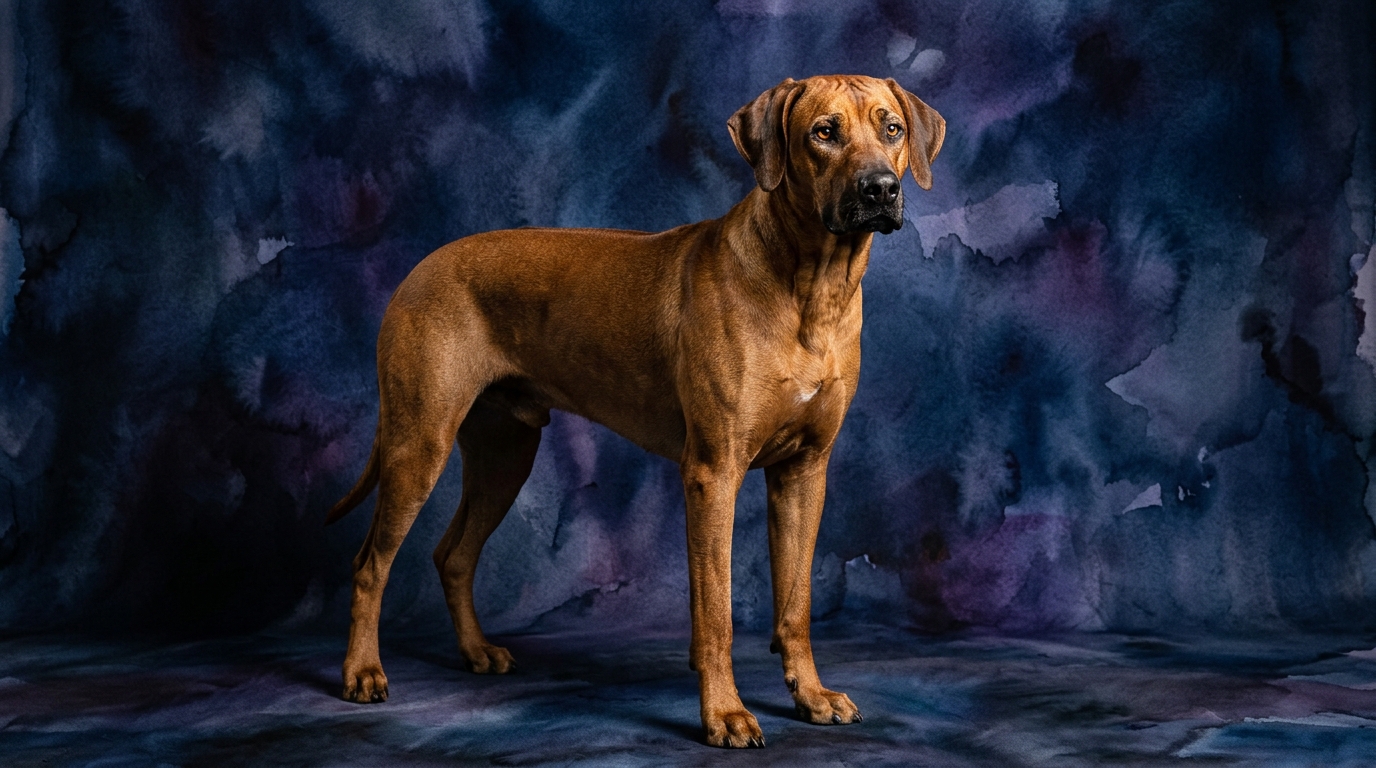
Side-by-Side IQ Profiles: A Cognitive Blueprint
The Cosmic Pet Pet IQ Lab employs five key dimensions to map a breed's cognitive profile, offering a nuanced view beyond simple obedience. For the Dachshund, ranked #49 by Coren, its profile includes Problem Solving at 4/5, Training Speed at 2/5, Social Intelligence at 3/5, Instinctive Drive at an impressive 5/5, and Memory at 3/5. This paints a picture of a resourceful yet potentially stubborn thinker with a strong innate purpose.
In contrast, the Rhodesian Ridgeback, Coren ranked #52, presents a different mental architecture. Its IQ scores are Problem Solving 3/5, Training Speed 3/5, Social Intelligence 3/5, Instinctive Drive 3/5, and Memory 3/5. This profile suggests a more balanced, perhaps less intense, cognitive approach across several dimensions, making them capable but without the Dachshund's extreme peaks in certain areas. Both breeds share a 'Hound' classification, yet their mental wiring diverges significantly, reflecting their distinct historical roles and physical adaptations.
These scores are not absolute measures of 'good' or 'bad' intellect but rather indicators of how a breed tends to process information, learn, and interact with its environment. Understanding these specific dimensions helps owners align their expectations and training methods with their dog's intrinsic cognitive predispositions. The slight difference in Coren ranking, with the Dachshund slightly higher, hints at subtle distinctions in their working and adaptive intelligence that our deeper dive will explore.
Where the Dachshund Excels Cognitively
The Dachshund's standout cognitive strength lies in its Problem Solving ability, rated at 4/5. This isn't about solving complex puzzles in a laboratory setting, but rather their remarkable capacity to independently figure out how to achieve a goal, often related to their strong instinctive drives. Whether it's tunneling under a fence, outsmarting a food puzzle, or devising a strategy to reach a forbidden treat, Dachshunds demonstrate a cunning and persistent mental approach.
Complementing this problem-solving prowess is their Instinctive Drive, rated a perfect 5/5. Bred to independently hunt badgers and other burrowing animals, this drive manifests as an intense focus, determination, and single-mindedness. When a Dachshund locks onto a scent or a perceived 'prey' item, their cognitive functions become entirely dedicated to that pursuit, often overriding other commands or distractions. This deep-seated instinctual intelligence makes them incredibly effective at their original purpose.
This combination of high problem-solving and intense instinctive drive means a Dachshund can be incredibly creative and persistent in achieving its self-appointed missions. Owners often observe them devising elaborate schemes to get what they want, showcasing their independent thought and strategic thinking. This self-reliance, while endearing, also presents a unique challenge in training, as their own agenda can sometimes overshadow human directives.
Where the Rhodesian Ridgeback Shines Cognitively
The Rhodesian Ridgeback exhibits a more balanced cognitive profile, with its primary edge appearing in Training Speed, rated 3/5. While not exceptionally high, this score indicates a more moderate pace of learning and responsiveness to commands compared to the Dachshund's 2/5. Ridgebacks tend to grasp new concepts and cues with reasonable consistency, provided the training is engaging and fair.
Their Social Intelligence, also at 3/5, suggests a capacity for understanding social cues and maintaining relationships within their human and canine families. While independent, they are generally attentive to their human companions, capable of forming strong bonds and interpreting subtle signals. This balanced social awareness, combined with their training speed, makes them receptive to structured learning within a family environment.
The Ridgeback's overall consistency across Problem Solving (3/5), Instinctive Drive (3/5), and Memory (3/5) points to a dog that is neither overly impulsive nor overly independent in its cognitive operations. They possess sufficient problem-solving skills to navigate daily life and learn from experiences, without the intense, singular focus that can characterize the Dachshund. This cognitive equilibrium contributes to their reputation as capable and adaptable companions, making them less prone to the intense single-mindedness seen in breeds with higher instinctive drives.
Trainability: Dachshund vs. Rhodesian Ridgeback
When considering which breed is easier to train, the Rhodesian Ridgeback generally holds an advantage due to its Training Speed score of 3/5, compared to the Dachshund's 2/5. Ridgebacks tend to pick up new commands and routines with more readiness and less repetition. Their moderate instinctive drive (3/5) means they are less likely to be completely consumed by external stimuli, allowing them to remain more focused during training sessions.
The Dachshund's lower Training Speed (2/5) combined with its intense Instinctive Drive (5/5) and high Problem Solving (4/5) creates a unique training dynamic. Their innate drive to explore, dig, and chase means they are often more interested in pursuing their own 'work' than complying with human commands, especially if a compelling scent is present. They are not necessarily 'unintelligent,' but rather have a strong independent streak and a profound sense of self-purpose that can make them appear stubborn or difficult to motivate.
Successful training for a Dachshund often requires immense patience, creativity, and highly rewarding incentives to overcome their independent nature. Owners must make training more compelling than the allure of their instinctive drives. For the Ridgeback, while they still require consistent and firm guidance, their more balanced cognitive profile means they are often more amenable to structured learning and less likely to actively 'problem-solve' their way out of a command. Their willingness to cooperate is generally higher, making the training process smoother for many owners.
Matching Cognitive Profiles to Lifestyles: Active vs. Relaxed Owners
For active owners seeking a canine companion for adventures and more structured activities, the Rhodesian Ridgeback's cognitive profile aligns well. Their balanced instinctive drive (3/5) means they can engage in activities like hiking, jogging, or even dog sports without being overwhelmingly single-minded in their pursuits. Their moderate training speed and social intelligence make them good candidates for advanced obedience, agility, or tracking, where a degree of cooperation and focus is essential.
While they possess a strong prey drive, it is generally more manageable than that of the Dachshund, allowing them to be more reliably integrated into diverse outdoor settings. Owners who enjoy consistent training, mental enrichment, and providing a clear leadership role will find the Ridgeback's cognitive makeup responsive and rewarding. They thrive on having a 'job' and appreciate structured engagement, making them excellent partners for an active, involved lifestyle where they can expend both physical and mental energy.
Relaxed owners, or those seeking a dog that can thrive in a less structured, more independent home environment, might find the Dachshund's cognitive profile a surprisingly good fit, despite its training challenges. Their high problem-solving and instinctive drive mean they can entertain themselves and find their own ways to stay engaged, even if that involves digging up the garden or 'rearranging' household items. They don't necessarily demand constant, high-intensity mental tasks, but rather opportunities to fulfill their inherent drives on their own terms.
However, 'relaxed' for a Dachshund owner doesn't mean 'hands-off.' It means being prepared for a dog with a strong personality and independent thought, who might not always comply with commands but will certainly keep life interesting. Owners who appreciate a dog's quirky independence, can provide secure boundaries, and are amused by a dog's self-directed problem-solving will find a deeply rewarding companion in the Dachshund. Their smaller size also makes them suitable for homes with less space, provided their mental stimulation needs are met through appropriate outlets for their digging and scent-hunting instincts.
The Verdict
Choose a Dachshund if you appreciate a dog with exceptional independent problem-solving skills and a powerful instinctive drive, are prepared for a challenging but rewarding training journey, and enjoy a companion with a strong, self-reliant personality.
Opt for a Rhodesian Ridgeback if you desire a capable, trainable companion for an active lifestyle, value a dog with a more balanced cognitive profile and moderate instinctive drive, and are ready to provide consistent leadership and structured mental engagement.
🧠 Find Your Pet's IQ Score
Our Pet IQ Lab assessment covers 25+ tests across 5 cognitive dimensions — personalized to your breed.
Take the Full IQ Test →Frequently Asked Questions
Which breed is more prone to stubbornness?
The Dachshund, with its 2/5 Training Speed and 5/5 Instinctive Drive, is often perceived as more stubborn due to its strong independent nature and tendency to prioritize its own deep-seated drives over human commands. The Rhodesian Ridgeback, having a more balanced profile, tends to be more cooperative in training contexts.
Do these breeds require a lot of mental stimulation?
Both breeds benefit from mental stimulation, but in different ways. The Dachshund's high problem-solving and instinctive drive mean it needs outlets for scent work, digging, and independent exploration, while the Rhodesian Ridgeback thrives on structured training, puzzle toys, and activities that engage its moderate problem-solving and social intelligence.
How does their Coren rank relate to their cognitive scores?
The Coren rank broadly reflects a breed's working and adaptive intelligence, often correlating with trainability and obedience. While the Dachshund ranks slightly higher at #49 than the Ridgeback at #52, our detailed IQ dimensions show the Dachshund's intelligence is often directed by its powerful instincts, making it a different kind of 'smart' than a breed primarily excelling in obedience.