
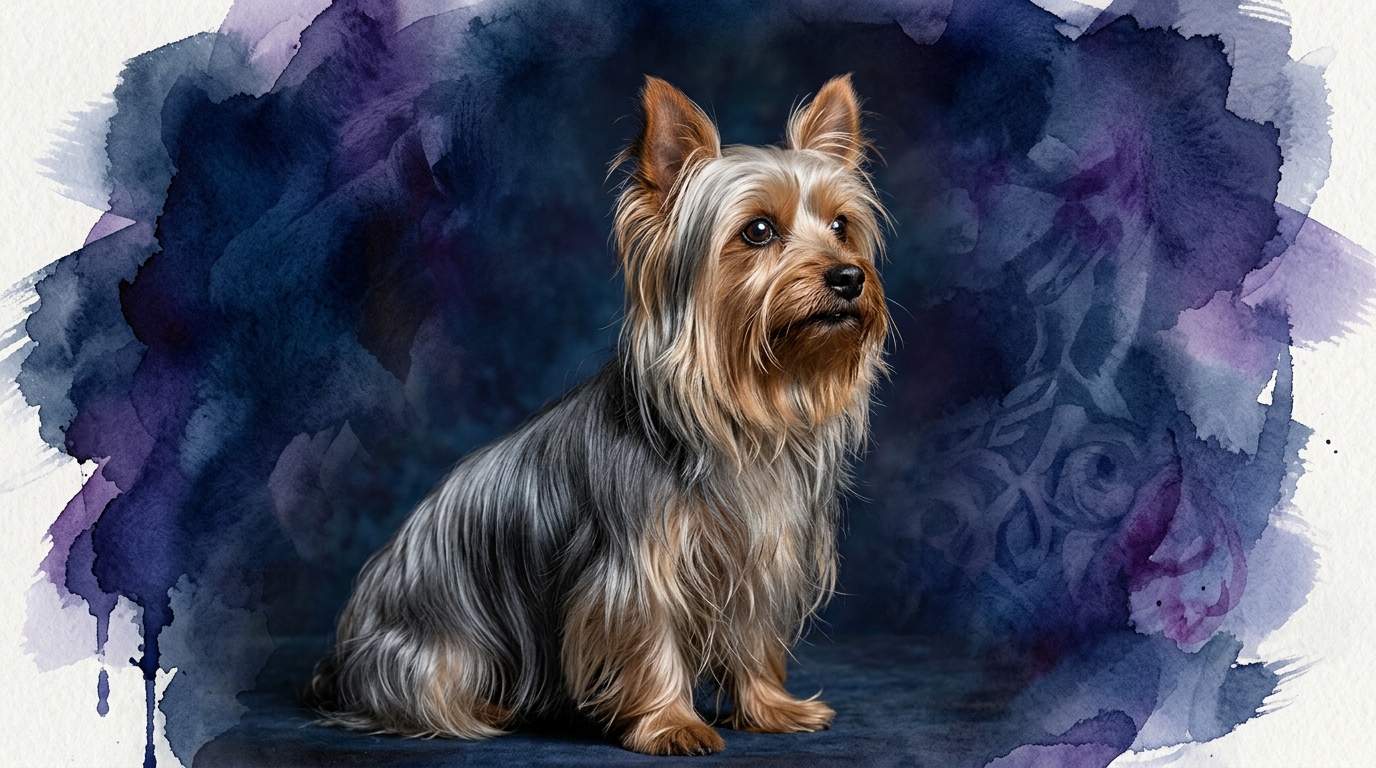
Side-by-Side IQ Profile: Dachshund vs. Silky Terrier
To understand the cognitive landscape of these two breeds, The Cosmic Pet Pet IQ Lab utilizes a five-dimensional intelligence framework. The Dachshund, a hound ranked #49 by Coren, and the Silky Terrier, a toy breed not Coren-ranked, present intriguing differences across these dimensions.
For the **Dachshund (Hound, Coren #49):** Their **Problem Solving score of 4/5** indicates impressive independent thought, crucial for tracking and flushing burrow-dwelling prey, adept at figuring out how to overcome obstacles. **Training Speed at 2/5** reflects their strong will and self-reliant nature, often making them less eager to please in traditional obedience. Their **Social Intelligence at 3/5** means they form strong family bonds, understanding human cues but sometimes acting independently if instincts conflict. An **Instinctive Drive of 5/5** is their defining trait, showcasing powerful scenting ability and unwavering pursuit. Finally, their **Memory at 3/5** is average for commands and routines, but strong for routes and scent-related successes.
For the **Silky Terrier (Toy, Not Coren-Ranked):** Their **Problem Solving score of 3/5** demonstrates a moderate ability to navigate novel situations, often driven by curiosity or a desire for interaction. **Training Speed at 3/5** shows they are generally amenable to training, responding well to positive reinforcement and consistent methods. Their **Social Intelligence at 3/5** means they are typically very attuned to their human families, seeking interaction and understanding social dynamics, though they can be reserved with strangers. An **Instinctive Drive of 3/5** reflects a moderate prey drive and tenacity, manifesting in chasing small critters or enthusiastic play. Their **Memory at 3/5** is average, capable of remembering routines, learned commands, and familiar faces.
Where the Dachshund Excels Cognitively
The Dachshund's cognitive profile reveals distinct advantages rooted in their specialized history as a hunting hound. Their **Problem Solving score of 4/5** surpasses the Silky Terrier's 3/5, reflecting a deep-seated capacity for independent thought and strategic action. A Dachshund faced with a scent trail leading under a fence will not passively wait; they will actively assess the situation, perhaps digging, squeezing, or circling to reach their objective. This isn't about rote obedience, but about self-directed ingenuity and persistence in pursuit of a goal. This cognitive trait makes them adept at navigating complex environments to achieve their desired outcome.
Furthermore, their **Instinctive Drive rating of 5/5** stands out significantly against the Silky Terrier's 3/5. This isn't merely a physical drive, but a complex cognitive program involving intricate scent discrimination, persistent tracking, and the decision-making required to navigate varied terrain while focused on a singular, invisible target. This specialized intelligence, honed over centuries, makes them unparalleled in tasks requiring dedicated sensory focus and relentless pursuit, showcasing a profound ability to engage with and interpret their environment through scent.
Where the Silky Terrier Shows Relative Cognitive Strengths
While the Silky Terrier doesn't outscore the Dachshund in sheer problem-solving complexity or instinctive intensity, it demonstrates a clear advantage in a crucial area for pet ownership: **Training Speed (3/5 vs. Dachshund's 2/5)**. This difference points to a more cooperative and less independently-minded cognitive approach when interacting with humans. A Silky Terrier is generally more receptive to learning new commands and routines, often motivated by praise, treats, and the desire to engage with their owner. Their cognitive wiring makes them typically more inclined to seek guidance and respond to cues, reducing the persistent negotiation often required with a Dachshund.
This relatively higher trainability simplifies the process of integrating them into a structured home environment and teaching them good manners, making them a more straightforward student in many common training scenarios. While both breeds possess average social intelligence and memory, the Silky's slightly greater amenability to training means their cognitive abilities are often more readily channeled into desired behaviors through consistent human interaction.
Ease of Training: Dachshund vs. Silky Terrier
Based on their respective IQ profiles, the Silky Terrier generally presents as the easier breed to train, primarily due to its higher **Training Speed (3/5)** compared to the Dachshund's 2/5. The Dachshund’s independent nature, a cornerstone of its problem-solving abilities and powerful instinctive drive, often translates into a stubborn streak in training. They may understand a command perfectly but choose not to comply if it conflicts with their current interest, such as a captivating scent or a desire to dig. Their historical role demanded self-reliance, not strict adherence to human commands in the field.
Conversely, the Silky Terrier, while possessing typical terrier assertiveness, tends to be more people-oriented and eager to please within the family unit. They generally respond more readily to positive reinforcement, seeing training as an engaging interaction rather than an interruption to their own agenda. This difference in intrinsic motivation and focus on human engagement makes the Silky Terrier a more pliable and rewarding student for the average owner seeking consistent obedience, often achieving desired results with less effort and more enthusiasm from the dog.
Matching Breeds to Owner Lifestyles
Defining 'active' and 'relaxed' owners in the context of these breeds requires considering both physical and cognitive engagement. For owners who are 'active' in the sense of providing consistent, mentally stimulating activities, the **Dachshund** is an excellent fit. While not requiring extreme physical endurance, they thrive with owners who can channel their 4/5 problem-solving acumen and 5/5 instinctive drive into scent work, puzzle toys, or supervised digging opportunities. An owner who enjoys engaging a dog's mind with challenges and is patient with an independent spirit will find a Dachshund rewarding. A 'relaxed' owner who expects passive companionship might find the Dachshund's independent spirit and strong urges challenging to manage without adequate outlets, potentially leading to frustration for both dog and owner.
The **Silky Terrier**, on the other hand, suits owners who enjoy moderate physical activity and consistent interactive play. Their 3/5 instinctive drive means they appreciate walks and games of fetch, but aren't typically driven to the same intense, focused pursuits as a Dachshund. They can adapt well to a somewhat more 'relaxed' owner who provides regular engagement and attention, valuing companionship and social interaction. However, their terrier energy means they still require more than just a couch potato lifestyle; they thrive with owners who are active enough to provide daily walks and playtime, ensuring their social and physical needs are met without excessive mental demands.
The Verdict
Choose a Dachshund if you appreciate an independent, persistent thinker with a powerful instinctual drive, and are prepared to engage their mind with scent work or problem-solving games, navigating their charming stubbornness.
Opt for a Silky Terrier if you desire a spirited, moderately trainable companion who enjoys interactive play and social engagement, thriving in a home that offers consistent attention and daily activity.
🧠 Find Your Pet's IQ Score
Our Pet IQ Lab assessment covers 25+ tests across 5 cognitive dimensions — personalized to your breed.
Take the Full IQ Test →Frequently Asked Questions
Are Dachshunds difficult to train for housebreaking?
Dachshunds can be challenging to housebreak due to their independent nature and strong instincts, which sometimes prioritize their own agenda. Consistent routines, frequent outdoor access, and positive reinforcement are crucial to overcome their tendency to follow their own elimination preferences.
Do Silky Terriers bark a lot due to their terrier nature?
Silky Terriers can be prone to barking, a common trait among terriers used for alarm and rodent control. Their social intelligence and moderate instinctive drive mean they often alert to strangers or perceived threats, but consistent training and early socialization can help manage excessive vocalization.
Which breed is better for an owner new to dog training?
For a new owner prioritizing ease of training, the Silky Terrier (Training Speed 3/5) would generally be a more straightforward choice than the Dachshund (2/5). Their higher willingness to engage and respond to commands can make the learning process less frustrating and more rewarding for a novice.