
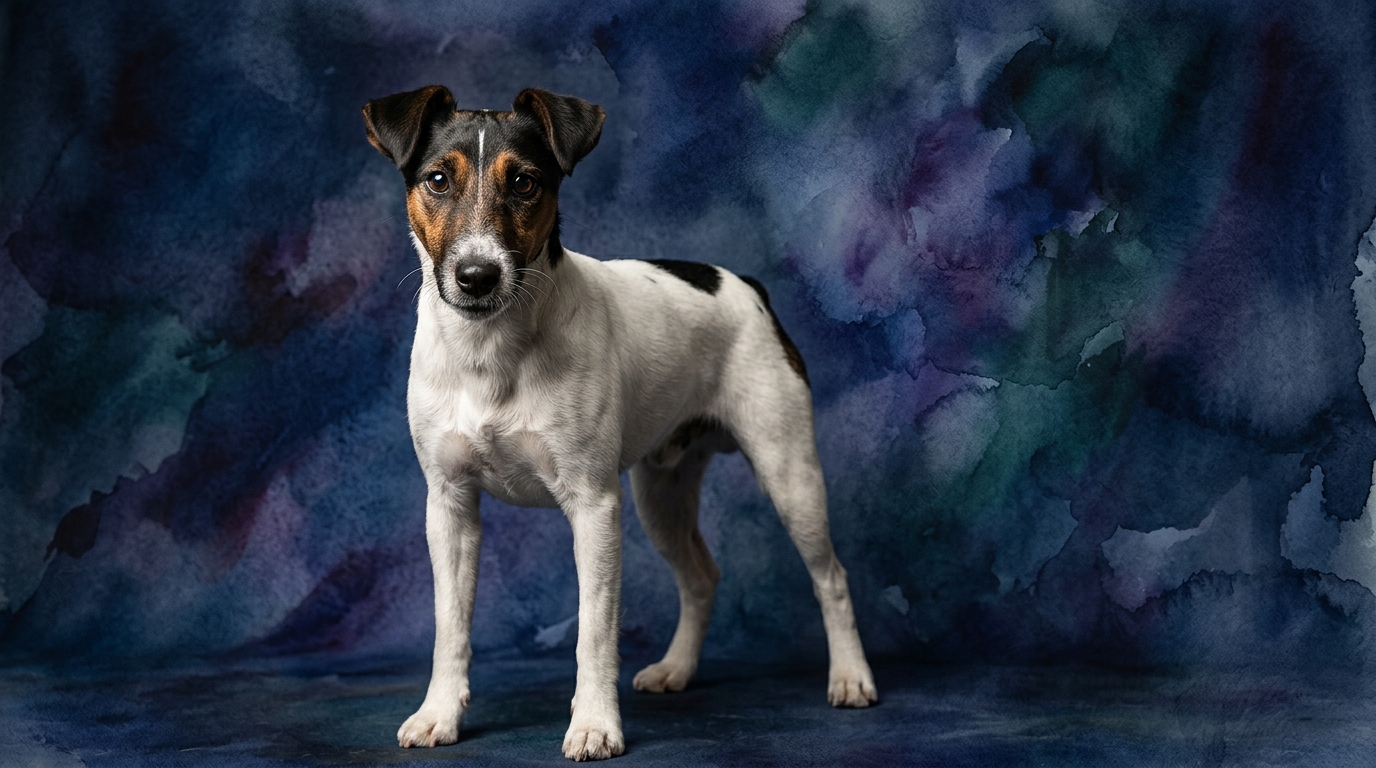
Side-by-Side IQ Profile: Dachshund vs. Smooth Fox Terrier
At The Cosmic Pet's Pet IQ Lab, we delve beyond surface behaviors to understand the core cognitive abilities of our canine companions. Comparing the Dachshund and the Smooth Fox Terrier offers a compelling look at how breed purpose shapes intellect. The Dachshund, a hound renowned for its subterranean hunting prowess, comes with a Coren rank of #49, indicating a solid capacity for understanding new commands. The Smooth Fox Terrier, a lively terrier bred for bolting foxes, does not have a Coren rank, but our proprietary IQ metrics provide a detailed comparison.
The Dachshund's profile highlights exceptional Problem Solving at 4/5, a critical trait for navigating complex underground tunnels and outsmarting prey. Its Instinctive Drive is a perfect 5/5, reflecting an almost singular focus on scent work, digging, and tracking. However, its Training Speed is 2/5, suggesting a more independent nature when it comes to obedience. Social Intelligence and Memory both score 3/5, indicating a capacity for connection and recall, but perhaps with a self-directed inclination.
In contrast, the Smooth Fox Terrier presents a balanced cognitive profile. Its Problem Solving is 3/5, demonstrating resourcefulness but perhaps less sustained, intricate strategizing than the Dachshund. Training Speed is 3/5, making it generally more receptive to learning commands. Social Intelligence and Memory also stand at 3/5, showing good adaptability and recall. Its Instinctive Drive is 3/5, present and active, but potentially more amenable to redirection compared to the Dachshund's intense focus.
Where the Dachshund Excels Cognitively
The Dachshund's cognitive advantages are deeply rooted in its original role as a badger hunter. Its Problem Solving score of 4/5 isn't just about quick wit; it reflects a tenacious, strategic approach to overcoming obstacles. Imagine a Dachshund maneuvering through a labyrinth of burrows, assessing scent trails, and determining the most effective path to its quarry – this requires sustained focus and adaptive thinking. They apply this same determination to household puzzles, often exhibiting remarkable persistence in figuring out how to access a forbidden treat or open a cabinet door.
Furthermore, the Dachshund's Instinctive Drive, rated at an unparalleled 5/5, is a profound cognitive strength in its own right. This isn't merely a physical urge; it represents an ingrained, powerful cognitive program for specific tasks. This drive means an almost unwavering dedication to tracking scents, digging, and exploring. While this can manifest as 'stubbornness' in a domestic setting, it is, in essence, a highly specialized form of intelligence, allowing them to excel at tasks requiring deep focus and an inherent understanding of their ancestral purpose. Owners who engage this drive through scent work or earthdog sports will witness this cognitive strength in full display.
Where the Smooth Fox Terrier Holds the Cognitive Edge
The Smooth Fox Terrier's primary cognitive advantage lies in its Training Speed, scoring 3/5 compared to the Dachshund's 2/5. This difference is significant for owners seeking a responsive companion. Terriers were often required to work in close partnership with hunters, bolting quarry from dens and needing to respond quickly to handler cues in dynamic environments. This historical context fostered a quicker uptake of commands and a greater eagerness to engage in interactive learning sessions.
A Smooth Fox Terrier often approaches training with enthusiasm, viewing it as a stimulating game rather than a chore. Their moderate Problem Solving (3/5) and Instinctive Drive (3/5) mean they are resourceful enough to enjoy mental challenges, but perhaps less likely to become singularly fixated on their own agenda, making them more amenable to redirection and instruction. This balance allows them to be versatile learners, adaptable to various training disciplines, from basic obedience to agility or flyball, where quick reactions and a willingness to learn new sequences are paramount.
Trainability: Dachshund vs. Smooth Fox Terrier
When considering trainability, the IQ scores paint a clear picture. The Smooth Fox Terrier, with its 3/5 Training Speed, generally presents a more straightforward training experience. They tend to be more engaged during sessions, often eager to please and quick to form associations between commands and rewards. Their moderate Instinctive Drive means that while they possess a prey drive, it can often be channeled or redirected with consistent training and positive reinforcement. They thrive on variety and interaction, making them rewarding partners for those who enjoy structured training.
The Dachshund, however, requires a different approach. Its 2/5 Training Speed, coupled with a formidable 5/5 Instinctive Drive, means that training can be a test of patience and creativity. Their strong problem-solving skills are often directed towards achieving their own goals, which may not always align with their owner's commands. For instance, a Dachshund on a scent trail can appear 'deaf' to recall commands, not because it doesn't understand, but because its innate drive is overwhelmingly powerful. Successful Dachshund training involves understanding their hound nature, leveraging their drive through scent games, and making training incredibly rewarding to compete with their natural inclinations. They are not untrainable, but they require a handler who appreciates their independent spirit and uses motivation rather than strict coercion.
Suiting Active vs. Relaxed Owners: Lifestyle Alignment
The choice between a Dachshund and a Smooth Fox Terrier also depends significantly on an owner's lifestyle and their capacity to meet specific cognitive and physical needs. For owners who are genuinely active and seek a canine partner for diverse, engaging activities, the Smooth Fox Terrier is often an excellent match. Their balanced IQ profile, with a 3/5 Training Speed and 3/5 Instinctive Drive, makes them adaptable to sports like agility, earthdog trials, or extended hikes. They thrive on mental and physical stimulation, enjoying puzzle toys, interactive games, and consistent engagement. Their energy levels are typically higher, requiring owners to provide structured outlets for their curiosity and zest for life.
Conversely, while the Dachshund possesses an intense 5/5 Instinctive Drive, its physical exercise requirements can be more moderate, making it suitable for owners who might be described as 'relaxed' in terms of high-intensity physical activity. A Dachshund will relish a good sniffy walk, where its superior problem-solving and instinctive drive can be engaged through scent exploration, but it may not demand hours of running. However, 'relaxed' does not mean 'inactive' mentally. Dachshunds still require significant mental enrichment to prevent boredom from leading to undesirable behaviors. Owners who enjoy providing puzzle toys, engaging in short, focused training sessions, or allowing their dog to follow scent trails in a safe environment will find the Dachshund a rewarding, albeit sometimes challenging, companion. They are content with lounging after their mental and physical needs have been met, making them good companions for apartment living, provided their unique cognitive needs are addressed.
The Verdict
Choose a Dachshund if you appreciate a tenacious, independent thinker with a profound natural drive, and are prepared to engage its problem-solving abilities and instincts through scent work and creative training methods.
Opt for a Smooth Fox Terrier if you seek an engaging, quicker-to-train companion who thrives on interactive play and diverse activities, offering a balanced mix of terrier spunk and responsiveness in a dynamic lifestyle.
🧠 Find Your Pet's IQ Score
Our Pet IQ Lab assessment covers 25+ tests across 5 cognitive dimensions — personalized to your breed.
Take the Full IQ Test →Frequently Asked Questions
Is a Dachshund truly 'stubborn' or just highly driven?
A Dachshund's perceived 'stubbornness' is often a direct manifestation of its 5/5 Instinctive Drive and 4/5 Problem Solving. They are not ignoring commands out of spite but are profoundly focused on their innate urges or solving a problem in their own way, which can override human directives. Understanding this drive is key to effective training.
Which breed is better for first-time dog owners?
For first-time dog owners, the Smooth Fox Terrier's 3/5 Training Speed generally makes it a more approachable choice, as they tend to be more responsive and eager to learn. Dachshunds, with their lower training speed and intense drive, require more experience, patience, and a deep understanding of hound behavior to manage successfully.
Do both breeds require a lot of mental stimulation?
Yes, both breeds benefit significantly from mental stimulation, though the type may differ. Dachshunds thrive on scent work and puzzle toys that engage their problem-solving and instinctive drives. Smooth Fox Terriers enjoy varied training, interactive games, and activities that challenge their quick wit and physical agility.