
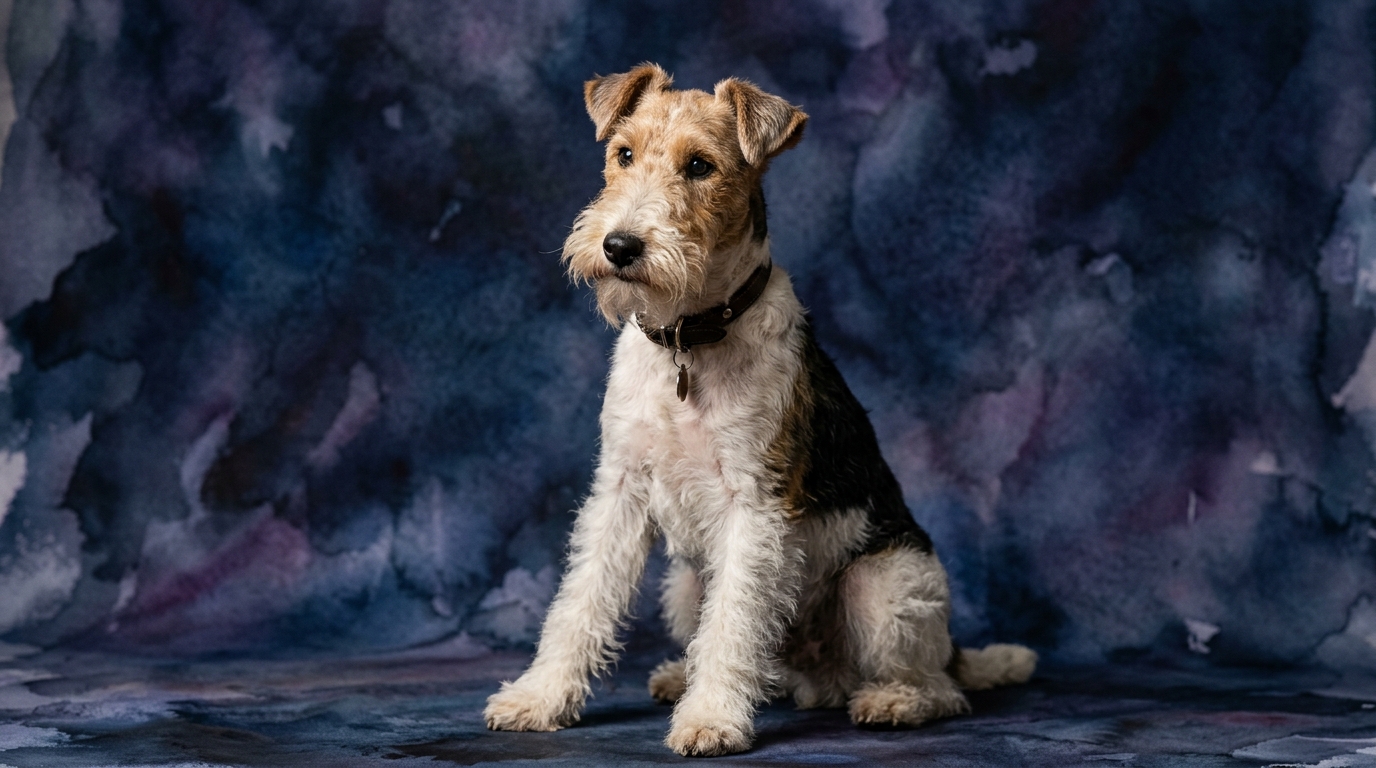
Side-by-Side IQ Profile: Dachshund vs. Wire Fox Terrier
The Cosmic Pet Pet IQ Lab employs a five-dimensional framework to assess canine intelligence, offering a nuanced view beyond simplistic rankings. For the Dachshund, a Hound breed, their profile reflects a specialized mind: Problem Solving scores 4/5, indicating a strong capacity for independent thought and navigating complex physical challenges, essential for their burrowing origins. Training Speed is rated 2/5, suggesting a greater challenge in formal obedience due to their independent nature. Social Intelligence stands at 3/5, representing an average ability to interpret human cues and interact within a social structure. Their Instinctive Drive is exceptionally high at 5/5, a testament to their relentless pursuit and focus on scent-driven tasks. Memory is an adequate 3/5, sufficient for retaining routines and learned associations. Dachshunds are also recognized by Coren's ranking at #49.
The Wire Fox Terrier, a Terrier breed, presents a different cognitive balance. Their Problem Solving score is 3/5, indicating resourcefulness and adaptability, though perhaps less strategic than the Dachshund's burrow-centric intellect. Training Speed is rated 3/5, suggesting they are moderately receptive to learning commands and routines. Social Intelligence mirrors the Dachshund at 3/5, indicating a similar capacity for social interaction. Their Instinctive Drive is 3/5, strong for a terrier, but not the singular focus seen in the Dachshund's specialized hunting. Memory is also 3/5, providing a solid foundation for retaining information. The Wire Fox Terrier is not included in Coren's traditional ranking, which often emphasizes obedience, a trait that can sometimes overshadow the independent ingenuity of many terriers.
Where the Dachshund Excels Cognitively
The Dachshund's cognitive strengths are deeply rooted in their original purpose: hunting badgers and other burrowing animals. Their Problem Solving score of 4/5 is a clear indicator of their superior ability to figure out how to access hidden objects or navigate intricate pathways. This isn't just about brute force; it involves spatial reasoning and persistent strategizing to overcome obstacles, much like a badger must be outsmarted in its den. For example, a Dachshund might spend significantly more time and varied approaches to retrieve a toy hidden under furniture compared to a Wire Fox Terrier, demonstrating a higher level of persistent, independent thought in problem-solving scenarios.
Furthermore, the Dachshund's Instinctive Drive, an exceptional 5/5, represents an unparalleled focus and tenacity. This isn't merely a physical drive; it's a cognitive commitment. When a Dachshund locks onto a scent or a perceived 'prey,' their mind becomes singularly focused on that task, demonstrating an incredible capacity for sustained attention and willpower that can override all other stimuli. This relentless mental persistence, while sometimes challenging for owners, is a profound cognitive strength for their specialized work, allowing them to pursue a goal with unwavering dedication.
Where the Wire Fox Terrier Shows Cognitive Advantages
The Wire Fox Terrier's cognitive profile, while not as specialized as the Dachshund's, offers a distinct advantage in areas of general adaptability and responsiveness. Their Training Speed of 3/5, compared to the Dachshund's 2/5, suggests a marginally greater aptitude for quickly grasping new commands and routines. This indicates a more open mental framework for absorbing human-directed instruction and a slightly higher intrinsic motivation to engage in structured learning activities. For instance, a Wire Fox Terrier might require fewer repetitions to master a new trick or obedience command, indicating a more efficient learning curve in formal training settings.
While their Problem Solving is 3/5, it's often coupled with a quick, reactive intelligence suitable for above-ground hunting and agile maneuvering. Their cognitive strength lies in a balanced approach that allows for quicker shifts between tasks and environments. This versatility means they can adapt more readily to a variety of mental challenges beyond a single-minded pursuit, potentially making them more amenable to diverse training disciplines like agility or rally, which demand quick thinking and responsive action rather than prolonged, singular focus.
Which is Easier to Train and Why?
When considering ease of training, the Wire Fox Terrier, with a Training Speed of 3/5, generally presents a slightly smoother path than the Dachshund, rated at 2/5. This difference stems largely from their divergent instinctive drives and problem-solving approaches. Dachshunds possess an exceptionally high instinctive drive (5/5) and a strong problem-solving capacity (4/5) that often translates into a profound independence of mind. Their historical role required them to make split-second decisions underground, far from human direction, fostering a stubborn self-reliance. This means a Dachshund, once fixated on a scent or a perceived task, can be remarkably difficult to redirect, as their internal drive often overrides human commands. Their persistence, a cognitive asset for hunting, can become a training hurdle when they decide their agenda is more important.
In contrast, the Wire Fox Terrier, while certainly independent and spirited, has a more balanced instinctive drive (3/5) and a slightly better training speed. They are often more eager to engage with their human partners in learning activities, viewing training as an interactive challenge rather than an interruption to their own pursuits. While they can still be assertive, their cognitive makeup suggests a greater willingness to process and respond to commands, especially when training is framed positively and keeps them mentally stimulated. This makes them generally more amenable to consistent training efforts, leading to quicker and more reliable results in obedience and trick learning.
Which Suits Active Owners vs. Relaxed Owners?
For owners with an active lifestyle who enjoy varied mental and physical challenges, the Wire Fox Terrier is often a more suitable companion. Their balanced instinctive drive (3/5), coupled with a higher training speed and general terrier tenacity, makes them excellent candidates for dog sports such as agility, flyball, or earthdog trials. They thrive on consistent mental stimulation and physical exercise, requiring owners who are prepared to provide daily engagement beyond a simple walk. Their adaptability and eagerness to participate in diverse activities mean they can keep pace with an owner who enjoys exploring different hobbies and outdoor adventures, preventing boredom and potential destructive behaviors.
Conversely, for owners seeking a companion with a more specialized, internal world, or those with a more relaxed pace, the Dachshund might be a better fit. While they certainly require regular exercise, their activity often revolves around their powerful instinctive drive (5/5), meaning they derive immense satisfaction from scent-driven walks where they can explore and 'hunt' with their nose. Their independent problem-solving (4/5) can be satisfied with puzzle toys or structured scent work, rather than constant high-impact physical exertion, which can also be limited by their unique spinal structure. Owners who appreciate a dog with a strong, self-directed personality and are content to observe and facilitate their natural drives, rather than constantly direct them, will find a rewarding partnership with a Dachshund.
The Verdict: When to Choose Each Breed
The Verdict
Choose the Dachshund if you appreciate a dog with exceptional, specialized problem-solving skills and an unparalleled instinctive drive, understanding that their independent spirit requires patient, consistent engagement.
Opt for the Wire Fox Terrier if you seek a spirited, adaptable companion with a slightly quicker training speed, who thrives on varied mental and physical activities and enjoys a more interactive learning partnership.
🧠 Find Your Pet's IQ Score
Our Pet IQ Lab assessment covers 25+ tests across 5 cognitive dimensions — personalized to your breed.
Take the Full IQ Test →Frequently Asked Questions
Do Dachshunds forget their training easily?
Dachshunds have a memory score of 3/5, indicating they retain training well. The challenge isn't a lack of memory, but their powerful instinctive drive and independent will, which can often lead them to prioritize their own desires over learned commands if not consistently reinforced.
Are Wire Fox Terriers good at learning tricks?
With a training speed of 3/5 and a keen, energetic nature, Wire Fox Terriers can be quite adept at learning tricks. They often enjoy the mental stimulation and interactive challenge involved in such activities, making them engaging partners for trick training.
Which breed is more prone to destructive behaviors if bored?
Both breeds require mental stimulation to prevent boredom. However, a Dachshund's intense digging drive (instinctive drive 5/5) might manifest as focused excavation, while a Wire Fox Terrier's more balanced drive could lead to broader mischief like chewing or general restlessness if their needs aren't met.