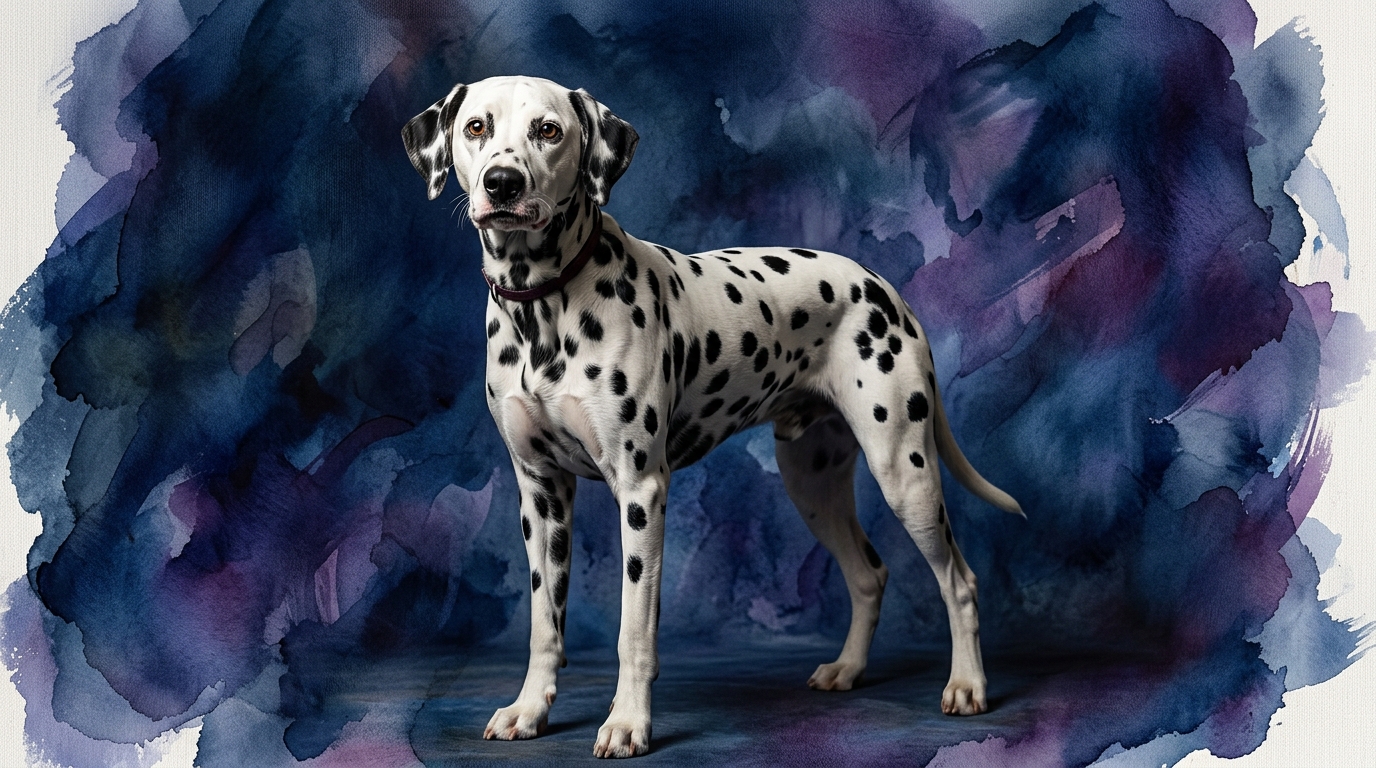
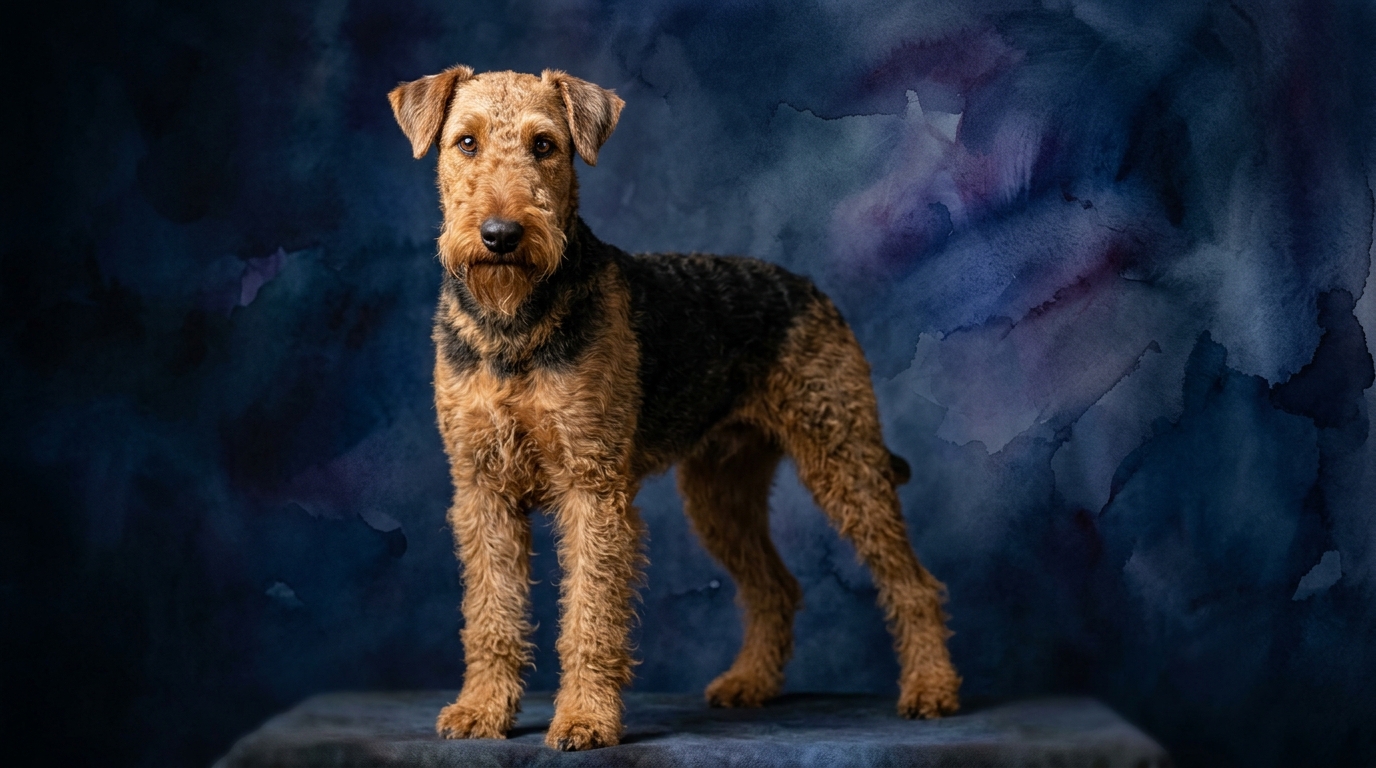
Side-by-Side IQ Profile: Dalmatian vs. Airedale Terrier
The Cosmic Pet Pet IQ Lab employs a five-dimensional framework to assess canine intelligence: problem-solving ability, training speed, social intelligence, instinctive drive, and memory. Examining the Dalmatian and Airedale Terrier through this lens reveals their distinct cognitive strengths and predispositions, shaped by their unique histories and breed purposes.
The Dalmatian, a member of the Non-Sporting Group with a Coren rank of #39, scores 3/5 for problem-solving, suggesting they can navigate moderately complex situations but might not always be the first to invent novel solutions. Their training speed also rates 3/5, indicating they require consistent, patient training, often taking a moderate number of repetitions to solidify commands. However, their social intelligence is a strong 4/5, pointing to a significant capacity for understanding human cues, forming deep bonds, and often seeking interaction. Their instinctive drive is also high at 4/5, reflecting a powerful inherent motivation linked to their historical roles, like endurance running or guarding. Finally, their memory scores an impressive 4/5, showing they retain learned information and experiences effectively over time.
In contrast, the Airedale Terrier, from the Terrier Group with a Coren rank of #29, shows different cognitive leanings. Their problem-solving ability is a robust 4/5, demonstrating a significant capacity to independently figure out complex situations and adapt to new challenges. Their training speed matches this at 4/5, suggesting they grasp new commands and concepts relatively quickly, often needing fewer repetitions than many other breeds. However, their social intelligence is 3/5, implying they are capable of forming bonds but might exhibit more independence or require clearer communication from their human companions. Their instinctive drive is also 3/5, indicating a moderate, but still present, inherent motivation often tied to their terrier heritage of hunting and independent work. Like the Dalmatian, the Airedale Terrier also scores 4/5 for memory, possessing a strong capacity for remembering past lessons and experiences.
Where the Dalmatian Wins Cognitively
The Dalmatian's superior social intelligence, scoring 4 out of 5, allows them to be highly attuned to their human companions' moods and intentions, fostering a strong, empathetic connection within the family unit. This translates to an intuitive understanding of household routines and a desire to participate, making them excellent family members who thrive on companionship and often respond well to subtle emotional cues. Their ability to read non-verbal communication contributes significantly to their reputation as sensitive and responsive partners.
Furthermore, their formidable instinctive drive, also scoring 4 out of 5, is a testament to their heritage as carriage dogs, requiring immense stamina and focus to run alongside horses for miles. This drive manifests as a deep-seated need for purposeful activity and endurance, making them exceptionally motivated for structured exercise like long runs, hiking, or canine sports that tap into their innate athleticism and sustained effort. This isn't solely about physical energy, but also the cognitive focus required to maintain a task or activity over extended periods.
Where the Airedale Terrier Wins Cognitively
The Airedale Terrier's impressive 4/5 in problem-solving ability highlights their capacity for independent thought and strategic thinking, often finding ingenious ways to navigate obstacles or achieve desired outcomes. This resourcefulness, a hallmark of their terrier lineage, means they are adept at evaluating situations and devising solutions, whether it's figuring out how to open a gate or solving a complex puzzle toy. Owners will frequently observe their Airedale contemplating a challenge before acting, rather than relying solely on brute force or immediate reaction, showcasing a keen, analytical mind.
Scoring 4/5 in training speed, Airedales demonstrate a remarkable aptitude for rapidly grasping new commands and concepts, often requiring fewer repetitions than many other breeds to achieve mastery. This quick uptake is coupled with their problem-solving prowess, allowing them to generalize learned behaviors to new situations efficiently. While they learn quickly, their inherent terrier independence means that while they understand *what* is asked, they may require consistent and engaging motivation to *comply* if the task doesn't immediately align with their interests or perceived value.
Which Is Easier to Train and Why
When considering the ease of training, the Airedale Terrier, with its 4/5 training speed, often picks up new commands and complex sequences with notable rapidity, making initial learning phases relatively swift. Their problem-solving acumen means they can quickly understand the *mechanics* of a new behavior. However, their 3/5 social intelligence suggests a more independent nature; they might understand the command but choose to comply only if sufficiently motivated or if they perceive a clear benefit, sometimes leading to a 'what's in it for me?' attitude that can challenge a handler.
In contrast, the Dalmatian, scoring 3/5 in training speed, may require more consistent repetition and patience during the initial learning stages, taking a bit longer to grasp new concepts. Yet, their superior 4/5 social intelligence often translates into a stronger desire to please and a deeper connection to their handler, fostering a collaborative training environment. While they might take longer to *learn* a command, their motivation to *perform* it consistently, driven by their bond and understanding of human expectations, can be more enduring. Their higher instinctive drive (4/5) means focus can sometimes be challenged by environmental stimuli, demanding an engaging and highly rewarding training approach to maintain attention.
Therefore, 'easier' is subjective and depends on the owner's training style and expectations. An Airedale might learn *faster* in terms of raw acquisition, but a Dalmatian might be more *willing* to cooperate over the long term due to social bonding, provided the owner is patient and consistent. Airedales benefit from varied, challenging training that engages their intellect and offers clear rewards, while Dalmatians thrive with positive reinforcement that strengthens their partnership and appeals to their social nature.
Which Suits Active Owners vs. Relaxed Owners
For owners seeking a truly active companion, both breeds demand significant engagement, but their preferred activities diverge in a fascinating way. The Dalmatian, with its 4/5 instinctive drive and historical role as a carriage dog, excels in endurance activities. They are ideal partners for long-distance running, cycling alongside their owner, or participating in agility and flyball where sustained effort and stamina are key. Their high social intelligence also means they typically prefer to share these activities with their human, making them excellent companions for owners who integrate their dog into their daily fitness routine.
The Airedale Terrier, while also requiring substantial physical exercise, often benefits more from mentally stimulating activities that tap into its 4/5 problem-solving abilities. Think structured scent work, complex obedience routines, or interactive puzzle games that challenge their intellect alongside physical exertion. Their 3/5 instinctive drive is more geared towards the chase and solve, typical of terriers, rather than pure sustained endurance. They enjoy exploring, 'working' a problem, and engaging in activities that require strategic thinking and independent action.
Crucially, neither breed is suitable for truly relaxed owners seeking a low-energy couch potato. Both Dalmatians and Airedale Terriers require daily, vigorous exercise and consistent mental enrichment to prevent boredom and potential behavioral issues rooted in unfulfilled cognitive and physical needs. Attempting to keep either breed with minimal activity would be detrimental to their well-being and frustrating for the owner, as their inherent cognitive and physical demands are simply too high for a sedentary lifestyle.
The Verdict
Choose a Dalmatian if you value a deeply bonded, socially intuitive companion for endurance activities and a consistent, albeit patient, training journey, thriving on partnership and shared experiences.
Opt for an Airedale Terrier if you are an owner who enjoys engaging a sharp, independent mind with complex problem-solving tasks and appreciates a quick learner who thrives on intellectual challenges and variety.
🧠 Find Your Pet's IQ Score
Our Pet IQ Lab assessment covers 25+ tests across 5 cognitive dimensions — personalized to your breed.
Take the Full IQ Test →Frequently Asked Questions
Are Dalmatians difficult to train?
Dalmatians (training speed 3/5) require consistent, patient methods, taking a moderate number of repetitions to learn commands. Their strong social intelligence (4/5) means they respond well to positive reinforcement that strengthens the human-dog bond, making training a collaborative experience, not necessarily 'difficult' but requiring dedication.
Do Airedale Terriers need a lot of mental stimulation?
Absolutely. With a problem-solving score of 4/5, Airedale Terriers thrive on mental challenges like puzzle toys, advanced obedience, and scent work. Their independent nature requires their minds to be regularly engaged to prevent boredom and channel their intelligence constructively, otherwise they may invent their own 'problems' to solve.
Which breed is better with children, based on intelligence?
The Dalmatian's higher social intelligence (4/5) often means they are more attuned to family dynamics and human cues, potentially making them more naturally responsive and empathetic companions for children. However, both breeds require proper socialization and supervision with kids, as individual temperament and consistent training are always key factors regardless of breed intelligence scores.