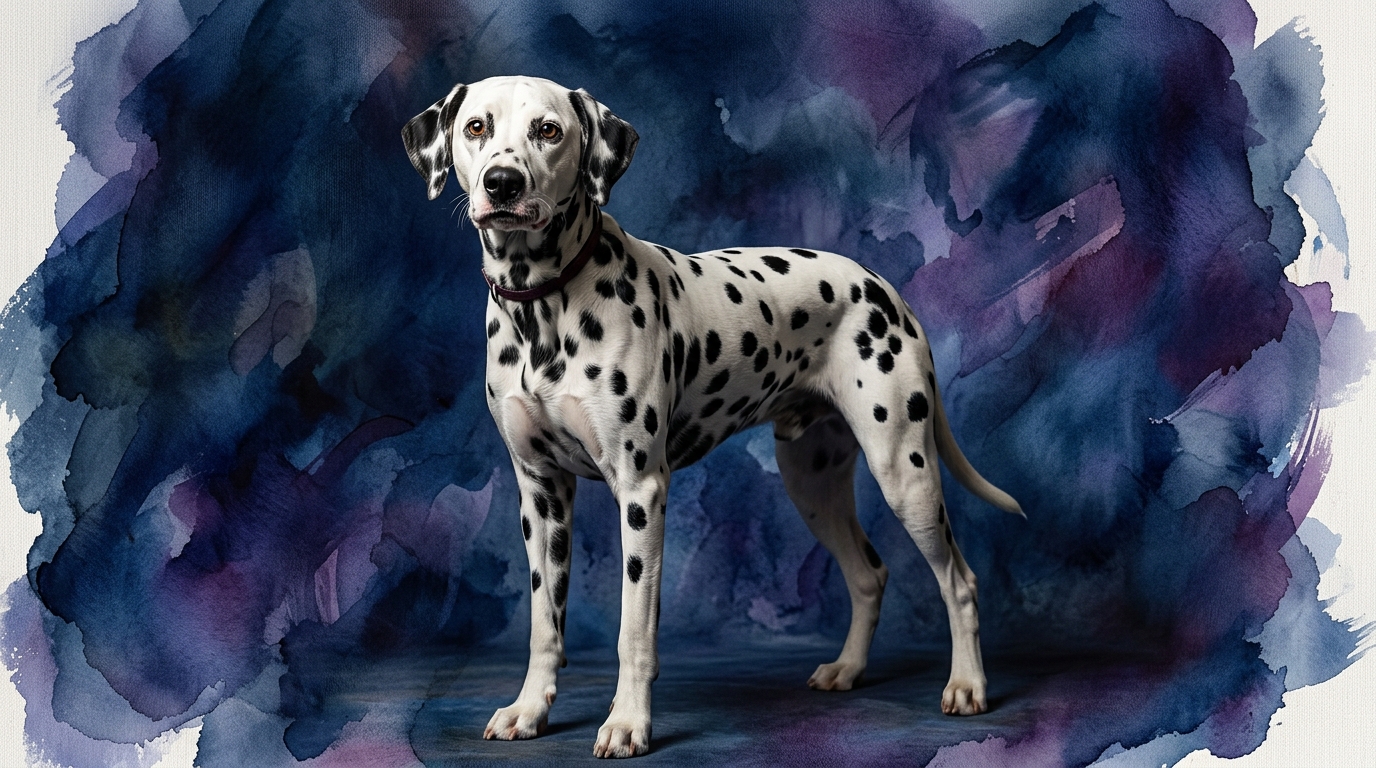
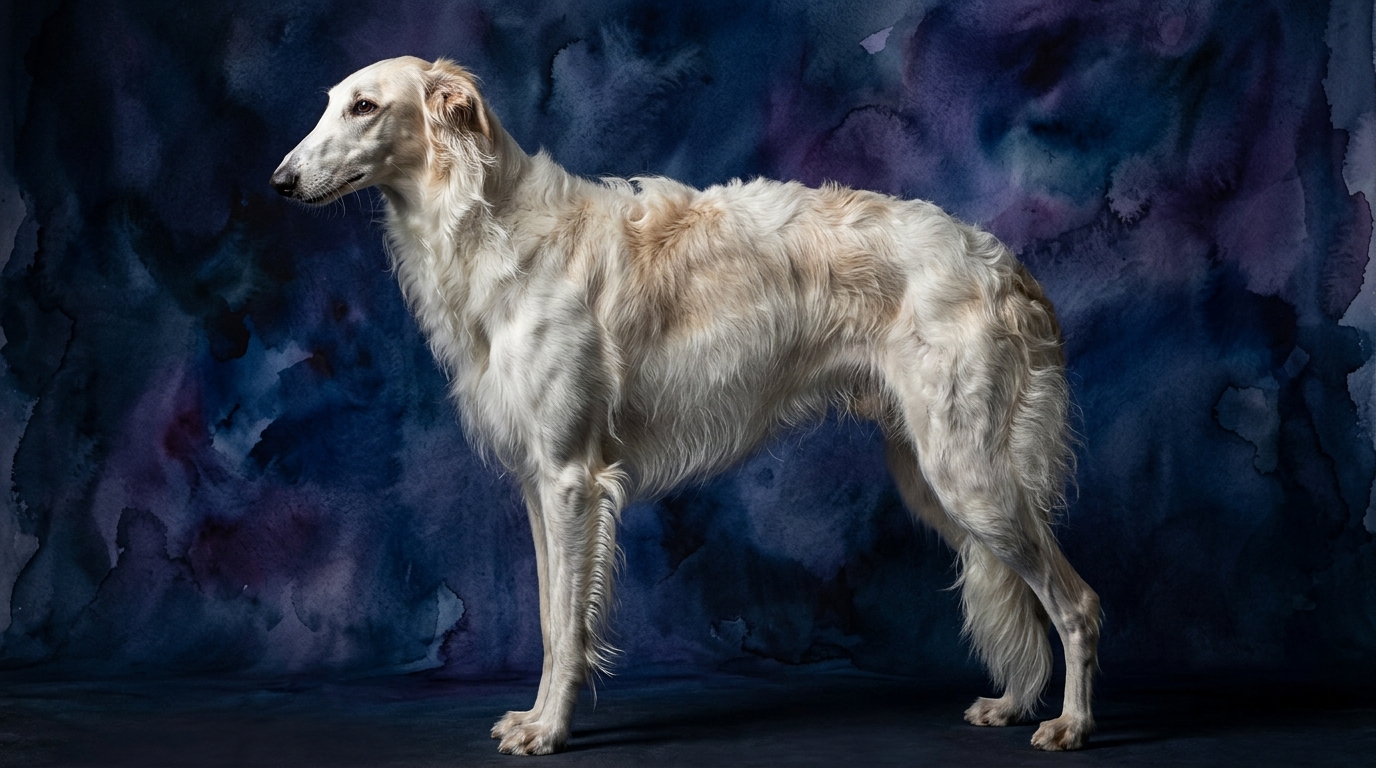
Side-by-Side Cognitive Profiles: Dalmatian vs. Borzoi
At The Cosmic Pet Pet IQ Lab, we delve beyond superficial observations to understand the intricate cognitive landscapes of different breeds. Our comparison of the Dalmatian and the Borzoi highlights how their historical roles have profoundly shaped their mental aptitudes. The Dalmatian, with a Coren rank of #39, falls into the category of above-average working and obedience intelligence, suggesting a solid capacity for understanding and executing commands. The Borzoi, ranked #75, occupies a position indicating fair working and obedience intelligence, often interpreted as a more independent, less handler-focused cognitive style.
Breaking down the Dalmatian's cognitive metrics, we see a balanced profile: Problem Solving 3/5, Training Speed 3/5, Social Intelligence 4/5, Instinctive Drive 4/5, and Memory 4/5. This suggests a dog capable of navigating practical challenges, learning at a steady pace, and possessing a strong awareness of social cues and a robust memory for experiences and training. Their higher scores in social intelligence, instinctive drive, and memory point to a breed that is often highly engaged with its environment and human companions, eager to participate and remember routines.
The Borzoi's cognitive profile presents a somewhat different picture: Problem Solving 3/5, Training Speed 3/5, Social Intelligence 3/5, Instinctive Drive 3/5, and Memory 3/5. While their problem-solving and training speed scores are identical to the Dalmatian's, their slightly lower scores across social intelligence, instinctive drive, and memory suggest a more self-reliant and potentially less overtly demonstrative cognitive style. This breed’s mental architecture is geared more towards autonomous decision-making in vast spaces, reflecting their heritage as sighthounds requiring independent judgment during the chase, rather than constant handler interaction.
Where the Dalmatian Excels Cognitively
The Dalmatian’s cognitive strengths are particularly evident in areas demanding social attunement and consistent recall. With a Social Intelligence score of 4/5 compared to the Borzoi’s 3/5, Dalmatians often demonstrate a more profound ability to pick up on human emotions, intentions, and even subtle shifts in household dynamics. This translates into a companion who might seem more 'in tune' with their family, initiating interactions, responding to moods, and generally integrating themselves seamlessly into the social fabric of a home. Their historical role as carriage dogs demanded a keen awareness of their surroundings and handlers, a trait that continues to manifest in their responsiveness.
Furthermore, the Dalmatian's Instinctive Drive at 4/5 and Memory at 4/5 offer distinct advantages. Their strong instinctive drive isn't just about energy; it often encompasses a desire for purpose and routine, making them eager participants in structured activities. This drive, coupled with their excellent memory, means they retain learned behaviors and experiences with impressive precision. A Dalmatian is more likely to remember a complex trick after fewer repetitions or recall specific routes and past interactions, contributing to their consistency in performance and their ability to engage reliably in long-term training regimens or complex routines.
Where the Borzoi's Cognitive Strengths Lie
While the Borzoi's overall IQ scores appear slightly lower than the Dalmatian's, their cognitive strengths are uniquely adapted to their sighthound heritage, particularly in independent problem-solving within dynamic environments. Their Problem Solving score of 3/5, though numerically similar to the Dalmatian's, manifests in a distinctly different way. A Borzoi excels at rapid, autonomous decision-making during a chase, requiring swift, on-the-spot assessments of terrain, speed, and the evasive maneuvers of prey. This is a highly specialized form of spatial and kinetic problem-solving, honed for specific hunting scenarios rather than collaborative tasks with a handler.
The Borzoi's independent nature, reflected in their 3/5 Social Intelligence, can also be viewed as a cognitive strength in contexts demanding self-reliance. They are less reliant on constant human direction or emotional validation, making them adept at tasks where immediate handler input isn't available or practical. This self-sufficiency means they can process information and make choices based on their own observations, a critical trait for a breed whose primary function involved pursuing game over vast distances without direct human instruction. Their focus is often on the task at hand (or the horizon), rather than on pleasing a handler, showcasing a profound capacity for self-directed action.
Training Dynamics: Dalmatian vs. Borzoi
When it comes to trainability, the subtle differences in their cognitive profiles become significant. The Dalmatian, with its 3/5 Training Speed, 4/5 Social Intelligence, and 4/5 Memory, generally presents a more straightforward training experience for the average owner. Their higher social intelligence means they are often more motivated by human interaction and approval, making them receptive to positive reinforcement and eager to engage in learning sessions. Their excellent memory ensures that once a command is learned, it tends to stick, contributing to consistent performance and building upon previous lessons. However, their strong instinctive drive (4/5) means they require consistent mental and physical outlets to prevent boredom-induced mischief, channeling their energy into productive learning.
The Borzoi, sharing a 3/5 Training Speed but with slightly lower 3/5 scores in Social Intelligence and Memory, requires a more nuanced approach. Their independent nature means they are less inherently driven to please and may evaluate commands based on their own perceived value or interest rather than immediate compliance. Training sessions need to be engaging, positive, and make sense from the Borzoi's perspective, often requiring more patience and creativity from the handler. Repetition is crucial due to their 3/5 memory score, and abstract concepts might take longer to grasp. Their powerful sighthound prey drive, part of their 3/5 instinctive drive, can be a considerable challenge, making off-leash reliability difficult without extensive, dedicated training and secure environments.
In essence, while both breeds have a similar raw 'training speed' capacity, the Dalmatian's higher social intelligence and memory make them generally more amenable to human-directed training and more consistent in recalling learned behaviors. The Borzoi's independence means successful training hinges more on understanding their unique motivations and working with their inherent self-reliance, rather than expecting eager compliance.
Matching Breeds to Lifestyles: Active vs. Relaxed Owners
The Dalmatian's cognitive profile, particularly their high Instinctive Drive (4/5) and Social Intelligence (4/5), makes them an ideal match for active owners. These dogs require substantial physical exercise to manage their energy and prevent boredom, thriving on regular outdoor adventures like running, hiking, or participating in dog sports such as agility or flyball. Their social intelligence means they genuinely enjoy being an integral part of family activities and can become frustrated if left alone for extended periods without engagement. Owners who can commit to a structured routine involving both mental stimulation and vigorous physical activity will find the Dalmatian a rewarding and engaged companion, leveraging their excellent memory (4/5) to learn complex routines and tricks.
Conversely, the Borzoi, despite their incredible speed, often suits owners who appreciate a more relaxed home life punctuated by bursts of intense activity. While their 3/5 Instinctive Drive is powerful, it is primarily focused on short, explosive sprints rather than sustained endurance. They are often described as '45 mph couch potatoes,' content to lounge gracefully indoors after a good run. They suit owners who can provide secure off-leash running opportunities—such as a large, fenced yard or access to lure coursing—where they can safely express their sighthound instincts. Their 3/5 Social Intelligence suggests they are less demanding of constant direct interaction, often preferring to observe from a comfortable spot, making them a good fit for owners who enjoy a more independent canine companion.
The Verdict
Choose a Dalmatian if you seek a highly engaged, responsive companion for active pursuits, value strong social interaction, and are prepared to channel their substantial energy and instinctive drives into consistent training and activities.
Opt for a Borzoi if you appreciate an elegant, independent companion capable of incredible bursts of speed, are comfortable with a more reserved social style, and can provide secure spaces for their sighthound instincts to be safely expressed.
🧠 Find Your Pet's IQ Score
Our Pet IQ Lab assessment covers 25+ tests across 5 cognitive dimensions — personalized to your breed.
Take the Full IQ Test →Frequently Asked Questions
Are Dalmatians good family dogs?
Yes, with their 4/5 social intelligence, Dalmatians often form strong bonds with their families, showing responsiveness and affection. However, their high energy and instinctive drive (4/5) mean they require consistent training and plenty of activity to be well-adjusted companions in a family setting.
Do Borzoi need a lot of exercise?
Borzoi need intense, short bursts of exercise, not constant endurance. While they can be '45 mph couch potatoes' indoors, it's crucial to provide secure, fenced areas for them to gallop and express their sighthound instincts safely, ideally several times a week, to keep them mentally and physically content.
What's the biggest training challenge for a Borzoi?
The Borzoi's most significant training challenge often stems from its independent nature (social intelligence 3/5) and powerful prey drive (instinctive drive 3/5). They can be less motivated by human approval than other breeds and may prioritize chasing a moving object over a command, requiring patient, consistent, and highly rewarding training methods.