A Side-by-Side Cognitive Profile
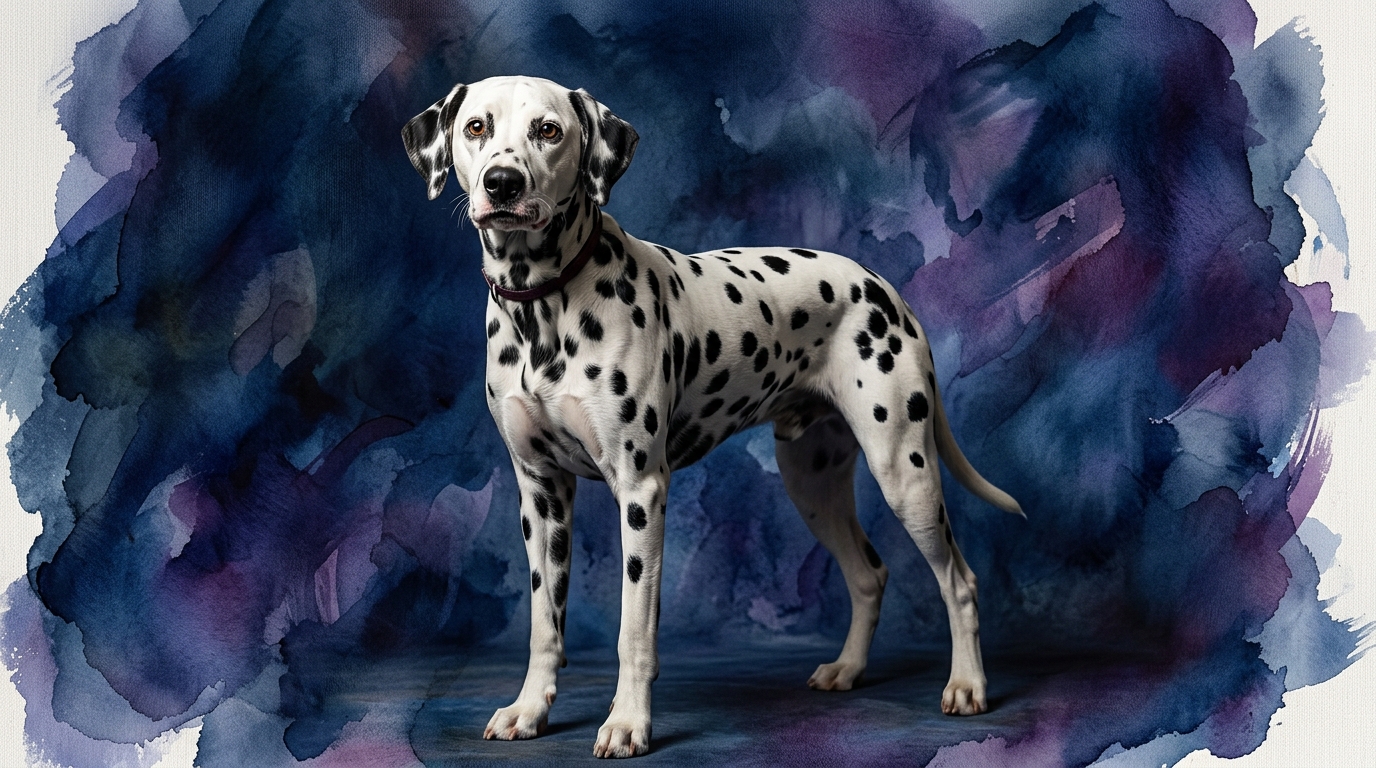
Our Pet IQ Lab data provides a granular view of canine intelligence across five key dimensions, offering a nuanced understanding of how Dalmatians and Mastiffs process their world. The Dalmatian, a Non-Sporting breed ranking #39 in Coren's intelligence scale, presents a balanced but socially adept cognitive profile. Their Problem Solving is rated 3 out of 5, indicating a moderate capacity to independently navigate novel challenges and puzzles. Training Speed also sits at a 3 out of 5, suggesting they grasp new commands and routines with average efficiency. Where Dalmatians truly distinguish themselves is in Social Intelligence, scoring a robust 4 out of 5, reflecting their strong ability to interpret human cues and bond deeply. Their Instinctive Drive, also 4 out of 5, points to a strong internal motivation, often tied to their historical role as coach dogs requiring endurance and purpose. Finally, their Memory is impressive at 4 out of 5, enabling them to retain learned behaviors and experiences over extended periods.
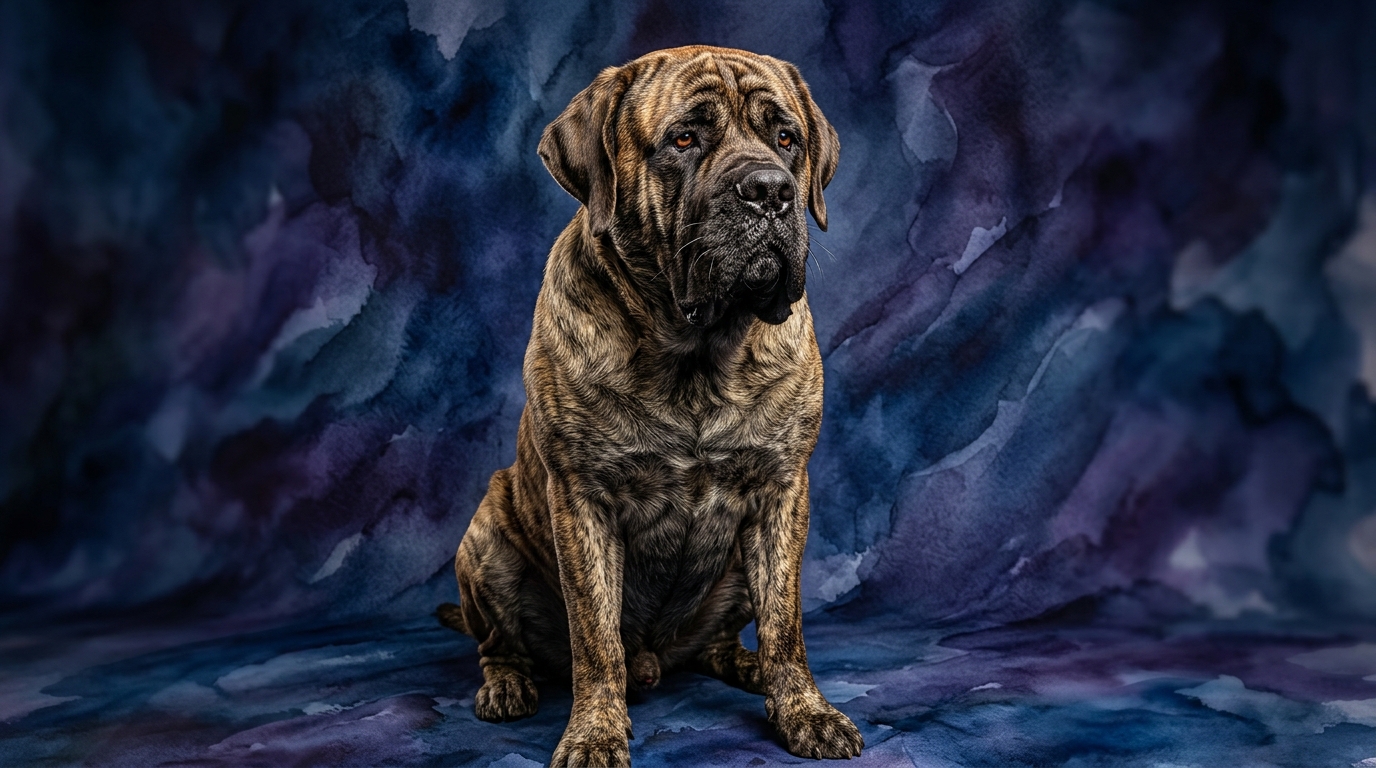
In contrast, the Mastiff, a Working breed with a Coren rank of #72, exhibits a more uniform cognitive spread. Their Problem Solving ability is rated 3 out of 5, mirroring the Dalmatian in their capacity for independent thought when faced with obstacles. Similarly, their Training Speed is a 3 out of 5, meaning they learn at a comparable pace to Dalmatians, though the motivational approach might differ. The Mastiff's Social Intelligence is a 3 out of 5, indicating a solid but less outwardly expressive connection with humans compared to the Dalmatian. Their Instinctive Drive is also 3 out of 5, reflecting a powerful, yet often reserved, motivation typically linked to their protective guardian instincts rather than sustained activity. Their Memory score of 3 out of 5 suggests a reliable ability to recall information, though perhaps not with the same vividness or detail as their spotted counterparts.
Where the Dalmatian's Cognition Shines
The Dalmatian's cognitive advantages are most evident in their elevated Social Intelligence, Instinctive Drive, and Memory scores. A 4/5 in Social Intelligence means Dalmatians are often highly attuned to human emotions and intentions, making them exceptionally responsive in interactive settings. This isn't just about following commands; it's about a deeper understanding of social dynamics, allowing them to anticipate needs or react appropriately to subtle shifts in mood. For an owner, this translates into a companion who feels more 'in tune' with the household, often initiating interaction or seeking engagement.
Their 4/5 Instinctive Drive fuels a natural inclination towards purpose and activity. This isn't merely boundless energy; it's a drive to *do* something, whether it's participating in agility, accompanying a jogger, or engaging in complex games. This strong internal motor means they often learn best when training taps into this desire for engagement and a 'job.' Coupled with their 4/5 Memory, Dalmatians are adept at remembering intricate sequences, routes, and past interactions, making them quick to recall training cues even after a long break, and capable of holding onto complex routines in activities like competitive obedience or canine sports. This superior recall means less reteaching and a more consistent application of learned behaviors over time.
Understanding the Mastiff's Distinctive Cognitive Profile
While the Mastiff doesn't outscore the Dalmatian in any specific cognitive dimension according to our data, their unique application of a balanced cognitive profile is crucial to understanding their intelligence. Their Problem Solving (3/5) and Training Speed (3/5) scores, matching the Dalmatian, indicate a consistent capacity for learning and adapting, despite their lower general Coren rank. This suggests that while they may not be as quick to volunteer solutions or learn with overt enthusiasm, they possess a steady, methodical approach to new information and challenges.
The Mastiff's 3/5 Instinctive Drive, while lower than the Dalmatian's, is intensely focused on their historical role: protection and guardianship. This drive manifests not as a need for constant physical activity, but as a deep-seated vigilance and territorial awareness. Their cognitive processes are geared towards observing, assessing, and acting decisively when a perceived threat arises, rather than seeking continuous external stimulation. This focused drive, combined with their adequate Social Intelligence (3/5) and Memory (3/5), allows them to form strong, loyal bonds within their family while maintaining a watchful, discerning eye on their environment, making them effective, if understated, protectors.
Trainability: Nuances Beyond Speed
When considering which breed is 'easier to train,' our data reveals a more complex picture than a simple win-loss. Both Dalmatians and Mastiffs share a Training Speed score of 3 out of 5, suggesting that neither breed inherently grasps new commands faster than the other. However, the Dalmatian's higher Social Intelligence (4/5 vs. Mastiff's 3/5) and Instinctive Drive (4/5 vs. Mastiff's 3/5) can significantly influence the *experience* of training. A Dalmatian's superior social understanding means they are often more receptive to human feedback and eager for interactive learning, sometimes interpreting a trainer's enthusiasm as a direct call to action. Their strong instinctive drive can be harnessed to motivate engagement, making them keen participants in activities that provide a sense of purpose or a physical outlet.
For the Mastiff, training requires a different approach. While they learn at the same speed, their slightly lower social intelligence means they might not be as overtly keen to please or as quick to pick up on subtle cues. Their instinctive drive is geared towards protection, not necessarily towards high-energy tasks, meaning motivation often needs to be more patient, consistent, and reward-based. Mastiffs respond well to calm, confident leadership and positive reinforcement, but may not offer the same enthusiastic 'bounce' during a training session. Their Coren rank of #72 compared to the Dalmatian's #39 also points to a general tendency for Mastiffs to require more repetitions and patience to solidify complex behaviors, even if the initial understanding is comparable.
Matching Breeds to Lifestyles: Active vs. Relaxed Owners
The distinct cognitive profiles of Dalmatians and Mastiffs make them suitable for very different owner lifestyles. The Dalmatian, with its 4/5 Instinctive Drive, is a natural fit for active owners who enjoy regular outdoor pursuits. This breed thrives on having a 'job' and requires consistent physical and mental stimulation to prevent boredom and channel their considerable energy constructively. Owners who love hiking, running, or engaging in dog sports like agility or flyball will find a highly motivated and capable partner in a Dalmatian, especially given their superior memory for complex routines and their social intelligence that makes them keen to collaborate.
Conversely, the Mastiff, with its 3/5 Instinctive Drive, is an ideal companion for more relaxed owners who appreciate a calm, watchful presence. While they do require regular, moderate exercise to maintain health, their drive is not for constant, high-intensity activity. Instead, their cognitive focus is often on observing their environment and family, fulfilling their guardian role with quiet vigilance. Owners who prefer leisurely walks, a steady presence by their side, and who can provide consistent, patient training will find a devoted and imposing companion in a Mastiff. Their lower social intelligence and memory scores, while still respectable, mean they are less likely to demand constant interactive play and more content with a stable, predictable routine.
The Verdict
Choose a Dalmatian if you lead an active lifestyle, crave an interactive and socially astute companion, and are prepared to engage their strong drive and memory with consistent training and purposeful activities.
Opt for a Mastiff if you appreciate a calm, watchful presence, have a more relaxed daily routine, and are committed to patient, consistent training that respects their protective instincts and steady learning pace.
🧠 Find Your Pet's IQ Score
Our Pet IQ Lab assessment covers 25+ tests across 5 cognitive dimensions — personalized to your breed.
Take the Full IQ Test →Frequently Asked Questions
Are Dalmatians difficult to train?
Dalmatians have a Training Speed of 3/5, indicating an average learning pace. Their higher social intelligence and strong instinctive drive mean they respond well to engaging, purpose-driven training that leverages their desire for interaction and activity, rather than being inherently difficult.
Do Mastiffs need a lot of exercise?
Mastiffs have an Instinctive Drive of 3/5, which is moderate. They require regular, but not intense, exercise to stay healthy, such as daily walks. Their drive is more focused on watchful guardianship than on sustained, high-energy physical activity.
What's the main cognitive difference between Dalmatians and Mastiffs?
The primary cognitive distinctions lie in social intelligence, instinctive drive, and memory. Dalmatians score higher in all three (4/5) compared to Mastiffs (3/5), making Dalmatians generally more socially attuned, driven by purpose, and adept at recall, while Mastiffs exhibit a more reserved and watchful cognitive style.