Side-by-Side Cognitive Profiles
At The Cosmic Pet Pet IQ Lab, we delve beyond surface observations to understand the intricate cognitive landscapes of different breeds. Our proprietary IQ framework evaluates five key dimensions: problem-solving, training speed, social intelligence, instinctive drive, and memory. Let's examine how the Dalmatian and Norwich Terrier measure up.
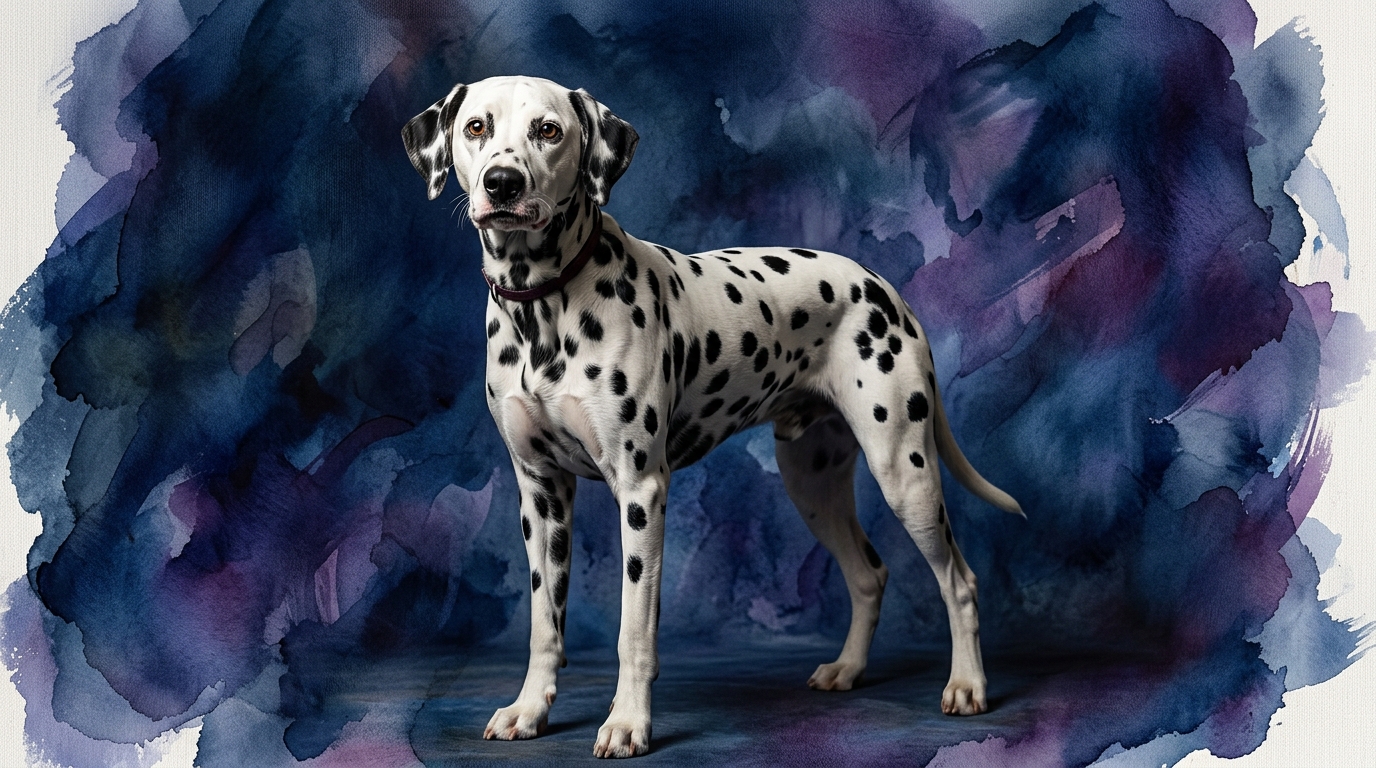
The Dalmatian, historically a coach dog and a member of the Non-Sporting Group, exhibits a balanced yet robust cognitive profile. They score 3/5 in Problem Solving, indicating an ability to navigate moderately complex challenges with some guidance. Their Training Speed also rates at 3/5, suggesting a steady learning pace that benefits from consistent, positive reinforcement. Where Dalmatians truly shine is in their Social Intelligence and Instinctive Drive, both rated at 4/5, reflecting their capacity to read human cues and their inherent need for purpose and activity. Furthermore, their Memory scores an impressive 4/5, contributing to long-term understanding and reliable recall.
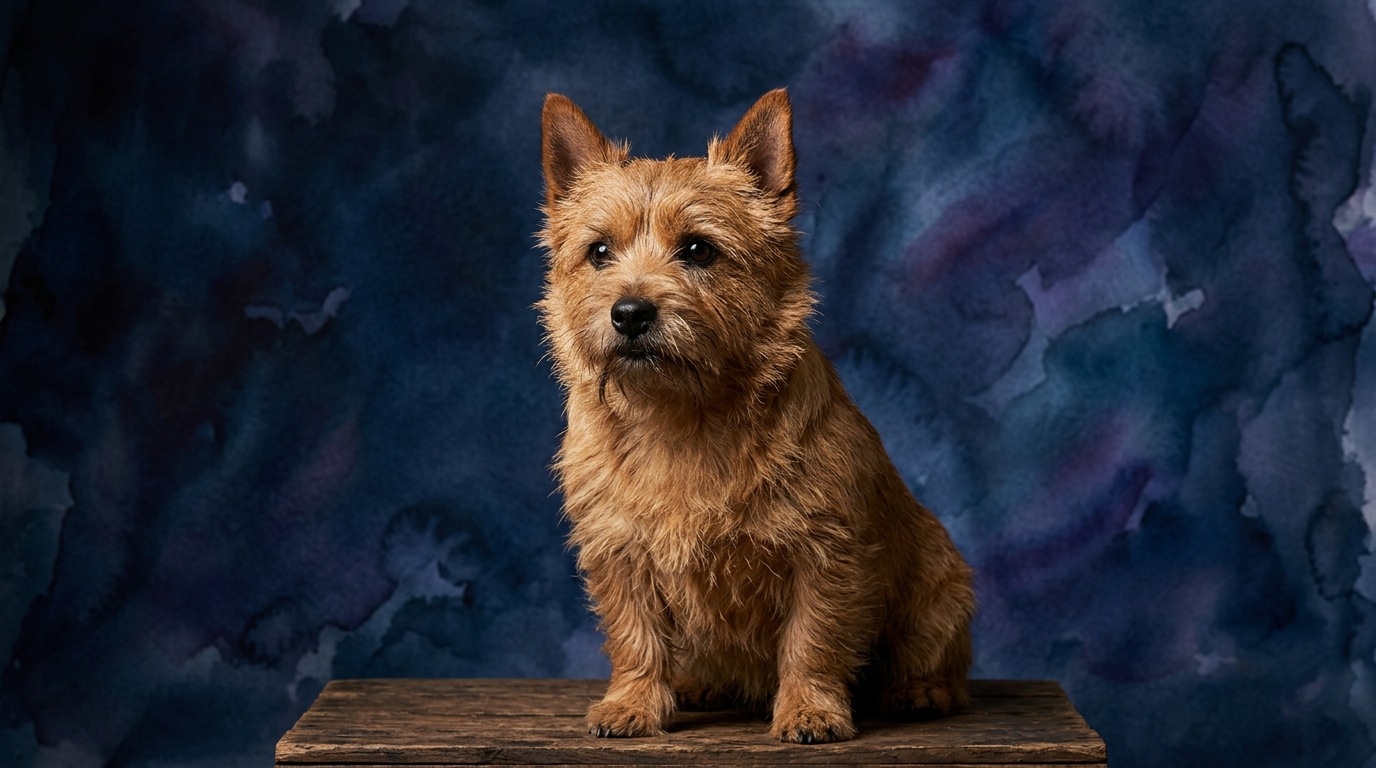
In contrast, the Norwich Terrier, a tenacious member of the Terrier Group, presents a distinct set of cognitive strengths. This breed, while not Coren-ranked, shows a consistent performance across several dimensions, scoring 3/5 in Problem Solving, indicating a moderate ability to tackle challenges, often through persistence. Their Training Speed is also 3/5; they learn at an average rate, though their independent terrier nature can sometimes lead to selective hearing. Their Social Intelligence and Instinctive Drive are both rated at 3/5, suggesting they understand social dynamics sufficiently but are often more focused on their immediate family or task. Finally, their Memory also scores 3/5, meaning they hold onto information reasonably well, though perhaps not with the same depth as some breeds.
Where the Dalmatian Excels Cognitively
The Dalmatian's cognitive advantages become particularly clear in areas demanding social acumen and sustained engagement. With a Social Intelligence score of 4/5 compared to the Norwich Terrier’s 3/5, Dalmatians often demonstrate a superior ability to interpret human body language, vocal tones, and emotional states. Their history as companions to horses and carriages likely fostered this sensitivity, allowing them to integrate seamlessly into diverse social structures and anticipate their human family's needs, fostering deep, communicative bonds.
Their Instinctive Drive, also rated at 4/5, signifies a profound need for purposeful activity and mental stimulation. This isn't merely about physical energy; it's a cognitive inclination to engage with tasks and challenges, making them highly motivated partners for activities like obedience, agility, or long-distance running. This inherent drive can be a powerful asset in structured learning environments, enabling them to sustain focus and effort over extended periods when given a clear objective.
Furthermore, the Dalmatian’s Memory score of 4/5, surpassing the Norwich Terrier's 3/5, means they generally retain learned behaviors and complex sequences of commands with greater fidelity and for longer durations. This cognitive strength translates into more consistent performance in training and daily routines, as they are less likely to 'forget' what they’ve learned. Owners can build upon previous lessons with confidence, knowing the Dalmatian has likely stored that information effectively for future recall.
Where the Norwich Terrier Shows Unique Cognitive Strengths
While the Norwich Terrier's raw scores might be numerically lower or equal, their specific cognitive makeup provides distinct advantages in certain contexts. Their Problem Solving (3/5) combined with their Instinctive Drive (3/5) manifests as a highly focused tenacity, particularly in pursuit of their original earthdog purpose. Their problem-solving often involves relentless determination to overcome physical obstacles, such as navigating tight spaces or persistently investigating a scent, relying on sheer will and physical prowess rather than intricate strategic planning. This specialized application of problem-solving is a unique cognitive strength for their historical role.
The Norwich Terrier's independent decision-making, an aspect influenced by their Social Intelligence score of 3/5, can also be a unique cognitive asset. Unlike breeds that might rely more heavily on human cues for direction, the Norwich is often capable of making quick, autonomous choices, a valuable trait for a dog expected to work independently underground. This self-reliance fosters a direct, proactive approach to challenges, where they might leverage their own initiative and sensory input to solve a problem without constant human intervention, demonstrating a form of practical intelligence tailored for specific, immediate environmental interactions.
Ease of Training: Dalmatian vs. Norwich Terrier
When it comes to trainability, the Dalmatian, with its 3/5 Training Speed, 4/5 Social Intelligence, and 4/5 Memory, generally offers a smoother experience for consistent handlers. Their higher social intelligence means they are often more attuned to their handler's desires, picking up on subtle cues and remembering commands over time. Their robust instinctive drive, when channeled appropriately, can be a powerful motivator for learning and performing tasks. They respond well to positive reinforcement and consistency, showing a greater capacity for understanding the 'why' behind an action and retaining that knowledge, though their drive also necessitates regular mental and physical engagement to prevent boredom-induced behaviors.
The Norwich Terrier, while also scoring 3/5 in Training Speed, presents a different set of considerations. Their independent nature, a hallmark of many terriers, means they might be less inclined to follow commands if they perceive a more interesting alternative, often requiring more convincing. Their slightly lower social intelligence means they might not be as readily attuned to handler cues, demanding more explicit and consistent communication. Training a Norwich often requires patience, creativity, and a strong understanding of their self-reliant spirit, focusing on making training fun and rewarding to overcome their inherent independence; they often excel when they feel they are making their own choices.
Suitability for Active vs. Relaxed Owners
The Dalmatian, with an Instinctive Drive of 4/5, is an ideal match for highly active owners. Their historical role as coach dogs means they possess significant stamina and a deep-seated need for both physical and mental engagement. Owners who enjoy long runs, hiking, dog sports like agility or obedience, or even just extended daily play sessions will find a willing and energetic partner. A more relaxed owner might struggle to meet the Dalmatian's intrinsic need for activity, potentially leading to boredom and subsequent undesirable behaviors; their cognitive profile thrives on consistent interaction and purposeful activity.
Conversely, the Norwich Terrier, with an Instinctive Drive of 3/5, suits a moderately active owner. While they certainly enjoy play and walks, their energy levels are generally lower than a Dalmatian's, and their activities often focus on shorter bursts of exploration or interaction rather than sustained endurance. They appreciate a good romp in the yard or a brisk walk around the neighborhood and are often content to then settle down with their family. A relaxed owner who can still provide daily mental stimulation and moderate physical outings would find a good match in a Norwich, as they don't demand the same intense commitment to exercise as their larger counterpart.
The Verdict
Choose the Dalmatian if you are an active, experienced owner seeking a highly social, driven companion for long runs, complex training, and consistent engagement, valuing a dog that remembers well and thrives on purpose.
Opt for the Norwich Terrier if you appreciate an independent, persistent spirit in a smaller package, suitable for moderately active households that can offer consistent, engaging training and enjoy a dog that thinks for itself in specific situations.
🧠 Find Your Pet's IQ Score
Our Pet IQ Lab assessment covers 25+ tests across 5 cognitive dimensions — personalized to your breed.
Take the Full IQ Test →Frequently Asked Questions
Are Dalmatians difficult to train due to their energy?
Dalmatians are not inherently difficult to train, but their strong instinctive drive and need for engagement mean consistency and positive reinforcement are crucial. Their superior memory and social intelligence can actually make them quick learners, provided their physical and mental needs are met through regular activity.
Do Norwich Terriers bark a lot due to their terrier nature?
Norwich Terriers can be prone to barking, a common trait among terriers, often in response to perceived threats or novel stimuli. While not every individual is excessively vocal, their independent nature means early training focusing on appropriate vocalization is beneficial to manage this behavior effectively.
Which breed is generally better with children?
Both breeds can be good with children with proper socialization and supervision. Dalmatians, with their higher social intelligence, might adapt more readily to a bustling family environment. Norwich Terriers, while affectionate with their family, may prefer slightly older, respectful children due to their independent streak and smaller size.