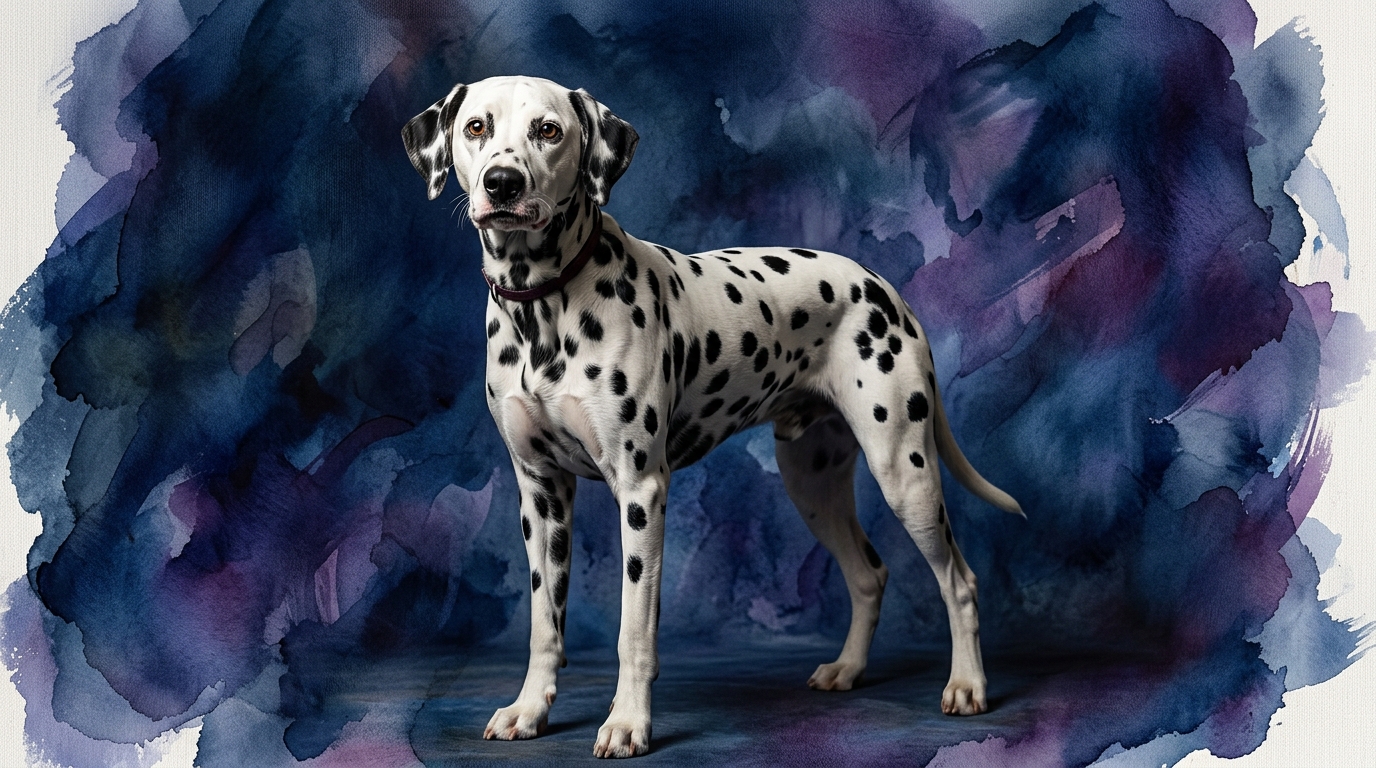
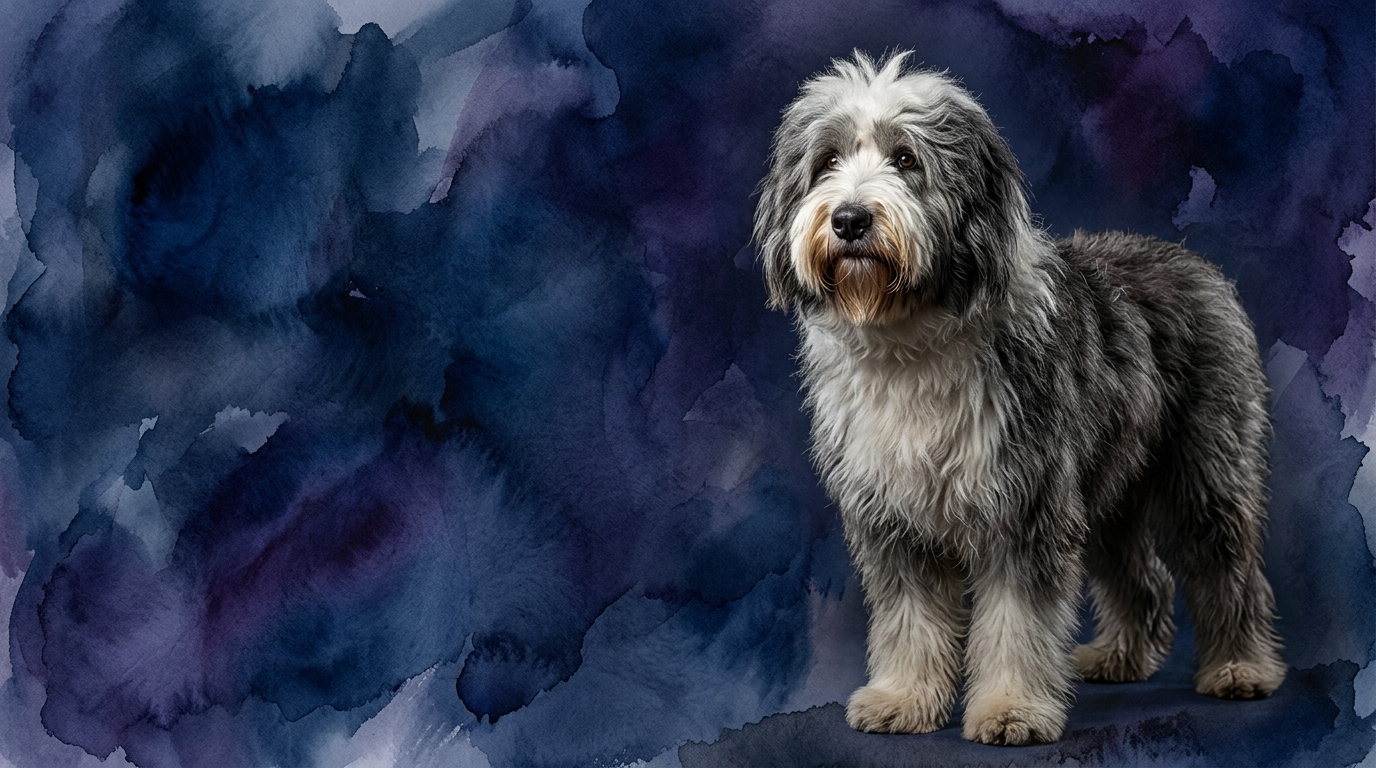
Side-by-Side Pet IQ Profile: Dalmatian vs. Old English Sheepdog
The Pet IQ Lab offers a nuanced perspective on canine cognition, moving beyond simple 'smart' labels to explore specific mental dimensions. For the Dalmatian (Coren rank #39), we see a unique blend of attributes, while the Old English Sheepdog (Coren rank #44) presents a profile honed by its herding legacy.
**Dalmatian IQ Breakdown:** Problem Solving (3/5) indicates a moderate capacity for independent thought and adapting to new situations, often applying practical rather than abstract reasoning. Training Speed (3/5) suggests they grasp new commands steadily, responding well to consistent, positive reinforcement, though their independence may require patience. Social Intelligence (4/5) is a strong suit, reflecting their historical need to navigate complex social environments with humans and horses, leading to a keen awareness of cues. Instinctive Drive (4/5) signifies a robust desire for activity, territory, and protection, demanding structured engagement. Memory (4/5) highlights their solid ability to recall commands, routines, and experiences.
**Old English Sheepdog IQ Breakdown:** Problem Solving (3/5) shows a practical ability to tackle challenges, often within the context of managing a flock. Training Speed (3/5) means they learn at a steady pace, particularly when tasks align with their natural instincts, though their independent nature can occasionally surface. Social Intelligence (3/5) indicates a good understanding of their immediate family unit, geared more towards working with a handler than broad social navigation. Instinctive Drive (3/5) is primarily rooted in their herding heritage, focusing on gathering and protecting, which requires appropriate outlets. Memory (4/5) is a significant strength, allowing them to retain training, recognize individuals, and recall complex patterns essential for their historical role.
Where the Dalmatian's Cognition Shines
The Dalmatian's cognitive profile truly stands out in its **Social Intelligence (4/5)**. Their historical role as carriage escorts required them to be highly attuned to their human companions, horses, and the bustling public environment. This background cultivated a deep perceptiveness, enabling them to read subtle human cues and integrate seamlessly into diverse social settings. This capacity for understanding unspoken signals fosters a rich, communicative bond with their family, making them incredibly intuitive companions. Furthermore, their robust **Instinctive Drive (4/5)** is multi-faceted, encompassing a strong desire for physical activity, a protective instinct for their territory and people, and a need for consistent mental engagement. This proactive drive positions them as dynamic partners eager to participate in various activities, reflecting a mind that seeks interaction and purpose.
Understanding the Old English Sheepdog's Cognitive Strengths
While not outscoring the Dalmatian in every dimension, the Old English Sheepdog's cognitive strengths are uniquely tailored to its ancestral purpose. Their **Problem Solving (3/5)** and **Training Speed (3/5)**, although matching the Dalmatian's scores, are specifically honed for practical application within a herding context. They demonstrate an aptitude for assessing dynamic situations involving livestock and making independent decisions to manage a flock effectively. This isn't about abstract puzzles, but rather a robust, reliable application of their mental faculties to real-world, often complex, scenarios. Their exceptional **Memory (4/5)**, a shared strength, is particularly vital for the OES, allowing them to recall intricate herding patterns, remember individual flock members, and retain extensive training, ensuring consistent and dependable performance in their dedicated roles. Their cognitive profile reflects a mind built for purposeful, independent work and steadfast loyalty to their charge.
Training Dynamics: Dalmatian vs. Old English Sheepdog
When it comes to training, both breeds present unique considerations. The Dalmatian, benefiting from its higher **Social Intelligence (4/5)**, often displays a greater eagerness to cooperate and understand human directives, which can make conventional obedience training feel more fluid. Their perceptive nature allows them to pick up on subtle cues from their trainer, fostering a responsive learning environment. However, their robust **Instinctive Drive (4/5)** mandates consistent mental and physical outlets; without appropriate channeling, this energy can manifest as an independent streak or boisterousness that requires firm, patient guidance.
The Old English Sheepdog, with a solid **Training Speed (3/5)**, is certainly capable of learning, especially when tasks align with their natural herding instincts or provide a clear purpose. However, their historical role often required independent decision-making, meaning they can sometimes exhibit a 'think for myself' attitude that might require more creative engagement or proofing during training. Their **Instinctive Drive (3/5)**, focused on herding, also needs careful management; owners might need to specifically train them to avoid 'herding' children or other pets. Therefore, Dalmatians might be marginally easier for general obedience due to their social perceptiveness and desire to engage, provided their significant energy needs are consistently met and directed.
Lifestyle Match: Active vs. Relaxed Owners
Matching a dog's energy and mental needs to an owner's lifestyle is paramount for a harmonious household. Dalmatians, with their pronounced **Instinctive Drive (4/5)** and historical role as endurance companions, are unequivocally suited for active owners. They thrive on consistent, vigorous exercise, enjoying long runs, hiking, and engaging in dog sports like agility or canicross. Their need for varied mental stimulation, stemming from their problem-solving and social intelligence, also means they appreciate owners who provide diverse activities and training challenges. A sedentary lifestyle will likely lead to boredom and the expression of undirected energy, which can manifest in unwanted behaviors.
The Old English Sheepdog, while possessing an **Instinctive Drive (3/5)** for herding, generally has a more moderate daily energy requirement compared to the Dalmatian. They certainly benefit from regular walks, playtime, and opportunities for mental engagement, but they can often transition to a more relaxed home life once their initial activity needs are met. They are a good fit for owners who enjoy consistent, moderate daily activity rather than intense, high-impact pursuits. Their dense coat also makes them less tolerant of strenuous activity in warmer climates, further aligning them with a more measured pace. Thus, Dalmatians are ideal for the consistently active, adventurous owner, while OES can suit owners who enjoy moderate daily activity and a more relaxed, but still engaged, home environment.
The Verdict
Choose a Dalmatian if you are an active individual or family seeking a perceptive, socially aware companion who thrives on consistent physical activity and varied mental challenges, eager to engage deeply in your life.
Select an Old English Sheepdog if you appreciate a loyal, steady companion with a moderate activity level, valuing a dog that is reliable in routine and possesses a practical, independent streak rooted in its working heritage.
🧠 Find Your Pet's IQ Score
Our Pet IQ Lab assessment covers 25+ tests across 5 cognitive dimensions — personalized to your breed.
Take the Full IQ Test →Frequently Asked Questions
Are Dalmatians good family dogs?
Dalmatians, with their high social intelligence, can be excellent family dogs, forming strong bonds and being perceptive to family dynamics. However, their robust energy and instinctive drive mean they thrive best in active households that can provide consistent exercise and mental stimulation, ensuring they are well-integrated and happy companions.
Do Old English Sheepdogs shed a lot?
Yes, Old English Sheepdogs are known for their dense, double coat and do shed, particularly during seasonal changes. Regular grooming, including daily brushing, is essential to manage shedding, prevent mats, and maintain the health of their coat, which also helps keep them comfortable.
Which breed is more protective of their family?
Both breeds possess protective instincts, but they manifest differently. Dalmatians, with their higher instinctive drive and history as escorts, often have a more overt protective streak towards their family and territory. Old English Sheepdogs are also protective of their 'flock' (family) but might express it more through a watchful, guarding presence rather than immediate intervention, stemming from their herding roots.