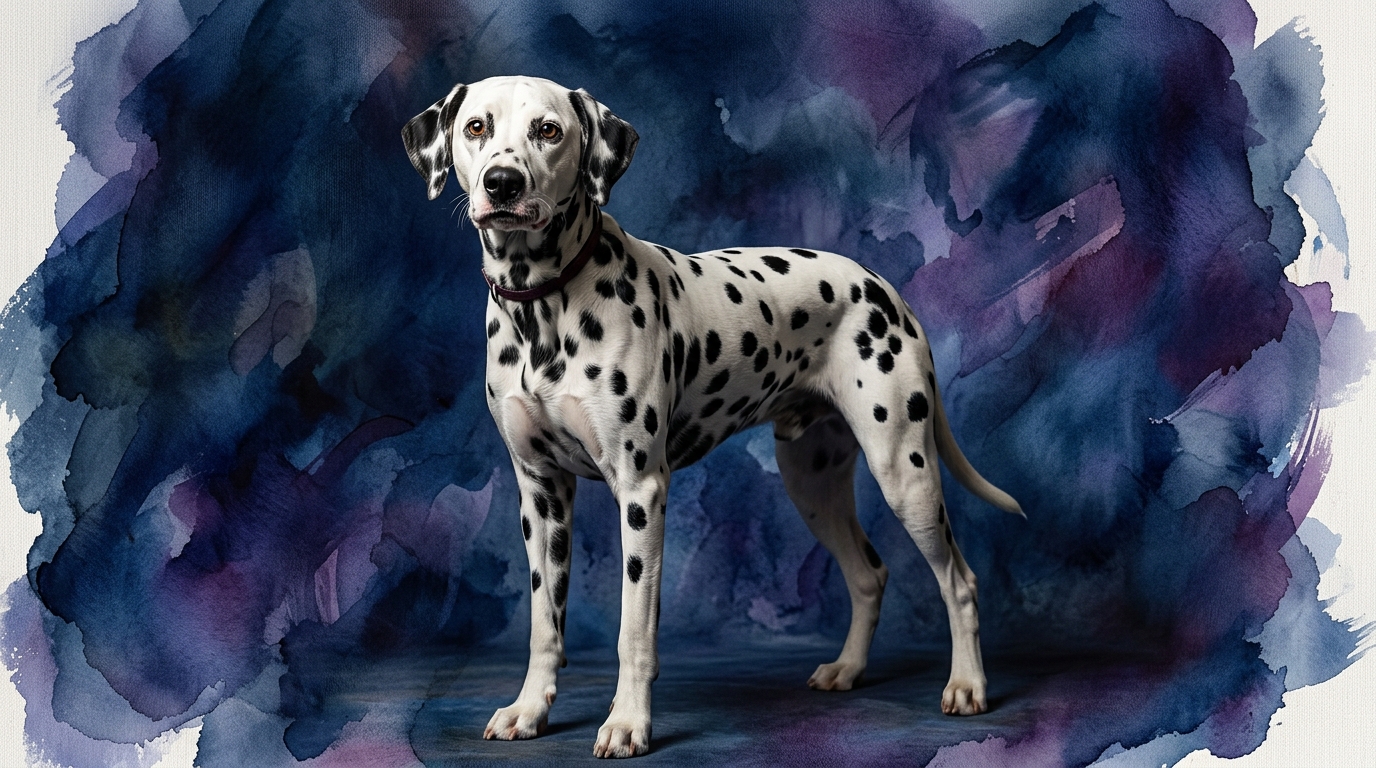
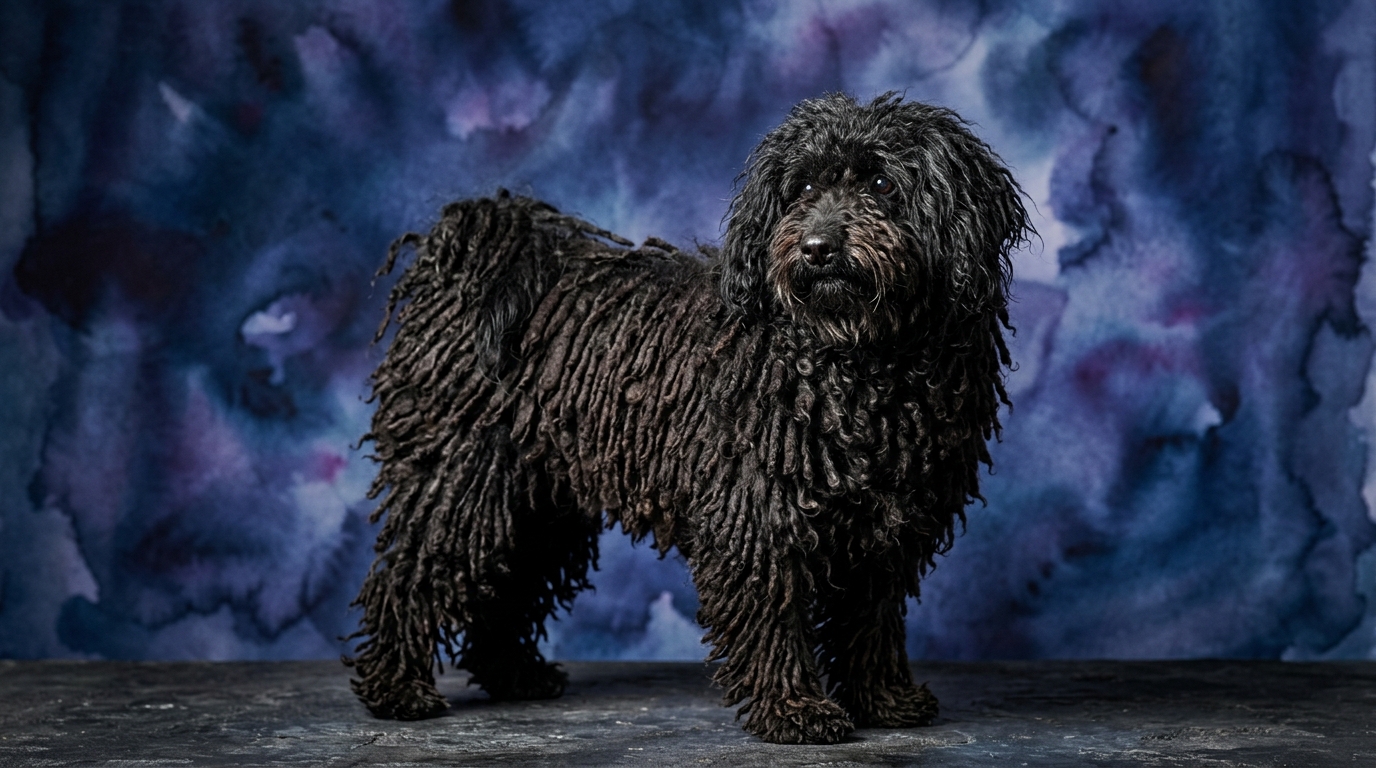
Side-by-Side IQ Profile: Dalmatian vs. Puli
The Cosmic Pet Pet IQ Lab employs a five-dimensional framework to assess canine intelligence, providing a detailed understanding beyond simple 'smartness.' For the Dalmatian, categorized in the Non-Sporting group, we see a blend of moderate learning and strong social connection.
**Dalmatian IQ Breakdown:** Problem Solving (3/5) indicates they can follow established routines and solve familiar puzzles, but might require more guidance when faced with entirely novel situations. Training Speed (3/5) suggests they internalize new commands with consistent repetition, requiring a patient and persistent trainer. Social Intelligence (4/5) highlights their deep attunement to human emotions and family dynamics, making them highly responsive to their people's moods and cues. Their Instinctive Drive (4/5) reflects their heritage as coach dogs, manifesting as a robust desire for endurance, companionship on long journeys, and a vigilant awareness of their surroundings. Memory (4/5) means they retain learned behaviors, routes, and experiences with impressive clarity once they are embedded.
The Puli, a member of the Herding group, presents a different cognitive profile, characterized by agile problem-solving and rapid learning.
**Puli IQ Breakdown:** Problem Solving (4/5) signifies a strong capacity for independent thought and creative solutions, often figuring out how to achieve goals or navigate complex environments. Training Speed (4/5) shows they are quick studies, often grasping new commands and routines with fewer repetitions than many other breeds. Social Intelligence (3/5) indicates they form strong bonds and understand human cues, but their responses might be more independent and less driven by a constant need to please. Their Instinctive Drive (3/5) is a moderate, focused urge to gather and control, a direct reflection of their herding origins, which can be channeled into purposeful activities. Memory (4/5) demonstrates excellent long-term retention of complex sequences, past experiences, and learned strategies for problem-solving.
Where the Dalmatian Wins Cognitively
The Dalmatian's cognitive strengths truly shine in areas of social connection and enduring partnership. Their superior Social Intelligence (4/5 compared to the Puli's 3/5) means they are exceptionally adept at reading human emotions, understanding subtle social cues, and integrating smoothly into family dynamics. This makes them highly empathetic companions, often anticipating their owner's needs or moods, fostering a deep, intuitive bond.
Furthermore, the Dalmatian's Instinctive Drive (4/5) is a significant asset for owners seeking a dedicated, long-distance partner. This drive isn't just about physical stamina; it's a mental fortitude and desire to accompany their humans on extensive adventures, reflecting their historical role. Their strong memory (4/5) complements this, allowing them to recall complex routes or consistent routines, making them reliable partners for established outdoor activities.
Where the Puli Wins Cognitively
The Puli's cognitive profile showcases a distinct advantage in mental agility and rapid assimilation of new information. Their Problem Solving ability (4/5 compared to the Dalmatian's 3/5) means they are inherently more innovative and resourceful, often devising their own strategies to overcome obstacles or manipulate their environment. This makes them excellent candidates for puzzle toys or tasks that require independent thinking.
Coupled with their faster Training Speed (4/5 compared to the Dalmatian's 3/5) and higher Coren rank (#25 vs. #39), Pulis typically pick up new commands and complex sequences with remarkable efficiency. This makes them highly responsive to advanced obedience training and dog sports, where quick learning and strategic thinking are paramount. Their focused instinctive drive, though moderate, is easily channeled into learning and performance.
Which is Easier to Train and Why
When considering ease of training, the Puli generally holds an edge, primarily due to their superior Training Speed (4/5) and Problem Solving (4/5) scores. Pulis are quick to grasp new concepts and often require fewer repetitions to master a command. Their herding background instills a natural focus and willingness to work, making them highly receptive to instruction, especially when presented as a mental challenge. They thrive on learning complex sequences and figuring out tasks, which translates into a more expedient training process for advanced behaviors.
The Dalmatian, with a Training Speed of 3/5, requires a more patient and consistent approach. While their high Social Intelligence (4/5) makes them eager to please and responsive to their owner's approval, their moderate problem-solving means they might need more guided instruction through novel situations. What might be perceived as 'stubbornness' is often a need for clearer communication and more structured repetition. Owners must be prepared to invest consistent effort to reinforce commands and behaviors, leveraging the Dalmatian's strong memory (4/5) to cement lessons over time.
Which Suits Active Owners vs. Relaxed Owners
Neither the Dalmatian nor the Puli are ideal companions for truly relaxed, sedentary owners; both breeds possess significant energy and mental needs. However, their activity preferences differ, suiting different types of active lifestyles.
The Dalmatian is an excellent match for owners who embrace consistent, vigorous physical activity. Their strong Instinctive Drive (4/5) for endurance makes them superb partners for long-distance running, hiking, or cycling. They need substantial daily exercise to prevent boredom and channel their stamina. Owners who enjoy a dedicated companion for outdoor adventures, where the dog can accompany them for miles, will find a perfect match in the Dalmatian, especially given their excellent memory for routes and routines.
The Puli, while physically active, also demands significant mental engagement. Their high Problem Solving (4/5) and Training Speed (4/5) make them ideal for owners who enjoy dog sports like agility, flyball, or advanced obedience. They thrive on intellectual challenges and tasks that require quick thinking and strategy. An owner who is committed to providing regular mental stimulation through training, puzzle games, and varied activities will find the Puli a rewarding and engaging companion, even if their physical exercise isn't solely about covering vast distances.
The Verdict
Choose a Dalmatian if you seek a deeply connected, empathetic companion who thrives on shared endurance activities and you are prepared for consistent, patient guidance through training. They excel as dedicated partners for long, active outings.
Choose a Puli if you desire a quick-witted, independent thinker who excels in learning complex tasks and enjoys mentally stimulating challenges, dog sports, and a more efficient training process.
🧠 Find Your Pet's IQ Score
Our Pet IQ Lab assessment covers 25+ tests across 5 cognitive dimensions — personalized to your breed.
Take the Full IQ Test →Frequently Asked Questions
Are Dalmatians difficult to train?
Dalmatians have a Training Speed of 3/5, meaning they require consistent, clear methods and positive reinforcement. They are not inherently difficult but benefit from patient, structured training that leverages their social intelligence and strong memory to build lasting habits.
Do Pulis require a lot of mental stimulation?
Yes, Pulis have a Problem Solving score of 4/5, indicating a strong need for mental engagement. They thrive on activities like puzzle toys, advanced obedience, and dog sports that challenge their intellect and provide an outlet for their quick learning abilities.
Which breed is better for first-time dog owners?
Neither breed is typically recommended for completely novice owners without prior research and commitment. Both Dalmatians and Pulis require experienced handling due to their energy levels and specific cognitive needs, but a Puli's faster training speed might be slightly more forgiving for a dedicated first-timer.