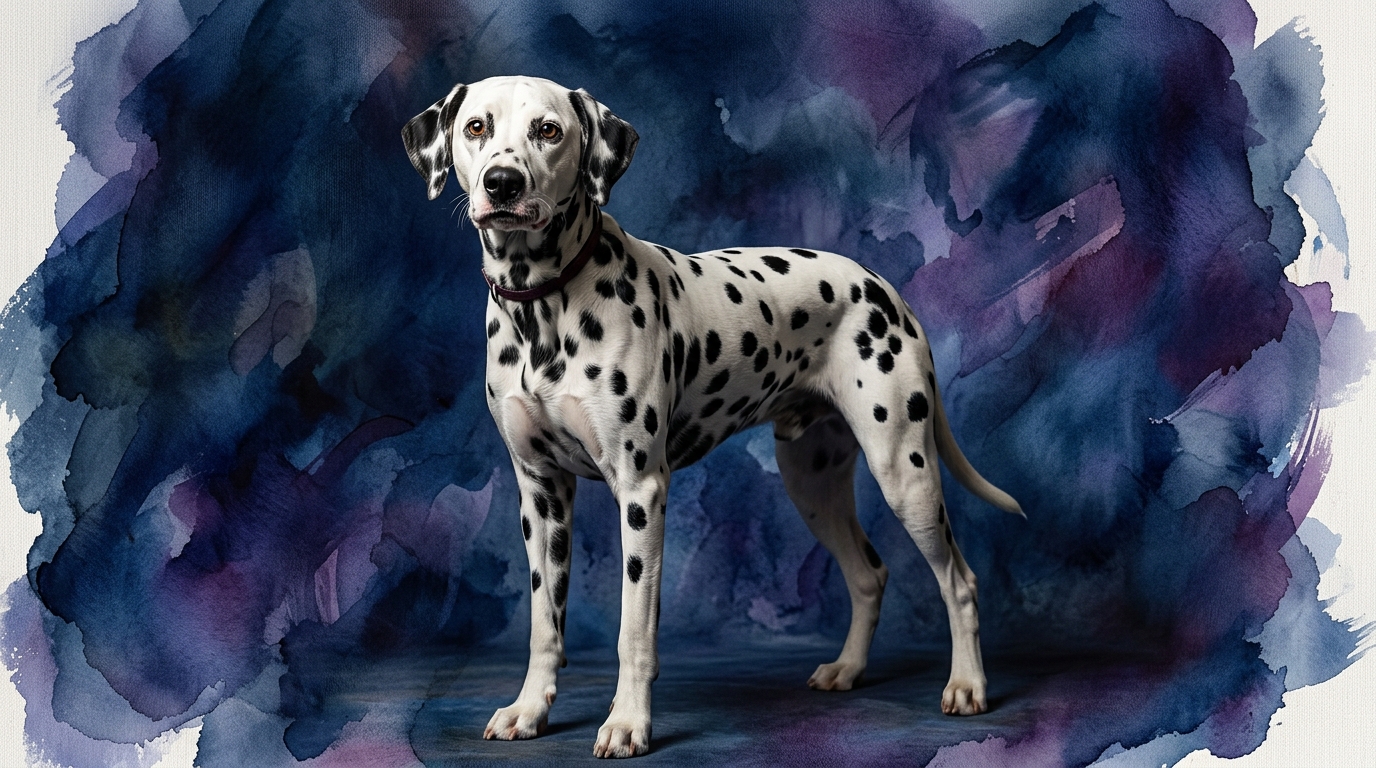

Side-by-Side IQ Profile: Dalmatian vs. Russian Toy
The Cosmic Pet Pet IQ Lab provides a detailed look into five key dimensions of canine intelligence for both breeds. For the Dalmatian, Problem Solving scores at 3/5, indicating a moderate ability to navigate novel situations and figure out puzzles with some guidance. Training Speed is also 3/5, suggesting they learn new commands at an average pace, benefiting from consistent, positive reinforcement. Social Intelligence shines at 4/5, highlighting their strong capacity to read human cues, understand emotional states, and form deep, responsive bonds. Instinctive Drive is a robust 4/5, pointing to a significant innate motivation for activity, often manifesting as a desire to pursue, guard, or engage in vigorous physical tasks. Finally, Memory stands at 4/5, signifying an impressive ability to recall learned behaviors, routines, and experiences over extended periods.
In contrast, the Russian Toy presents a slightly different, yet equally compelling, cognitive blueprint. Their Problem Solving ability is 3/5, mirroring the Dalmatian’s capacity for independent thought in new scenarios. Training Speed also aligns at 3/5, indicating they absorb new information at a similar, steady rate with proper teaching. Social Intelligence registers at 3/5, suggesting a good, but perhaps less expansive, understanding of human social signals, often focusing intensely on their primary caregivers. Instinctive Drive is 3/5, denoting a moderate level of innate motivation, present but not as intense or broad as in more driven breeds, making them generally content with less strenuous activities. Their Memory score is 3/5, indicating a solid ability to remember commands and routines, though perhaps not with the same long-term retention or complexity as a higher-scoring breed.
Where the Dalmatian Wins Cognitively
The Dalmatian truly distinguishes itself through its higher scores in Social Intelligence, Instinctive Drive, and Memory. With a 4/5 in Social Intelligence, Dalmatians often display a profound ability to tune into their human companions' moods and intentions. This can manifest as an uncanny sensitivity to emotional shifts, making them exceptionally responsive to subtle cues during training or daily interactions. Their elevated Instinctive Drive, also at 4/5, means they possess a robust natural inclination for activity and purpose, stemming from their historical role as coach dogs. This drive isn't just about physical energy; it fuels a persistent curiosity and a desire to engage with their environment through scent work, exploration, or structured tasks. Furthermore, their 4/5 Memory score suggests Dalmatians are adept at retaining complex sequences of commands and remembering specific events or people over long durations, contributing to their capacity for sophisticated learning and strong, lasting bonds. This combination makes them particularly well-suited for owners who appreciate a companion capable of deep engagement and purposeful activity.
Where the Russian Toy Excels Cognitively
While the Russian Toy's individual scores don't surpass the Dalmatian's in any single category, its overall cognitive profile offers distinct advantages for certain lifestyles. Its 3/5 in Instinctive Drive, for instance, translates to a generally less demanding need for intense, structured work compared to breeds with higher drives. This can be an advantage for owners seeking a companion whose natural inclinations are more geared towards companionship than vigorous, goal-oriented tasks. The Russian Toy's Social Intelligence at 3/5, while not as broad as the Dalmatian's, often manifests as an intense, focused devotion to its immediate family. This concentrated social aptitude means they can form incredibly strong, personal bonds, thriving on close interaction within a smaller social circle without the potential for broader social demands. Their consistent 3/5 across all metrics indicates a balanced and manageable cognitive framework, making them straightforward to understand and interact with for those who appreciate a loyal, attentive, and less overtly “driven” presence. This profile makes them exceptional at being a cherished, focused companion.
Training Dynamics: Which is Easier to Train?
Both breeds share a 3/5 score for Training Speed, implying they learn new commands at a similar pace. However, the nuances in their other cognitive dimensions suggest different training approaches and outcomes. The Dalmatian's superior Social Intelligence (4/5) and Memory (4/5) can contribute to a more responsive and lasting training experience. They are often quicker to pick up on subtle handler cues and retain complex sequences, making them suitable for advanced obedience or specialized tasks. Their higher Instinctive Drive (4/5), while providing strong motivation, also means they might require more consistent redirection and mental stimulation to channel that drive constructively, preventing it from manifesting as independent, less desirable behaviors.
In contrast, the Russian Toy's 3/5 in Social Intelligence and Memory means training might require more repetition and clearer communication, as they may not infer intentions as readily or retain complex sequences as quickly. However, their lower Instinctive Drive (3/5) can be an advantage; they may be less prone to strong independent urges or distractions, potentially making them more focused on the task at hand when engaged, albeit for shorter periods. Therefore, while both learn at a similar speed, the Dalmatian may be easier to train for complex tasks due to better social understanding and memory, provided their drive is managed, while the Russian Toy might be more straightforward for basic obedience due to fewer strong independent motivations.
Matching Cognitive Profiles to Lifestyles: Active vs. Relaxed Owners
The distinct cognitive profiles of the Dalmatian and Russian Toy clearly delineate their suitability for different owner lifestyles. The Dalmatian, with its robust 4/5 Instinctive Drive and historical role as a coach dog, thrives with active owners who can provide ample physical exercise and mental engagement. Their cognitive makeup demands opportunities for problem-solving, exploring, and purposeful activity, making them ideal companions for hikers, runners, or those interested in dog sports like agility or obedience. Without sufficient stimulation, their high drive can lead to boredom and subsequent undesirable behaviors.
Conversely, the Russian Toy's more moderate 3/5 Instinctive Drive, coupled with its smaller stature, makes it an excellent match for more relaxed owners. While still requiring daily walks and play for physical and mental well-being, their needs are generally less intense. They are often content with indoor games, shorter strolls, and extensive cuddle time, making them suitable for apartment living or for individuals who prefer a less physically demanding companion. Their focused social intelligence often means they are perfectly happy being the center of attention in a calm, intimate household.
The Verdict
Choose the Dalmatian if you are an active individual or family seeking a highly engaged, perceptive companion who thrives on extensive physical activity, complex learning, and a deep, responsive bond.
Opt for the Russian Toy if you desire a devoted, focused companion in a more relaxed setting, appreciating a nuanced social connection without the need for intense physical demands or highly structured mental challenges.
🧠 Find Your Pet's IQ Score
Our Pet IQ Lab assessment covers 25+ tests across 5 cognitive dimensions — personalized to your breed.
Take the Full IQ Test →Frequently Asked Questions
Are Dalmatians good at understanding human emotions?
With a Social Intelligence score of 4/5, Dalmatians exhibit a strong capacity for understanding human emotions and subtle cues, often making them very empathetic and responsive companions to their families.
Does a Russian Toy require a lot of mental stimulation?
While all dogs benefit from mental engagement, the Russian Toy's 3/5 in Problem Solving and Instinctive Drive suggests moderate needs. Regular short training sessions, puzzle toys, and interactive play are usually sufficient to keep their minds engaged.
Which breed has better memory for commands?
The Dalmatian, with a Memory score of 4/5, generally possesses a superior ability to recall commands and routines over long periods compared to the Russian Toy's 3/5, making them apt at retaining complex learned behaviors.