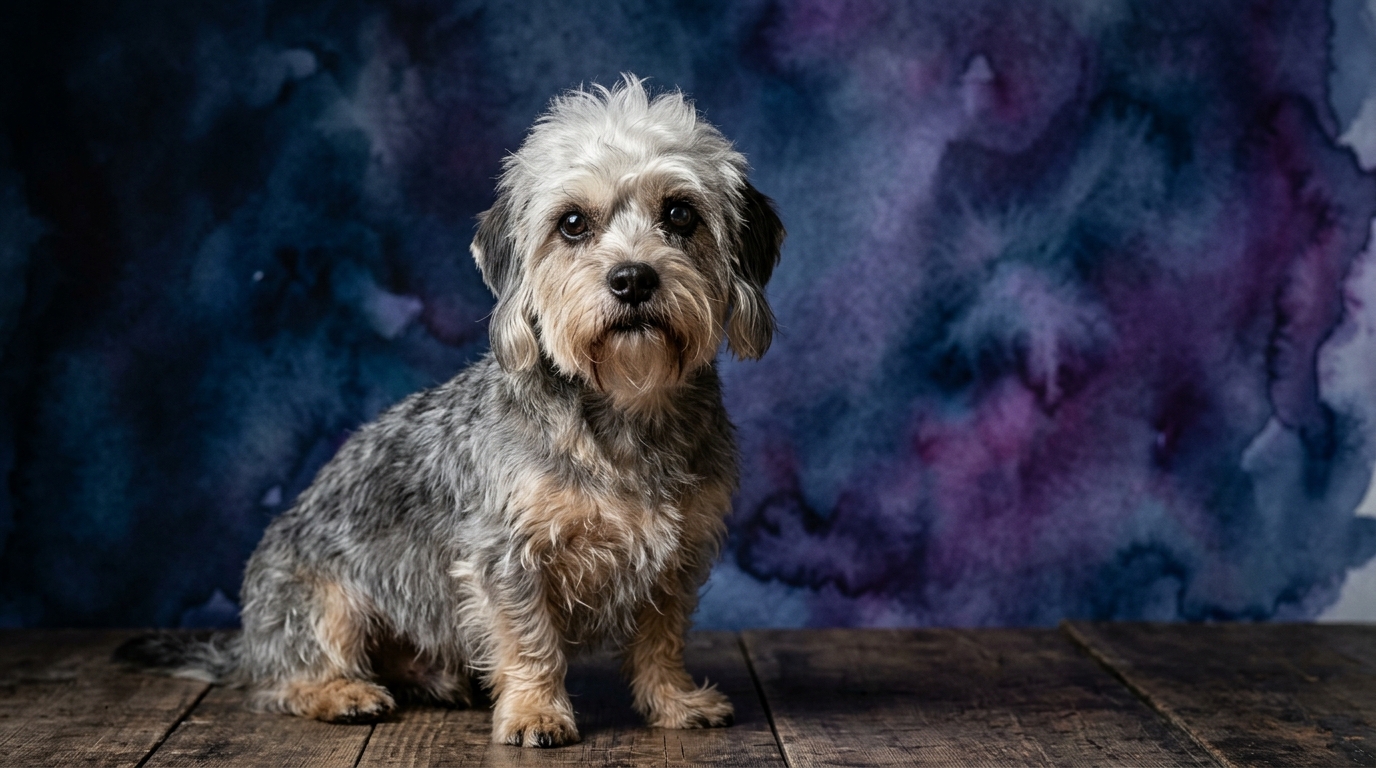
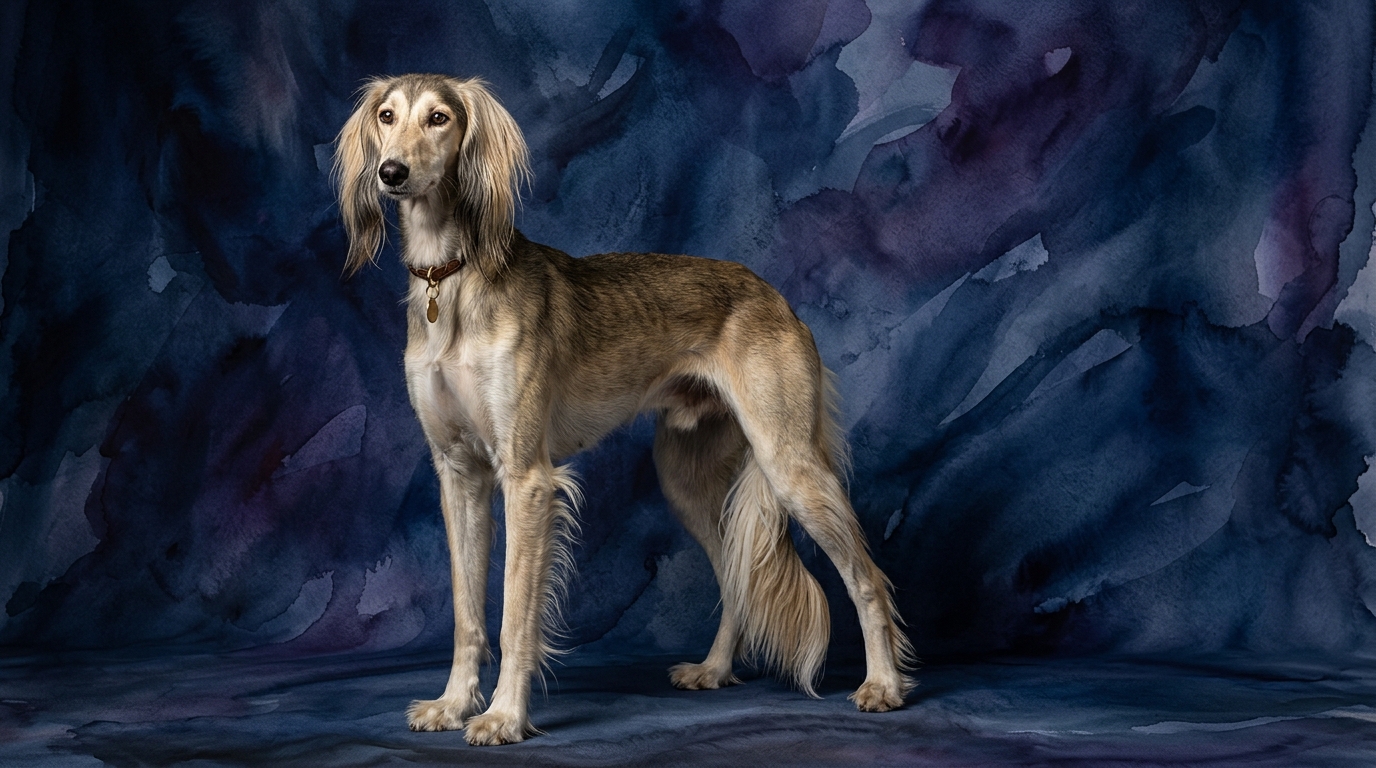
Side-by-Side Cognitive Profiles
The Cosmic Pet Pet IQ Lab evaluates five key cognitive dimensions, and both the Dandie Dinmont Terrier and the Saluki consistently register a 3/5 in each category. This shared numerical rating, however, belies the unique expression of these abilities rooted in their breed-specific aptitudes and historical roles. Understanding these nuances is crucial for any prospective owner.
For the Dandie Dinmont Terrier, a breed with roots in hunting vermin, their **Problem Solving (3/5)** typically involves practical, independent thought aimed at achieving a specific goal, often related to exploration or 'prey' acquisition. This might mean figuring out how to access a forbidden treat or navigating a complex garden to find an interesting scent, rather than abstract puzzle-solving. Their **Training Speed (3/5)** reflects an ability to learn commands, but often with a terrier's characteristic independent streak; they grasp concepts well but might choose whether or not to comply based on their current motivation or perceived value of the task. **Social Intelligence (3/5)** for a Dandie often translates to deep loyalty and perceptiveness within their family circle, reading their preferred humans' moods with surprising accuracy, though they may be reserved or assertive with strangers or other animals. Their **Instinctive Drive (3/5)** is strongly geared towards hunting, digging, and chasing small, moving objects, a powerful inherent motivation that defines much of their behavior. Finally, their **Memory (3/5)** is practical and robust, allowing them to remember routines, learned commands, and locations of interesting smells or buried treasures.
The Saluki, an ancient sighthound bred for chasing game across vast distances, interprets these same scores through a different lens. Their **Problem Solving (3/5)** is often expressed as an acute spatial awareness and strategic thinking in pursuit; they excel at identifying the quickest, most efficient path to an object of interest or navigating complex environments at speed. This might extend to cleverly circumventing obstacles in the home or finding escape routes if a captivating sight arises. Their **Training Speed (3/5)** indicates they are quick learners, particularly when tasks are presented with respect and positive reinforcement, yet their independent nature means they may appear aloof or disengaged if training becomes repetitive or lacks clear purpose. **Social Intelligence (3/5)** for a Saluki is characterized by a sensitive and often reserved demeanor; they form profound, discerning bonds with their chosen family members, subtle in their affection, and are typically polite but not effusive with strangers. Their **Instinctive Drive (3/5)** is overwhelmingly focused on the chase, with an unparalleled desire to pursue anything that moves swiftly, a drive that can override other considerations. Their **Memory (3/5)** is excellent for remembering people, specific routes, and comfortable resting spots, reflecting their long history of companionship and independent hunting.
Where the Dandie Dinmont Terrier Wins Cognitively
The Dandie Dinmont Terrier's cognitive strengths shine in scenarios demanding tenacious, independent problem-solving within a confined or complex environment. Their terrier grit means they are less likely to give up on a mental challenge, such as figuring out a complex puzzle feeder or navigating a new scent trail, even if it requires repeated attempts. This persistence, combined with their compact size and inherent curiosity, allows them to excel at tasks requiring detailed investigation and focused effort, such as finding a hidden toy or 'ridding' a garden of perceived pests. While their training speed is a 3/5, their determination can sometimes make them appear more adept at mastering specific, rewarding tasks they deem worthwhile, often showing a cleverness in manipulating situations to their advantage, a hallmark of their breed's historical purpose.
Where the Saluki Wins Cognitively
The Saluki's cognitive advantages are most evident in situations requiring swift decision-making, expansive spatial reasoning, and refined sensitivity. Their 3/5 in problem-solving manifests as an innate ability to quickly assess and react to dynamic environments, crucial for high-speed chases and navigating varied terrains. This breed often displays a nuanced understanding of body language and subtle cues, making them particularly perceptive companions who can anticipate their owner's intentions with minimal prompting, a facet of their 3/5 social intelligence. Their memory for routes and past experiences is exceptional, allowing them to recall specific paths or familiar landmarks with ease, which is vital for a breed historically covering vast distances. This combination of quick thinking, subtle communication, and expansive awareness gives them an edge in activities that leverage their sighthound heritage.
Which is Easier to Train, and Why?
Assessing which breed is 'easier' to train requires understanding their distinct motivations and temperaments, as both score 3/5 in Training Speed. The Dandie Dinmont Terrier, while capable of learning quickly, often brings a strong-willed, independent terrier mindset to training. They are not always eager to please for its own sake and may require creative, consistent, and highly rewarding methods to maintain engagement. Their focus can be easily diverted by interesting smells or the prospect of a 'hunt,' so capturing and holding their attention is paramount. Training a Dandie often involves convincing them that cooperation is more beneficial than pursuing their own agenda, demanding patience and a firm but fair approach.
The Saluki, conversely, responds best to gentle, positive reinforcement and respects a calm, consistent trainer. While they learn quickly, their sensitive nature means they can shut down or become aloof if training is harsh, repetitive, or lacks clear purpose. They are generally not as food-motivated as some breeds, often valuing comfort and freedom, which means motivation must be tailored to their preferences, perhaps through short, engaging sessions that incorporate play or praise. Their independence means they might question commands or choose to ignore them if they perceive a more compelling alternative, such as a distant squirrel. Therefore, neither breed is 'easy' in the sense of being inherently eager to please and compliant, but they each require a nuanced, breed-specific training strategy to unlock their 3/5 potential.
Which Suits Active Owners vs. Relaxed Owners?
For owners seeking an active companion, both breeds offer unique forms of engagement, but cater to different activity styles. The Dandie Dinmont Terrier, despite its smaller size, is a robust and energetic dog requiring regular, engaging exercise that stimulates both body and mind. They thrive with owners who enjoy structured walks, interactive play, and opportunities for 'terrier work' like digging in a designated area or scent games. Their activity is often characterized by bursts of energy followed by periods of rest, but they need consistent mental stimulation to prevent boredom-driven behaviors. They are well-suited for owners who enjoy being out and about, exploring varied environments, and providing consistent, structured activities that tap into their curious and tenacious nature.
The Saluki, by contrast, is a breed of extremes: requiring intense, high-speed sprints daily, followed by long periods of relaxed lounging indoors. They are not suited for endless jogging, but rather need secure, expansive spaces where they can gallop freely and unleash their powerful instinctive drive. Owners who enjoy long walks or hikes but can also provide a safe, large, fenced area for daily bursts of speed will find a Saluki fulfilling. Indoors, Salukis are typically calm, graceful, and enjoy soft beds, making them surprisingly suitable for relaxed indoor living, provided their intense outdoor exercise needs are met. Therefore, an 'active owner' for a Saluki means someone who can facilitate their need for explosive, high-speed exercise, while a 'relaxed owner' for a Dandie might struggle with their persistent need for mental and physical engagement beyond casual strolls.
The Verdict
Choose the Dandie Dinmont Terrier if you appreciate a resilient, independent problem-solver with a strong personality, willing to engage in structured, stimulating activities and a keen, loyal family bond.
Opt for the Saluki if you are drawn to a graceful, sensitive, and reserved companion who thrives on daily high-speed sprints and offers deep, quiet affection within a calm home environment.
🧠 Find Your Pet's IQ Score
Our Pet IQ Lab assessment covers 25+ tests across 5 cognitive dimensions — personalized to your breed.
Take the Full IQ Test →Frequently Asked Questions
Do Dandie Dinmont Terriers and Salukis get along with other pets?
Dandie Dinmont Terriers, with their strong prey drive, require careful socialization, especially with smaller pets, though they can coexist peacefully. Salukis also possess a high prey drive for fast-moving objects, making introductions to smaller, non-canine pets challenging and requiring constant supervision.
Are these breeds suitable for first-time dog owners?
Neither breed is typically recommended for first-time dog owners due to their strong independent streaks and specific needs. Both require consistent, knowledgeable training and an understanding of their unique breed temperaments to flourish.
How do their grooming needs compare?
The Dandie Dinmont Terrier requires regular grooming, including hand-stripping or professional clipping to maintain their distinctive coat and prevent matting. The Saluki, with its short, silky coat, has relatively low grooming needs, primarily requiring regular brushing to remove loose hair and occasional baths.