
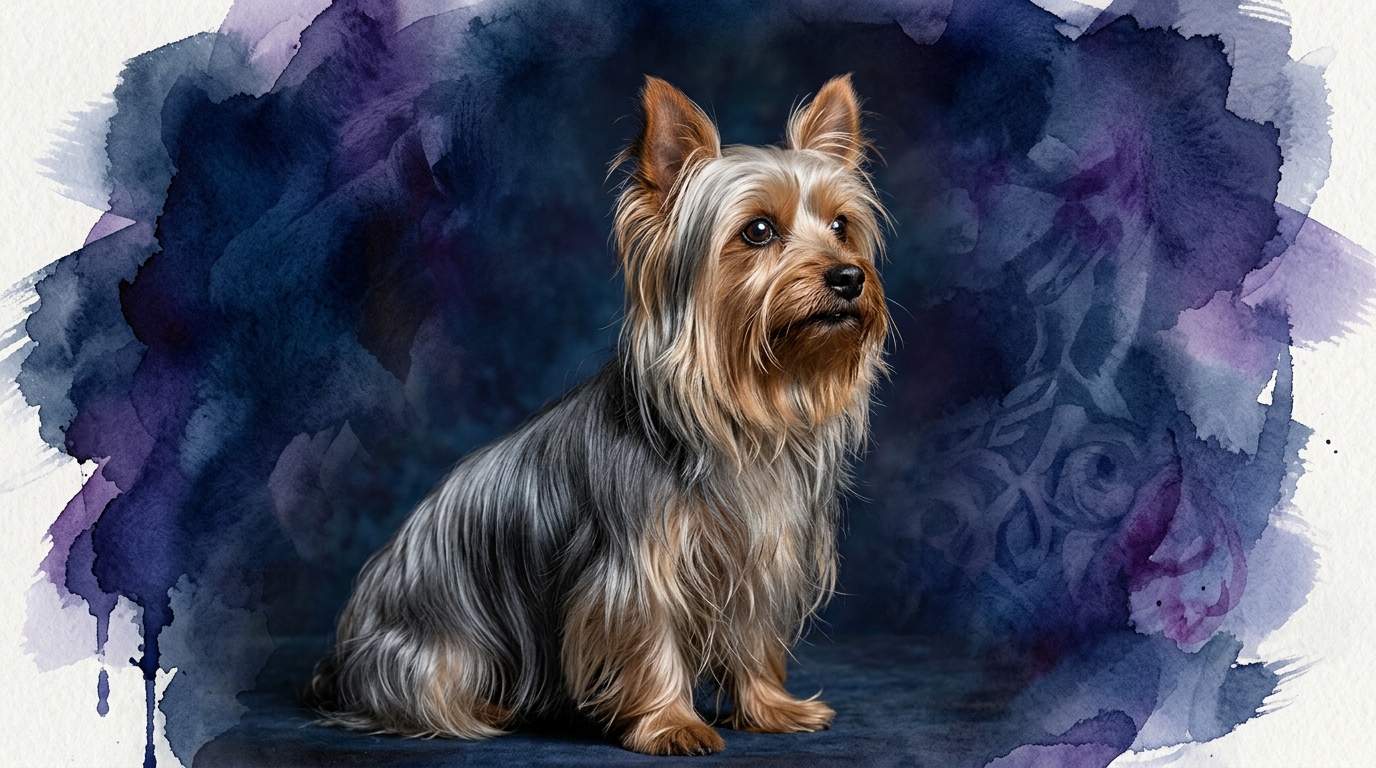
Side-by-Side Cognitive Profiles: Dandie Dinmont vs. Silky Terrier
At first glance, the cognitive assessments for both the Dandie Dinmont Terrier and the Silky Terrier present a remarkable uniformity, with each breed scoring 3/5 across all five dimensions of our Pet IQ Lab evaluation. However, these identical scores belie unique expressions shaped by their distinct breed origins and intended roles. A deeper look reveals how these foundational terrier traits manifest differently in a robust earthdog versus a refined companion.
For the Dandie Dinmont Terrier, a Problem Solving score of 3/5 reflects a moderate capacity to navigate and resolve environmental challenges, often with a tenacious, independent streak. Originating as a working terrier bred to hunt otter and badger, their problem-solving tends to be practical and persistent, focused on achieving a goal like reaching a scent or dislodging something. This isn't about abstract puzzles, but rather figuring out the most effective physical path or method to achieve a tangible outcome, often involving digging or strategic maneuvering. Their solutions are often self-directed, rooted in their drive to accomplish a task.
Training Speed at 3/5 for the Dandie indicates they absorb new commands and routines at a steady, average pace. While capable of learning, their strong independent nature and ingrained terrier persistence mean they require consistent, patient, and engaging methods. They are not typically eager-to-please in the traditional sense; rather, they learn best when the training aligns with their interests or provides a clear, rewarding outcome. Repetitive drills without perceived purpose can lead to stubbornness, as their focus is on efficacy over compliance.
Social Intelligence, also at 3/5 for the Dandie, suggests a moderate ability to interpret and respond to human and canine social cues. They form deep bonds with their immediate family, reading their emotions and intentions effectively within that trusted circle. With strangers or unfamiliar dogs, their social interactions can be more reserved or assertive, reflecting their protective instincts and self-assured demeanor. They are capable of polite social engagement but often prefer the company of their chosen few, discerning quickly who belongs to their inner sphere.
The Instinctive Drive of 3/5 in Dandies is a palpable force, directly linked to their heritage. This score represents a strong, but manageable, inclination towards prey drive, digging, and territorial guarding. Their senses are finely tuned to detect small movements and scents, triggering an immediate, focused response. This drive is not overwhelming but is a consistent undercurrent in their behavior, requiring appropriate outlets and management. Their terrier instincts are fundamental to their being, driving much of their exploratory and reactive behaviors.
Finally, a Memory score of 3/5 means Dandies have a dependable recall of learned commands, routines, and experiences. They remember what works, what doesn't, and the consequences of past actions. This moderate memory allows for progressive training and the building of complex behavioral patterns over time, though occasional reinforcement is crucial to keep less frequently used commands sharp. They are unlikely to forget a negative experience or a successful strategy for getting what they want.
Transitioning to the Silky Terrier, their Problem Solving score of 3/5, while numerically identical to the Dandie, manifests with a different flavor. As a companion breed with strong terrier roots, the Silky's problem-solving often involves clever manipulation of their environment or their people to achieve comfort, attention, or access to desired items. They might figure out how to open a cabinet, retrieve a hidden toy, or strategically position themselves for maximum affection. Their solutions tend to be more socially oriented or focused on personal gain within the household, demonstrating a sharp wit for navigating domestic situations.
The Silky's Training Speed of 3/5 indicates they learn at a moderate pace, often exhibiting a keen desire to please their primary human, which can aid in instruction. However, their spirited nature and potential for distraction mean that sessions need to be engaging and consistent. They can pick up commands readily but may test boundaries or become easily bored if training lacks variety or positive reinforcement. Their learning is often tied to the immediate reward and interaction with their owner.
A Social Intelligence score of 3/5 for the Silky Terrier highlights their aptitude for charming and interacting with their human family, often displaying a nuanced understanding of household dynamics. They are often adept at reading moods and eliciting responses, using their considerable charm to their advantage. While generally outgoing, their terrier roots can mean they are selective about whom they bestow their full affection upon, and may bark to alert or express displeasure if their social boundaries are crossed. They thrive on interaction and can become quite adept at communication within their social group.
The Instinctive Drive at 3/5 for the Silky is present, though often slightly moderated compared to a working terrier. This score reflects a moderate prey drive for small animals or toys, a definite inclination to bark at perceived threats or novelties, and a strong sense of territoriality, particularly within their home environment. While they enjoy chasing and digging, these behaviors are often expressed in a more contained, domestic context. Their terrier 'feistiness' is a core part of their personality, driving their alertness and protective tendencies.
Finally, the Silky Terrier's Memory score of 3/5 means they retain information well, remembering routines, past training, and the outcomes of their actions. They can recall commands and behaviors consistently, making them capable of learning a broad repertoire of tricks and manners. This reliable memory contributes to their ability to adapt to household rules and bond effectively with their family, remembering who provides comfort and who provides treats.
Where the Dandie Dinmont Terrier Demonstrates Unique Cognitive Strengths
The Dandie Dinmont Terrier, while sharing identical raw scores, exhibits particular cognitive strengths rooted in its working heritage. Its problem-solving, though rated 3/5, often involves a robust, physical tenacity that sets it apart. A Dandie is more likely to methodically work through a physical barrier or an environmental puzzle using its body and will, driven by an inherent objective rather than seeking human direction. This translates to an enduring persistence in tasks that require sustained effort and a degree of independent thought, such as navigating a complex scent trail or retrieving an object from a tight space. Their cognitive approach is less about pleasing and more about achieving the self-assigned goal, making them exceptionally determined when their instincts are engaged.
Where the Silky Terrier Demonstrates Unique Cognitive Strengths
The Silky Terrier, despite matching the Dandie's scores, reveals distinct cognitive advantages, particularly in its nuanced social engagement and adaptability within a domestic setting. Its 3/5 in social intelligence often manifests as a sophisticated ability to 'read the room' and adapt its behavior to garner attention or affection from its human companions. Silky Terriers are adept at using their charm and subtle cues to influence interactions, a form of problem-solving applied to social dynamics. Their cognitive strengths lean towards understanding human routines and emotional states, allowing them to integrate seamlessly into family life and often anticipate needs or desires, making them remarkably attuned household members.
Training Dynamics: Which is Easier and Why?
When considering ease of training, the nuances of their identical 3/5 Training Speed scores become apparent. The Silky Terrier often presents as slightly 'easier' to train for the average pet owner due to its inherent desire for human companionship and a tendency to seek approval, even with its independent streak. They are generally responsive to positive reinforcement and eager to engage in activities that involve their people, which can make initial command learning and house manners more straightforward. Their moderate instinctive drives, while present, are often channeled more readily into play or structured activities, making them somewhat more pliable.
The Dandie Dinmont Terrier, while equally capable of learning, requires a trainer who understands and respects its profound independence and working dog mindset. Their 3/5 Training Speed is often influenced by their strong will and focus on their own perceived objectives. If a command doesn't seem immediately relevant or rewarding to the Dandie, they may choose to ignore it. Training a Dandie demands consistency, patience, and creative methods that tap into their innate drives, such as scent work or problem-solving games, rather than relying solely on compliance. Their deep-rooted terrier tenacity means that once they decide on a course of action, redirecting them can be a greater challenge than with the more socially motivated Silky.
Matching Lifestyles: Active vs. Relaxed Owners
For owners seeking a companion that thrives on consistent activity and intellectual engagement, the Dandie Dinmont Terrier is a compelling choice. Their 3/5 instinctive drive and problem-solving, coupled with their physical persistence, mean they appreciate a lifestyle that offers regular opportunities for exploring, sniffing, and engaging in activities that satisfy their working terrier instincts. They need more than just a walk around the block; they benefit from varied environments, scent games, or even earthdog trials where their tenacity can be properly channeled. An active owner who enjoys outdoor adventures and provides structured mental stimulation will find a deeply satisfied and engaging companion in the Dandie. Their cognitive profile suggests they are at their best when given a 'job' or a puzzle to solve in the real world.
The Silky Terrier, while still possessing a moderate 3/5 instinctive drive and needing daily exercise, is often better suited for owners who might describe themselves as more 'relaxed' but still seek an interactive companion. Their cognitive strengths in social intelligence and their cleverness in domestic problem-solving mean they thrive on being integral members of the household, engaging in play sessions, short walks, and cuddle time. They enjoy being the center of attention and participating in family activities, even if those activities are primarily indoors. A Silky's 'activity' often involves social interaction, learning tricks, or engaging in spirited play with toys, making them an excellent fit for owners who prioritize companionship and indoor engagement over extensive outdoor adventures. They are content to be close to their people, observing and participating in the rhythm of home life.
The Verdict
Choose the Dandie Dinmont Terrier if you value a tenacious, independent thinker who thrives on purposeful activity and physical problem-solving, and you are prepared for a devoted yet self-assured companion.
Opt for the Silky Terrier if you desire a charming, socially astute companion who excels at domestic integration and enjoys being the clever, interactive heart of the home, even with a spirited terrier spark.
🧠 Find Your Pet's IQ Score
Our Pet IQ Lab assessment covers 25+ tests across 5 cognitive dimensions — personalized to your breed.
Take the Full IQ Test →Frequently Asked Questions
Do Dandie Dinmont Terriers get along with other pets?
Dandie Dinmont Terriers, with their 3/5 social intelligence and instinctive drive, can coexist with other pets, especially if introduced early. However, their strong prey drive means small, non-canine pets may be viewed as quarry. Careful, supervised introductions and consistent training are essential for harmonious multi-pet households.
Are Silky Terriers good for first-time dog owners?
Silky Terriers, with their 3/5 training speed and social intelligence, can be suitable for first-time owners who are committed to consistent training and socialization. Their spirited nature requires clear boundaries and engagement, but their desire for companionship makes them responsive to patient, positive guidance. They are not overly challenging, but also not entirely passive learners.
How much mental stimulation do these breeds need?
Both breeds, with their 3/5 problem-solving and memory, benefit from regular mental stimulation to prevent boredom. Dandie Dinmont Terriers thrive on scent work and puzzle toys that engage their hunting instincts, while Silky Terriers enjoy learning new tricks, interactive games, and social engagement with their owners. Short, frequent sessions are often more effective than long, infrequent ones for both.