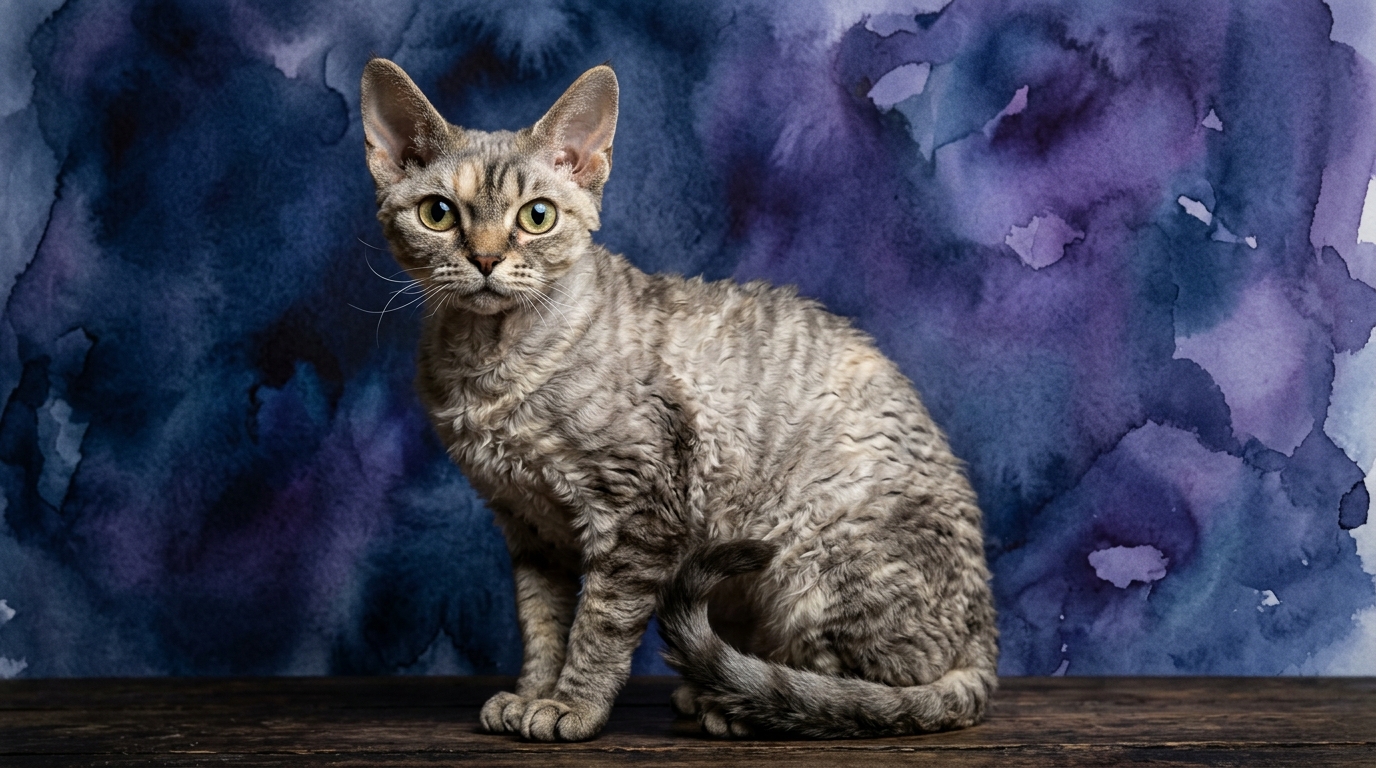
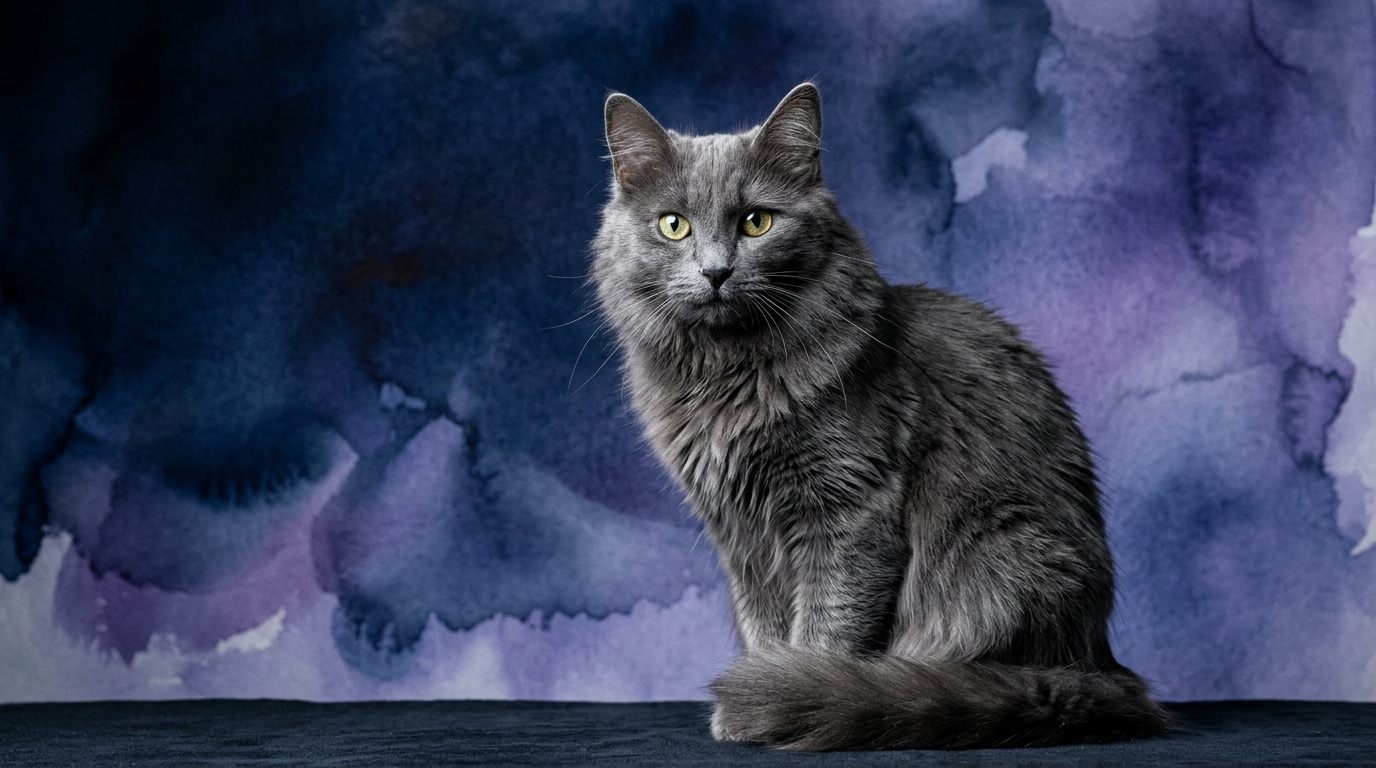
Side-by-Side Cognitive Profiles
The Devon Rex presents a compelling cognitive profile, beginning with a robust Problem Solving ability at 4 out of 5, indicating a strong capacity to navigate novel situations and devise solutions independently. Its Training Speed is exceptionally high at 5 out of 5, suggesting a rapid grasp of commands and routines, while Social Intelligence also scores a perfect 5 out of 5, highlighting its profound understanding of human cues and complex social dynamics. The breed’s Instinctive Drive is moderate at 3 out of 5, meaning while natural feline behaviors are present, they don't overwhelmingly dominate interactions. Finally, its Memory is rated at 4 out of 5, indicating excellent retention of learned experiences and associations.
The elegant Nebelung possesses a more evenly balanced cognitive makeup, with its Problem Solving skill rated 3 out of 5, suggesting it can tackle challenges, though perhaps with less immediate flair. Training Speed is also a steady 3 out of 5, meaning it learns at a respectable pace, requiring consistent but not necessarily intensive reinforcement. Social Intelligence sits at a moderate 3 out of 5, indicating it forms connections and understands social structures, but might not engage with the same overt enthusiasm or nuanced interpretation as a Devon Rex. Its Instinctive Drive aligns with its other scores at 3 out of 5, reflecting a typical feline repertoire of hunting and exploration behaviors, and Memory is also a consistent 3 out of 5, showing it remembers routines and past events reliably.
Where the Devon Rex Wins Cognitively
The Devon Rex clearly demonstrates a cognitive advantage across several key dimensions, making it a particularly engaging and adaptive companion. Its superior Problem Solving score of 4/5 means these cats are often observed figuring out how to open cabinets, manipulate puzzle toys, or even devise strategies to get attention. This isn't just about curiosity; it's about active mental engagement with their environment, consistently seeking ways to achieve desired outcomes. Furthermore, the Devon Rex's exceptional Social Intelligence, rated 5/5, suggests a profound capacity for understanding human emotions and intentions. They can often anticipate needs, respond to subtle cues, and actively participate in household dynamics, going beyond simple companionship to become integral, responsive family members. Lastly, its Memory at 4/5 ensures that these problem-solving and social lessons are not fleeting; a Devon Rex will remember past interactions, successful strategies, and the routines of its human companions with impressive clarity, building a rich mental map of its world.
Where the Nebelung Wins Cognitively
While the Nebelung's individual cognitive scores might appear more moderate when directly compared to the Devon Rex, its consistent profile of 3 out of 5 across Problem Solving, Training Speed, Social Intelligence, Instinctive Drive, and Memory presents a unique strength: a balanced and predictable cognitive temperament. This consistency means a Nebelung is less likely to exhibit extreme fluctuations in its intellectual engagement or behavioral responses, offering a steady companion. Its Instinctive Drive, matching the Devon Rex at 3 out of 5, ensures it retains a healthy feline curiosity and natural predatory behaviors without being overly driven by them, allowing for a harmonious integration into a home environment. The Nebelung's cognitive 'win' lies in its inherent reliability and steady nature, providing a companion whose intellectual demands are consistent and whose responses are generally measured, suitable for owners who value a calm, predictable presence.
Which is Easier to Train and Why
When considering ease of training, the Devon Rex holds a distinct advantage, primarily due to its exceptional Training Speed (5/5) and high Social Intelligence (5/5). A Devon Rex will typically grasp new commands, learn to walk on a leash, or master complex tricks with remarkable swiftness. Their keen desire to interact and please their human companions, stemming from that high social intelligence, makes them highly motivated learners. They pay close attention to human vocalizations and body language, quickly associating actions with rewards and cues. This means fewer repetitions are needed, and the cat is more likely to generalize learned behaviors to new situations. For instance, teaching a Devon Rex to “fetch” or “sit” often requires only a handful of dedicated sessions, as their sharp memory (4/5) reinforces these lessons quickly.
In contrast, the Nebelung, with its Training Speed and Social Intelligence both rated at 3/5, requires a more patient and consistent approach. While certainly capable of learning, a Nebelung might take more time to process new information and form associations. Their social engagement, while present, is not as overtly demonstrative, meaning they might not be as driven by the desire to “perform” for their owner. Training a Nebelung will involve more repetition and a greater emphasis on positive reinforcement to solidify behaviors. For example, leash training a Nebelung might be a gradual process spanning weeks, focusing on short, positive experiences, whereas a Devon Rex might adapt in days. The key difference lies in the intrinsic motivation and the speed at which they interpret and respond to human-initiated learning opportunities.
Which Suits Active Owners vs. Relaxed Owners
The cognitive profiles of these two breeds offer clear guidance for matching them with an owner's lifestyle. Active owners, those who enjoy interactive play, training sessions, and a pet deeply involved in daily activities, will find a superb match in the Devon Rex. Its high Problem Solving (4/5) and Social Intelligence (5/5) mean it thrives on mental stimulation and constant engagement. These cats often initiate play, seek out interaction, and can even become “shadows,” following their owners from room to room. They benefit immensely from puzzle toys, clicker training, and opportunities to learn new tricks. An owner who can provide consistent intellectual challenges and social interaction will prevent boredom and foster a well-adjusted Devon Rex.
Conversely, relaxed owners, those who appreciate a calm presence and less demanding intellectual engagement, might find the Nebelung more suitable. With its consistent 3/5 across most cognitive dimensions, the Nebelung is a cat that appreciates routine and a serene environment. While they enjoy interaction, their social intelligence is not as overtly demanding as the Devon Rex's, meaning they are content with gentler, less frequent play sessions and quiet companionship. They are less likely to constantly seek out puzzles or invent new ways to entertain themselves, preferring to observe or engage in familiar activities. Their balanced Instinctive Drive (3/5) means they are still cats who enjoy some play and exploration, but they are unlikely to become overly boisterous or disruptive. A Nebelung offers a comforting, graceful presence that complements a quieter household, providing affection without requiring constant intellectual stimulation or high-energy engagement.
The Verdict
Choose a Devon Rex if you're an active owner seeking a highly interactive, quick-to-learn feline companion eager for mental challenges and deep social engagement.
Opt for a Nebelung if you prefer a graceful, predictable cat with a balanced temperament, offering serene companionship without demanding constant intellectual stimulation.
🧠 Find Your Pet's IQ Score
Our Pet IQ Lab assessment covers 25+ tests across 5 cognitive dimensions — personalized to your breed.
Take the Full IQ Test →Frequently Asked Questions
Do Devon Rex cats get along well with other pets?
Yes, their high social intelligence (5/5) generally makes Devon Rex cats adaptable and agreeable with other household pets, including dogs and other cats. They often enjoy the company and stimulation that multiple pets provide, integrating smoothly into multi-pet environments.
Are Nebelung cats prone to destructive behaviors if not sufficiently stimulated?
Nebelung cats, with their balanced cognitive profile, are generally less prone to destructive behaviors stemming from under-stimulation compared to more intensely driven breeds. While they benefit from play and interaction, their moderate problem-solving and social intelligence mean they are often content with established routines and a calmer environment, making them less likely to resort to mischief out of boredom.
How much daily interaction does a Devon Rex require to be content?
Given their exceptional social intelligence and training speed, a Devon Rex thrives on significant daily interaction, typically needing at least 30-60 minutes of dedicated playtime, training, or cuddle sessions. This engagement helps fulfill their mental and social needs, preventing boredom and fostering a strong bond.