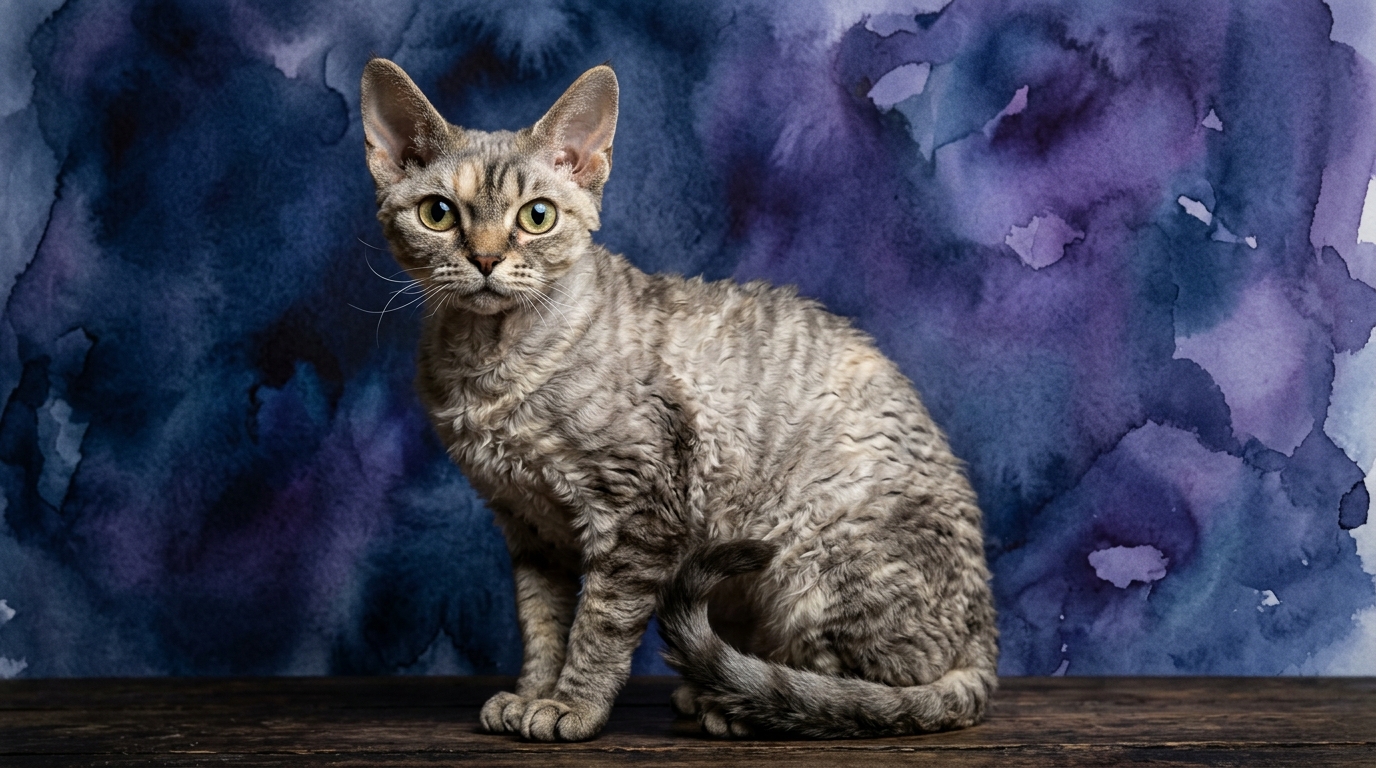
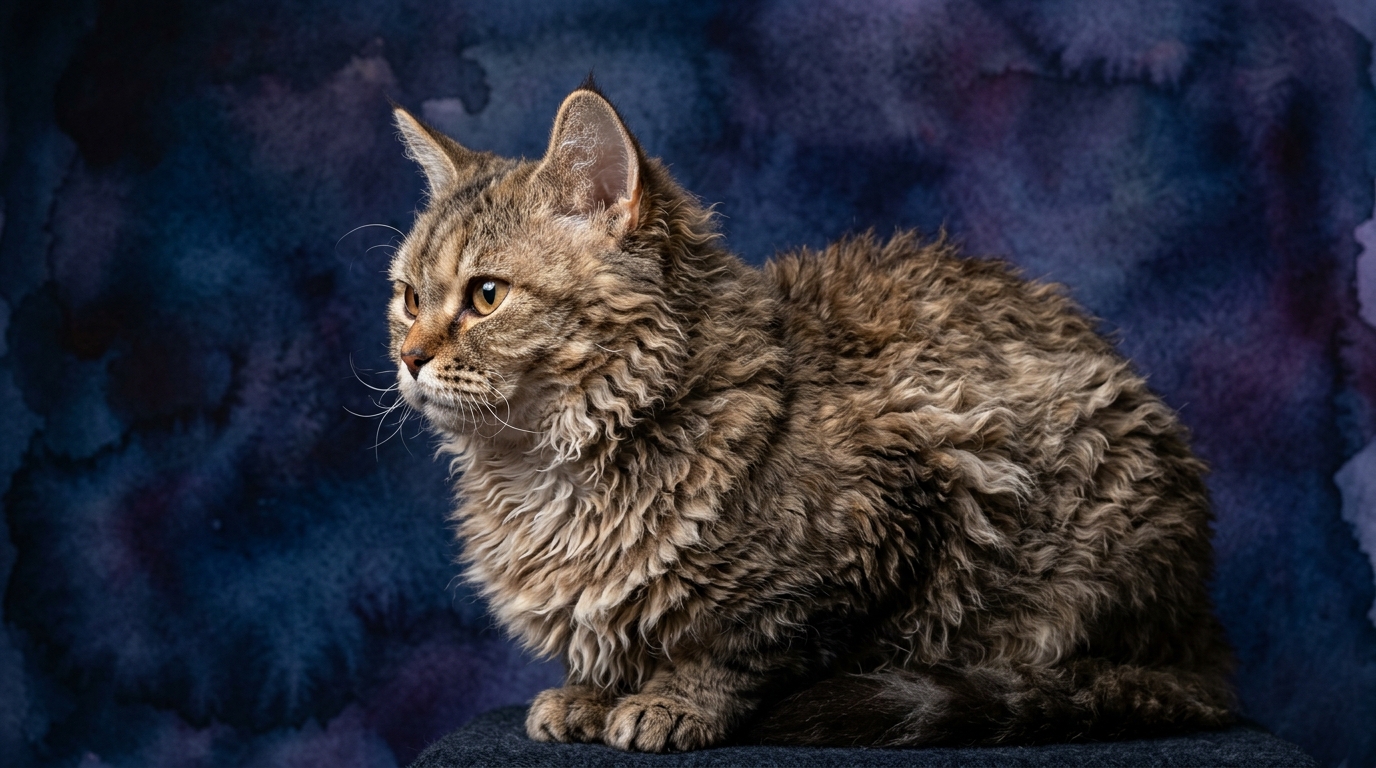
Side-by-Side Cognitive Profiles
The Cosmic Pet Pet IQ Lab provides a detailed breakdown of five key cognitive dimensions for both the Devon Rex and the Selkirk Rex, offering a glimpse into their individual mental strengths.
The Devon Rex presents with Problem Solving at 4/5, indicating a robust capacity for figuring out novel challenges and often employing creative tactics to achieve goals like opening cabinets or finding hidden toys. Their Training Speed is an exceptional 5/5, suggesting remarkable quickness in associating commands with actions, picking up new routines and tricks with alacrity. Social Intelligence is also top-tier at 5/5, reflecting a profound understanding of human cues and emotions, making them exceptionally attuned and interactive companions. Their Instinctive Drive sits at a balanced 3/5, meaning while natural feline instincts are present, they are moderately balanced, allowing for a stronger focus on human-centric activities. Finally, their Memory is strong at 4/5, demonstrating a solid ability to recall past experiences, learned behaviors, and even specific individuals.
In contrast, the Selkirk Rex shows a Problem Solving score of 3/5, approaching new puzzles with a steady demeanor, often relying on learned patterns or simpler solutions rather than overtly inventive tactics. Their Training Speed is 3/5, meaning they learn at a moderate pace, requiring more repetition and patience to solidify new commands or behaviors compared to their more agile counterparts. Social Intelligence is also 3/5, as they engage with their environment and human companions in a gentle, observant manner, understanding basic social cues without necessarily seeking deep interactive engagement. Their Instinctive Drive is similar to the Devon Rex at 3/5, where urges are present but not overwhelmingly dominant, allowing them to comfortably integrate into domestic life. Their Memory score is 3/5, retaining information adequately for daily routines and familiar faces, but perhaps not demonstrating the same long-term recall for complex sequences or infrequent events.
Where the Devon Rex Excels Cognitively
The Devon Rex distinguishes itself with a cognitive profile geared towards rapid learning and intricate social bonding. Their Problem Solving score of 4/5 reflects a cat that isn't easily deterred by novel obstacles; they will actively experiment with different approaches to achieve goals like opening a door or retrieving a hidden treat, often displaying playful persistence. This inventive streak is coupled with an exceptional Training Speed of 5/5, meaning a Devon Rex can master complex tricks, leash training, or agility courses with remarkable efficiency. They absorb new information quickly, making the learning process a stimulating game. Furthermore, their superior Social Intelligence (5/5) means they are exquisitely tuned to human emotions and intentions. A Devon Rex is more likely to initiate interactive play, offer comfort, or even 'converse' through varied vocalizations, demonstrating a profound awareness of their human companions' states. Their 4/5 Memory score also underpins their consistent recall of learned behaviors and household routines, creating a highly responsive companion.
Where the Selkirk Rex's Cognitive Style Shines
While the Selkirk Rex may not exhibit the same rapid cognitive agility as the Devon Rex, their distinct mental rhythm offers advantages for owners seeking a tranquil companion. Their Problem Solving score of 3/5 suggests a cat less inclined to constantly test boundaries or invent new ways to access off-limits areas, translating to a more predictable household member. Similarly, their moderate Training Speed (3/5) means they approach learning with a steady, patient disposition, suitable for owners who prefer a relaxed training pace. The Selkirk Rex's Social Intelligence (3/5) fosters a gentle, observant companionship; they are present and affectionate without being overly demanding, offering a calm, reassuring presence. Their well-balanced Instinctive Drive (3/5) means they are content with domestic life, fitting seamlessly into a serene home environment. Ultimately, the Selkirk Rex's cognitive profile cultivates a stable, good-natured presence, offering quiet companionship rather than constant intellectual challenge.
Ease of Training: Devon Rex vs. Selkirk Rex
When it comes to ease of training, the Devon Rex clearly holds an advantage. Their exceptional Training Speed of 5/5 means they grasp new commands, litter box routines, and even complex tricks with remarkable efficiency. This isn't merely about rote learning; their high Social Intelligence (5/5) means they are often eager to please and highly responsive to human cues, making them active participants in the training process. A Devon Rex will typically engage with sessions enthusiastically, viewing them as interactive play and an opportunity for bonding. For example, they might quickly learn to fetch small toys or walk on a leash, driven by their desire for interaction and mental stimulation. In contrast, the Selkirk Rex, with a Training Speed of 3/5 and Social Intelligence of 3/5, requires a more patient and consistent approach. They will learn, but at a slower pace, needing more repetitions and positive reinforcement. While capable of learning household rules, their motivation often stems from comfort and routine rather than an intense drive for interactive accomplishment. Training sessions might need to be shorter and more frequent to maintain their engagement.
Matching Cognitive Styles to Owner Lifestyles
The cognitive profiles of these two Rex breeds naturally align with different owner lifestyles. The Devon Rex, with its high Problem Solving (4/5), Training Speed (5/5), and Social Intelligence (5/5), is an ideal companion for active owners who relish interactive engagement and mental stimulation. These cats thrive in environments where they are regularly challenged with puzzle toys, taught new tricks, and included in family activities. Their social nature means they actively seek out interaction, making them perfect for individuals or families who enjoy a constant, communicative presence and adaptability. Conversely, the Selkirk Rex, with its more moderate cognitive scores, is an excellent match for relaxed owners seeking a calm, affectionate, and relatively low-maintenance companion. Their steady temperament means they are less likely to constantly demand attention or invent new mischief. They are content with predictable routines and enjoy quiet companionship, appreciating a gentle cuddle or a watchful presence. They don't require the same intensity of mental or physical engagement, making them a wonderful choice for those who prefer a more serene household rhythm.
The Verdict
Choose the Devon Rex if you desire a highly interactive, quick-witted feline companion eager for training, games, and constant social engagement. Their zest for problem-solving and deep social connection makes them a lively, participatory family member.
Opt for the Selkirk Rex if you seek a gentle, patient, and less demanding companion who offers calm affection and a predictable presence. Their relaxed cognitive approach fosters a serene household dynamic.
🧠 Find Your Pet's IQ Score
Our Pet IQ Lab assessment covers 25+ tests across 5 cognitive dimensions — personalized to your breed.
Take the Full IQ Test →Frequently Asked Questions
Are Devon Rex cats good with children?
Yes, their high social intelligence and playful nature often make them excellent companions for children. They tend to be tolerant and enjoy interactive play, provided children are taught to interact gently and respectfully.
Do Selkirk Rex cats require a lot of grooming despite their curls?
Selkirk Rex cats do require regular grooming to prevent matting in their curly coats, typically a few times a week. While their curls are charming, they need attention to maintain health and comfort.
Can either breed be left alone for long periods?
While both breeds appreciate companionship, the Selkirk Rex generally tolerates solitude better due to its calmer, more independent nature. The highly social Devon Rex prefers more constant interaction and might become bored or distressed if left alone for extended periods too frequently.