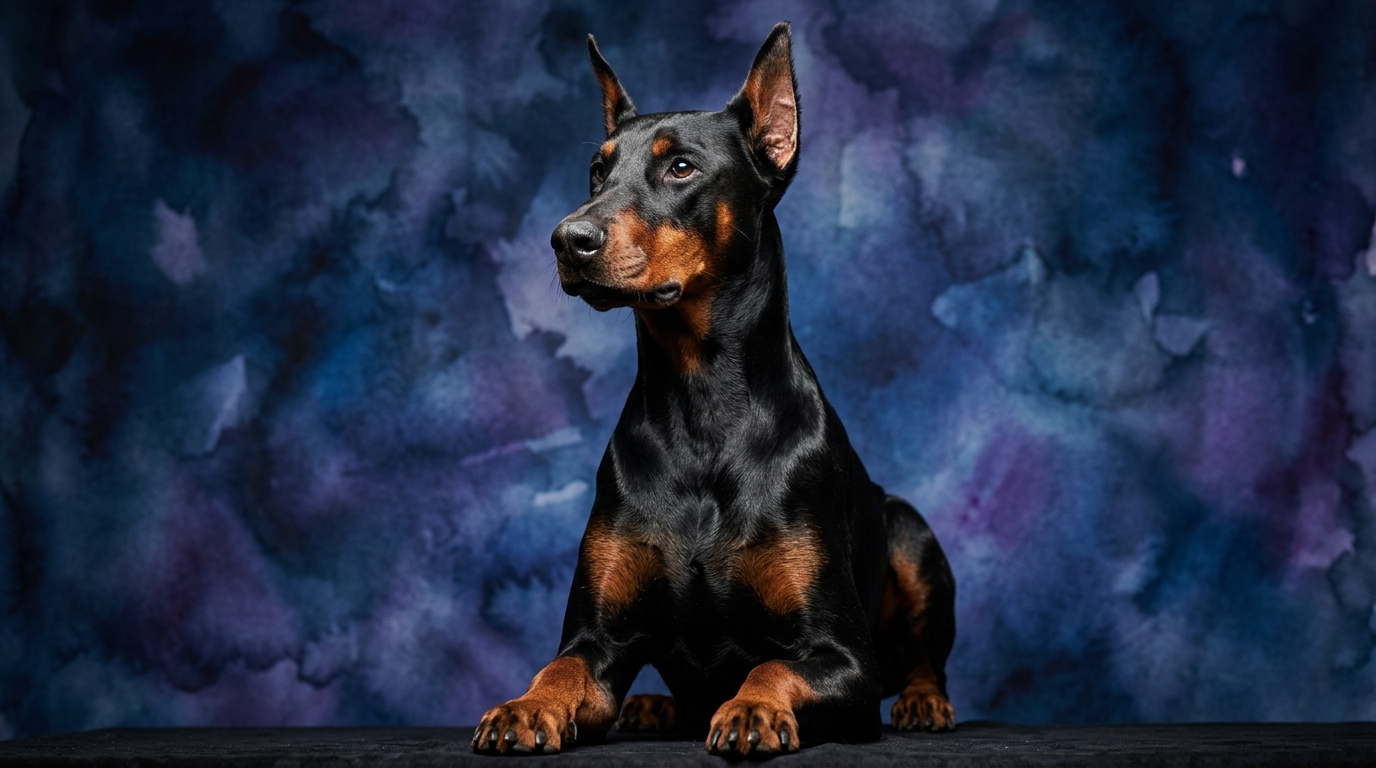
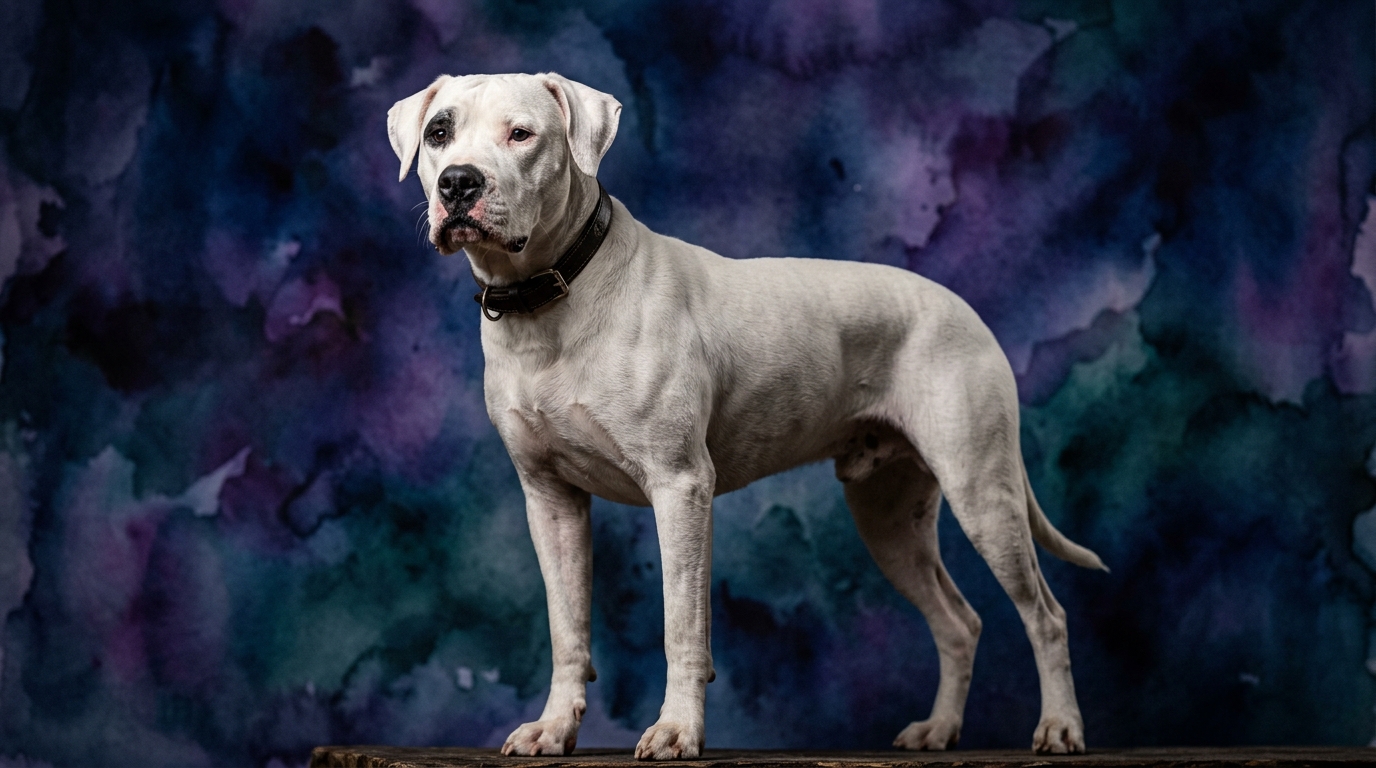
Side-by-Side IQ Profile: Doberman Pinscher vs. Dogo Argentino
The Doberman Pinscher, a working breed ranked #5 by Coren, demonstrates exceptional mental agility across our IQ dimensions. Their Problem Solving is rated 5/5, indicating an outstanding capacity for independent thought, adapting to novel challenges, and devising solutions. Training Speed also earns a 5/5, reflecting their rapid assimilation of new commands and routines, often needing only a handful of repetitions to solidify new behaviors. Social Intelligence scores 4/5; they are acutely perceptive of human emotional states and intentions, capable of intricate communication, though their social circle might be selectively guarded. An Instinctive Drive of 5/5 highlights their profound motivation for purpose-driven tasks like guarding or protection. Finally, their Memory, at 5/5, ensures excellent long-term retention of learned behaviors and experiences.
The Dogo Argentino, while not Coren-ranked, presents a distinct cognitive profile, bred for a different kind of working demand. Their Problem Solving is rated 3/5, suggesting a moderate ability to navigate new scenarios, often preferring established methods over independent innovation. Training Speed is also 3/5; they learn new commands steadily but typically require more consistent repetition and patience to solidify behaviors. Social Intelligence registers 3/5, indicating strong familial bonds and an understanding of basic human cues, but potentially less nuanced interpretation of complex social dynamics, especially with unfamiliar individuals. Instinctive Drive, at 3/5, is geared specifically towards their hunting heritage, focusing on prey detection and pursuit rather than generalized task work. Their Memory is 3/5, allowing for reasonable retention of training and experiences, though perhaps not with the precision seen in breeds with higher scores.
Where the Doberman Pinscher Wins Cognitively
The Doberman Pinscher's cognitive strengths shine particularly in areas demanding quick uptake, complex task execution, and refined social interaction. Their 5/5 Problem Solving score means they excel at figuring out intricate puzzles, understanding multi-step commands, and independently adjusting strategies when faced with unexpected environmental shifts. This superior adaptability makes them adept at advanced obedience, protection sports, and even scent work where novel solutions are often required. Coupled with a 5/5 Training Speed, Dobermans can master a vast repertoire of commands with remarkable efficiency, often anticipating handler cues before they are fully given. Their 4/5 Social Intelligence allows them to read subtle shifts in human body language and tone, making them responsive partners in complex interactions, though this sensitivity can also mean they are more affected by inconsistent handling. Furthermore, their 5/5 Memory ensures that once a lesson is learned, it is deeply ingrained, allowing for reliable performance even after long periods without practice.
Where the Dogo Argentino Wins Cognitively
The Dogo Argentino's cognitive advantages are rooted in its specialized historical role as a big-game hunter, demanding a specific blend of focus and physical fortitude. While their scores are generally lower than the Doberman's across the board, their 3/5 Instinctive Drive is precisely calibrated for sustained, independent pursuit and engagement with large quarry. This translates into a steadfast determination and endurance that, while not generalized for complex problem-solving, is exceptionally effective within its niche. Their moderate Problem Solving (3/5) means they are less prone to overthinking or distraction in high-stakes situations, instead relying on robust, learned responses. This can be an asset in scenarios requiring unwavering focus on a primary objective, such as tracking or scent work where persistence is paramount. Their Social Intelligence (3/5), while not as nuanced as a Doberman's, fosters a profound, uncomplicated loyalty to their immediate family, making them dependable guardians who form deep, protective bonds. Their memory, while rated 3/5, is sufficient for retaining the consistent training necessary for their demanding work, ensuring they remember critical cues and boundaries within their established routines.
Which is Easier to Train and Why
Based on our IQ scores, the Doberman Pinscher is unequivocally easier to train for a wide range of tasks, primarily due to their superior Training Speed (5/5) and Problem Solving (5/5). They grasp new concepts with minimal repetition, often requiring only a few sessions to solidify a command. This rapid learning curve, combined with their strong desire to work and please, makes them highly responsive to positive reinforcement and structured training. Their social intelligence also means they are acutely aware of their handler's expectations and can adjust their behavior accordingly. In contrast, the Dogo Argentino, with a Training Speed of 3/5, requires more patience, consistency, and repetition. While capable of learning, they are not as quick to generalize commands or adapt to varied training environments. Their training often benefits from shorter, more frequent sessions to maintain focus, as their instinctive drive is more geared towards specific hunting tasks rather than generalized obedience. Dogo Argentinos can also exhibit a more independent streak, which, while valuable in their original role, can present challenges for an inexperienced trainer seeking rapid compliance.
Which Suits Active Owners vs. Relaxed Owners
The Doberman Pinscher is an ideal match for active owners who relish engaging deeply with their dog's mental and physical capacities. Their 5/5 Instinctive Drive and 5/5 Problem Solving mean they thrive on daily mental stimulation, structured training, and vigorous exercise like agility, obedience trials, or protection sports. A Doberman without sufficient engagement can become restless or develop undesirable coping behaviors. They require an owner who understands their need for purpose and provides consistent, intelligent direction. Conversely, a Dogo Argentino, while possessing significant physical stamina and needing regular exercise, is not necessarily suited for a “relaxed” owner in the traditional sense, but rather one who understands their specific energy profile. Their 3/5 Instinctive Drive, though lower than the Doberman's, is powerful and requires outlets, often through long walks, runs, or structured activities that tap into their tracking and scenting abilities. They are less about complex mental gymnastics and more about robust physical exertion followed by calm companionship. A relaxed owner might struggle with either breed if “relaxed” means minimal engagement; however, a Dogo Argentino might be more forgiving of less varied mental stimulation compared to a Doberman, provided their physical needs are met and their training is consistent.
The Verdict
Choose the Doberman Pinscher if you seek a highly trainable, versatile companion for advanced obedience, dog sports, or a vigilant guardian who thrives on complex mental engagement and rapid learning. Their cognitive agility demands an owner committed to consistent, stimulating training and a structured environment.
Opt for the Dogo Argentino if you appreciate a steadfast, loyal guardian with a strong physical presence and a more direct, less nuanced approach to social interaction, provided you are prepared for consistent, patient training tailored to their powerful, purpose-driven nature.
🧠 Find Your Pet's IQ Score
Our Pet IQ Lab assessment covers 25+ tests across 5 cognitive dimensions — personalized to your breed.
Take the Full IQ Test →Frequently Asked Questions
Do Doberman Pinschers get bored easily if not mentally stimulated?
Yes, Doberman Pinschers, with their 5/5 Problem Solving and Instinctive Drive, require significant mental engagement. Without consistent training, puzzle toys, or structured activities, they can become restless and may develop undesirable behaviors stemming from boredom.
Is a Dogo Argentino suitable for a first-time dog owner?
A Dogo Argentino is generally not recommended for a first-time dog owner due to their powerful build, strong protective instincts (3/5 Instinctive Drive), and need for consistent, firm, and patient training (3/5 Training Speed). They require an experienced hand to guide their development effectively.
How do the social intelligence scores impact their interaction with strangers?
The Doberman's 4/5 Social Intelligence means they are often discerning and can be reserved with strangers, reading cues carefully. The Dogo Argentino's 3/5 Social Intelligence suggests they might be less nuanced in their initial assessment, often exhibiting a more direct, watchful, and potentially aloof demeanor with unfamiliar individuals, relying more on established family bonds.