Side-by-Side IQ Profile: Poodle vs Doberman
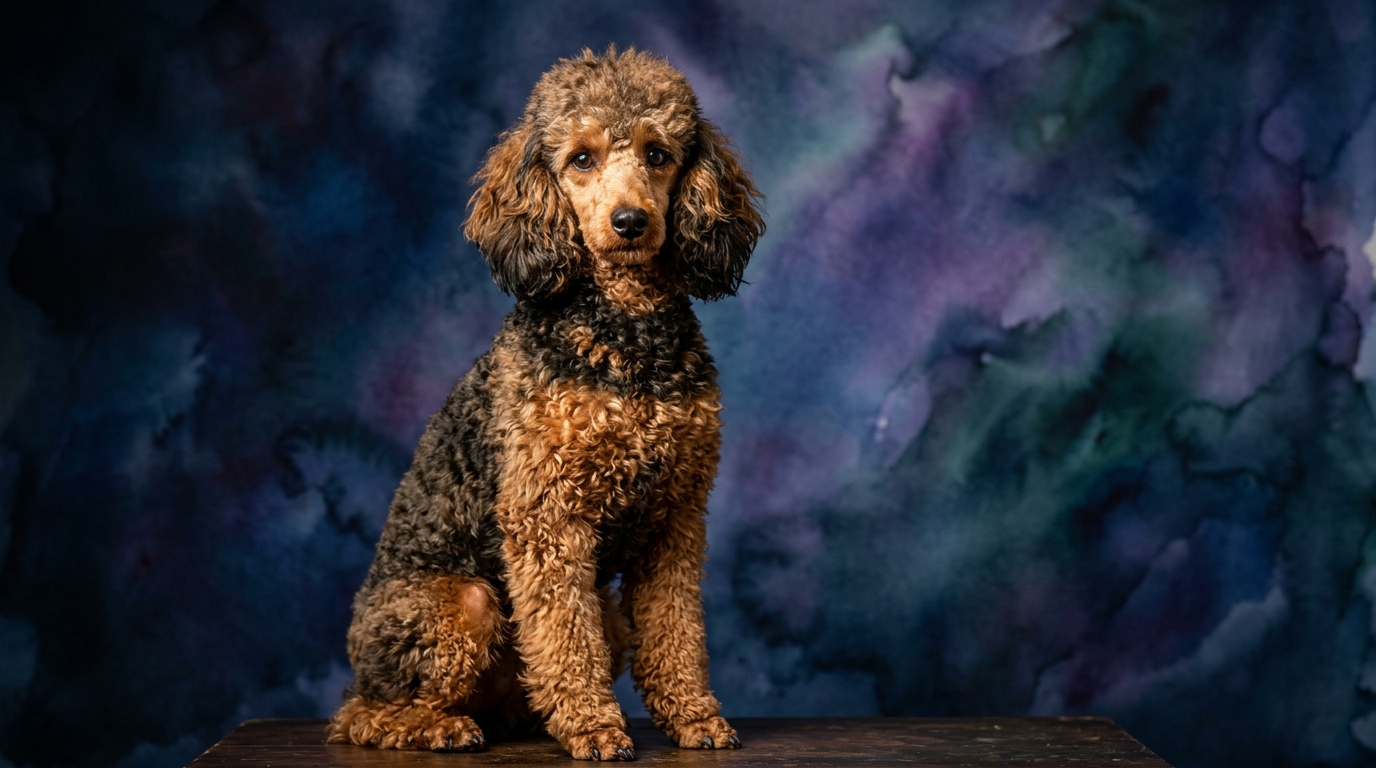
The Standard Poodle's cognitive profile is marked by exceptional adaptability and social acumen. With a 5/5 in Problem Solving, they excel at devising innovative solutions and adapting strategies in complex situations. Their Training Speed is also a perfect 5/5, allowing them to grasp new commands with remarkable swiftness, further supported by a 5/5 Memory that ensures lasting retention of learned behaviors. A standout trait is their 5/5 Social Intelligence, making them profoundly attuned to human emotions and subtle cues, fostering deep, empathetic bonds. Their Instinctive Drive, rated at 4/5, is present for activities like retrieving or agility, but is moderately intense, enabling versatility without overwhelming demands for a specific “job.”
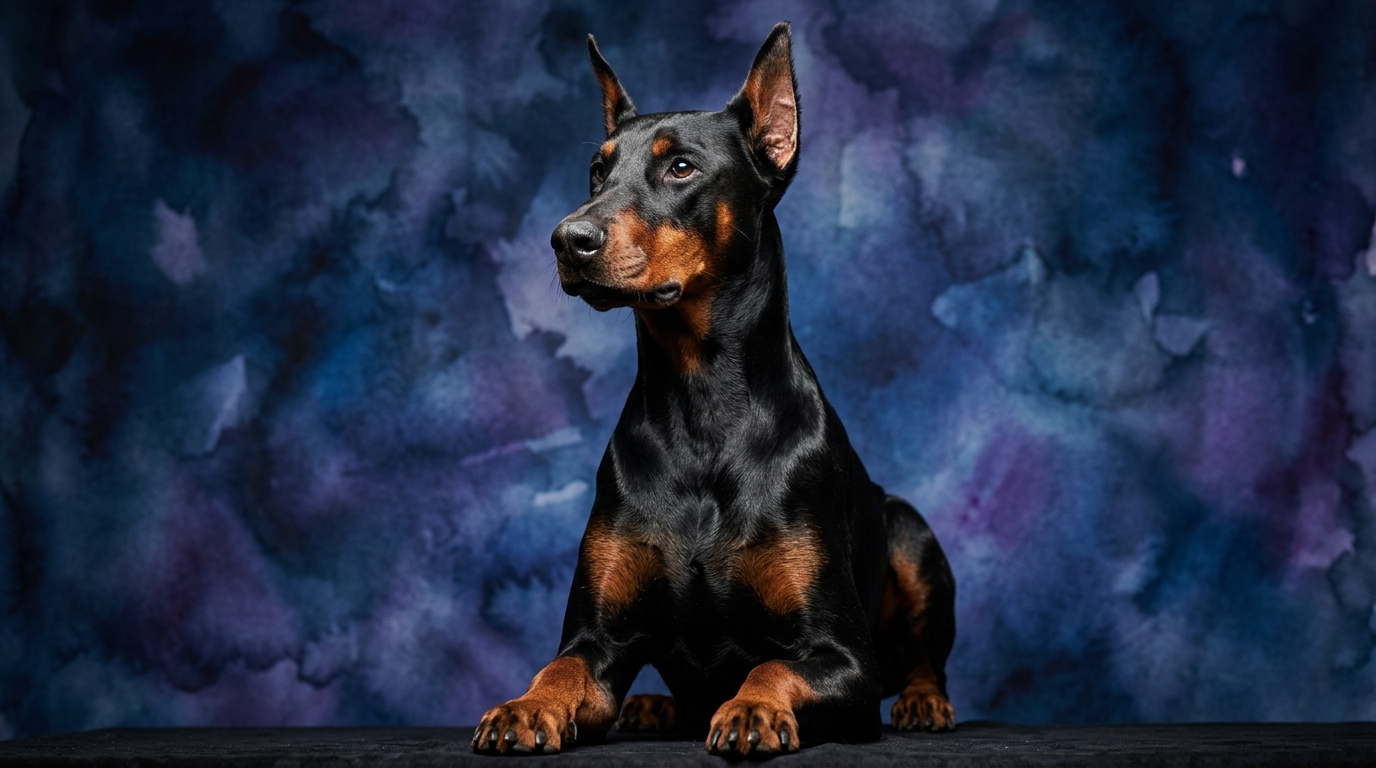
The Doberman Pinscher exhibits a formidable intellect characterized by a direct and efficient approach. They score 5/5 in Problem Solving, particularly excelling in goal-oriented tasks that require strategic thinking and decisive action. Their Training Speed is equally impressive at 5/5, allowing for rapid mastery of intricate routines, complemented by a 5/5 Memory for complex sequences and commands. A powerful Instinctive Drive, rated 5/5, defines much of their mental architecture, manifesting as a profound need for purpose and activity, essential for their roles in protection or competitive sports. While perceptive, their Social Intelligence, at 4/5, often leans more towards loyalty and adherence to established roles rather than pure emotional mirroring.
Where the Standard Poodle Wins Cognitively
The Standard Poodle’s distinct cognitive edge is most evident in its superior social intelligence, scoring 5/5 compared to the Doberman’s 4/5. This heightened capacity allows them to interpret human emotions and subtle non-verbal cues with remarkable precision, leading to deeply empathetic and intuitive interactions. A Poodle might instinctively offer comfort or adjust its behavior to match the mood of a room, demonstrating an empathetic responsiveness that goes beyond mere obedience. Their problem-solving, while top-tier for both breeds, often manifests in a creatively adaptive and curious manner within domestic settings, enabling them to navigate complex household situations with thoughtful finesse and a playful approach. This blend makes them uniquely attuned companions, often anticipating needs and adjusting their behavior with subtle understanding.
Where the Doberman Pinscher Wins Cognitively
The Doberman Pinscher’s distinct cognitive strength lies in its powerful instinctive drive, rated 5/5 versus the Poodle’s 4/5, which fuels an unparalleled dedication to purpose-driven tasks. This intensity, combined with their exceptional problem-solving and training speed, makes them formidable in roles requiring sustained focus, precision, and decisive action, such as protection work, scent detection, or advanced competitive dog sports. Their mental architecture is geared towards efficiency and goal attainment, allowing them to master and execute complex, multi-step commands with unwavering commitment and mental stamina under pressure. This robust drive ensures they maintain concentration and drive through challenging scenarios, making them exceptional working partners.
Which Is Easier to Train and Why
While both breeds achieve a perfect 5/5 in training speed, the practical experience of training them diverges due to their other cognitive traits. The Standard Poodle’s exceptional social intelligence (5/5) makes them highly motivated by human interaction and approval, often finding the training process itself rewarding. They respond enthusiastically to positive reinforcement and are eager to please, making them generally more “biddable” and forgiving for novice trainers. Their moderately intense instinctive drive (4/5) means fewer distractions from inherent urges, allowing for a more fluid and focused learning environment, as they are less likely to be sidetracked by intense prey drive or territorial instincts.
Conversely, the Doberman Pinscher’s powerful instinctive drive (5/5) demands a trainer who can provide consistent, clear direction and a strong sense of purpose. While they learn commands quickly, their inherent intensity requires channeling and management; without sufficient mental and physical engagement, their strong will can lead to self-directed behaviors or restlessness. For experienced handlers, a Doberman is an incredibly capable student, but their need for a confident, authoritative leader and structured engagement can present a greater challenge for those less familiar with working breed mentalities, requiring unwavering consistency and dedication to managing their innate intensity.
Which Suits Active Owners vs. Relaxed Owners
For active owners seeking a dog with a profound sense of purpose, the Doberman Pinscher is an exceptional match. Their 5/5 instinctive drive necessitates a lifestyle rich in structured activities, rigorous physical exercise, and consistent mental challenges. Dobermans thrive when given a “job,” whether it’s competitive dog sports, protection work, or extensive outdoor adventures. Owners who can commit to daily, demanding engagement and provide clear leadership will find the Doberman to be a dedicated, fulfilled, and well-behaved companion, whereas neglecting these needs can lead to significant behavioral issues and an unfulfilled dog.
The Standard Poodle, while undeniably an athletic and energetic breed, offers more adaptability for owners who are active but do not require a dog with a singular, intense working drive. Their 4/5 instinctive drive means they enjoy and excel in various activities like fetch, swimming, or agility, but they are also more content to integrate into family life, finding fulfillment in varied mental stimulation and companionship. Their high social intelligence makes them excellent partners for owners who appreciate daily walks, occasional vigorous play, and a dog that is equally happy with quiet time as they are with an adventure, making them suitable for active families with diverse interests.
The Verdict
Choose the Standard Poodle for a highly adaptable, empathetic companion who thrives on nuanced communication, family integration, and diverse mental challenges.
Choose the Doberman Pinscher for an owner seeking a dedicated, protective partner who excels with purpose-driven training, rigorous physical demands, and a confident, consistent leader.
🧠 Find Your Pet's IQ Score
Our Pet IQ Lab assessment covers 25+ tests across 5 cognitive dimensions — personalized to your breed.
Take the Full IQ Test →Frequently Asked Questions
Do Standard Poodles or Dobermans need more mental stimulation?
Both breeds possess exceptional cognitive abilities and require significant mental stimulation to prevent boredom and destructive behaviors. Standard Poodles often thrive on varied puzzle toys, learning new tricks, and engaging in interactive games, while Dobermans typically benefit most from structured tasks, advanced obedience, and activities that tap into their strong working drive and desire for purpose.
Are Poodles or Dobermans better with children?
Both breeds can be excellent family dogs with proper socialization from an early age and consistent training. Standard Poodles, with their higher social intelligence, are often very gentle, patient, and intuitive with children, adapting well to family dynamics. Dobermans, while fiercely loyal and protective of their family unit, require careful guidance and supervision around children due to their powerful drives and protective instincts, ensuring all interactions are positive and safe.
Which breed is more prone to separation anxiety?
Both Standard Poodles and Doberman Pinschers form strong, deep bonds with their human families and can potentially develop separation anxiety if not properly conditioned to alone time. Standard Poodles, due to their superior social intelligence and strong need for companionship, may exhibit distress if left alone for extended periods without adequate mental preparation. Dobermans, with their intense loyalty and protective instincts, can also struggle with separation, often manifesting as destructive behaviors or excessive vocalization when their human “pack” is absent.