
Side-by-Side IQ Profile: Doberman Pinscher vs. English Springer Spaniel
The Cosmic Pet Pet IQ Lab provides a unique lens through which to compare canine intellect, breaking it down into five key dimensions. For the Doberman Pinscher, ranked #5 by Coren, its profile is a testament to its operational prowess: Problem Solving at 5/5, Training Speed at 5/5, Social Intelligence at 4/5, Instinctive Drive at 5/5, and Memory at 5/5. This configuration suggests a breed capable of intricate thought, rapid learning, and an exceptional capacity to retain information and act on powerful, innate motivations, often centered around protection and task completion.
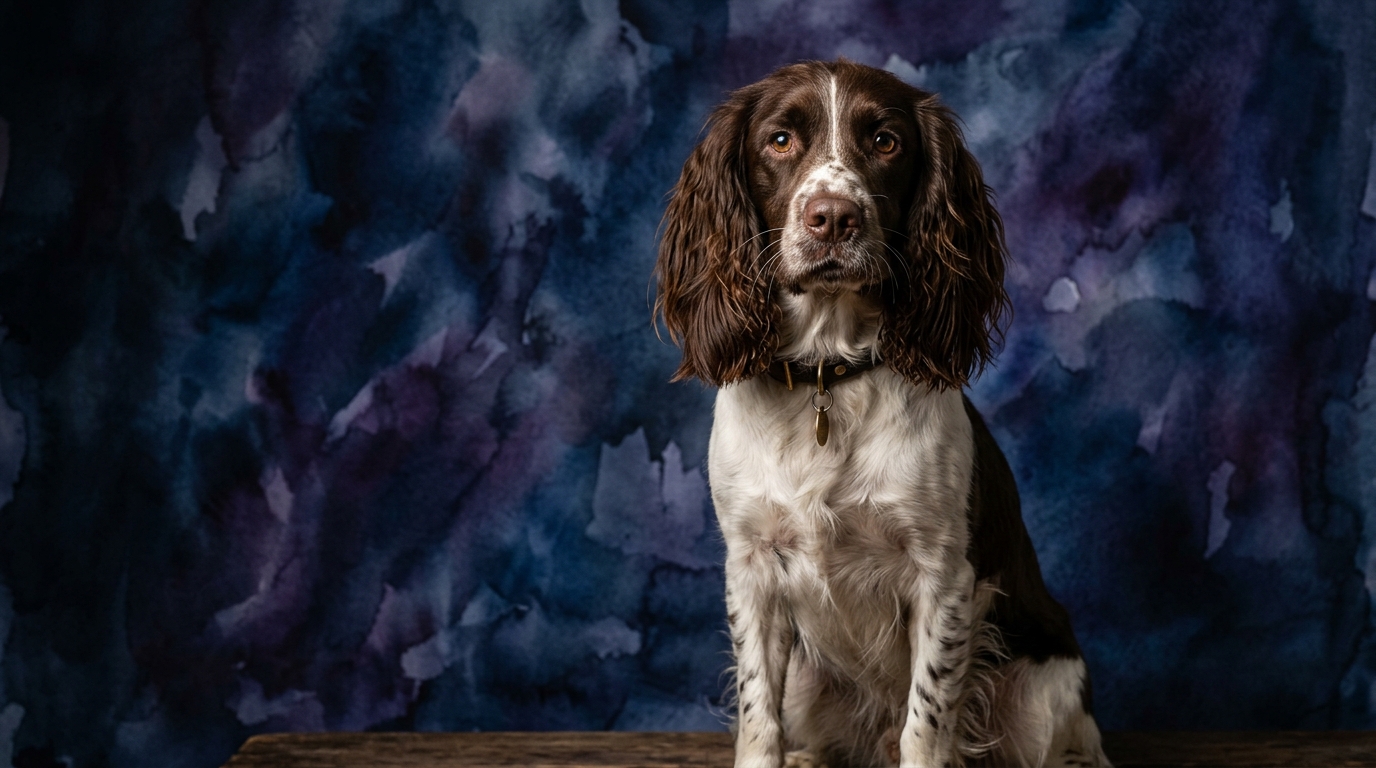
In contrast, the English Springer Spaniel, holding Coren’s #13 rank, presents a profile reflecting its sporting heritage: Problem Solving at 4/5, Training Speed at 5/5, Social Intelligence at 4/5, Instinctive Drive at 5/5, and Memory at 4/5. While sharing the Doberman’s top marks in training speed and instinctive drive, the Springer’s slightly lower scores in problem solving and memory indicate a cognitive approach that, while still highly capable, might be more geared towards pattern recognition and application within specific contexts, such as scent work and retrieval, rather than abstract conceptualization or complex multi-stage tasks. Both breeds exhibit robust social intelligence and powerful instinctive drives, but the *nature* of these drives and their cognitive application differ significantly based on their historical roles.
Where the Doberman Pinscher Wins Cognitively
The Doberman Pinscher’s cognitive architecture shines brightest in areas demanding intricate thought and robust recall, evident in its perfect 5/5 scores for both Problem Solving and Memory. This breed excels at navigating novel situations, devising solutions to obstacles, and understanding complex sequences of commands or events. Unlike breeds that might rely more on trial and error, a Doberman can often analyze a situation and formulate an effective strategy, a skill honed by generations of selection for police, military, and personal protection work.
Their exceptional memory allows them to retain vast repertoires of commands, intricate routines, and contextual information, making them adept at tasks requiring sustained focus and precision over time. This superior cognitive recall also contributes to their effectiveness in vigilance, remembering past threats or patterns to anticipate future ones. Their instinctive drive (5/5), coupled with these strong problem-solving and memory skills, means they apply their formidable intellect with unwavering purpose, whether it's learning a new sport or mastering a complex protection scenario.
Where the English Springer Spaniel Wins Cognitively
While the English Springer Spaniel may not outscore the Doberman in every cognitive dimension, its distinct strengths lie in the *application* of its impressive abilities, particularly within its specialized field. The Springer's perfect 5/5 in Instinctive Drive, coupled with its 4/5 in Problem Solving and 4/5 in Memory, creates an exceptionally effective package for scent work and retrieval. Their cognitive “win” is in their unparalleled ability to focus intensely on olfactory challenges, methodically working through complex scent trails, and adapting their search strategies on the fly.
This isn't just brute instinct; it requires sophisticated problem-solving to interpret faint cues and memory to recall patterns in terrain or scent distribution. Their 4/5 social intelligence, while matching the Doberman, often manifests as an exuberant eagerness to cooperate with their handler, making them incredibly responsive partners in the field. This cooperative spirit, combined with their 5/5 training speed, allows them to rapidly learn and apply commands within dynamic, often distracting, outdoor environments, showcasing a specific type of cognitive agility and purpose-driven intellect.
Which Is Easier to Train and Why
Both the Doberman Pinscher and the English Springer Spaniel boast a perfect 5/5 in Training Speed, indicating they absorb new commands and routines with remarkable alacrity. However, the *ease* of training can diverge based on their inherent drives and how those are managed. The Doberman, with its 5/5 Problem Solving and 5/5 Memory, thrives on structured, mentally stimulating training that challenges its intellect. They are quick to grasp complex tasks and long sequences, but their strong instinctive drive (5/5), often geared towards vigilance and protection, requires a confident and consistent handler to channel this drive constructively. Without adequate mental engagement, a Doberman might apply its problem-solving prowess to undesirable behaviors.
The English Springer Spaniel, also with a 5/5 Training Speed, is equally eager to learn, but its motivation is frequently tied to its powerful instinctive drive (5/5) for scenting and retrieving. Training is often perceived as a joyous game by Springers, especially when it involves their nose or a retrieve. While they learn quickly, their enthusiasm and tendency to follow intriguing scents can present unique challenges, requiring a handler who can maintain focus amidst environmental distractions. Therefore, while both are highly trainable, the Doberman might be “easier” for an owner who enjoys teaching intricate obedience and utility tasks, while the Springer might be “easier” for an owner who embraces energetic, play-based training centered around their natural sporting aptitudes.
Which Suits Active Owners vs. Relaxed Owners
Neither the Doberman Pinscher nor the English Springer Spaniel are breeds suited for truly “relaxed” owners in the traditional sense. Both require substantial daily engagement to thrive, though the *nature* of that engagement differs. The Doberman, with its profound problem-solving abilities and powerful instinctive drive, demands structured mental and physical activity. This includes vigorous exercise, advanced obedience training, dog sports like Schutzhund or agility, and consistent mental challenges to prevent boredom and channel its protective instincts. An active owner for a Doberman is someone prepared to be a diligent leader, providing purpose and mental work daily. A less active owner will likely find a Doberman becoming restless, destructive, or exhibiting behavioral issues stemming from unfulfilled cognitive needs.
The English Springer Spaniel, with its boundless energy and intense instinctive drive for scent and retrieve, requires an owner committed to extensive physical exercise and outdoor exploration. They need long runs, hikes, swimming, and consistent opportunities to use their nose in stimulating environments. While they also benefit from mental challenges, their primary need is for physical exertion that allows them to express their sporting heritage. A truly “relaxed” owner would quickly be overwhelmed by a Springer's persistent need for activity. Therefore, both breeds are firmly in the “active owner” camp, but the Doberman leans towards structured, mentally challenging activity, while the Springer leans towards vigorous, outdoor, scent-driven physical activity.
The Verdict
Choose the Doberman Pinscher if you are an experienced owner seeking a vigilant, highly capable working partner dedicated to complex tasks, protection, and intricate routines, and are prepared to provide consistent, mentally demanding engagement.
Choose the English Springer Spaniel if you crave an enthusiastic, scent-driven companion for extensive outdoor adventures, field sports, and a cooperative, playful spirit in active learning, and are ready for their boundless physical energy.
🧠 Find Your Pet's IQ Score
Our Pet IQ Lab assessment covers 25+ tests across 5 cognitive dimensions — personalized to your breed.
Take the Full IQ Test →Frequently Asked Questions
Are Dobermans more challenging to train than Springers?
Both breeds possess a 5/5 Training Speed, meaning they learn commands rapidly. The Doberman's higher problem-solving and memory might allow for more complex task learning, while the Springer's strong prey drive can make them easily distracted by scents, requiring consistent redirection.
Which breed requires more mental stimulation?
The Doberman Pinscher, with its 5/5 Problem Solving and 5/5 Memory, generally requires more structured mental challenges to prevent boredom and channel its protective instincts effectively. While Springers also benefit from mental work, their primary need is often vigorous physical exertion.
Can an English Springer Spaniel be a good guard dog?
While English Springer Spaniels are alert and will bark at strangers, their social intelligence and instinctive drive are geared towards cooperative hunting and companionship, not protection. They lack the Doberman's natural guarding instincts and problem-solving applied to threat assessment.