
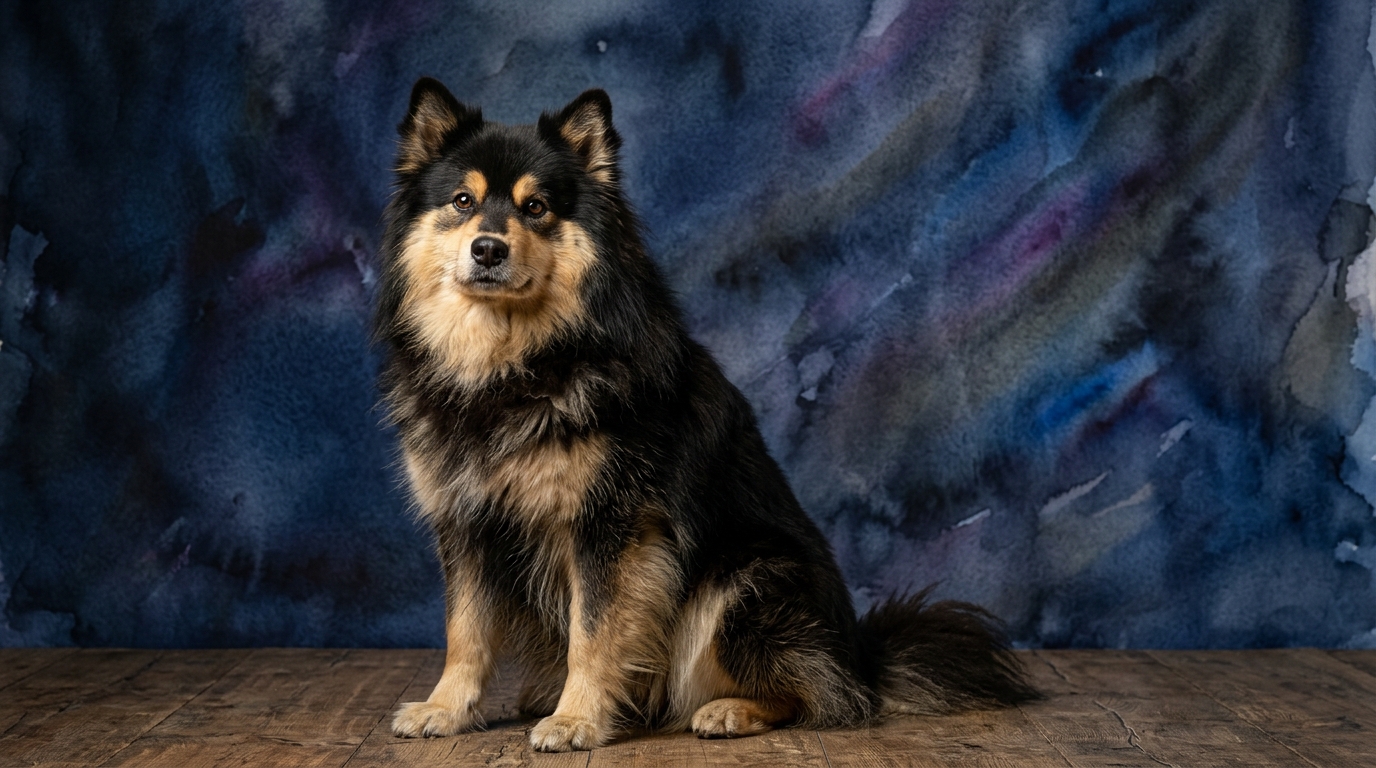
Side-by-Side IQ Profile: Doberman Pinscher vs. Finnish Lapphund
The Cosmic Pet Pet IQ Lab employs a five-dimensional framework to assess canine intelligence, offering a nuanced view beyond simple obedience. For the Doberman Pinscher, a Working breed ranked #5 by Coren, its profile is marked by high scores across the board: Problem Solving (5/5), Training Speed (5/5), Social Intelligence (4/5), Instinctive Drive (5/5), and Memory (5/5). This reflects a breed engineered for demanding, complex tasks requiring rapid comprehension and steadfast execution.
In stark contrast, the Finnish Lapphund, a Herding breed not ranked by Coren, presents a more balanced, independent cognitive profile. Its scores are consistently moderate: Problem Solving (3/5), Training Speed (3/5), Social Intelligence (3/5), Instinctive Drive (3/5), and Memory (3/5). These scores are not indicative of a lack of mental capacity, but rather a different kind of intelligence, one adapted for autonomous decision-making in a less structured, more naturalistic environment, characteristic of its herding origins in the Arctic.
Where the Doberman Pinscher Wins Cognitively
The Doberman Pinscher's cognitive architecture is optimized for precision and purpose, making them excel in scenarios demanding swift understanding and execution. Their 5/5 score in Problem Solving stems from an ability to not just react, but to analyze situations and develop strategic responses. For instance, in advanced obedience or protection work, a Doberman can quickly discern subtle cues, anticipate changes, and adapt their behavior seamlessly, mastering intricate sequences of commands that would overwhelm many other dogs.
Their Training Speed, also rated 5/5, is a direct consequence of their exceptional memory and focus. A Doberman often requires fewer repetitions to solidify a new command or behavior, making them highly efficient learners. This extends to complex tasks like search and rescue or service dog work, where the ability to acquire and retain a vast repertoire of skills rapidly is paramount. Their Instinctive Drive, rated 5/5, fuels this learning, providing a strong internal motivation to engage in goal-oriented activities, whether it's guarding their territory or excelling in competitive dog sports.
Where the Finnish Lapphund Wins Cognitively
While the Doberman excels in structured, human-directed tasks, the Finnish Lapphund's cognitive strengths lie in adaptable, independent decision-making, particularly in dynamic, less predictable environments. Their Problem Solving at 3/5, for example, isn't about solving abstract puzzles, but about practical, real-world challenges. A Lapphund herding reindeer in vast, open landscapes needs to make independent judgments about flock movement, potential threats, and navigating terrain without constant human instruction. This requires a different kind of mental agility – one focused on environmental awareness and autonomous action rather than strict adherence to complex human commands.
Their Social Intelligence, rated 3/5, reflects a balanced approach. Lapphunds are perceptive and bonded to their family, but also possess an inherent independence, stemming from their role where they might spend long periods with livestock, making their own social decisions within the herd. They are less inclined to be overtly handler-dependent than a Doberman, displaying a quiet confidence that allows them to thrive even when human direction is minimal. This blend of social awareness and self-reliance makes them uniquely suited to roles where initiative and resilience are prized over absolute obedience.
Which is Easier to Train and Why
Comparing ease of training between these two breeds reveals distinct approaches shaped by their historical roles. The Doberman Pinscher, with its 5/5 Training Speed and 5/5 Memory, is unequivocally quicker to pick up new commands and behaviors. Their inherent desire to work and please their handler, coupled with a formidable focus, means they often require fewer repetitions and are more inclined to perform tasks with precision. This makes them a prime candidate for advanced obedience, protection sports, or service work, where rapid learning and consistent execution are critical.
The Finnish Lapphund, with a 3/5 Training Speed and 3/5 Memory, presents a different training journey. They are not 'difficult' to train, but they learn at a more moderate pace and possess an independent streak characteristic of herding breeds. A Lapphund might pause, consider a command, or even offer an alternative behavior if they don't immediately see the value or if their herding instincts suggest a different course of action. This requires a patient, positive reinforcement-based approach, focusing on building a strong relationship and making training engaging. Once they understand the 'why' behind a request, their practical problem-solving allows them to adapt and learn through experience.
Which Suits Active Owners vs. Relaxed Owners
The Doberman Pinscher is ideally suited for active owners who can provide consistent, high-level mental and physical engagement. Their 5/5 Instinctive Drive translates into a profound need for a 'job,' whether it's rigorous daily exercise, advanced training, or participation in dog sports like agility, obedience, or protection work. A Doberman thrives on purpose and structure; a relaxed owner who cannot meet these demands will likely encounter behavioral issues stemming from boredom and unfulfilled mental energy. They require an owner who understands their working dog mentality and is committed to channeling their formidable drive into productive activities.
The Finnish Lapphund, while also an active breed from the Herding group, offers a slightly more adaptable lifestyle for owners. Their 3/5 Instinctive Drive means they enjoy outdoor activities, hikes, and active play, and certainly benefit from regular exercise to keep them healthy and happy. However, they are often more content to relax with their family after a good walk, rather than constantly seeking a 'job' in the same intense way a Doberman does. They suit owners who enjoy an active lifestyle but also appreciate a dog that can transition to a calmer home environment, enjoying companionship without the relentless demand for high-stakes mental stimulation. They are a good fit for those who want an engaging companion for adventures, but also a loving presence indoors.
The Verdict
Choose the Doberman Pinscher if you seek a highly trainable, focused, protective partner for demanding tasks and are committed to providing an active, structured lifestyle.
Opt for the Finnish Lapphund if you desire a resilient, independent, yet affectionate companion for active family life, appreciating their adaptable nature and practical intelligence.
🧠 Find Your Pet's IQ Score
Our Pet IQ Lab assessment covers 25+ tests across 5 cognitive dimensions — personalized to your breed.
Take the Full IQ Test →Frequently Asked Questions
Is the Doberman Pinscher good with children?
Yes, with proper socialization and training from a young age, Dobermans can be devoted family protectors, often forming strong bonds with children within their household. Their protective instincts mean early, positive exposure to various people and situations is crucial for a well-adjusted temperament.
Do Finnish Lapphunds bark a lot?
Finnish Lapphunds are known to be vocal, using barks to communicate and alert. While not typically excessive, their herding heritage means they might use their voice to express excitement, warn of strangers, or gather their 'flock,' which can be managed with consistent training and redirection.
What are the main health concerns for Doberman Pinschers?
Dobermans are unfortunately prone to several significant health issues, including dilated cardiomyopathy (DCM), Wobbler syndrome (cervical vertebral instability), von Willebrand's disease (a bleeding disorder), and hip dysplasia. Responsible breeding practices and regular veterinary check-ups are essential for their well-being.