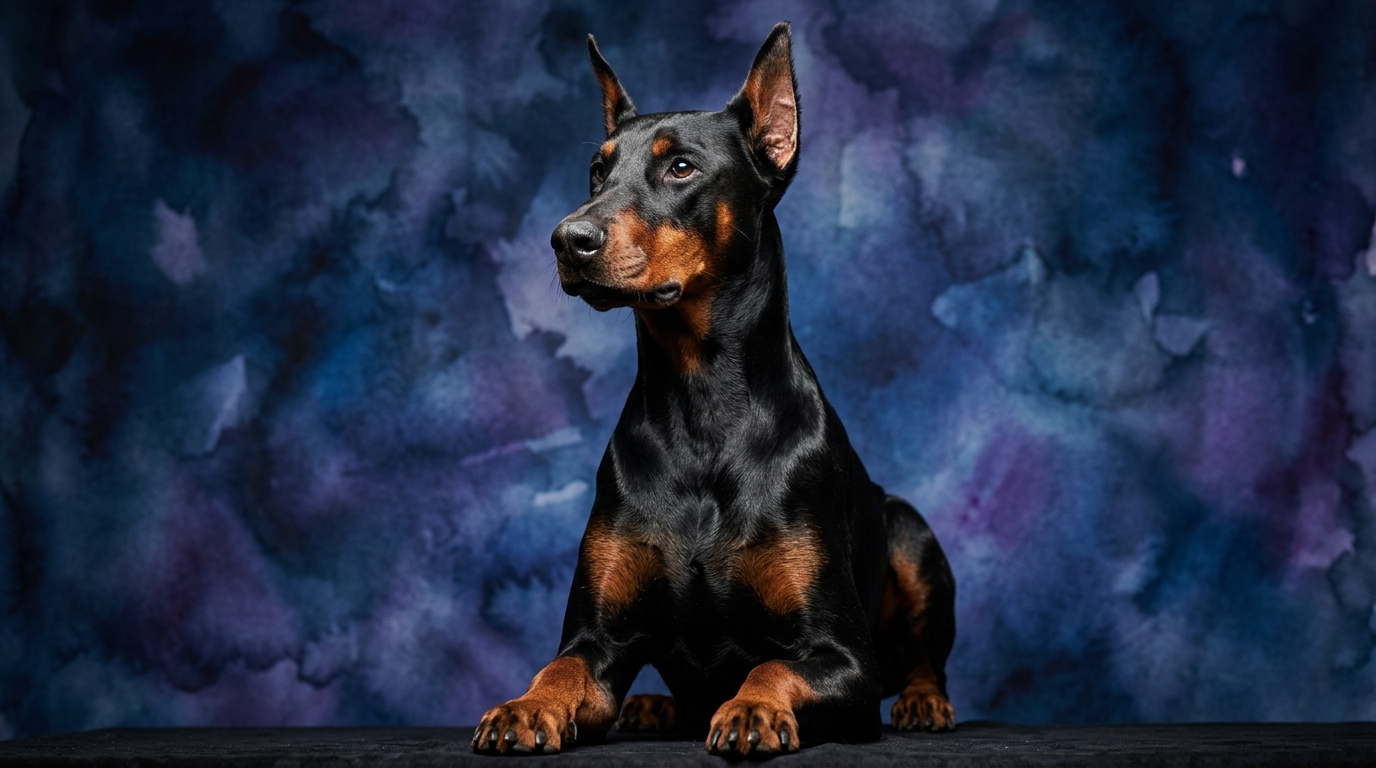
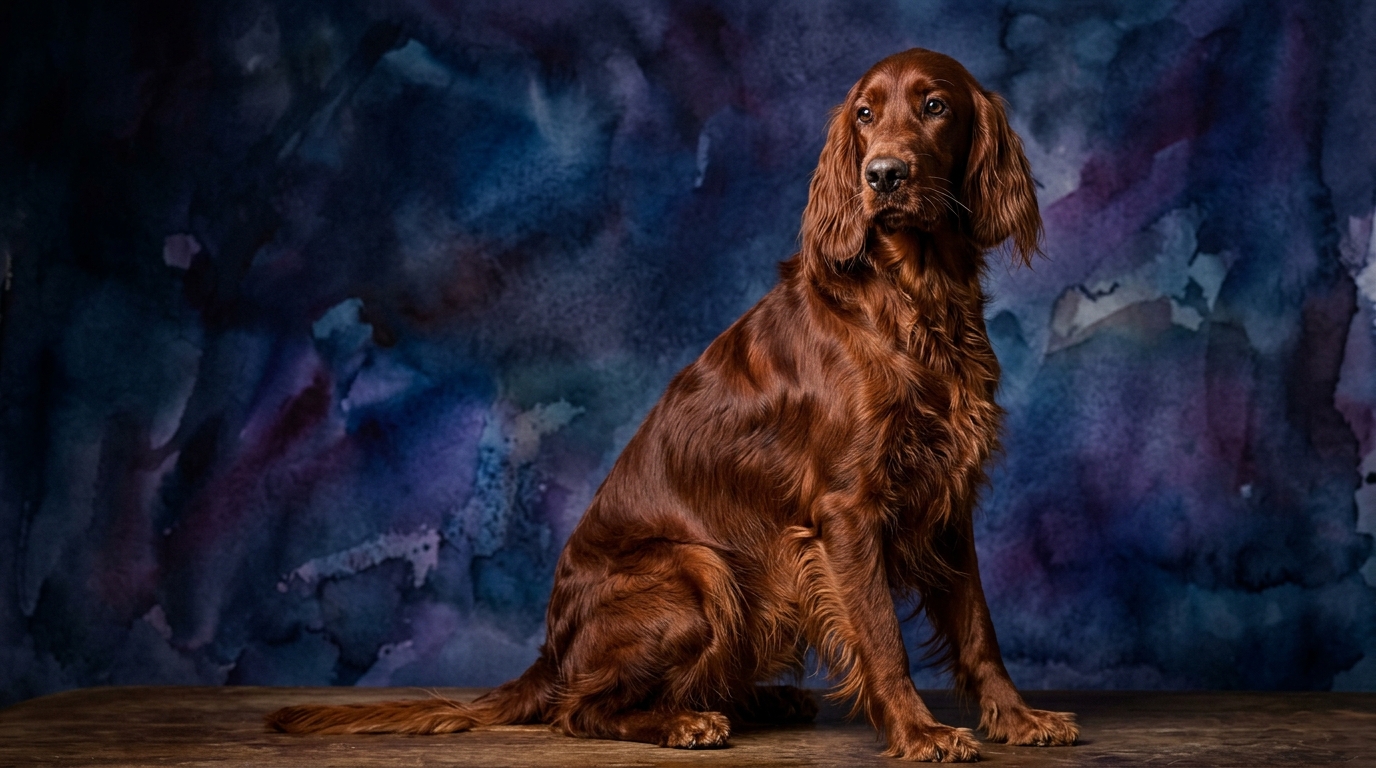
Side-by-Side IQ Profile: Doberman Pinscher vs. Irish Setter
**Doberman Pinscher (Working Group, Coren Rank #5):** This breed’s cognitive architecture is designed for precision, partnership, and protection. Their **Problem Solving (5/5)** excels at analyzing new situations, devising strategies, and executing multi-step solutions, manifesting in complex obedience routines or nuanced protection work. A **Training Speed (5/5)** score reflects exceptional learning efficiency, often grasping new commands and behaviors after only a few repetitions, fueled by intense focus and eagerness. **Social Intelligence (4/5)** indicates a keen awareness of human cues and intentions, allowing for deep, reciprocal bonds and anticipation of handler needs, though their primary allegiance is often focused. Their **Instinctive Drive (5/5)** is profoundly geared towards guarding, patrolling, and performing tasks, responding decisively to perceived threats. Finally, **Memory (5/5)** ensures long-term retention of learned commands, routines, and experiences, recalling specific sequences with remarkable precision.
**Irish Setter (Sporting Group, Coren Rank #35):** The Irish Setter's cognitive profile is tailored for endurance, environmental engagement, and independent field work. Their **Problem Solving (4/5)** capabilities are strong, particularly within their sporting context, allowing them to navigate challenging terrains or locate hidden objects through persistence and exploration rather than intricate, planned strategies. A **Training Speed (4/5)** score means they learn at a commendable pace, especially with positive reinforcement, though their independent streak can sometimes lead to momentary lapses in focus. **Social Intelligence (3/5)** describes a generally friendly and outgoing nature, forming affectionate bonds with family and often welcoming to strangers, though less intensely focused on nuanced partnership work. Their **Instinctive Drive (3/5)** is primarily centered around hunting, bird flushing, and retrieving, manifesting as a strong urge to follow scents and engage in energetic, sustained activity. **Memory (4/5)** ensures solid recall for routines, learned commands, and familiar people and places, remembering hunting patterns or favorite scent trails reliably.
Where the Doberman Pinscher Wins Cognitively
The Doberman Pinscher’s cognitive profile showcases a distinct advantage in structured, goal-oriented tasks. Their 5/5 Problem Solving score means they don't just react; they actively strategize. For instance, a Doberman tasked with finding a hidden object might systematically search an area, remembering previously checked spots and adjusting their approach, rather than relying solely on scent and random exploration. Their 5/5 Training Speed is unparalleled, allowing them to master intricate obedience chains or specialized protection commands with remarkable efficiency. This rapid acquisition of skills stems from their focused attention and inherent desire to work collaboratively. Furthermore, their 5/5 Instinctive Drive for protection and work, combined with their 5/5 Memory, means they retain complex protocols for guarding and can execute them reliably, distinguishing friend from foe based on prior learning. This breed's capacity for sustained, precise recall of commands and situations makes them highly dependable in roles requiring consistent performance under varying conditions.
Where the Irish Setter Excels Cognitively
While the Doberman excels in precision and structured work, the Irish Setter’s cognitive strengths shine in environments demanding endurance, environmental awareness, and independent initiative. Their 4/5 Problem Solving, though numerically lower, is perfectly adapted to their role as a sporting dog. An Irish Setter in the field might creatively navigate dense cover to flush game, utilizing their understanding of terrain and bird behavior, rather than following a rigid, pre-defined path. Their 3/5 Instinctive Drive, focused on scent and pursuit, allows for sustained, enthusiastic engagement in hunting scenarios, where their broad environmental scanning is more crucial than intense, directed focus on a single handler. The Irish Setter’s 4/5 Memory supports their ability to recall hunting patterns, favorite scent trails, and the locations of previous finds, enabling them to work effectively across large areas. Their social intelligence, rated 3/5, while not as intensely focused on handler partnership, fosters a generally amiable disposition that allows them to interact broadly without the guardedness sometimes seen in protection breeds, making them adaptable to various social settings.
Which is Easier to Train and Why
Based on The Cosmic Pet Pet IQ Lab data, the Doberman Pinscher is unequivocally easier to train for obedience and complex tasks due to its superior scores in Problem Solving (5/5) and Training Speed (5/5). Dobermans exhibit an intense focus and an eager-to-please temperament that translates into rapid learning. They grasp new commands, intricate routines, and behavioral expectations often within a few repetitions, making them highly responsive to consistent instruction. Their strong memory (5/5) ensures long-term retention of these lessons, reducing the need for constant re-training. In contrast, the Irish Setter, with 4/5 in both Problem Solving and Training Speed, is still trainable but requires more patience and engaging methods. Irish Setters possess an independent streak and a formidable instinctive drive (3/5) for exploration and scent work, which can lead to distractions in a training environment. While they learn, their attention might wander more readily, necessitating shorter, more varied sessions to maintain engagement. For instance, teaching a "stay" command to a Doberman might take minutes; for an Irish Setter, it might take several sessions to proof against environmental temptations.
Which Suits Active Owners vs. Relaxed Owners
Both breeds are generally active, but their ideal ownership profiles diverge significantly based on their cognitive and physical needs. The Doberman Pinscher, with its 5/5 Instinctive Drive for work and protection, coupled with its sharp Problem Solving and Training Speed, thrives with active owners who can provide rigorous mental stimulation and structured physical exercise. This breed requires consistent training, engaging puzzle toys, and opportunities to use their cognitive prowess in activities like obedience, agility, or protection sports. A Doberman with insufficient mental engagement can become bored and potentially destructive. Conversely, the Irish Setter, while also requiring considerable physical activity due to its sporting heritage, is better suited for active owners who appreciate a more independent and free-spirited companion. Their 3/5 Instinctive Drive is geared towards sustained exploration and scent work, meaning they excel in activities like long hikes, running, or field trials where they can range. While they benefit from training, their cognitive needs are less about complex problem-solving routines and more about opportunities to fulfill their natural hunting instincts in an expansive environment. A relaxed owner, providing minimal physical or mental outlet, would likely find both breeds challenging, but the Doberman's need for structured engagement makes it particularly unsuitable for a sedentary lifestyle.
The Verdict
Choose a Doberman Pinscher if you are an experienced owner seeking a highly trainable, focused partner for structured activities like obedience, protection, or complex sport, and can provide consistent mental and physical challenges.
Choose an Irish Setter if you are an active owner who enjoys outdoor adventures, appreciates a more independent companion with a strong sporting drive, and can provide ample opportunities for free-ranging exercise and affectionate companionship.
🧠 Find Your Pet's IQ Score
Our Pet IQ Lab assessment covers 25+ tests across 5 cognitive dimensions — personalized to your breed.
Take the Full IQ Test →Frequently Asked Questions
Do Doberman Pinschers make good family pets given their protective instincts?
Yes, Doberman Pinschers can be excellent family pets, especially with early socialization and consistent training. Their social intelligence (4/5) allows them to bond deeply with their family, and their protective instincts (5/5) are typically directed at safeguarding their loved ones, not general aggression.
How much exercise does an Irish Setter need to be happy and well-behaved?
Irish Setters require substantial daily exercise, ideally at least 60-90 minutes of vigorous activity like running, hiking, or field work. Their strong instinctive drive (3/5) for movement and exploration means that without adequate physical outlets, they can become restless or destructive.
Can an Irish Setter be trained for protection work like a Doberman Pinscher?
While an Irish Setter can be trained for basic obedience and alert barking, their instinctive drive (3/5) and cognitive profile are not geared towards protection work in the same way as a Doberman Pinscher (5/5). Their nature is more focused on amiable interaction and sporting pursuits rather than guarding.