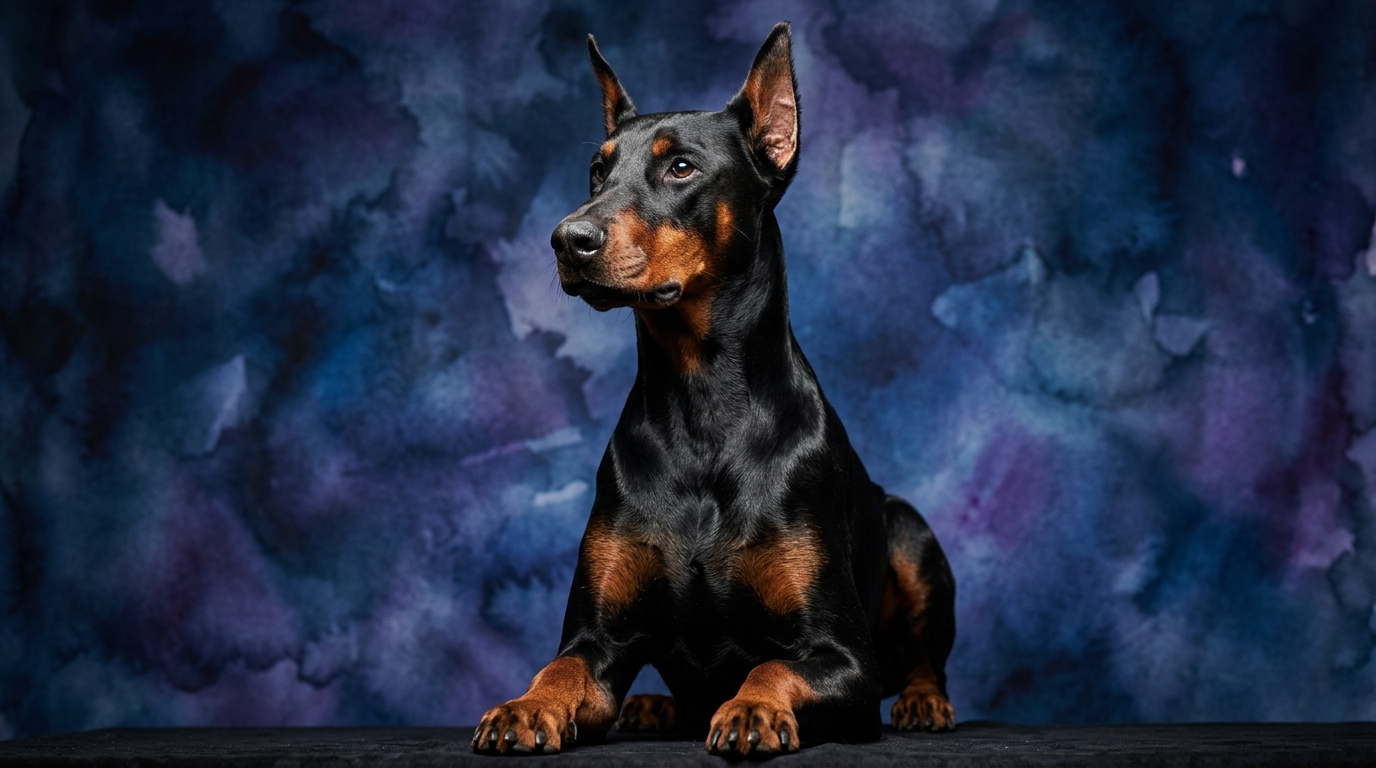
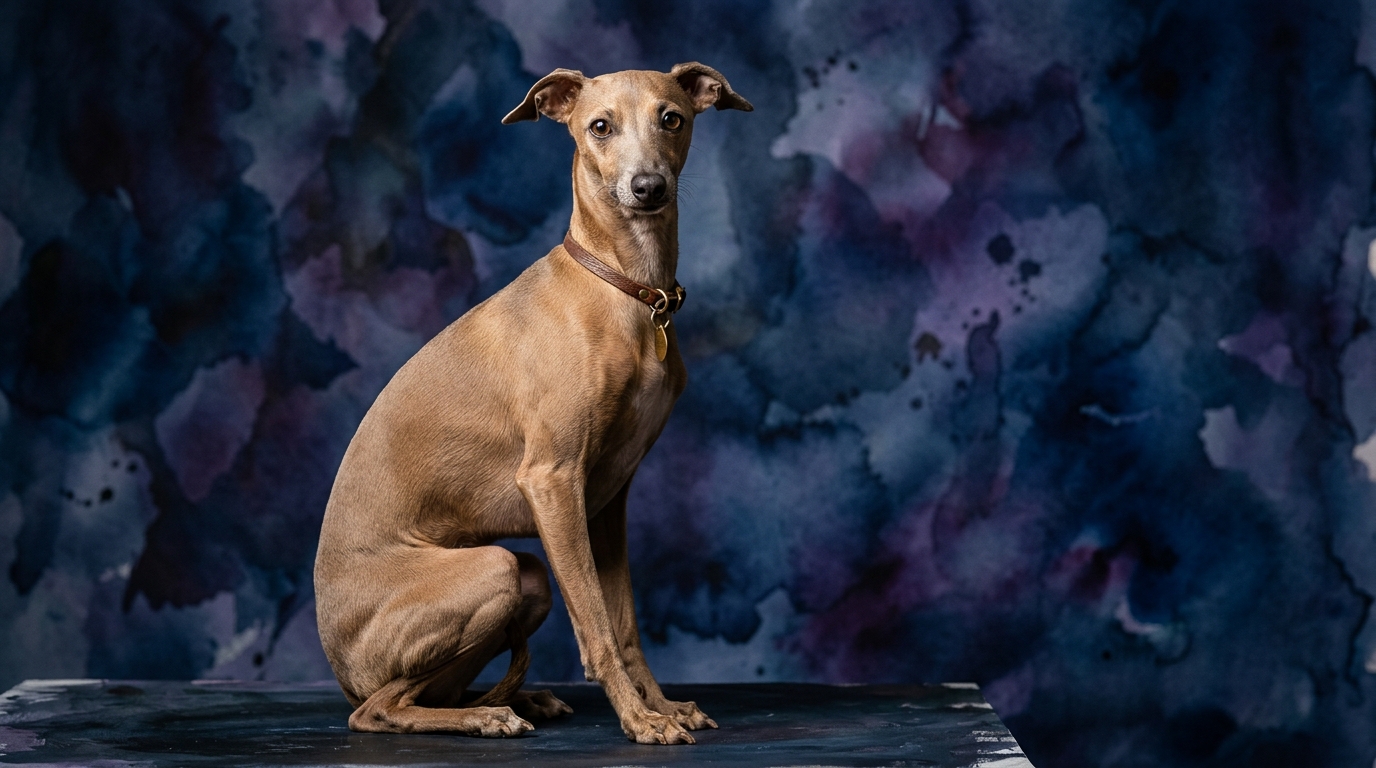
Side-by-Side IQ Profile: Doberman Pinscher vs. Italian Greyhound
The Cosmic Pet Pet IQ Lab employs a five-dimensional metric to assess canine cognition, providing a nuanced view beyond mere obedience. For the Doberman Pinscher, a breed with a formidable Coren rank of #5, its cognitive scores paint a picture of sharp, purposeful intellect. Its Problem Solving is rated 5/5, indicating an exceptional capacity to navigate complex situations and find solutions independently. Training Speed also registers a perfect 5/5, reflecting its rapid acquisition and retention of commands and tasks. Social Intelligence stands strong at 4/5, demonstrating a keen awareness of human cues and pack dynamics, vital for its historical roles. An Instinctive Drive of 5/5 underscores its powerful innate urges for protection and work, while a Memory score of 5/5 means it rarely forgets a lesson or an experience.
Conversely, the Italian Greyhound, a graceful member of the Toy group and not Coren-ranked, presents a more moderate, yet equally fitting, cognitive profile for its companion role. Its Problem Solving capability is rated 3/5, suggesting it can learn and adapt but may not independently seek out complex mental challenges. Training Speed also sits at 3/5, meaning it learns at a steady pace, requiring consistent and patient instruction rather than instant mastery. Social Intelligence is 3/5, indicating it forms strong bonds and understands basic social cues, though perhaps without the Doberman's intricate interpretation of human intent. Instinctive Drive is 3/5, reflecting a moderate level of innate urges, primarily focused on comfort and companionship rather than complex tasks. Lastly, its Memory is 3/5, allowing it to retain important information and routines, but perhaps not with the Doberman's photographic recall.
Where the Doberman Pinscher Excels Cognitively
The Doberman Pinscher's cognitive architecture is a testament to its design as a guardian and working companion. Its 5/5 Problem Solving score means it doesn't just follow commands; it actively processes its environment, often anticipating situations or figuring out novel ways to achieve a goal. For instance, a Doberman might independently strategize how to open a child-proof gate or devise a method to retrieve a toy stuck under furniture, rather than simply giving up. This cognitive prowess extends to its 5/5 Instinctive Drive, which, when properly channeled, translates into unwavering focus and purpose in tasks like protection, scent work, or agility, allowing it to excel in roles requiring intense mental engagement and sustained effort.
Furthermore, the Doberman's 5/5 Training Speed and 5/5 Memory mean it absorbs new information with remarkable efficiency and retains it for the long term. This isn't just about learning basic obedience quickly; it's about mastering intricate multi-step commands, understanding complex routines, and even recognizing subtle changes in its environment. Its 4/5 Social Intelligence complements these traits, enabling it to read and respond to human emotions and intentions with a depth that facilitates complex communication and partnership, making it adept at understanding nuanced instructions and anticipating its handler's next move in a dynamic environment.
The Italian Greyhound's Cognitive Strengths and Suitability
While the Italian Greyhound's cognitive scores are moderate compared to the Doberman's, their profile presents distinct advantages for specific lifestyles. Its 3/5 Problem Solving score means it's less prone to overthinking or becoming bored and destructive if not constantly challenged with complex mental exercises. This can be a significant 'win' for owners seeking a companion whose cognitive needs are more easily met within a typical household without the constant demand for intricate tasks or intense training regimens. The Italian Greyhound is content with simpler mental engagement, such as short puzzle toys or interactive play, rather than needing to 'work through' a complex daily routine.
The Italian Greyhound's 3/5 Instinctive Drive also translates to a less intense internal pressure for a 'job' or a high-stakes purpose. This can result in a more relaxed household dynamic, as owners are less likely to contend with powerful, deeply ingrained urges for hunting, herding, or protection that require extensive management and redirection. Its moderate Social Intelligence (3/5) means it forms affectionate bonds and enjoys companionship without necessarily needing to be an active participant in complex human social dynamics or requiring constant validation through performance, making it a comfortable, amiable presence in the home.
Training Dynamics: Doberman Pinscher vs. Italian Greyhound
When it comes to training, the differences between these two breeds are pronounced and stem directly from their cognitive profiles. The Doberman Pinscher, with its 5/5 Training Speed and 5/5 Memory, is often a dream student for an experienced handler. They grasp new concepts rapidly, generalize learned behaviors to different environments, and rarely forget what they've been taught. Their high Instinctive Drive (5/5) means they are highly motivated by purpose and often thrive on structured training sessions that challenge their intellect and physical capabilities. However, this same drive means they require consistent, firm, and fair leadership; without it, their problem-solving abilities might be directed towards undesirable behaviors, such as testing boundaries or finding creative ways to get their own way.
The Italian Greyhound, with its 3/5 Training Speed and 3/5 Memory, learns at a more deliberate pace. They respond well to positive reinforcement and gentle methods, but may not pick up on cues as quickly or retain them as perfectly as a Doberman. Their moderate Instinctive Drive (3/5) means they are less likely to be driven by intense working urges, but can sometimes be more easily distracted by comfort or novel scents. House-training, for example, might require more patience and consistency with an Italian Greyhound, as their memory for previous potty spots might not be as sharp. Their training success relies heavily on making sessions fun, short, and rewarding, avoiding harsh corrections that can make them withdraw due to their sensitive nature.
Matching Cognition to Lifestyle: Active vs. Relaxed Owners
The Doberman Pinscher's high cognitive scores and intense drives make it an ideal companion for active, engaged owners who are prepared to dedicate significant time to mental and physical stimulation. Owners who enjoy dog sports like agility, obedience, protection work, or scent detection will find a Doberman's 5/5 Problem Solving and Instinctive Drive to be a perfect match, as these activities channel their formidable mental energy into productive outlets. Without consistent mental challenges and a clear role, a Doberman can become bored, potentially leading to anxiety or destructive behaviors as they invent their own 'jobs' around the house. They thrive on a structured environment where their cognitive abilities are regularly exercised.
In contrast, the Italian Greyhound's more moderate cognitive profile (3/5 across the board) makes it well-suited for owners seeking a more relaxed, yet still engaged, companion. While they still require regular exercise to maintain physical health and mental well-being, their cognitive demands are less intense than a Doberman's. A relaxed owner who enjoys casual walks, cozy indoor companionship, and gentle play will find the Italian Greyhound's disposition aligns perfectly. They are less likely to develop behavioral issues from insufficient mental 'work' and are generally content with a routine that includes affection, comfort, and moderate engagement, making them a good fit for quieter households or those with less experience managing high-drive breeds.
The Verdict
Choose the Doberman Pinscher if you are an experienced, active owner ready to provide extensive mental and physical challenges for a highly driven, intelligent partner.
Opt for the Italian Greyhound if you seek a gentle, affectionate companion whose moderate cognitive needs blend seamlessly into a more relaxed home environment.
🧠 Find Your Pet's IQ Score
Our Pet IQ Lab assessment covers 25+ tests across 5 cognitive dimensions — personalized to your breed.
Take the Full IQ Test →Frequently Asked Questions
Do Italian Greyhounds need mental stimulation?
Yes, Italian Greyhounds still benefit from mental stimulation, even with moderate scores. While not needing the intensity of a Doberman, puzzle toys, short training sessions, and new experiences keep their 3/5 problem-solving and memory engaged, preventing boredom and enriching their lives.
Is a Doberman Pinscher easily bored?
A Doberman Pinscher, with its 5/5 problem-solving and instinctive drive, is indeed prone to boredom if not adequately challenged. Their powerful intellect requires consistent engagement through training, complex tasks, and physical activity to prevent them from becoming restless or inventing their own, potentially undesirable, amusements.
Which breed is better for first-time dog owners?
For first-time dog owners, the Italian Greyhound generally presents an easier learning curve due to its moderate drives and cognitive demands. The Doberman Pinscher's intense intellect and strong instincts typically require an owner with experience in structured training and managing a powerful working breed.