Side-by-Side Cognitive Profiles
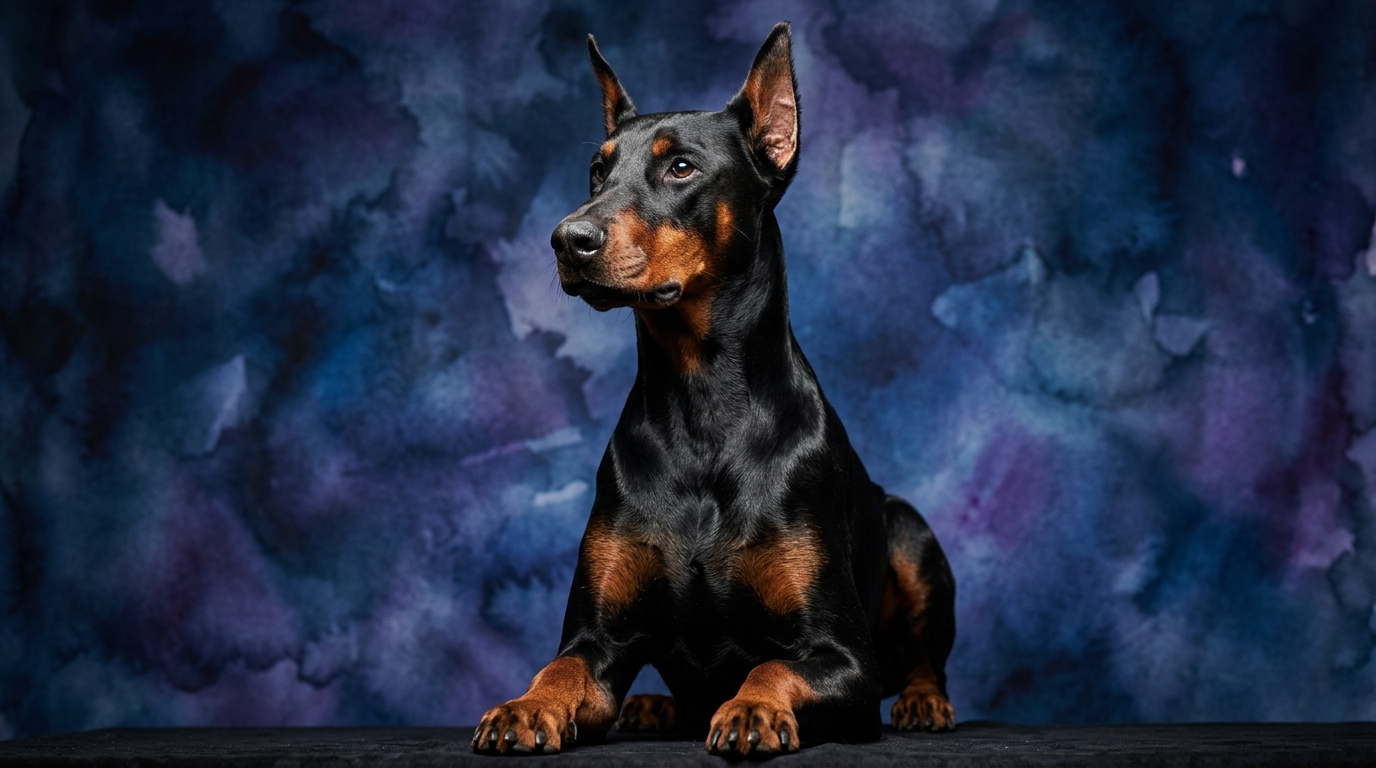
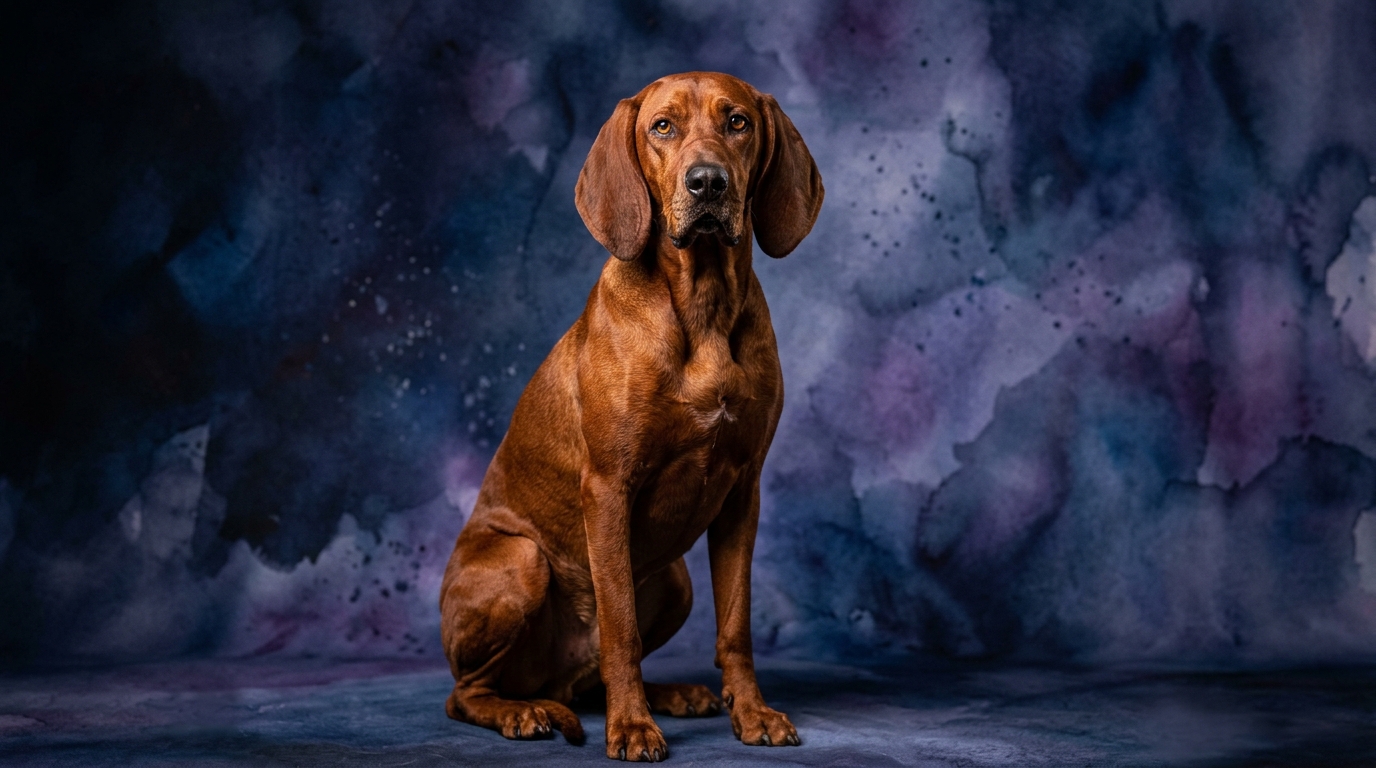
At The Cosmic Pet Pet IQ Lab, we evaluate canine intelligence across five critical dimensions to provide a nuanced understanding of each breed's mental landscape. The Doberman Pinscher, a Working breed, demonstrates a cognitive profile geared towards rapid learning and purposeful action, while the Hound group's Redbone Coonhound showcases an intelligence deeply rooted in its specialized sensory world.
For the Doberman Pinscher (Coren rank #5): Problem Solving (5/5) indicates this breed approaches novel challenges with a methodical, analytical mind, often evaluating situations before acting and devising effective solutions. Training Speed (5/5) means Dobermans absorb new commands and routines with remarkable rapidity, often grasping complex sequences after only a few repetitions. Social Intelligence (4/5) reflects their nuanced understanding of human cues and social hierarchies, allowing them to integrate smoothly into family dynamics and respond appropriately to various interactions. Instinctive Drive (5/5) shows their innate drive is channeled into protection and task-orientation, displaying an intense focus and determination when given a job or guarding their family. Memory (5/5) highlights their ability to retain learned information, including commands, routines, and even specific locations, over extended periods, contributing to their consistent performance.
For the Redbone Coonhound (Not Coren-ranked): Problem Solving (3/5) suggests that while capable of navigating complex scent trails, their problem-solving tends to be less abstract, focusing more on practical, immediate environmental challenges rather than multi-step cognitive puzzles. Training Speed (3/5) means Redbones learn at a moderate pace, often requiring more patience and repetition to solidify new commands, especially when their powerful scent drive competes for attention. Social Intelligence (3/5) indicates they are generally amiable and responsive to familiar people, but their social interactions can sometimes be overshadowed by their independent nature and focus on environmental stimuli. Instinctive Drive (3/5) reveals their primary drive is rooted in scent work and tracking, an instinct that can be powerful and all-consuming, guiding their actions with unwavering focus on a trail. Memory (3/5) demonstrates adequate memory for established routines and familiar people, though their recall for less relevant commands might be less consistent, particularly when distracted by an enticing scent.
Where the Doberman Pinscher Excels Cognitively
The Doberman Pinscher's cognitive architecture presents a clear advantage in areas demanding rapid assimilation of information and strategic execution. Their perfect 5/5 in Problem Solving signifies a breed capable of dissecting complex scenarios and formulating effective responses, whether it's navigating an agility course or understanding intricate household rules. This analytical prowess is complemented by a 5/5 Training Speed, meaning new behaviors are cemented with remarkable efficiency, translating into a dog that can master a diverse repertoire of commands quickly.
Furthermore, their perfect 5/5 Memory ensures these learned behaviors and environmental specifics are retained over the long term, making for a consistently reliable companion. The Doberman's 5/5 Instinctive Drive, channeled into purpose-driven tasks like protection or service work, allows them to maintain intense focus and dedication to a given objective, moving beyond mere instinct to apply learned strategies. Their 4/5 Social Intelligence also enables them to interpret human communication with greater subtlety, fostering a deep, responsive bond.
Where the Redbone Coonhound's Cognition Shines
While the Redbone Coonhound's cognitive profile differs from the Doberman's, it exhibits a distinct form of intellectual strength rooted in its specialized purpose. Its 3/5 Instinctive Drive, though numerically lower, represents an unwavering dedication to its primary calling: scent tracking. This drive isn't about general task completion but an almost singular focus on following a trail, demonstrating an acute ability to filter out irrelevant stimuli and concentrate solely on olfactory information.
This specialized problem-solving, rated at 3/5, allows them to untangle complex scent puzzles across varied terrains and conditions, a unique cognitive feat. Their 3/5 Memory, while not as broad as the Doberman's, is sufficient to recall established scent patterns and familiar hunting grounds, proving effective for their specific work. The Redbone’s 3/5 Social Intelligence often manifests as a congenial, if sometimes independent, demeanor with those they trust, reflecting a simple, honest connection rather than complex social maneuvering. These scores collectively paint a picture of a dog whose cognition is optimized for endurance, determination, and an unparalleled mastery of the olfactory world.
Trainability: Doberman Pinscher vs. Redbone Coonhound
The Doberman Pinscher emerges as the more straightforward breed to train, primarily due to its exceptional 5/5 Training Speed and 5/5 Memory. They process and retain commands with remarkable efficiency, often requiring fewer repetitions to achieve proficiency. Their 5/5 Instinctive Drive, when properly channeled, translates into a desire to work alongside their human, eagerly engaging in structured learning sessions. This breed thrives on mental stimulation and purpose, making them receptive partners in obedience, agility, or specialized tasks.
The Redbone Coonhound, conversely, presents a different training landscape. With a 3/5 Training Speed and 3/5 Memory, they require more patience, consistency, and positive reinforcement. Their powerful 3/5 Instinctive Drive, heavily skewed towards scent, means they are frequently compelled to follow their nose, making off-leash reliability a significant challenge without extensive, dedicated training. A Redbone might 'forget' a command when a compelling scent presents itself, not out of malice, but because their primal tracking instinct overrides other cognitive processes. Their independent nature, a hallmark of many hound breeds, means they often require a compelling reason to comply, and their motivation is less about pleasing a handler and more about their own interests or rewards.
Matching Canine Cognition to Owner Lifestyles
For owners seeking an active and mentally engaged canine partner, the Doberman Pinscher is an exceptional match. Their 5/5 Problem Solving and 5/5 Instinctive Drive mean they excel in activities that challenge both their bodies and minds, such as advanced obedience, protection sports, agility, or even service work. These dogs require consistent intellectual engagement and structured exercise to thrive, making them ideal for individuals who enjoy training, competitive dog sports, or long, purposeful excursions. A Doberman is not a breed content with being a couch potato; their active minds need a job or a consistent outlet for their energy and drive.
The Redbone Coonhound also requires an active lifestyle, but with a different emphasis. Their 3/5 Instinctive Drive primarily manifests as a profound need for extensive outdoor exploration and scent work. These dogs are best suited for owners who enjoy long hikes, 'sniffaris,' or even participate in tracking or hunting. While they don't demand the same level of complex mental tasks as a Doberman, their physical stamina and need to follow their nose are considerable. A Redbone might appear more 'relaxed' indoors after a long day of tracking, but they are not suited for truly sedentary owners. Their idea of activity is often a meandering, scent-driven exploration rather than a structured, high-intensity workout.
The Verdict
Choose the Doberman Pinscher if you seek a highly trainable, purpose-driven companion eager to engage in complex tasks and structured activities, thriving on a close, communicative partnership.
Opt for the Redbone Coonhound if you appreciate an independent, affable companion with an unparalleled passion for exploring the world through scent, and you are prepared for extensive outdoor adventures.
🧠 Find Your Pet's IQ Score
Our Pet IQ Lab assessment covers 25+ tests across 5 cognitive dimensions — personalized to your breed.
Take the Full IQ Test →Frequently Asked Questions
Do Redbone Coonhounds need a lot of exercise?
Yes, Redbone Coonhounds possess significant stamina and a strong scent drive, requiring ample daily exercise, ideally involving opportunities for extensive sniffing and exploration. Long walks, hikes, or tracking activities are crucial for their physical and mental well-being.
Are Doberman Pinschers good family dogs?
Doberman Pinschers can be exceptional family dogs, particularly when properly socialized and trained from a young age. Their 4/5 social intelligence allows them to form strong bonds and be protective of their family, but their need for leadership and mental engagement means they thrive in structured environments.
How does the 'Instinctive Drive' differ between these two breeds?
The Doberman's 5/5 Instinctive Drive is channeled into task-oriented behaviors like guarding or obedience, demonstrating intense focus on human-directed activities. The Redbone's 3/5 Instinctive Drive, while powerful, is primarily centered on independent scent tracking, making them driven by olfactory cues above all else.