
Side-by-Side Cognitive Profiles
The Doberman Pinscher, holding an impressive Coren rank #5, presents a robust cognitive blueprint. Their Problem Solving is rated 5/5, indicating an exceptional ability to quickly analyze novel situations and devise effective solutions, often with minimal guidance. Training Speed also sits at a perfect 5/5, signifying rapid acquisition of commands and complex sequences, making them incredibly responsive learners. Social Intelligence is strong at 4/5, demonstrating a keen understanding of human cues and a capacity for forming deep, purposeful bonds. An Instinctive Drive of 5/5 underscores their powerful natural inclinations for protection and work, while their Memory, also 5/5, ensures they retain learned behaviors and experiences over long periods, making their learning durable and reliable.
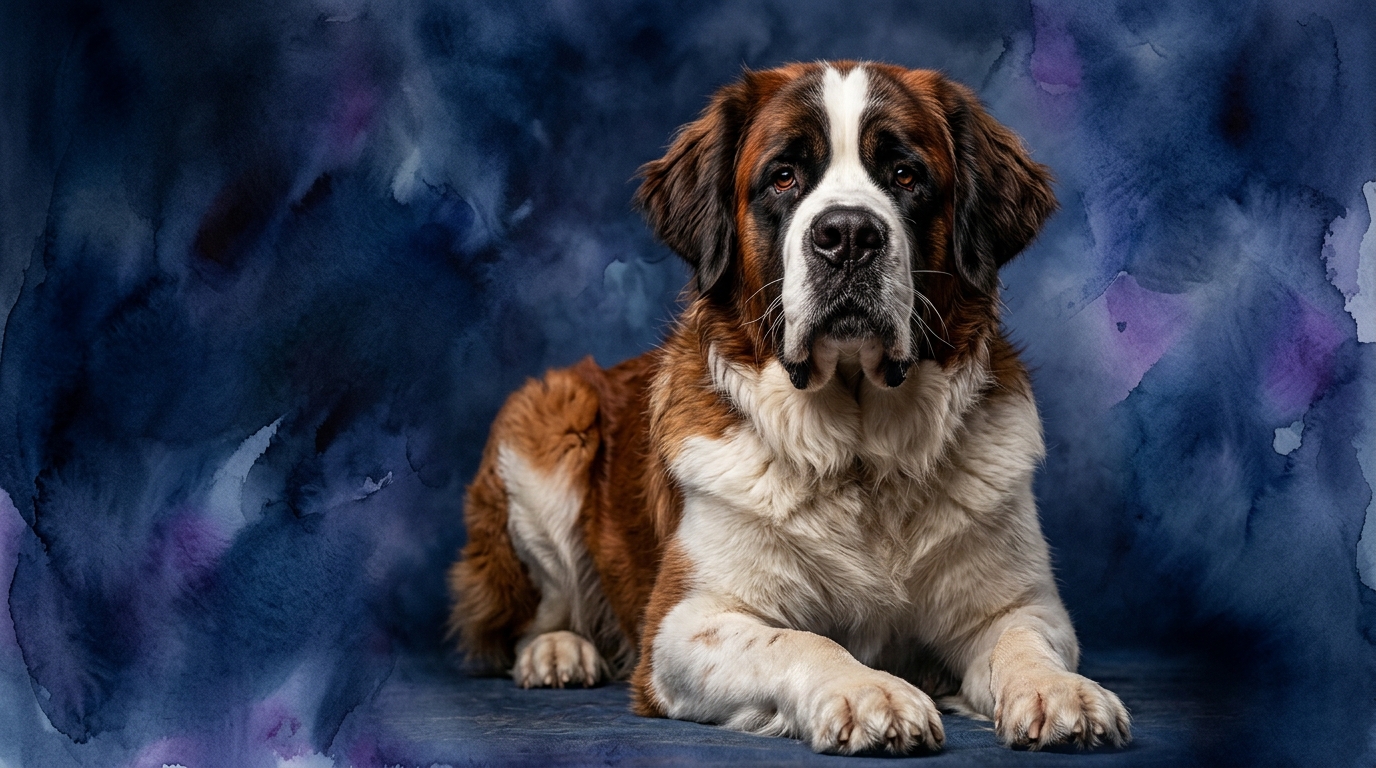
In contrast, the Saint Bernard holds Coren rank #65, reflecting a different cognitive emphasis. Their Problem Solving is rated 3/5, suggesting they can navigate challenges but may require more time, patience, or direct guidance to find solutions. Training Speed is 2/5, indicating that acquiring new commands requires more repetition and a patient, consistent approach. Like the Doberman, their Social Intelligence is 4/5, highlighting an empathetic nature and a strong ability to understand social dynamics and form profound connections. Their Instinctive Drive is also 5/5, reflecting a powerful innate inclination for rescue, companionship, and a protective presence. Memory for the Saint Bernard is 3/5, meaning they retain core lessons but might require more frequent reinforcement for less commonly used commands or experiences.
Where the Doberman Pinscher Excels Cognitively
The Doberman Pinscher's cognitive strengths shine brightest in areas demanding rapid intellectual processing and execution. Their Problem Solving score of 5/5, significantly higher than the Saint Bernard's 3/5, means they excel at quickly assessing and navigating complex, new scenarios. For instance, a Doberman might independently figure out how to manipulate a latch to open a gate or devise a shortcut through an unfamiliar environment, demonstrating a proactive and adaptive approach to challenges. This isn't just about raw strength but about strategic thought and mental agility.
Furthermore, the Doberman’s Training Speed, a perfect 5/5 compared to the Saint Bernard’s 2/5, translates into an impressive capacity for absorbing and executing intricate commands with minimal repetitions. This breed thrives on structured learning, quickly grasping multi-step routines required in advanced obedience, protection sports, or agility. Their superior Memory (5/5 vs. 3/5) further cements this advantage; once a Doberman learns a task or a rule, it tends to stick, allowing for less frequent reinforcement sessions and a more consistent performance over time. This cognitive efficiency makes them exceptional candidates for roles requiring precise, rapid responses and a broad repertoire of learned behaviors.
Where the Saint Bernard Excels Cognitively
While the Saint Bernard may not match the Doberman's speed in complex problem-solving or rapid command acquisition, their cognitive strengths are profoundly rooted in their empathetic and instinctively driven nature. Both breeds share a 4/5 Social Intelligence and a 5/5 Instinctive Drive, but the Saint Bernard applies these attributes with a distinct nuance. Their historical role as mountain rescue dogs, navigating treacherous terrain to find and comfort lost travelers, highlights a unique cognitive “win” that isn't measured by speed of learning a trick, but by depth of understanding and appropriate, measured response.
The Saint Bernard excels in situations demanding calm judgment and an intuitive grasp of distress. Their powerful instinctive drive for rescue, coupled with their social intelligence, allows them to perceive vulnerability and respond with an innate, gentle presence, often without explicit command. This manifests as an ability to offer comfort, sense anxiety, or provide a steadying influence in stressful environments. Their cognitive advantage here lies in their profound capacity for empathy and their ability to act as emotional anchors, a form of situational intelligence that prioritizes well-being and connection over rapid, complex task execution. This reflective, rather than reactive, approach to social and environmental cues provides a unique cognitive strength.
Training Journey: Doberman Pinscher vs. Saint Bernard
Based on The Cosmic Pet Pet IQ Lab data, the Doberman Pinscher is unequivocally easier to train. Their 5/5 Training Speed means they absorb new commands and multi-step routines with remarkable rapidity, requiring significantly fewer repetitions than many other breeds. This efficiency stems from a strong desire to work and please their handlers, coupled with their exceptional Problem Solving (5/5) and Memory (5/5) scores. They quickly form associations between commands, actions, and rewards, making the learning process a highly engaging and productive experience. Dobermans thrive on mental challenges and structured training, often seeking out opportunities to learn and perform.
The Saint Bernard, with a Training Speed of 2/5, presents a different training journey. While certainly capable of learning, they require a more patient, consistent, and positive reinforcement-based approach. They may take longer to grasp new concepts and might need more frequent refreshers due to their 3/5 Memory score. Saint Bernards can exhibit an independent streak, and their training success hinges on building a strong, trusting relationship and making the learning process enjoyable and rewarding. Overly repetitive or harsh methods can lead to disengagement or stubbornness, emphasizing the need for understanding their slower, more deliberate learning pace.
Matching Canine Cognition to Lifestyle
For active owners seeking a dynamic and engaged canine partner, the Doberman Pinscher is an ideal match. Their high instinctive drive (5/5), combined with their exceptional problem-solving abilities (5/5) and rapid training speed (5/5), means they demand substantial mental and physical stimulation. Dobermans thrive when they have a “job” to do, whether it's participating in competitive dog sports like agility, obedience, or protection work, or accompanying owners on long, challenging hikes and runs. Owners who enjoy structured activities and can provide consistent, high-level engagement will find the Doberman an eager, capable, and fulfilling companion.
Conversely, for owners who prefer a more relaxed pace of life, the Saint Bernard often makes a more suitable companion. While they still require regular, moderate exercise to maintain their health, their lower scores in training speed (2/5) and problem-solving (3/5) suggest they are less demanding in terms of constant, complex mental engagement. Their strong social intelligence (4/5) and powerful instinctive drive for companionship make them excellent family dogs who appreciate a calm, predictable home environment. Saint Bernards are generally content with consistent, moderate daily activity and thrive on strong social bonds and a steady presence rather than intricate cognitive challenges or intense physical demands.
The Verdict
Choose a Doberman Pinscher if you are an experienced owner seeking a highly trainable, mentally agile companion for complex tasks, protection, or competitive dog sports, and can provide consistent, high-level mental and physical engagement.
Opt for a Saint Bernard if you desire a gentle, devoted companion with a calm demeanor, valuing strong social bonds and a steady presence over rapid task acquisition or intense cognitive challenges, and can provide moderate activity and consistent, patient training.
🧠 Find Your Pet's IQ Score
Our Pet IQ Lab assessment covers 25+ tests across 5 cognitive dimensions — personalized to your breed.
Take the Full IQ Test →Frequently Asked Questions
Are Dobermans harder to handle due to their intelligence?
Dobermans thrive on mental stimulation; without it, their problem-solving and instinctive drives can lead to self-directed activities. Proper training and consistent engagement channel their abilities productively, making them immensely rewarding companions for owners who understand their needs.
Do Saint Bernards struggle with learning new things?
Saint Bernards are capable learners, but their training speed is slower, requiring more patience and repetition than some breeds. Their strong social intelligence and desire for connection mean positive reinforcement and trust-building are paramount to their learning success.
How do their social intelligence scores compare?
Both breeds score 4/5 in social intelligence, indicating a strong capacity for understanding human cues and forming deep bonds. While the Doberman might leverage this for anticipating commands, the Saint Bernard often applies it for empathetic companionship and subtle, comforting communication.