
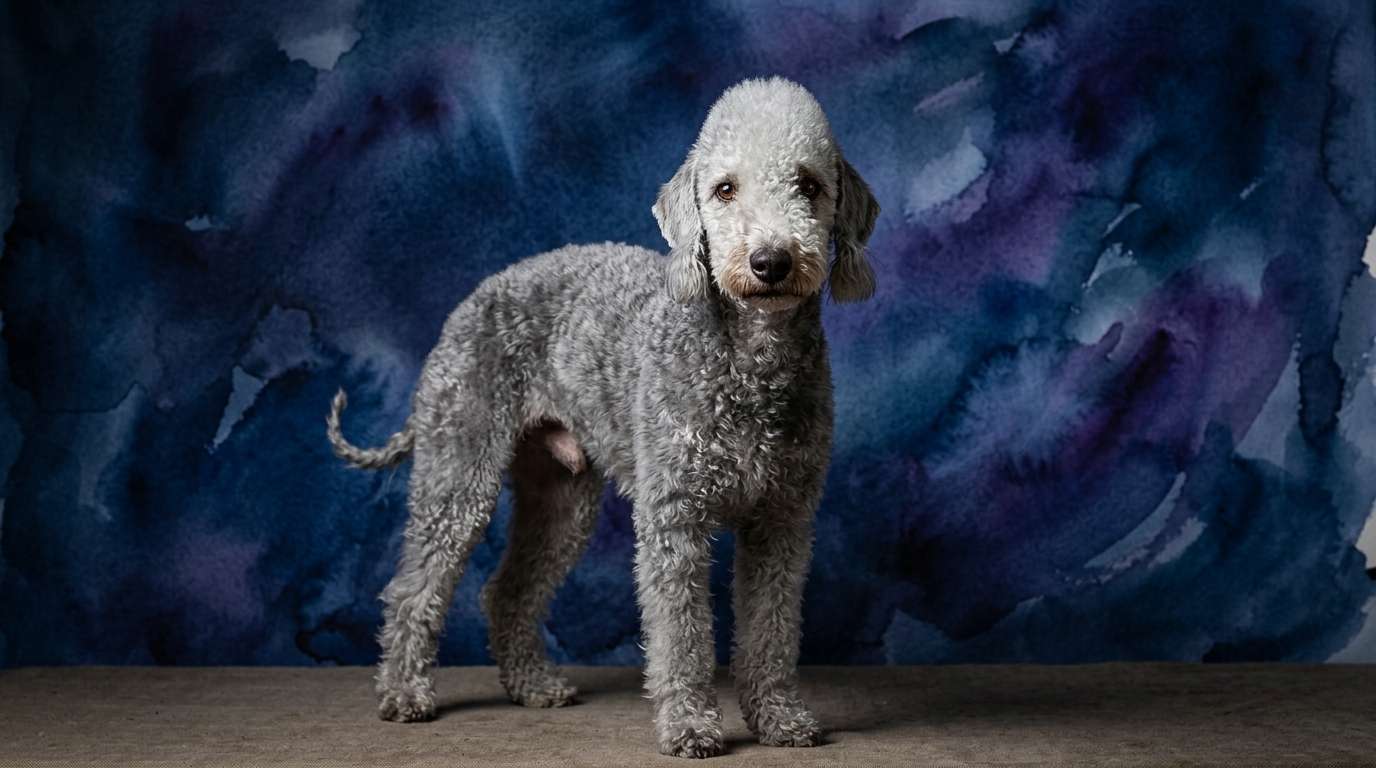
Side-by-Side IQ Profile: Dogo Argentino vs. Bedlington Terrier
When examining the Dogo Argentino and the Bedlington Terrier, our Pet IQ Lab scores reveal an intriguing identical 3/5 across all five cognitive dimensions. However, these identical scores belie the distinct ways each breed applies its cognitive faculties, shaped by their ancestral responsibilities and physical makeup. Understanding these nuances is key to appreciating their individual forms of mental dexterity.
For the Dogo Argentino, a breed forged for hunting large, dangerous game in South America, a 'Problem Solving' score of 3/5 reflects a practical, strategic mind. This involves assessing complex environmental cues during a chase, predicting prey movement, and making quick decisions in high-pressure scenarios, rather than solving abstract puzzles. Their 'Training Speed' at 3/5 indicates an ability to learn and retain commands for complex tasks, particularly when those tasks align with their strong protective and working drives. They respond well to consistent, confident leadership, internalizing routines and expectations quickly. Their 'Social Intelligence' at 3/5 is expressed through a discerning nature, understanding human family dynamics and identifying potential threats, often reading subtle shifts in body language. An 'Instinctive Drive' of 3/5 is central to their being, manifesting as a powerful prey drive and territoriality, which, when channeled, fuels their dedication. Finally, 'Memory' at 3/5 supports their ability to recall hunting strategies, learned commands, and social hierarchies within their pack structure.
The Bedlington Terrier, originally bred in England for hunting vermin, also scores 3/5 in 'Problem Solving,' but this manifests as persistent, resourceful ingenuity in confined spaces. They excel at navigating complex underground burrows, outsmarting small, quick prey, and figuring out how to access hard-to-reach areas, demonstrating a tenacious, independent form of cognitive application. Their 'Training Speed' of 3/5 means they are capable learners, but their terrier independence often means they learn best through engaging, reward-based methods that appeal to their self-interest. They can be quick to grasp concepts but might choose to execute them on their own terms. 'Social Intelligence' at 3/5 equips them to read the intentions of small prey and navigate interactions within their human family, though they can exhibit a sensitive yet sometimes feisty disposition. Their 'Instinctive Drive' at 3/5 is a potent force, marked by a powerful urge to chase, dig, and hunt small animals, a drive that profoundly influences their behavior and problem-solving. 'Memory' at 3/5 allows them to recall effective hunting tactics, the location of prime digging spots, and their repertoire of learned commands, sometimes also remembering perceived injustices with a characteristic terrier stubbornness.
Where the Dogo Argentino Excels Cognitively
While both breeds share identical numerical scores, the Dogo Argentino's cognitive strengths truly shine in contexts demanding strategic application of physical strength and discerning protective reasoning. Their problem-solving at 3/5 is particularly effective when it involves assessing a situation that requires both physical power and a keen understanding of dynamics, such as confronting a large animal or protecting their territory. This breed excels at sustained concentration on a singular, significant task, leveraging their instinctive drive to maintain focus over extended periods. Their social intelligence, also rated 3/5, allows for quick, decisive assessments of unfamiliar individuals or situations, enabling them to act as vigilant, discerning guardians for their human families.
Where the Bedlington Terrier Shows Its Cognitive Edge
Conversely, the Bedlington Terrier's cognitive prowess, while also scoring 3/5, emerges in scenarios demanding acute resourcefulness and independent persistence. Their problem-solving is unparalleled when navigating tight, complex environments, such as burrow systems, or when devising strategies to outmaneuver elusive small prey. This terrier's instinctive drive fuels an unwavering focus on a task, like digging or tracking, often without direct human instruction, showcasing a remarkable self-directed cognitive tenacity. The agility of their thought process, combined with their physical nimbleness, allows for rapid adaptation of strategies in pursuit of fast-moving targets, making them masters of quick, reactive problem-solving in dynamic, confined spaces.
Training Dynamics: Dogo Argentino vs. Bedlington Terrier
Determining which breed is 'easier' to train when both score 3/5 in 'Training Speed' requires looking beyond the number to their inherent behavioral tendencies. The Dogo Argentino, as a working breed, often possesses a strong desire to partner with and please their handler. When training aligns with their natural protective or task-oriented drives, they can be highly motivated and focused, learning complex sequences efficiently. However, their physical power and discerning nature mean that early, consistent, and confident leadership is paramount; they learn best when their handler earns their respect as a capable leader. Their training isn't necessarily 'easy' due to their size and potential for independence, but it can be highly rewarding when approached with clear communication and purpose.
The Bedlington Terrier, also at 3/5 for 'Training Speed,' presents a different set of training considerations. While capable of learning quickly, their independent, tenacious terrier temperament means they often possess a 'what's in it for me?' attitude. They can be stubborn and have a strong will, making training a test of creativity and patience for the owner. Successful training with a Bedlington often involves making the learning process engaging, fun, and highly rewarding, convincing them that performing a command is their own brilliant idea. They might selectively 'hear' commands if a more stimulating distraction, like a passing squirrel or an interesting scent, captures their powerful instinctive drive. Consistency and positive reinforcement are key to navigating their charming but sometimes willful nature.
Lifestyle Match: Active vs. Relaxed Owners
When considering lifestyle compatibility, both breeds benefit from active engagement, but the nature of that activity differs significantly. The Dogo Argentino, with its powerful build and strong working drives, is best suited for active owners who can provide consistent, vigorous physical exercise and purposeful mental stimulation. These dogs thrive on having a 'job,' whether it's advanced obedience, protection sports, or extensive outdoor adventures. They require an owner who is a firm, consistent leader and can channel their cognitive and physical energy productively. A relaxed owner who cannot commit to structured activities and leadership would likely find a Dogo Argentino challenging, as boredom can lead to undesirable behaviors.
The Bedlington Terrier, while smaller, is far from a sedentary companion. They suit owners who are active in terms of providing regular exercise, such as brisk walks, engaging play sessions, and opportunities for safe, supervised off-leash running. Their tenacious problem-solving and strong instinctive drives mean they also benefit from mental challenges like puzzle toys, scent work, or agility training. Owners need to be prepared for their digging instincts and strong prey drive, making a securely fenced yard essential. While they might adapt to a slightly less structured activity schedule than a Dogo, a 'relaxed' owner who offers minimal engagement might find their terrier's independent spirit and energy levels lead to frustration. They need owners who appreciate their spirited nature and can provide outlets for their unique cognitive and physical needs.
The Verdict
For those seeking a dedicated, protective companion who thrives on purpose-driven activities and clear leadership, valuing discerning social intelligence and strategic problem-solving, the Dogo Argentino is an excellent choice.
Conversely, the Bedlington Terrier appeals to owners who appreciate an independent, spirited companion, enjoy creative training challenges, and can provide outlets for their tenacious problem-solving and keen instinctive drives, particularly within a secure environment.
🧠 Find Your Pet's IQ Score
Our Pet IQ Lab assessment covers 25+ tests across 5 cognitive dimensions — personalized to your breed.
Take the Full IQ Test →Frequently Asked Questions
Can a Dogo Argentino live in an apartment?
While possible, a Dogo Argentino's robust build and requirement for significant exercise and mental engagement mean a spacious home with a secure yard is generally more suitable. Consistent, vigorous daily activity is essential to prevent boredom and behavioral issues.
Are Bedlington Terriers good with children?
Bedlington Terriers can be good with older, respectful children, but their terrier tenacity and potential sensitivity mean interactions should always be supervised. Early socialization is crucial to foster positive relationships within the family.
Do these breeds require a lot of grooming?
The Dogo Argentino has a short, easy-care coat requiring minimal grooming beyond occasional brushing. The Bedlington Terrier, with its unique lamb-like coat, needs regular professional grooming or diligent home care to prevent matting and maintain its distinctive appearance.