Side-by-Side IQ Profile: Understanding 'Competent' Cognition
Both the Dogo Argentino and the Otterhound register a consistent 3 out of 5 across all five cognitive dimensions: Problem Solving, Training Speed, Social Intelligence, Instinctive Drive, and Memory. A score of 3/5 in our lab signifies 'competent' rather than 'average,' indicating that these breeds possess a solid foundation in each area, capable of learning, adapting, and performing tasks effectively, though perhaps not with the lightning-fast acquisition or intricate reasoning of top-tier breeds. Their cognitive strengths lie in their practical application, honed over generations for specific working roles.
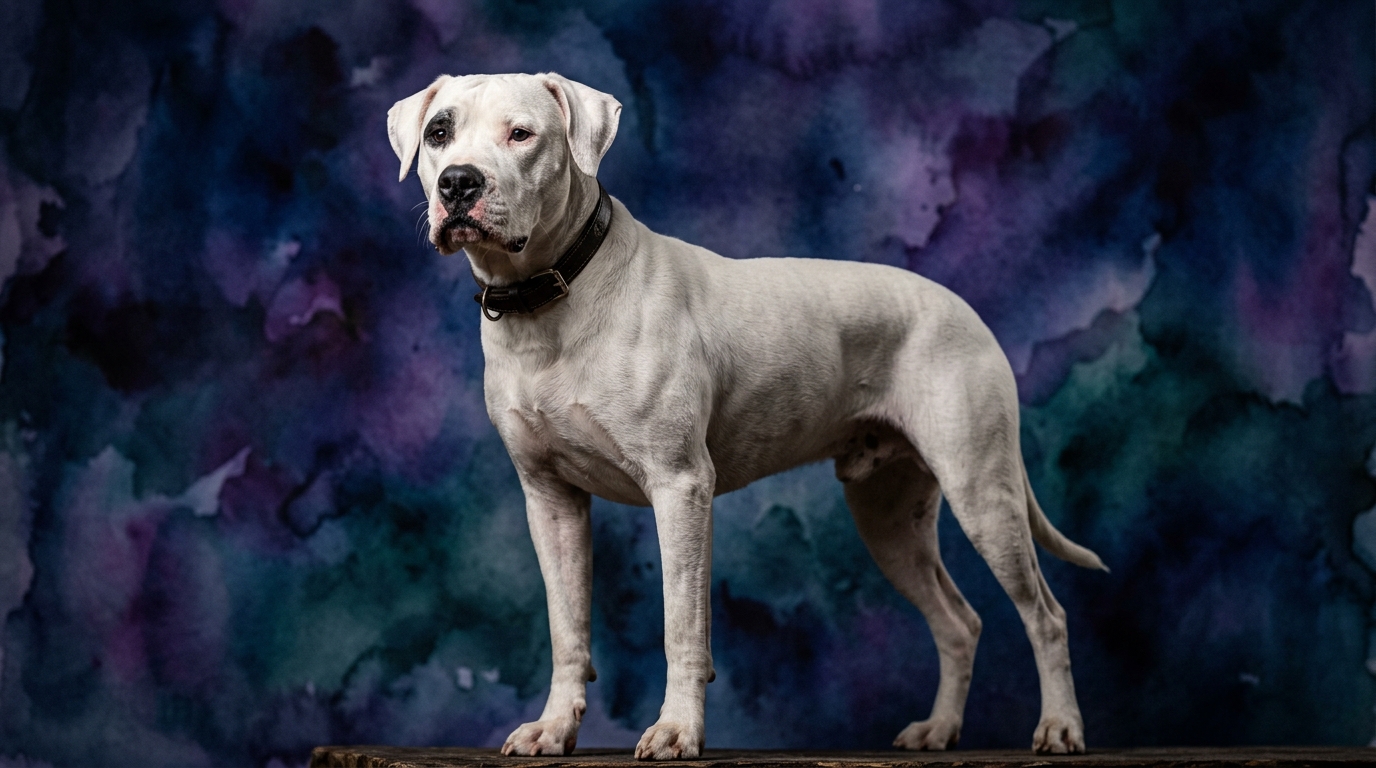
For the Dogo Argentino, a breed developed for big-game hunting in Argentina, their 3/5 in Problem Solving reflects an ability to strategize during a hunt, assessing threats and navigating complex terrain with purpose and determination. Their Training Speed of 3/5 suggests they are receptive to learning commands, particularly when clear leadership is established, but may require consistent reinforcement due to their independent nature. Social Intelligence at 3/5 means they can discern social cues within their family unit and with familiar individuals, often exhibiting a protective discernment, while their Instinctive Drive (3/5) is profoundly rooted in prey detection and guarding. A Memory score of 3/5 allows them to retain complex hunting strategies and recognize specific individuals or boundaries over time.
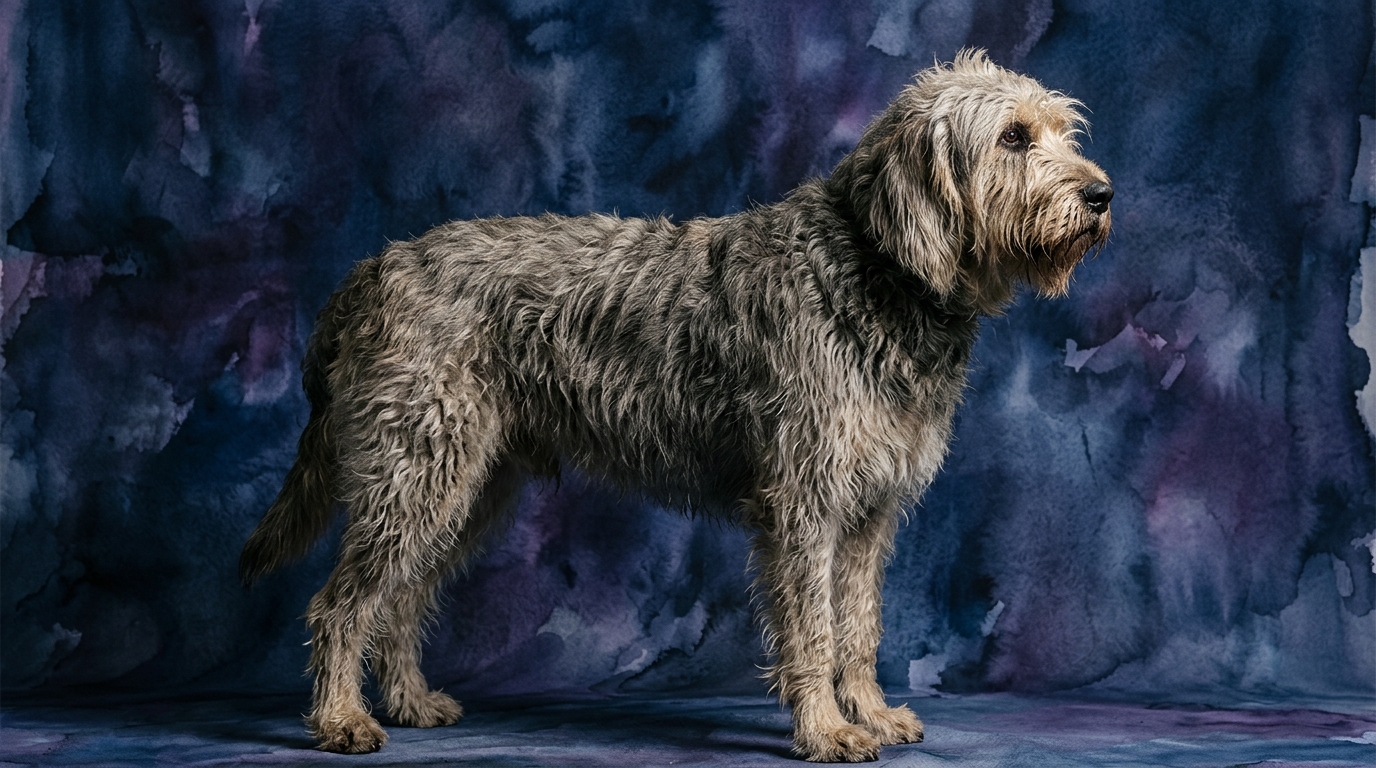
The Otterhound, originating from Great Britain and bred for hunting otters, applies its 3/5 Problem Solving in a fundamentally different way: persistent, scent-driven deduction. This means unraveling intricate scent trails over varied landscapes, often requiring sustained mental effort. Their Training Speed of 3/5 indicates they can learn commands, but their powerful, independently focused Instinctive Drive (3/5) for scent work can often take precedence, making consistent recall a patient endeavor. Social Intelligence at 3/5 enables them to operate effectively within a pack or family, often displaying a boisterous, amiable nature, while their Memory (3/5) is particularly strong for scent patterns and geographical locations relevant to their tracking pursuits.
Where the Dogo Argentino Wins Cognitively
While their raw scores are identical, the Dogo Argentino's cognitive strengths lean towards focused, strategic engagement and protective discernment. Their Problem Solving, rated 3/5, often manifests as decisive action in challenging situations, whether confronting a perceived threat or navigating a complex environment with a specific goal in mind. This isn't about intricate puzzles, but about practical, goal-oriented solutions requiring courage and physical prowess. For instance, a Dogo might more readily assess and react to a novel environmental change or a stranger's approach with a clear, protective intent, demonstrating their particular brand of social intelligence and problem-solving.
Their Instinctive Drive, also 3/5, is channeled into guardianship and a powerful prey drive that, when properly managed, contributes to their alertness and focused attention on their surroundings. This focused intensity, combined with their memory for specific tasks and individuals, means a Dogo Argentino might excel in roles requiring a consistent, vigilant presence and a clear understanding of boundaries. They remember who belongs and who doesn't, and how to act accordingly, exhibiting a more direct and often imposing application of their cognitive abilities compared to the more free-spirited Otterhound.
Where the Otterhound Wins Cognitively
The Otterhound's cognitive strengths, despite identical scores, are deeply rooted in their scenting heritage and tenacious endurance. Their Problem Solving (3/5) shines brightest when presented with a complex scent trail, requiring them to piece together fragmented olfactory information, make deductions about direction, and maintain focus over long distances and varied terrains. This is a form of environmental problem-solving that few other breeds can match, showcasing a remarkable persistence that belies their numerical score.
Their Instinctive Drive (3/5) is almost entirely dedicated to their nose, making them unparalleled in tasks requiring sustained olfactory engagement. An Otterhound's memory, also 3/5, is particularly adept at recalling intricate scent patterns and the locations associated with them, allowing them to pick up an old trail or navigate familiar hunting grounds with uncanny accuracy. Their social intelligence, while friendly, is geared towards cooperative pack work rather than individual protection, fostering a robust, amiable rapport with fellow dogs and humans who engage in their preferred activities. They excel in environments where their unique sensory and endurance-based cognition can be fully utilized and celebrated.
Which is Easier to Train and Why
Neither the Dogo Argentino nor the Otterhound are typically considered 'easy' to train, despite their identical 3/5 Training Speed scores, due to distinct behavioral characteristics that influence their responsiveness. The Dogo Argentino, with its powerful build and strong protective instincts, requires a confident, consistent handler who can establish clear leadership from an early age. While they are capable of learning commands, their independent streak and high prey drive mean that training must be structured, firm, and ongoing. They are physically imposing, so lapses in training or command adherence carry greater implications for control. Their attention can be intensely focused on their handler in a structured setting, but they can also be challenging if not properly motivated or if their guarding instincts are triggered.
The Otterhound, conversely, presents a different set of training challenges. Their powerful instinctive drive for scenting can easily override commands, especially when they've caught an interesting whiff. They possess the characteristic hound stubbornness and an independent spirit that often leads them to prioritize their nose over their handler's voice. Training an Otterhound requires immense patience, positive reinforcement, and a willingness to make training a game rather than a strict lesson. Recall, in particular, can be a lifelong endeavor due to their wanderlust and profound dedication to following a scent. Therefore, while both have a 'competent' training speed, the Dogo Argentino might be more responsive to direct, authority-based training, whereas the Otterhound demands a more creative, engaging approach to overcome its inherent distractions and independent nature.
Which Suits Active Owners vs. Relaxed Owners
For owners considering either the Dogo Argentino or the Otterhound, the notion of a 'relaxed' ownership experience is largely incompatible with both breeds' needs. Both are robust, active dogs requiring significant physical and mental engagement, though the *type* of activity differs substantially. The Dogo Argentino thrives with active owners who can provide consistent, structured exercise, such as long, purposeful walks, jogging, or engaging in dog sports like agility or protection work. They need a strong leader who can channel their energy and intelligence into productive activities, preventing boredom and potential destructive behaviors. Their need for mental stimulation often involves problem-solving games or tasks that reinforce their bond with their owner and their understanding of boundaries.
The Otterhound, while equally active, demands a different kind of engagement. They are relentless explorers, driven by their incredible sense of smell. Owners best suited for an Otterhound are those who relish outdoor adventures, long hikes where their dog can explore scents safely, or participation in scent work and tracking trials. They need ample space to roam and opportunities to use their nose, making them ideal companions for owners who enjoy being out in nature, regardless of the weather. A relaxed owner will quickly find themselves overwhelmed by an Otterhound's boisterous energy, independent spirit, and strong wanderlust, which necessitates secure fencing and diligent leash training.
The Verdict
Choose the Dogo Argentino if you are a confident, experienced owner seeking a powerful, protective companion willing to engage in structured activities and thrive under clear leadership.
Opt for the Otterhound if you are an adventurous owner who enjoys extensive outdoor exploration, can manage a tenacious scent hound, and appreciates a playful, independent spirit.
🧠 Find Your Pet's IQ Score
Our Pet IQ Lab assessment covers 25+ tests across 5 cognitive dimensions — personalized to your breed.
Take the Full IQ Test →Frequently Asked Questions
Are Dogo Argentinos good family dogs?
Dogo Argentinos can be loyal and protective family dogs, often forming strong bonds with their human family members. However, their size, strength, and protective instincts necessitate early socialization and consistent training to ensure they are well-behaved and safe around children and other pets.
Do Otterhounds shed a lot?
Otterhounds have a dense, rough, double coat that is water-resistant. They do shed, but typically not excessively, and their coat requires regular brushing (2-3 times a week) to prevent matting and manage loose hair, as well as occasional stripping to maintain coat health.
How much exercise does each breed need?
Both breeds require substantial daily exercise. The Dogo Argentino needs at least 60-90 minutes of vigorous, structured activity daily, while the Otterhound requires similar durations, but often prefers free-ranging exploration, long hikes, and opportunities for scent work, making off-leash (in secure areas) or long-leash walks ideal.